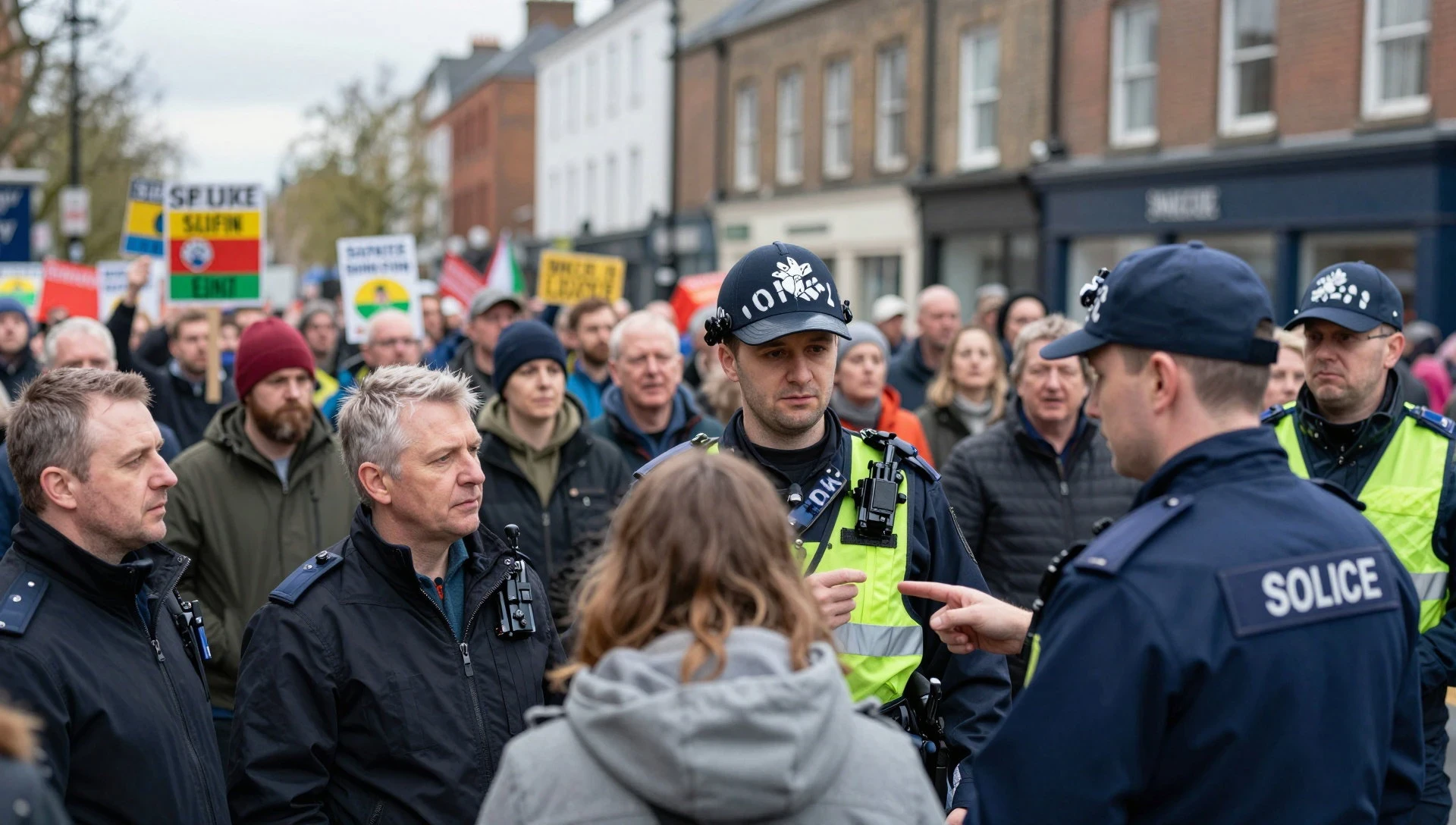
The policing of political protest in Northern Ireland has entered a legally and constitutionally sensitive phase, following the voluntary attendance of several senior Sinn Féin figures at Musgrave Police Station in Belfast.
The interviews concern participation in a demonstration on the Garvaghy Road that obstructed an Orange Order parade, forming part of a thirteen-day standoff in a predominantly nationalist district. The episode raises substantive questions about the boundary between legitimate assembly and criminal obstruction, and about the accountability of elected representatives who deliberately place themselves within contested legal terrain.
The individuals concerned occupy positions of considerable institutional weight. Deirdre Hargey and Gerry Kelly sit in the Northern Ireland Assembly, while Conor Murphy serves in the upper house of the Irish parliament; First Minister Michelle O'Neill and party president Mary Lou McDonald were interviewed earlier in the same week.
On This Page
- The Garvaghy Road Dispute and the Politics of Contested Assembly
- Policing Oversight and the Conflict of Institutional Roles
- Legal Exposure, Prosecutorial Discretion and the Right to Protest
- Political Strategy, Party Discipline and Electoral Calculation
- Comparative Perspectives and the Wider Implications for Divided Societies
Their collective decision to present themselves for questioning, rather than resist the process, signals a calculated legal and political strategy. It also invites scrutiny of how the Policing Board, the oversight body on which several of these figures sit, can credibly supervise an investigation that directly concerns its own members.
Analysis of the affair requires attention to three interlocking dimensions: the historical sociology of Orange Order parades and nationalist resistance, the legal architecture governing public order and obstruction in Northern Ireland, and the ethical obligations attaching to membership of a policing oversight body.
Each dimension carries its own evidentiary standards and its own political risk. The following examination proceeds from the immediate facts of the case toward the broader constitutional questions that the interviews have brought into public view.
TL;DR Three additional Sinn Féin politicians — Deirdre Hargey, Gerry Kelly and Conor Murphy — were interviewed by police at Musgrave Police Station in Belfast regarding their role in a Garvaghy Road protest that blocked an Orange Order parade during a thirteen-day standoff. First Minister Michelle O'Neill and party president Mary Lou McDonald had been questioned earlier in the week. Hargey and Kelly indicated they would not resign from the Policing Board if charged, framing their conduct as support for residents and a just cause. The case tests the separation between political accountability, policing oversight and public order enforcement in Northern Ireland.
The Garvaghy Road Dispute and the Politics of Contested Assembly
The Garvaghy Road controversy belongs to a long and well-documented tradition of disputes over parade routes in Northern Ireland, in which questions of territory, memory and consent intersect with public order law. The recent standoff, lasting thirteen days, prevented a disputed Orange Order march from proceeding along a predominantly nationalist street.
Such confrontations are rarely spontaneous; they typically emerge from unresolved negotiations over notification, routing and community consent, and they frequently escalate when institutional mediation is perceived to have failed.
Historical Precedents and the Drumcree Legacy
The Garvaghy Road occupies a distinctive place in the historical record of Northern Irish parading disputes, most notably through the Drumcree standoffs of the late 1990s. Those confrontations established a template in which nationalist residents' groups, loyal order organisers and policing authorities became locked into recurring cycles of negotiation and confrontation.
Contemporary disputes inherit this institutional memory, and participants on all sides routinely invoke earlier episodes to legitimise present positions and to frame adversaries as repeat offenders against an established norm.
Scholarship on the period has emphasised that parade disputes function simultaneously as ritual performance and as constitutional argument. The contested march is never merely a procession; it is a claim about whose presence is legitimate in a given space.
Consequently, the policing of such events carries a symbolic load far exceeding ordinary public order operations, and any decision to facilitate or obstruct a march is read as a statement about the relative standing of communities.
The thirteen-day duration of the recent standoff is itself analytically significant. Extended occupations or blockades impose cumulative costs on residents, businesses and policing resources, and they generate escalating legal exposure for participants.
The decision by senior political figures to remain present throughout suggests a deliberate acceptance of that exposure, consistent with a strategy of civil disobedience calibrated to generate political rather than merely legal consequences.
Comparative evidence from other divided societies indicates that prolonged standoffs tend to resolve through negotiated accommodation rather than enforcement alone. Where enforcement is pursued, it frequently produces a backlash that reopens the underlying dispute.
The Garvaghy Road case therefore invites assessment not only of the legality of the blockade but also of the adequacy of the mediation mechanisms available before and during the standoff.
The Legal Framework Governing Protest and Obstruction
Public order legislation in Northern Ireland provides for conditions on assemblies, offences of obstruction and provisions relating to the disruption of lawful activity. The precise characterisation of the Garvaghy Road blockade — whether as unlawful obstruction, as a breach of parade conditions, or as an exercise of assembly rights subject to proportionate restriction — will determine the evidential path pursued by investigators.
Prosecutorial discretion in such cases is inevitably informed by assessments of public interest as well as by strictly legal criteria.
The European Convention on Human Rights, incorporated domestically, protects freedom of peaceful assembly under Article 11 while permitting restrictions that are prescribed by law, pursue a legitimate aim and remain proportionate.
Adjudication therefore turns on granular factual questions: the duration of the obstruction, the availability of alternative routes, the conduct of participants, and the adequacy of police warnings. These are not abstractions; they are the operative variables in any subsequent prosecution.
Voluntary attendance for interview, as undertaken by the Sinn Féin figures, is a legally significant choice. It avoids the coercive apparatus of arrest while preserving the interviewee's ability to prepare and to be accompanied by legal advisers.
It also generates a public record of cooperation that may later be deployed to mitigate sentence or to rebut allegations of contempt for lawful authority.
The decision by Hargey and Kelly to state in advance that they would not resign from the Policing Board if charged introduces a further legal-political variable. Charging decisions rest with the Public Prosecution Service, and the threshold for charge differs from the threshold for conviction.
Public commentary that conflates the two risks distorting public understanding of the process and prejudicing the fairness of proceedings.
Residents' Groups and the Mediation Deficit
Residents' groups along the Garvaghy Road have historically functioned as collective bargaining agents, negotiating with the Parades Commission and with loyal order representatives over routes and conditions. Their effectiveness depends on internal cohesion and on the willingness of statutory bodies to treat them as legitimate interlocutors.
Where that legitimacy is contested, mediation collapses into confrontation, and the policing service is drawn into a role it is poorly equipped to perform.
The support expressed by the interviewed politicians for the residents reflects a durable alignment between nationalist electoral politics and community-based protest organisation. This alignment is electorally rational but institutionally consequential, because it blurs the distinction between constituency representation and participation in direct action.
The blurring is not unique to Northern Ireland, but its constitutional implications are sharper where policing oversight is involved.
Evidence from mediation research suggests that durable settlements require early intervention, transparent criteria and credible guarantees on all sides. The thirteen-day duration of the standoff implies that at least one of these conditions was absent.
A retrospective assessment of the mediation process would therefore be a more productive institutional response than a purely punitive one, though the two are not mutually exclusive.
The role of the Parades Commission, which determines conditions on contested marches, remains central to any structural analysis. Its determinations are legally binding but politically contestable, and compliance depends heavily on perceived impartiality.
When senior politicians publicly endorse defiance of route conditions, the commission's authority is indirectly tested, and the resulting precedent may shape future disputes.
Public Opinion and the Symbolism of Solidarity
Public opinion in Northern Ireland on parading disputes is fragmented along communal lines but also exhibits significant cross-community fatigue with recurring confrontation. Survey evidence consistently indicates that majorities prioritise local stability and economic normality over symbolic victories.
Political actors who position themselves within protest movements must therefore calibrate their conduct against an electorate that may reward solidarity while penalising prolonged disruption.
The symbolism of senior politicians attending a police station voluntarily should not be underestimated. It communicates confidence in due process and simultaneously dramatises the seriousness of the underlying grievance.
This dual message is characteristic of rights-based political mobilisation, in which legal confrontation is used to generate public attention and to force institutional clarification.
Media framing of the interviews has emphasised the novelty of a First Minister and party president being questioned by police. Such framing is understandable but risks obscuring the more routine reality that elected representatives are occasionally interviewed in connection with public order matters. Analytical caution is warranted before inferring systemic crisis from individual investigative steps.
The statements by Kelly that he would act again and that he regarded the cause as just constitute an explicit normative claim. Such claims are politically potent but legally irrelevant to the question of whether an offence was committed.
Distinguishing between the moral evaluation of conduct and its legal characterisation is essential to any rigorous assessment of the case.
Policing Oversight and the Conflict of Institutional Roles
The Northern Ireland Policing Board exists to hold the police service to account, to set strategic priorities and to secure public confidence in policing. Its members are expected to exercise independent judgement and to avoid conduct that might reasonably be perceived as compromising that independence.
When board members are simultaneously subjects of a police investigation, the resulting configuration is institutionally awkward and requires careful management to preserve public confidence.
The Constitutional Position of the Policing Board
The board's statutory remit encompasses oversight of police performance, resource allocation and complaints handling, and it operates within a framework designed to embed accountability in a post-conflict settlement. Its legitimacy depends on cross-community representation and on the perception that members act as overseers rather than as advocates for any particular political tradition. Any erosion of that perception carries consequences for the credibility of the entire accountability architecture.
Membership of the board is a public appointment carrying duties of confidentiality and impartiality. Where a member becomes the subject of an investigation, the board's own governance arrangements may require recusal from specific matters.
The absence of a clear, publicly articulated recusal protocol in the present case has generated legitimate questions about how the board will manage the conflict of interest.
Comparative practice in other jurisdictions suggests that oversight bodies typically adopt explicit conflict-of-interest policies, including temporary withdrawal from relevant business. Such policies protect both the individual and the institution.
Their invocation is not an admission of wrongdoing; it is a procedural safeguard that preserves the integrity of the oversight function while legal processes run their course.
The stated intention of Hargey and Kelly to remain on the board if charged therefore merits careful analysis. It may be defended as a refusal to accept that political protest constitutes misconduct, but it may equally be criticised as insufficiently attentive to the appearance of partiality.
The resolution of this tension will depend on the board's own procedures and on the judgement of its chair and members.
Accountability, Recusal and the Appearance of Partiality
Legal and ethical doctrine distinguishes between actual bias and the appearance of bias, and the latter standard is frequently decisive in public administration. A reasonable observer, informed of the facts, must be able to conclude that oversight decisions are taken impartially. Where board members are themselves under investigation, that conclusion becomes harder to sustain without transparent procedural separation.
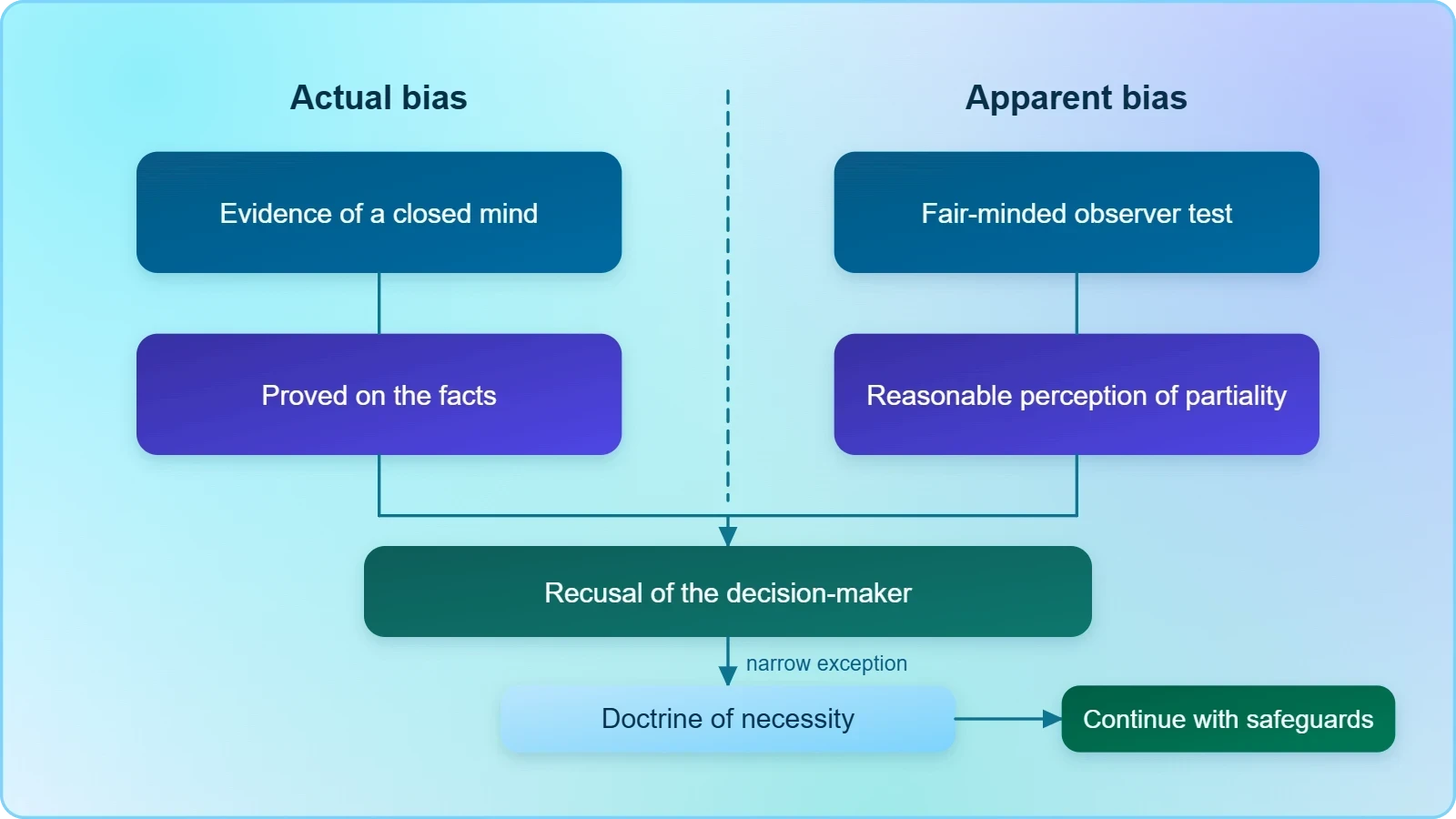
The doctrine of necessity complicates matters, since a board cannot simply cease to function because some members face investigation. Partial recusal, limited to matters connected to the Garvaghy Road case, offers a proportionate response.
Such an arrangement would allow the board to continue its general work while insulating case-specific decisions from any perception of conflict.
Public confidence in policing is a fragile and empirically measurable asset. Survey data on confidence in the police service in Northern Ireland indicate persistent communal variation, with nationalist confidence historically lower than unionist confidence.
Actions that appear to politicise oversight risk widening that gap, while actions that demonstrate procedural rigour may narrow it over time.
The political dimension cannot be ignored: Sinn Féin's participation in policing structures has been a contested element of its post-conflict strategy, and any perception that oversight is being instrumentalised would damage that strategy.
Conversely, a demonstrably rigorous approach to conflict of interest could reinforce the party's claim to constructive engagement with the rule of law.
Precedents from Other Divided Societies
Oversight bodies in other post-conflict settings have confronted comparable dilemmas, and their responses offer instructive precedents. In several jurisdictions, members under investigation have voluntarily stepped aside from relevant business while remaining in post, a practice that balances institutional continuity against the appearance of impartiality. The absence of a single universal standard reflects differing constitutional traditions and differing levels of public trust.
Evidence from comparative governance research suggests that the credibility of oversight institutions depends less on the personal probity of individual members than on the robustness of procedural safeguards. Institutions that codify recusal, disclosure and independent review tend to withstand individual controversies better than those that rely on informal understandings. The present case may therefore catalyse procedural reform.
International human rights bodies have consistently emphasised that accountability mechanisms must be independent, adequately resourced and transparent in their operations. These criteria apply with particular force where the mechanism operates in a society emerging from prolonged conflict.
The Policing Board's response to the current controversy will be assessed against these standards by domestic and international observers alike.
It is also relevant that the board operates alongside other accountability bodies, including the Police Ombudsman and the courts. The existence of multiple channels reduces the risk that any single institution's difficulties will paralyse accountability overall. Coordination among these bodies, however, requires clarity about respective mandates and about the handling of overlapping investigations.
Public Confidence and Institutional Legitimacy
Institutional legitimacy is not a fixed attribute but a continuously negotiated relationship between an organisation and its publics. For the Policing Board, legitimacy rests on demonstrable independence, cross-community balance and effective scrutiny.
Each of these elements is placed under strain when senior political figures who sit on the board become subjects of police inquiry, and the strain must be managed rather than denied.
Empirical research on procedural justice indicates that public acceptance of institutional decisions depends heavily on the perceived fairness of the processes used, independent of outcomes. This finding has direct implications: the board should prioritise transparent process, clear communication and visible adherence to its own rules. Such measures are likely to do more for confidence than any rhetorical defence of individual members.
The political context further complicates the assessment. Northern Ireland's power-sharing arrangements require cross-community consent, and policing oversight is one of the institutions through which that consent is operationalised. Disputes over the board's composition or conduct can therefore escalate rapidly into broader constitutional contention, with consequences extending beyond the immediate case.
Ultimately, the test is whether the institutions can demonstrate that no individual, however senior, is exempt from the ordinary operation of law and procedure. A credible demonstration of that principle would strengthen rather than weaken the settlement. Failure to demonstrate it would provide ammunition to those who argue that accountability is selectively applied.
We Also Published
Legal Exposure, Prosecutorial Discretion and the Right to Protest
The legal characterisation of the Garvaghy Road blockade will determine whether any participant faces prosecution and, if so, on what basis. Public order offences in Northern Ireland encompass obstruction, disorderly conduct and breach of parade conditions, each with distinct mens rea requirements and evidential thresholds. Prosecutors must also weigh the public interest, including the risk that prosecution may itself inflame community tensions.
Offences, Thresholds and Evidential Standards
Obstruction offences typically require proof that the defendant intentionally or recklessly prevented or hindered lawful activity. Where the activity in question is a parade subject to conditions, the lawfulness of the parade depends on compliance with those conditions.
The evidential chain therefore runs through the Parades Commission's determination, the conduct of marchers and the conduct of protesters, each of which must be established to the criminal standard.
The threshold for charge is lower than the threshold for conviction, and prosecutors exercise discretion informed by the Code for Prosecutors. Factors include the seriousness of the offence, the culpability of the suspect, the impact on victims and the availability of alternatives to prosecution.
In politically sensitive cases, the public interest assessment becomes unusually complex and is likely to attract judicial scrutiny if challenged.
Human rights jurisprudence establishes that restrictions on assembly must be proportionate and must not render the right illusory. Courts have repeatedly held that peaceful protest lies at the core of Article 11 protection, and that disruption alone does not justify prohibition. The duration and scale of the Garvaghy Road blockade will therefore be central to any proportionality analysis.
The possibility of diversionary or restorative disposals should not be discounted. Such measures may be appropriate where culpability is low and where the primary objective is the restoration of community relations. Their availability depends on the attitude of the prosecution service and on the willingness of participants to engage with the process.
Voluntary Interview as Legal Strategy
Attendance for voluntary interview is a recognised tactical choice that carries both advantages and risks. It demonstrates cooperation, allows preparation and avoids the stigma of arrest, but it also exposes the interviewee to questioning under caution and to the possibility of charges based on statements made. Legal advisers typically weigh these factors carefully before advising attendance.
The presence of legal representatives during interview is a fundamental safeguard, and the right to silence is qualified only by the possibility of adverse inferences in limited circumstances. Interviewees must therefore decide whether to answer, to provide a prepared statement or to remain silent. Each option carries strategic implications that extend beyond the immediate investigation.
The public statements made by Hargey and Kelly before and after interview may themselves become relevant evidence. Assertions that they acted to support residents and that they would act again could be characterised as admissions of intentional participation. Conversely, they may support a defence based on reasonable excuse or on the exercise of assembly rights.
The timing of the interviews, following those of O'Neill and McDonald, suggests a sequenced investigative approach. Sequencing may reflect evidential dependencies, resource management or a deliberate strategy of graduated escalation. Whatever the rationale, the pattern indicates that the investigation is being conducted systematically rather than reactively.
Proportionality and the Margin of Appreciation
Domestic courts and the European Court of Human Rights afford states a margin of appreciation in regulating public assemblies, but that margin is subject to rigorous supervision. Interference must correspond to a pressing social need and must be no greater than necessary. Blanket bans are difficult to justify; targeted conditions are more likely to survive scrutiny.
In the Northern Irish context, the courts have developed a body of jurisprudence sensitive to the communal dimensions of parading disputes. Judgements have emphasised the importance of balancing the rights of marchers and residents, and have scrutinised the reasoning of the Parades Commission.
This jurisprudence provides the framework within which any prosecution arising from the Garvaghy Road blockade would be assessed.
The concept of reasonable excuse in public order offences allows for contextual evaluation. Participants may argue that their conduct was a proportionate response to a perceived infringement of their community's rights. Whether such an argument succeeds depends on the specific facts and on the court's assessment of necessity and proportionality.
Sentencing, if conviction follows, would engage similar considerations. Courts typically weigh the seriousness of the disruption, the duration of the offence, the defendant's role and any previous convictions. The political motivation of a defendant is generally not an aggravating factor per se, though it may inform the assessment of culpability in certain circumstances.
Sentencing, Deterrence and Political Consequences
Deterrence is a recognised sentencing objective, but its application to political protest is contested. Heavy sentences may deter participation but can also generate backlash and undermine the legitimacy of the legal process. Courts in divided societies must therefore balance deterrence against the risk of exacerbating communal grievance.
The political consequences of conviction would extend well beyond the courtroom. A conviction could trigger standards proceedings in the Assembly, affect eligibility for certain offices and reshape electoral calculations. These downstream effects are relevant to the public interest assessment, though they must not be permitted to determine the legal outcome.
Comparative evidence from other jurisdictions suggests that prosecutions of senior political figures for protest-related offences are relatively rare and tend to be resolved through non-custodial disposals. The rarity reflects both prosecutorial caution and judicial sensitivity to the political context. Northern Ireland's own history provides examples of politically charged prosecutions that generated prolonged controversy.
The broader question is whether the legal process can deliver a resolution that is accepted as legitimate by all communities. That outcome depends on the transparency of decision-making, the quality of reasoning and the perceived independence of the institutions involved. Legal correctness alone is unlikely to suffice in a context where legitimacy is contested.
- 01
- 02
- 03
- 04
Political Strategy, Party Discipline and Electoral Calculation
Sinn Féin's decision to allow senior figures to be interviewed and to publicise their cooperation reflects a broader strategic orientation toward institutional engagement. Since endorsing policing arrangements, the party has sought to demonstrate that it can combine community advocacy with respect for lawful process. The Garvaghy Road episode tests whether that combination is sustainable under pressure.
Sinn Féin's Policing Strategy in Perspective
The party's journey from opposition to policing structures to participation in them is well documented and remains contested within its own support base. Endorsing the police service required significant internal persuasion and was presented as a means of advancing community interests from within. The current controversy therefore touches a sensitive nerve in the party's self-presentation.
Participation in the Policing Board is a visible expression of that strategy, and the refusal to resign if charged can be read as a defence of the principle that political protest should not disqualify citizens from oversight roles.
Whether that reading is accepted by the wider public is an empirical question that polling and commentary will illuminate over time.
The party's electoral position in both jurisdictions provides context for its calculations. In the Republic of Ireland, Sinn Féin has sought to present itself as a government-in-waiting, emphasising competence and moderation. In Northern Ireland, it holds the First Minister's office and must demonstrate that it can govern within the existing constitutional framework.
These dual imperatives create tension. Actions that mobilise the party's base in nationalist areas may complicate its outreach to moderate voters elsewhere. The Garvaghy Road interviews therefore constitute a test of the party's capacity to manage a heterogeneous electoral coalition while maintaining internal discipline.
Community Advocacy and the Limits of Solidarity
Community advocacy is a legitimate function of elected representatives, and attendance at protests is a recognised form of political expression. The limits of that function arise where advocacy shades into participation in unlawful activity or where it compromises the discharge of other public duties. Determining where those limits lie is precisely the task that the legal process now confronts.
The residents of the Garvaghy Road have historically relied on political patrons to amplify their concerns, and the presence of senior figures at the protest reflects that relationship. Solidarity of this kind can strengthen community cohesion but may also entrench positions and reduce the space for negotiated settlement. The balance between these effects is context-dependent.
Statements that participants would act again in similar circumstances signal a willingness to accept legal consequences for political conviction. Such statements are characteristic of civil disobedience traditions and are often intended to invite prosecution as a means of testing the law's legitimacy. Whether that strategy succeeds depends on public reception and on the response of institutions.
The risk for the party is that repeated confrontation may erode the goodwill generated by its participation in governance. Conversely, a perception of capitulation could alienate activists who regard policing arrangements with suspicion. Managing this tension requires careful communication and a clear articulation of the principles at stake.
Electoral Consequences and Public Reception
Electoral consequences of the controversy are likely to be modest in the short term but potentially significant over a longer horizon. Voters in nationalist constituencies may reward visible support for residents, while voters in marginal constituencies may penalise perceived disruption.
The net effect depends on the salience of the issue relative to other concerns such as health, housing and the economy.
Polling evidence from comparable controversies suggests that publics distinguish between the right to protest and the acceptability of prolonged disruption. Support for the former is broad; tolerance of the latter is narrower. Political actors who emphasise rights while acknowledging the costs of disruption are generally better placed to retain moderate support.
The timing of the controversy relative to electoral cycles matters. If proceedings extend over an extended period, the issue may become a recurring feature of political debate, shaping perceptions of competence and reliability. If resolved quickly, its salience may diminish before the next electoral test.
Media coverage will play a mediating role, framing the interviews either as a story about accountability or as a story about political victimhood. The party's communication strategy will seek to influence that framing, but editorial judgements and public sentiment will ultimately determine which narrative prevails.
Leadership, Discipline and Internal Cohesion
Leadership responses to legal jeopardy are closely observed by party members and opponents alike. A unified front, expressed through consistent messaging and visible support for those interviewed, projects discipline. Divergent signals, by contrast, invite speculation about internal divisions and may weaken negotiating positions.
The involvement of the party president and the First Minister in earlier interviews means that the controversy reaches the highest levels of leadership. Their willingness to be questioned establishes a precedent that may constrain or enable future conduct. It also raises the stakes of any subsequent charging decisions.
Internal discipline in a party with a strong organisational culture is generally robust, but prolonged legal uncertainty can strain cohesion. Members may differ over tactics, over the wisdom of confrontation and over the appropriate balance between protest and governance. Managing such differences requires clear channels of communication and a shared understanding of objectives.
The longer-term question is whether the episode strengthens or weakens the party's claim to be a reliable partner in governance. Demonstrating respect for legal process while defending community interests is a difficult balancing act, and its success will be judged by voters and by institutional counterparts over the coming months.
Comparative Perspectives and the Wider Implications for Divided Societies
The Garvaghy Road episode resonates beyond Northern Ireland because it exemplifies a general problem: how liberal democracies reconcile the right to protest with the maintenance of public order in deeply divided societies.
Comparable dilemmas arise in contexts as diverse as Spain, Israel-Palestine and the Balkans, where symbolic processions and territorial claims intersect with policing and constitutional law. Comparative analysis can illuminate both the distinctive features of the Northern Irish case and the general principles at stake.
Parading Disputes in Comparative Context
Parading disputes are a recurring feature of societies marked by contested memory and territorial identity. In each case, the procession functions as a claim about belonging, and the response of authorities signals whose claims are recognised.
Comparative scholarship emphasises that resolution requires institutional mechanisms capable of accommodating both majorities and minorities without resorting to zero-sum outcomes.
The Northern Irish model, with its Parades Commission and statutory framework, is unusual in its degree of institutionalisation. Other jurisdictions rely more heavily on negotiation, policing discretion or judicial review. The strengths and weaknesses of the Northern Irish approach are therefore instructive for policymakers elsewhere, particularly in regions emerging from conflict.
Evidence suggests that the credibility of parading adjudication depends on the perceived independence of the adjudicating body and on the transparency of its reasoning. Where these conditions are met, determinations are more likely to be accepted even by those who disagree with them. Where they are absent, determinations become focal points for renewed confrontation.
The role of senior politicians in protest movements adds a further comparative dimension. In several jurisdictions, political leaders have participated in demonstrations that tested legal boundaries, and their subsequent treatment has shaped public perceptions of the fairness of the legal system. The Northern Irish case will be watched with interest by observers of comparable disputes.
Human Rights Standards and International Scrutiny
International human rights mechanisms monitor the treatment of assembly rights and the conduct of policing in divided societies. Reports by treaty bodies and special procedures routinely address the balance between freedom of assembly and public order, and they scrutinise the proportionality of restrictions. Northern Ireland's arrangements are therefore subject to external as well as domestic evaluation.
The United Nations Special Rapporteur on the rights to freedom of peaceful assembly and of association has emphasised that states should facilitate peaceful assembly and should avoid unnecessary restrictions. This guidance is relevant to the assessment of both the parade conditions and the policing response to the blockade. Compliance with international standards strengthens the legitimacy of domestic decisions.
European jurisprudence provides a further layer of scrutiny, with the Court having addressed assembly cases in a range of contexts. Its judgments emphasise the importance of pluralism, tolerance and broadmindedness, and they caution against restrictions that stifle dissent. These principles inform the proportionality analysis that domestic courts would apply.
The involvement of senior political figures in the present case may attract particular international attention, given the prominence of the individuals concerned. Scrutiny of this kind can be constructive, encouraging rigorous adherence to standards, but it can also complicate domestic political management. The balance between external oversight and domestic autonomy is a recurring theme in post-conflict governance.
Institutional Learning and Reform Trajectories
Controversies of this kind frequently catalyse institutional learning, prompting reviews of procedures and the adoption of clearer protocols. The Policing Board may find it prudent to codify recusal arrangements, and the Parades Commission may consider how its determinations are communicated to reduce misunderstanding. Such reforms can strengthen legitimacy without conceding substantive ground.
Reform trajectories in divided societies are rarely linear, and progress often depends on the willingness of political actors to accept constraints on their own freedom of action. The present case offers an opportunity to demonstrate that accountability applies symmetrically, irrespective of party affiliation or office held. Seizing that opportunity would enhance the credibility of the settlement.
Evidence from institutional design research suggests that clarity of mandate, transparency of process and robust conflict-of-interest rules are the most effective safeguards against legitimacy erosion. These are procedural rather than substantive reforms, and they are therefore more likely to attract cross-party support. Their adoption would be a proportionate response to the current controversy.
The longer-term trajectory will depend on whether the case is resolved in a manner accepted as fair by all communities. A resolution perceived as partisan would entrench grievance; a resolution perceived as principled would build confidence.
The institutional choices made in the coming months will therefore have consequences extending well beyond the individuals concerned.
Lessons for Post-Conflict Governance
Post-conflict governance requires institutions capable of absorbing controversy without losing legitimacy. The Garvaghy Road case tests that capacity in a particularly visible manner, involving as it does the highest levels of political leadership and the principal oversight body for policing. The response will be studied as an example of how such systems manage internal stress.
One lesson concerns the importance of separating roles. Where individuals occupy multiple positions — as legislators, board members and protest participants — the potential for conflict of interest multiplies. Clear rules on recusal and disclosure reduce the risk that such multiplicity undermines institutional credibility.
A second lesson concerns communication. Public understanding of legal processes is often limited, and confusion between charge and conviction can distort debate. Institutions that explain their procedures clearly and promptly are better placed to maintain confidence during periods of uncertainty.
A third lesson concerns the value of proportionality. Responses that are calibrated to the seriousness of the conduct, and that leave room for political resolution, are generally more effective than maximalist approaches. This principle applies to policing, prosecution and political accountability alike, and it offers a framework for navigating the present controversy.
From our network :
- University Language Proficiency Exams: Why Institutional Tests Demand Different Preparation Than IELTS and TOEFLDiscover why university-specific language proficiency examinations differ fundamentally from IELTS and TOEFL, and learn strategic preparation approaches for institutional assessment success.
- How AI Agents Will Change the Way We Manage Personal FinancesExplore how AI agents are transforming personal finance through automated budgeting, bill payment, and investment management, while examining the critical security protocols and governance frameworks required for safe deployment.
- Committed Mediterranean Precipitation Decline: Why Emissions Cuts Alone Cannot Restore Winter RainsNew NOAA research reveals that Mediterranean winter rains may decline irreversibly even with emissions cuts. Explore the science of committed climate change and regional impacts.
- The Final Descent: How ESA Retired the Legendary Cluster Constellation After 24 Years of Space Weather ScienceAfter 24 years mapping Earth’s magnetosphere, ESA’s Cluster mission concluded with a precisely controlled reentry over the South Pacific. This analysis explores the scientific legacy, engineering decisions, and debris mitigation principles behind one of space exploration’s most responsible retirements.
- Live Online English Classes for Kids: Do They Actually Reduce Anxiety?A ten-week study reveals that synchronous online English classes can significantly reduce child language anxiety while improving listening and reading skills. Discover what makes these programs effective and how parents can select the right one.
- The Hidden Cost of AI Convenience: Why Over-Permissioned Agents Are a Security Time BombDiscover why AI agents with excessive permissions create dangerous single points of failure, and learn how implementing least privilege principles can protect your organization from exploitation.
- CISA’s Ten-Advisory Wave: Why Generic Patching Fails in OT and How to Build Product-Specific PlaybooksCISA released ten ICS advisories in one week, exposing critical infrastructure risks. Generic patching fails in OT. Learn to build product-specific remediation playbooks.
- Forbidden Matrix Patterns and Visible Lattice Points: A Geometric DictionaryExplore how multidimensional 0–1 matrices encode geometric truths, linking forbidden patterns to visible lattice points and hypergraph theory, with applications in combinatorics and computational geometry.
- Mobile Learning and VR in English: What Global Evidence Reveals About Effective Language TechnologyA systematic review across 14 countries reveals which language-learning technologies genuinely work. Mobile learning, AI, and VR show measurable benefits when pedagogically integrated. This evidence-based guide helps educators and learners select technology that delivers real return on investment.
RESOURCES
- Sinn Féin politicians attend police interview over Garvaghy Road ...bbc.com4 days ago ... More senior Sinn Féin politicians have attended police interviews over their roles in a protest on the Garvaghy Road that…
- Sinn Féin politicians attend police interview over Garvaghy Road ...bbc.co.uk4 days ago ... More senior Sinn Féin politicians have attended police interviews over their roles in a protest on the Garvaghy Road that…
- Police issue interview letters as part of Garvaghy Road investigationbbc.comOct 8, 2026 ... ... Sinn Féin politicians who took part in the protest against the Orange Order march. A Sinn Féin spokesperson said…
- Northern Irish police contact Sinn Fein members over ... - Reutersreuters.comOct 8, 2026 ... [1/4]A supporter of the Garvaghy Road protest holds an Irish flag during a demonstration as talks continue over the disputed…
- Northern Ireland's Sinn Fein faces police probe as protest tensions ...aljazeera.comOct 9, 2026 ... Northern Ireland's High Court permitted the Protestant Orange Order to march on the Catholic Garvaghy Road for the first time…
- Michelle O'Neill on Instagram: "I will be interviewed by the PSNI later ...instagram.comOct 19, 2026 ... “Sinn Féin stands fully with the Garvaghy Road community, and ... police interview in relation to a peaceful protest on…
- I have received a letter from the PSNI relating to the peaceful protest ...facebook.comOct 19, 2026 ... Sinn Féin stands fully with the Garvaghy Road community. ... police interview in relation to a peaceful protest on the…
- I am keenly aware of the strain that the events of the past week place ...instagram.comOct 3, 2026 ... ... Garvaghy Road and I will attend an interview in the period ahead. ... Sinn Féin will continue to stand…
- Orange Order legal challenge to Garvaghy Road parade ban ...irishtimes.comOct 10, 2026 ... ... police interview in relation to a peaceful protest on the Garvaghy Road. ... Police Service of Northern Ireland (PSNI)Sinn…
- Michelle O'Neill invited for police interview over Garvaghy Road ...news.sky.comOct 9, 2026 ... ... police interview in relation to her involvement in a Garvaghy Road protest. ... Sinn Fein. "I will continue to…
- Sinn Féin reps including Michelle O'Neill to attend police interviews ...belfastmedia.comOct 19, 2026 ... Sinn Féin have announced that elected representatives who received letters from the police around peaceful protests on the Garvaghy Road ...
- Michelle O'Neill says Garvaghy Rd community has her supportreddit.comSep 25, 2026 ... If the PSNI take a heavy handed approach to any protests then Sinn Fein ... Michelle O'Neal invited for police…
- Drumcree latest: First Minister Michelle O'Neill to attend interview ...belfasttelegraph.co.uk4 days ago ... Sinn Féin MLAs Gerry Kelly and Deirdre Hargey arrive at Belfast police station for interview over Garvaghy Road protest ·…
- PSNI to question SF leaders over Garvaghy Road protest - RTErte.ieOct 19, 2026 ... Sinn Féin leader Mary Lou McDonald and Northern Ireland's First Minister Michelle O'Neill are to be interviewed by police in…
- Sinn Féin and PBP representatives receive PSNI letters over ...thejournal.ieOct 8, 2026 ... ... police in relation to protests on the Garvaghy Road. A statement from Sinn Féin. https://t.co/3uBysOVRFm. — Sinn Féin (@sinnfeinireland) ...
- 01
- 02
- 03
- 04
- 05
- 06
- 07
- 08
0 Comments