When Amazon shares climbed six percent on 4 November 2026, the move said less about a single trading session and more about how quickly capital markets can reprice a trillion-dollar enterprise once the political fog lifts. The catalyst was not a quarterly earnings surprise, a product launch, or a regulatory reprieve; it was the resolution of an election that had left investors uncertain about the direction of technology policy, antitrust posture, and the fiscal backdrop against which cloud and artificial intelligence investments are financed. In that moment of clarity, portfolio managers returned to their spreadsheets and asked a familiar question with renewed urgency: is AWS still the profit engine it once was, and is Amazon's AI strategy finally converting ambition into measurable revenue?
The Globe and Mail reported the gain as a reassessment rather than a revelation, and that distinction matters. Markets rarely move six percent on a single company without some combination of short covering, valuation recalibration, and institutional repositioning. What the election provided was permission to look past near-term noise and re-examine the structural story: AWS's operating margins, the capital intensity of AI infrastructure, the competitive pressure from Microsoft Azure and Google Cloud, and the retail segment's quiet but persistent margin recovery. Each of these threads had been tangled in political uncertainty; the vote untangled them, at least temporarily, and the stock responded accordingly.
This analysis examines what that six percent actually represents, why AWS and AI sit at the center of Amazon's valuation debate, and how investors should interpret a post-election repricing that may or may not endure. It considers the cloud segment's economics, the capital expenditure cycle required to sustain AI workloads, the competitive landscape, and the broader question of whether Amazon is best understood as a retailer with a cloud business or a cloud business with a retail habit. The answers shape not only how the stock trades but how the company allocates capital over the next decade.
On This Page
TL;DR Amazon shares rose six percent on 4 November 2026 as investors, freed from election-related uncertainty, reassessed the company's AWS cloud franchise and its artificial intelligence strategy. The move reflects a valuation recalibration rather than a fundamental surprise, driven by renewed confidence in AWS's margin profile, the scale of AI infrastructure spending, and the retail segment's steady recovery. The central debate now concerns whether Amazon's AI investments will generate returns commensurate with their capital intensity, and whether AWS can defend its market position against Microsoft and Google. Investors should treat the rally as a signal of sentiment shift, not a guarantee of durable outperformance.
The Election as a Catalyst for Repricing
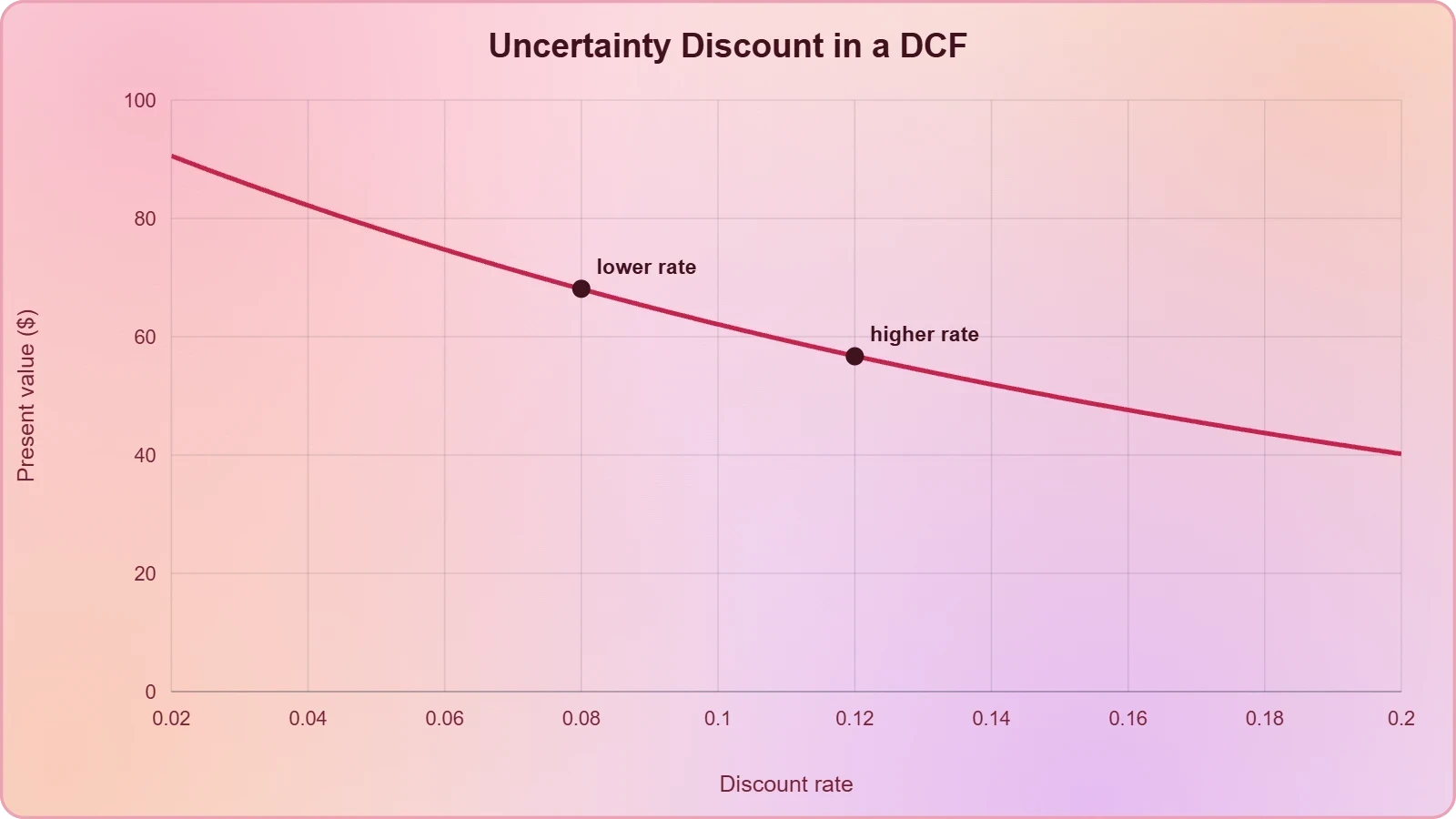
Political outcomes rarely create value in isolation, but they frequently remove the discount that uncertainty imposes. When the election results became clear, the market's collective discount rate on Amazon's future cash flows shifted, and a six percent move is a mathematically coherent response to even a modest change in that rate. Investors had been pricing in scenarios involving heightened antitrust scrutiny, altered tax treatment of capital gains, and unpredictable fiscal policy; the resolution of those scenarios, whatever their direction, allowed capital to flow back toward large-cap technology names with visible earnings trajectories.
Why Sentiment Shifts Precede Fundamental Shifts
Equity markets are forward-looking mechanisms that price expectations rather than current conditions, which is why a stock can move sharply without any change in reported earnings. The election functioned as an information event that collapsed a range of possible futures into a narrower set, and Amazon's valuation benefited from that compression. Portfolio managers who had trimmed exposure to avoid political risk were compelled to rebuild positions, and the resulting demand met a supply of shares that had been held by short-term traders anticipating further volatility. The mechanics of that repricing are as important as the narrative.
This dynamic is well documented in academic finance, where event studies routinely show that resolution of uncertainty produces abnormal returns independent of cash flow changes. The relevant equation for a discounted cash flow valuation makes the mechanism explicit: the present value of future cash flows rises when the discount rate falls, even if the numerator remains constant. Investors who understand this relationship recognize that sentiment shifts are not irrational noise but rational responses to changes in the probability distribution of future policy outcomes.
The Limits of Election-Driven Rallies
Rallies built on uncertainty resolution tend to fade unless they are subsequently validated by operating performance. The historical record offers cautionary examples: post-election enthusiasm in technology stocks has frequently reversed within quarters as earnings reports reasserted fundamental gravity. Amazon's six percent gain therefore should be read as a hypothesis rather than a conclusion, a market wager that the company's cloud and AI investments will justify their cost. The burden of proof now rests on AWS's next several earnings disclosures, where operating margins and revenue growth will either confirm or contradict the repricing.
Investors should also consider that election-driven moves can be amplified by positioning effects. When a large cohort of market participants holds similar hedges or underweights, the unwinding of those positions can produce price movements disproportionate to the underlying information. The six percent figure may therefore overstate the genuine change in fundamental expectations, a distinction that matters for anyone considering whether to chase the rally or wait for consolidation.
AWS and the Economics of Cloud Dominance
Amazon Web Services remains the most consequential profit center in the company's portfolio, generating operating income that subsidizes the lower-margin retail operation and funds the capital expenditure required for AI infrastructure. The segment's economics are distinctive: high switching costs, long-term contracts, and economies of scale that reward the largest provider. Yet AWS also faces its most credible competitive challenge in a decade, as Microsoft Azure leverages its enterprise relationships and OpenAI partnership while Google Cloud converts its AI research leadership into commercial workloads. The election-driven reassessment forced investors to weigh these dynamics anew.
Margin Durability Under Competitive Pressure
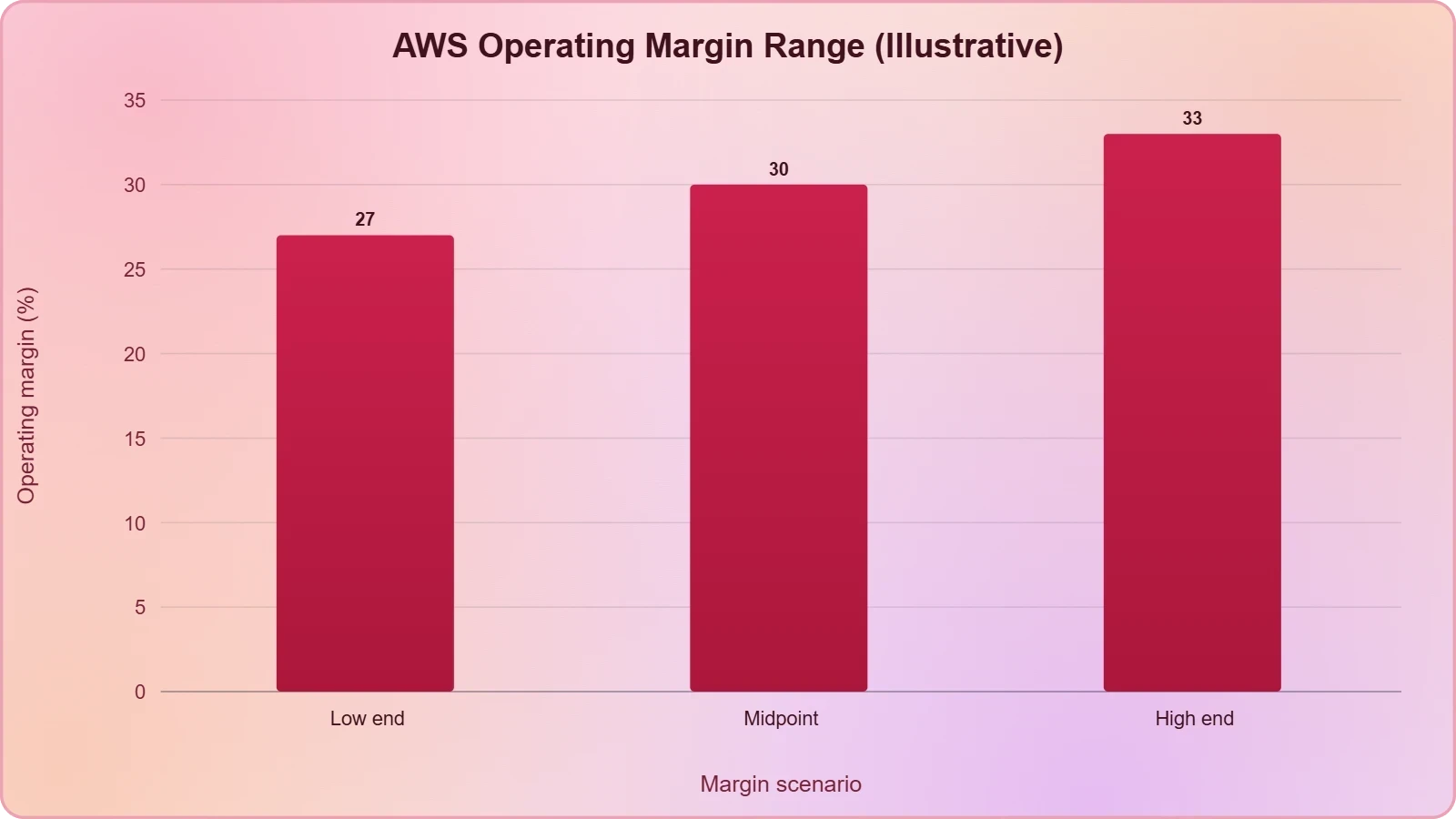
AWS operating margins have historically ranged in the high twenties to low thirties, a profile that reflects both pricing power and the efficiency of mature data center assets. The question confronting investors is whether those margins can persist as AI workloads demand newer, more expensive hardware and as competitors engage in price competition for large enterprise contracts. Capital intensity is rising across the industry, and the depreciation schedules attached to AI accelerators will weigh on reported profitability for years. The market's willingness to pay a premium for AWS earnings depends on confidence that margin compression will be modest and temporary.
The competitive landscape complicates that confidence. Microsoft's ability to bundle Azure with productivity software and its early lead in generative AI services gives it leverage in enterprise negotiations, while Google's custom silicon and research pedigree offer differentiated capabilities. Amazon's response has centered on Trainium and Inferentia chips, custom silicon designed to reduce dependence on external suppliers and lower the cost per inference. Whether that strategy yields durable cost advantages or merely parity is one of the central questions in the AWS investment case.
Custom Silicon as a Strategic Moat
Amazon's investment in custom AI chips represents a long-horizon bet on vertical integration, mirroring the approach that Apple used to differentiate its devices. By designing silicon optimized for its own workloads, AWS can potentially reduce costs, improve performance for specific use cases, and insulate itself from supply constraints affecting merchant chip vendors. The strategy requires sustained research spending and carries execution risk, but it also creates switching costs that are difficult for customers to replicate elsewhere. Investors who value AWS's franchise should monitor the adoption rates of these chips among major customers.
The silicon strategy also has implications for capital allocation. Building custom chips requires upfront investment that depresses near-term free cash flow, a trade-off that management has justified by pointing to long-term cost advantages. The market's tolerance for that trade-off depends on visible progress, and the election-driven rally suggests investors are currently willing to extend the benefit of the doubt. That patience is not unlimited, and quarterly disclosures will test it.
The AI Strategy and Its Capital Demands
Artificial intelligence has become the organizing principle of Amazon's investment thesis, shaping capital expenditure, product development, and competitive positioning across every segment. The company has committed tens of billions of dollars to data center expansion, custom silicon, and partnerships with AI model developers, betting that demand for inference and training capacity will compound for years. That bet is not unique to Amazon, but its scale is, and the election-driven reassessment invited investors to ask whether the returns on that capital will arrive quickly enough to justify the dilution of free cash flow.
From Ambition to Measurable Revenue
The gap between AI ambition and AI revenue remains the central uncertainty in Amazon's valuation. Management has pointed to growing adoption of Bedrock, the company's managed service for foundation models, and to enterprise demand for AI-enabled analytics and automation. Yet the revenue contribution from these services remains modest relative to the capital deployed, and investors must decide whether to value the segment on current earnings or on the option value of future capacity. The election rally suggests the market is currently inclined toward the latter, but that inclination is contingent on visible progress.
Comparisons with Microsoft's AI revenue disclosures and Google's cloud growth provide useful benchmarks. Both competitors have reported accelerating AI-related revenue, and Amazon's relative silence on specific figures has invited skepticism from analysts who prefer transparency. The company's decision to disclose selectively may reflect competitive caution, but it also creates an information asymmetry that weighs on valuation multiples. Investors seeking clarity should watch for changes in disclosure practices as evidence of confidence.
The Depreciation Question
AI infrastructure carries a distinctive accounting burden: the accelerators and networking equipment required for training and inference depreciate faster than traditional servers, compressing reported margins during the investment phase. Amazon's capital expenditure guidance has risen sharply, and the associated depreciation will flow through the income statement for years. The relevant calculation is straightforward in principle but difficult in practice, since it requires estimating the useful life of assets whose obsolescence rate is uncertain.
A shorter useful life assumption increases annual depreciation and reduces reported operating income, while a longer assumption flatters near-term results at the risk of future write-downs. Amazon's disclosures on useful lives therefore carry outsized significance for anyone modeling the stock. The market's willingness to look past current depreciation depends on confidence that the underlying assets will generate revenue for their full assumed lives, a confidence that competitive dynamics can either reinforce or undermine.
Retail, Advertising, and the Supporting Cast
Amazon's valuation debate tends to center on AWS and AI, but the retail and advertising segments provide the cash flow that funds the company's ambitions and the diversification that cushions cyclical shocks. Retail margins have recovered steadily as the company rationalized fulfillment capacity and benefited from regionalization of its logistics network, while advertising has emerged as a high-margin growth engine that rivals the profitability of cloud services. The election-driven reassessment encompassed these segments as well, since consumer confidence and advertising budgets are sensitive to the political and macroeconomic environment.
The Quiet Recovery in Retail Margins
Amazon's retail operation was long viewed as a low-margin necessity, a customer acquisition engine that subsidized the company's expansion into higher-value services. That characterization has aged poorly. Regional fulfillment models, automation in warehouses, and disciplined cost control have lifted North American retail margins into positive territory, and the improvement appears structural rather than cyclical. Investors who dismissed retail as a drag now confront a segment that contributes meaningfully to consolidated operating income, a shift that supports higher valuation multiples across the enterprise.
The advertising business reinforces this dynamic. Sponsored product placements and streaming advertising generate margins that exceed those of cloud services, and the segment's growth has outpaced overall company revenue. Advertising revenue is also less capital-intensive than AI infrastructure, which means it contributes disproportionately to free cash flow. The combination of recovering retail margins and high-margin advertising gives Amazon a financial buffer that funds AI investment without requiring external capital, a structural advantage that competitors with narrower business mixes cannot easily replicate.
Consumer Confidence and the Political Backdrop
Retail and advertising performance are sensitive to consumer spending, which in turn responds to employment, inflation, and fiscal policy. The election resolved some of the uncertainty surrounding those variables, and the resulting confidence may support near-term demand. Yet the relationship is not mechanical: consumer behavior responds to actual income and prices more than to political outcomes, and the durability of any confidence effect depends on the policy choices that follow the vote. Investors should treat the retail recovery as a trend to monitor rather than a certainty to assume.
Valuation Frameworks for a Hybrid Enterprise
Amazon defies simple valuation because it operates at the intersection of retail, logistics, cloud computing, advertising, and now artificial intelligence. Sum-of-the-parts analysis assigns different multiples to each segment, but the approach struggles with shared costs, internal transfer pricing, and the strategic interdependence that makes the whole more valuable than its components. The election-driven rally implicitly endorsed a higher blended multiple, and understanding why requires examining the frameworks investors use to price hybrid enterprises.
Sum-of-the-Parts and Its Discontents
A conventional sum-of-the-parts model values AWS at a premium cloud multiple, advertising at a high-margin media multiple, and retail at a discount to peers, then sums the results. The approach has intuitive appeal but suffers from practical limitations: shared infrastructure, corporate overhead, and the difficulty of isolating segment-level cash flows. Analysts who rely on it often produce valuations that diverge widely, which explains why Amazon's stock trades with greater dispersion of price targets than more focused competitors.
Alternative frameworks emphasize free cash flow and return on invested capital, treating Amazon as a single enterprise whose segments compete for capital. This approach better captures the company's internal capital allocation discipline but obscures the distinct economics of each business. The most defensible position may be a hybrid: use sum-of-the-parts for directional insight while anchoring the final valuation in consolidated cash flow metrics that reflect the company's actual financial statements.
What the Six Percent Implies
A six percent move on a company of Amazon's size translates into tens of billions of dollars of market capitalization, a figure that exceeds the annual revenue of many standalone enterprises. The move therefore embeds a substantial revision in expectations, whether about AWS margins, AI revenue timing, or the discount rate applied to future cash flows. Decomposing the move into its components is impossible with precision, but the magnitude suggests investors revised multiple assumptions simultaneously rather than adjusting a single variable.
That simultaneity is characteristic of sentiment-driven repricing. When uncertainty resolves, investors do not adjust one input at a time; they revise their entire model, often in the same direction. The result can be an overshoot that subsequent earnings reports correct. Investors considering the stock after the rally should therefore stress-test their assumptions against scenarios in which AWS margins compress, AI revenue disappoints, or retail demand softens, rather than extrapolating the post-election enthusiasm.
- 01
- 02
- 03
- 04
We Also Published
Competitive Dynamics and the Broader Market
Amazon's post-election rally occurred within a broader market context in which technology stocks generally benefited from reduced political uncertainty. The company's performance relative to peers therefore reflects both company-specific reassessment and sector-wide sentiment. Understanding the distinction matters for investors deciding whether to allocate capital to Amazon specifically or to technology more broadly, since the two decisions carry different risk profiles and different exposure to the competitive dynamics that will determine long-term returns.
Microsoft, Google, and the Cloud Triopoly
The cloud market has consolidated into a triopoly in which Amazon, Microsoft, and Google control the overwhelming majority of infrastructure spending. Each competitor brings distinct advantages: Amazon's scale and service breadth, Microsoft's enterprise relationships and AI partnership, and Google's research depth and custom silicon. The competitive equilibrium is stable but not static, and shifts in market share tend to occur gradually as enterprise customers diversify their cloud providers to avoid lock-in. Amazon's ability to defend its position depends on continued innovation and competitive pricing.
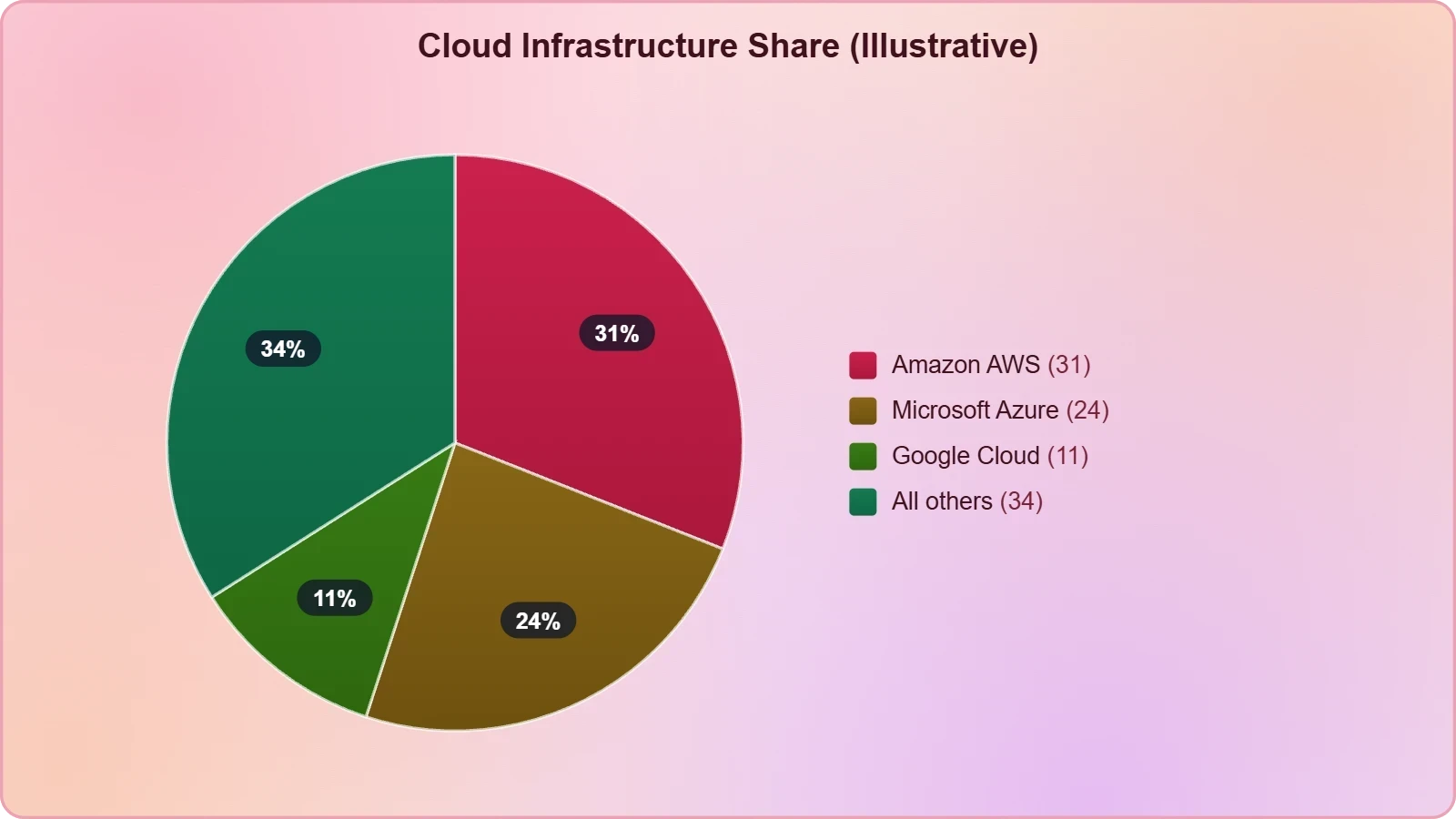
Investors should monitor several indicators of competitive health: the growth rate of AWS relative to Azure and Google Cloud, the pace of customer commitments disclosed in earnings, and the pricing trends for compute and storage. Divergence in any of these metrics can signal shifts in the competitive balance before they appear in reported financials. The election-driven rally did not resolve these competitive questions; it merely postponed their consideration.
Regulatory Risk After the Vote
Antitrust scrutiny of large technology platforms has been a persistent feature of the political landscape, and the election outcome shapes the intensity and direction of that scrutiny. Amazon faces investigations into its marketplace practices, its treatment of third-party sellers, and its acquisition history. The resolution of the election may reduce the probability of aggressive enforcement or may redirect it, depending on the policy priorities of the incoming administration. Investors pricing Amazon should assign some probability to adverse regulatory outcomes, even if the market's post-election behavior suggests optimism.
Regulatory risk is difficult to quantify because it depends on enforcement discretion, judicial interpretation, and political salience. The relevant approach is scenario analysis: estimate the earnings impact of plausible adverse outcomes, weight them by subjective probabilities, and compare the resulting expected value to the market price. That discipline prevents investors from conflating a favorable election outcome with the elimination of regulatory risk altogether.
What Investors Should Watch Next
The six percent rally establishes a new baseline against which future disclosures will be measured. Investors who understand the mechanics of sentiment-driven repricing recognize that the next earnings report carries disproportionate significance: it will either validate the post-election reassessment or expose it as premature. The specific metrics to monitor include AWS revenue growth and operating margin, capital expenditure guidance and its implied depreciation trajectory, advertising growth and margin, and any commentary on AI revenue contribution or custom silicon adoption.
Earnings Disclosures as Validation Events
Quarterly earnings reports function as validation events in which narrative meets data. Amazon's management has been deliberately vague about AI revenue specifics, and that vagueness will become harder to sustain as investors demand evidence that capital expenditure is generating returns. Watch for changes in disclosure granularity as a signal of management confidence, and pay attention to the language used around capital allocation priorities. Shifts in either direction can move the stock more than the reported figures themselves.
The comparison with prior quarters matters as much as the absolute numbers. Accelerating AWS growth would confirm the post-election thesis, while decelerating growth would challenge it. Similarly, stable or expanding operating margins would support the valuation multiple, while compression would invite a reassessment. Investors should prepare scenarios in advance rather than reacting to headlines, since the market's initial response to earnings often reverses as analysts digest the details.
Building a Disciplined Framework
The most useful response to a sentiment-driven rally is a disciplined framework that separates narrative from evidence. Define the specific conditions under which the investment thesis holds, assign probabilities to alternative scenarios, and establish position sizes that reflect the resulting expected values. That discipline prevents the common error of extrapolating recent price movements into the future, a tendency that behavioral finance has documented extensively and that costs investors dearly during periods of enthusiasm.
Amazon remains a genuinely exceptional enterprise with durable competitive advantages, but exceptional enterprises can be overpriced. The election-driven rally reminds us that markets price expectations, and expectations can shift faster than fundamentals. Investors who maintain a clear-eyed view of both the company's strengths and the uncertainties embedded in its valuation will be better positioned to navigate the volatility that inevitably follows periods of rapid repricing.
From our network :
- Committed Mediterranean Precipitation Decline: Why Emissions Cuts Alone Cannot Restore Winter RainsNew NOAA research reveals that Mediterranean winter rains may decline irreversibly even with emissions cuts. Explore the science of committed climate change and regional impacts.
- University Language Proficiency Exams: Why Institutional Tests Demand Different Preparation Than IELTS and TOEFLDiscover why university-specific language proficiency examinations differ fundamentally from IELTS and TOEFL, and learn strategic preparation approaches for institutional assessment success.
- How AI Agents Will Change the Way We Manage Personal FinancesExplore how AI agents are transforming personal finance through automated budgeting, bill payment, and investment management, while examining the critical security protocols and governance frameworks required for safe deployment.
- CISA’s Ten-Advisory Wave: Why Generic Patching Fails in OT and How to Build Product-Specific PlaybooksCISA released ten ICS advisories in one week, exposing critical infrastructure risks. Generic patching fails in OT. Learn to build product-specific remediation playbooks.
- Forbidden Matrix Patterns and Visible Lattice Points: A Geometric DictionaryExplore how multidimensional 0–1 matrices encode geometric truths, linking forbidden patterns to visible lattice points and hypergraph theory, with applications in combinatorics and computational geometry.
- Mobile Learning and VR in English: What Global Evidence Reveals About Effective Language TechnologyA systematic review across 14 countries reveals which language-learning technologies genuinely work. Mobile learning, AI, and VR show measurable benefits when pedagogically integrated. This evidence-based guide helps educators and learners select technology that delivers real return on investment.
- The Hidden Cost of AI Convenience: Why Over-Permissioned Agents Are a Security Time BombDiscover why AI agents with excessive permissions create dangerous single points of failure, and learn how implementing least privilege principles can protect your organization from exploitation.
- The Final Descent: How ESA Retired the Legendary Cluster Constellation After 24 Years of Space Weather ScienceAfter 24 years mapping Earth’s magnetosphere, ESA’s Cluster mission concluded with a precisely controlled reentry over the South Pacific. This analysis explores the scientific legacy, engineering decisions, and debris mitigation principles behind one of space exploration’s most responsible retirements.
- Live Online English Classes for Kids: Do They Actually Reduce Anxiety?A ten-week study reveals that synchronous online English classes can significantly reduce child language anxiety while improving listening and reading skills. Discover what makes these programs effective and how parents can select the right one.
RESOURCES
- Stock Market Today, Nov. 4: Amazon Jumps 6% From New ...theglobeandmail.com9 hours ago ... Investors will continue to monitor AWS growth and Amazon's AI strategy next. Trading volume reached 92.8 million shares, coming in…
- Amazon Stock Jumps 6% as Investors Weigh Data Centers - Wisevoterwisevoter.com9 hours ago ... ... reassessed Amazon's last-week earnings report following the midterm elections ... AWS growth and Amazon's AI strategy in the coming…
- Amazon.com Inc Stock (AMZN) Opened Up by 7.24% on Nov 4tradingkey.com17 hours ago ... Amazon stock rose as positive sentiment followed reassessed financial results and AI strategy.AWS ... Shares Sold Off; Amazon Rises 6%.…
- Notice of 2026 Annual Meeting of Shareholders and Proxy Statements2.q4cdn.comApr 9, 2026 ... Thank you for being an Amazon shareholder. No matter how large or small your holdings may be, your vote is…
- FTSE and Wall Street rebound from week-long rout as traders ...uk.finance.yahoo.comFeb 6, 2026 ... Traders were reassessing concerns about the impact of AI disruption and the risks of hefty Big Tech spending. According to…
- tm261382-1_nonfiling - none - 10.4724512s - SEC.govsec.govAMAZON.COM, INC. PROXY STATEMENT. ANNUAL MEETING OF SHAREHOLDERS To Be Held on Wednesday, May 20, 2026.
- Midterm elections market impact on ai and infrastructure - Facebookfacebook.com10 hours ago ... The midterm elections shifted the outlook across sectors as investors reassessed AI spending, infrastructure returns, regulatory risks and ...
- Adam Smith - Founder & CEO at Agent Astro - LinkedInlinkedin.comFounder & CEO at Agent Astro | Building AI for Regulatory Intelligence in MedTech · Medical device companies generate enormous amounts of information, ...
- AWS Prescriptive Guidance - Generative AI Lifecycle Operational ...docs.aws.amazon.comNov 12, 2025 ... All other trademarks not owned by Amazon are the property of their respective owners, who may or may not be…
- Amazon closes Shanghai AI research lab in latest cost-cutting movecnbc.comJul 23, 2025 ... Tech companies in the U.S/ have been reassessing their operations in China amid rising geopolitical tensions between the world's two…
- Utilities - U.S. - Gabelli Fundsgabelli.comJan 9, 2026 ... Despite rising inflation and interest rates from 2022–2024, utility stocks continued to grow EPS and dividends at an accelerating pace.
- The future of data centers - Brookings Institutionbrookings.eduNov 5, 2025 ... Climate & Energy As energy demands for AI increase, so should company transparency ... control over their own data (https://aws.amazon.com/what-is ...
- Amazon has joined the $3 trillion club — is AWS finally ... - Mitrademitrade.comAug 4, 2026 ... Broader technology-market sentiment: A rise in bond yields, a rotation away from growth shares, or concern over AI valuations can…
- Could we be wrong about Capex : r/ValueInvesting - Redditreddit.comFeb 6, 2026 ... 107 votes, 181 comments. Everyone's panicking about capex spending and AI killing software. But I think the market's missing something ...
- AI Watch: Global regulatory tracker - United States | White & Case LLPwhitecase.comJun 30, 2026 ... Laws/Regulations directly regulating AI (the “AI Regulations”)The US currently has no comprehensive federal AI legislation.
- 01
- 02
- 03
- 04
- 05
- 06
- 07
- 08
0 Comments