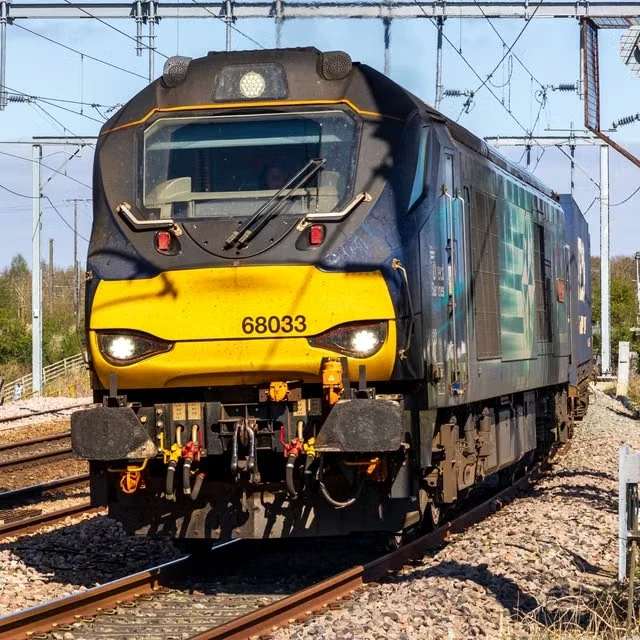
Railway recovery in Kumamoto is more than a transportation update; it is a measure of how a region rebuilds after seismic violence. The full reopening of the JR Kagoshima Main Line restores a critical artery across Kumamoto Prefecture, reconnecting communities that had been split by a July earthquake and interrupted for weeks by severe infrastructure damage.
The event also reveals the scale of Japan’s rail resilience model. Damage scattered across hundreds of locations, including warped track and collapsed poles, required methodical repair before operations could safely resume. Even as one line returns to service, the continued suspension on part of the Hisatsu Orange Railway shows that recovery is not a single moment but a staged restoration of public lifelines.
For residents, commuters, and local commerce, this reopening carries practical and symbolic weight. It means shorter travel uncertainty, revived regional mobility, and renewed confidence in a network that must function reliably in one of the world’s most earthquake-prone countries. The story is ultimately about infrastructure discipline, disaster response, and the quiet authority of getting a damaged system back to work.
On This Page
TL;DRKumamoto’s JR Kagoshima Main Line has fully reopened after more than two months of earthquake-related disruption, restoring a vital transport corridor in southwestern Japan. The repairs addressed extensive damage across more than 460 locations, underscoring the severity of the July quake and the precision required to safely resume rail service.
While the main line is back in operation, recovery remains incomplete on the Hisatsu Orange Railway, where service is still suspended on one section. The broader message is clear: in disaster recovery, reopening is not merely operational—it is a sign of resilience, continuity, and disciplined public infrastructure management.
What Happened and Why It Matters
The JR Kagoshima Main Line in Kumamoto Prefecture has returned to full operation after a prolonged suspension caused by a powerful July earthquake. The reopening matters because this line is not a minor branch; it functions as a regional connector linking daily commuters, freight-adjacent mobility, and access between important local stations across southwestern Japan.
Restoration of a Core Rail Corridor
The most heavily affected section stretched 25 kilometers between Uto and Yatsushiro stations, passing through Uki City and Hikawa Town. These locations were struck by the strongest shaking on Japan’s seismic scale, and the damage was not cosmetic. Rail authorities had to deal with bent tracks, fallen utility poles, and a web of site-specific failures before reopening.
Kyushu Railway Company reported damage at more than 460 locations, a figure that illustrates how an earthquake can attack a rail network in fragments rather than one single break. Repairs of that magnitude require inspection, safety verification, and staged engineering work, because rail lines cannot reopen on optimism; they reopen only when the system proves trustworthy again.
Immediate Regional Impact
For local residents, the return of full service means more than convenience. It restores access to work, schools, medical appointments, and commercial activity that can be disrupted when rail service is forced into partial operation. In a prefecture where rail remains essential to regional movement, the reopening has a direct effect on everyday stability.
This kind of restoration also strengthens confidence in disaster-prone infrastructure. Japan’s rail system is built around preparedness, response, and recovery, and every successful reopening reinforces the idea that public transit can be repaired quickly without abandoning safety standards. That balance is the real achievement behind the headline.
| Key Item | Details |
|---|---|
| Main line | JR Kagoshima Main Line |
| Disruption length | More than two months |
| Damaged stretch | 25 kilometers between Uto and Yatsushiro |
| Reported damage sites | Over 460 locations |
| Remaining disruption | Part of the Hisatsu Orange Railway remains suspended |
How Earthquake Damage Disrupts Rail Infrastructure
Rail systems are highly exposed to seismic events because they depend on precision geometry, stable foundations, and uninterrupted electrical support. Even small shifts in alignment can make tracks unsafe, while damaged overhead structures can halt service long after the visible shaking has stopped. That is why the repair process is often exhaustive.
Track, Pole, and Powerline Vulnerability
In this case, the damage included bent tracks and fallen poles that supported overhead cables, both of which are common failure points in strong quakes. These are not isolated maintenance problems; they are system-level hazards that can compromise train movement, signaling confidence, and passenger safety in one sweep.
Repair crews must inspect the line mile by mile, then confirm that the track bed, electrification structures, and surrounding terrain have all returned to acceptable standards. The technical challenge is as much about hidden stress as visible destruction. A rail corridor may look repaired from a distance while still failing the engineering tests that justify service restoration.
Why Partial Reopenings Are Common
Rail operators often restore service in phases because different sections face different damage levels. This approach protects the public while allowing the fastest usable parts of the network to return first. It also ensures that crews can focus on the most critical bottlenecks without delaying the whole corridor for every minor repair.
The continued suspension on the Hisatsu Orange Railway reflects this staged reality. While the JR Kagoshima Main Line has resumed full operations, adjacent or connected lines may still need more time. In disaster recovery, timing follows safety, not public impatience, and that rule governs every responsible rail reopening.
| Damage Type | Operational Risk |
|---|---|
| Bent tracks | Derailment risk and speed restrictions |
| Fallen poles | Loss of overhead power and service interruption |
| Multiple damage sites | Extended inspection and phased reopening |
Japan’s Rail Safety Logic After Disasters
Japan’s rail operators are widely known for disciplined safety procedures, and this reopening fits that pattern. Service does not resume on public pressure alone. It resumes after engineering checks, route validation, and administrative approval confirm that the line can operate without exposing passengers or staff to avoidable risk.
Inspection Before Announcement
Before reopening a quake-damaged line, operators typically verify the track profile, overhead systems, drainage conditions, and station-level safety. That sequence matters because earthquakes can produce delayed effects such as soil movement, settlement, or misalignment. The result is a reopening that appears fast to the public but is carefully choreographed behind the scenes.
This process is one reason Japan’s transport recovery is often studied internationally. The public sees trains returning; the technical community sees a layered safety system working as intended. The Kumamoto case demonstrates that resilience is not improvisation. It is preparation, procedure, and the authority to wait until conditions are right.
Comparing the Two Rail Operators
The JR Kagoshima Main Line and the Hisatsu Orange Railway show two different stages of recovery. One has regained full service, while the other remains partially suspended. That contrast matters because it shows how infrastructure damage can vary even within the same disaster zone, forcing operators to tailor recovery plans line by line.
Such differences also shape public expectations. When one route reopens, communities may naturally expect the rest to follow soon, but rail recovery depends on the exact condition of each segment. The disciplined approach is to reopen what is safe, not what is politically convenient or visually reassuring.
| Operator | Status |
|---|---|
| JR Kagoshima Main Line | Fully reopened |
| Hisatsu Orange Railway | Still suspended on Yatsushiro to Higo-tanoura section |
We Also Published
Why the Timing of Reopening Is Significant
The timing of this reopening carries practical and symbolic importance. More than two months after the earthquake, the return of full service signals that recovery has advanced from emergency response to restoration. That shift matters for local planning, business continuity, and the rhythm of ordinary life across Kumamoto Prefecture.
Restoring Mobility and Confidence
In a region where trains often serve as the backbone of movement, mobility is closely tied to confidence. When a major line reopens, it tells residents that roads, stations, and support systems have been stabilized enough for regular use. That reassurance can be as valuable as the service itself.
Commercial activity also benefits when transport uncertainty declines. Delivery schedules, commuter flows, and tourism access all improve once a main line returns to normal operation. Although the quake’s consequences cannot be erased, the reopening helps transform damage into a managed recovery rather than an open-ended disruption.
What Remains Unfinished
The partial suspension on the Hisatsu Orange Railway is a reminder that disaster recovery continues even after headline progress. Infrastructure networks are interdependent, and one successful reopening does not mean every neighboring line is equally ready. Full regional normalization still depends on the slower work of inspection and repair.
That is the deeper lesson of the Kumamoto case. Disaster recovery is not a victory lap; it is a sequence of controlled returns. Each reopened section represents both progress and restraint, and the restraint is what keeps the progress credible.
| Recovery Stage | Meaning |
|---|---|
| Emergency suspension | Immediate safety response after the quake |
| Partial reopening | Service returns on safe segments first |
| Full reopening | Network stability confirmed across the entire route |
- 01
- 02
- 03
- 04
Broader Lessons in Infrastructure Resilience
The Kumamoto reopening offers a practical case study in how societies recover from natural shocks. Infrastructure resilience is not just about strong construction; it is about the ability to inspect, repair, and restart critical systems without compromising safety. That capacity determines how quickly ordinary life can resume after catastrophe.
Disaster Recovery as Public Discipline
Effective recovery demands coordination among engineers, operators, and local authorities. Each decision must account for physical damage, passenger safety, and regional dependence on rail access. This discipline is what converts a damaged transport line into a functioning public asset again, rather than leaving it as a symbol of failure.
Communities often judge recovery by visible milestones, but the real test lies in whether systems operate reliably after the cameras leave. The reopening in Kumamoto demonstrates that resilience is measurable: in restored routes, repaired hazards, and the return of predictable movement across a shaken landscape.
A Model of Controlled Normalization
Reopening after a disaster is an act of controlled normalization, not a simple return to the past. Rail operators must balance urgency with caution, public demand with engineering evidence, and local impatience with long-term reliability. Those tensions are the defining features of any serious recovery effort.
Kumamoto’s example shows that when those tensions are managed well, a damaged network can recover with authority. The line reopens, the region reconnects, and life moves again—but only after the infrastructure has been proven worthy of that trust.
| Resilience Element | Practical Outcome |
|---|---|
| Engineering inspection | Confirms safety before service returns |
| Phased repair | Minimizes downtime while controlling risk |
| Public restoration | Rebuilds confidence in everyday mobility |
From our network :
- Live Online English Classes for Kids: Do They Actually Reduce Anxiety?A ten-week study reveals that synchronous online English classes can significantly reduce child language anxiety while improving listening and reading skills. Discover what makes these programs effective and how parents can select the right one.
- Forbidden Matrix Patterns and Visible Lattice Points: A Geometric DictionaryExplore how multidimensional 0–1 matrices encode geometric truths, linking forbidden patterns to visible lattice points and hypergraph theory, with applications in combinatorics and computational geometry.
- University Language Proficiency Exams: Why Institutional Tests Demand Different Preparation Than IELTS and TOEFLDiscover why university-specific language proficiency examinations differ fundamentally from IELTS and TOEFL, and learn strategic preparation approaches for institutional assessment success.
- The Final Descent: How ESA Retired the Legendary Cluster Constellation After 24 Years of Space Weather ScienceAfter 24 years mapping Earth’s magnetosphere, ESA’s Cluster mission concluded with a precisely controlled reentry over the South Pacific. This analysis explores the scientific legacy, engineering decisions, and debris mitigation principles behind one of space exploration’s most responsible retirements.
- Mobile Learning and VR in English: What Global Evidence Reveals About Effective Language TechnologyA systematic review across 14 countries reveals which language-learning technologies genuinely work. Mobile learning, AI, and VR show measurable benefits when pedagogically integrated. This evidence-based guide helps educators and learners select technology that delivers real return on investment.
- How AI Agents Will Change the Way We Manage Personal FinancesExplore how AI agents are transforming personal finance through automated budgeting, bill payment, and investment management, while examining the critical security protocols and governance frameworks required for safe deployment.
- CISA’s Ten-Advisory Wave: Why Generic Patching Fails in OT and How to Build Product-Specific PlaybooksCISA released ten ICS advisories in one week, exposing critical infrastructure risks. Generic patching fails in OT. Learn to build product-specific remediation playbooks.
- Committed Mediterranean Precipitation Decline: Why Emissions Cuts Alone Cannot Restore Winter RainsNew NOAA research reveals that Mediterranean winter rains may decline irreversibly even with emissions cuts. Explore the science of committed climate change and regional impacts.
- The Hidden Cost of AI Convenience: Why Over-Permissioned Agents Are a Security Time BombDiscover why AI agents with excessive permissions create dangerous single points of failure, and learn how implementing least privilege principles can protect your organization from exploitation.
RESOURCES
- All sections of Kyushu Shinkansen reopened after July quakejapantimes.co.jpSep 18, 2026 ... – A section on the Kyushu Shinkansen bullet train line that had been halted due to the impact of a…
- Wander in Japan - Facebookfacebook.comAug 11, 2026 ... KYUSHU TRAVEL ALERT Traveling around Kyushu? Check your route before you go. Kyushu Shinkansen Service between Kumamoto and Shin ...
- Kyushu Shinkansen services to be fully resumed on Sept. 18 after ...english.kyodonews.netAug 27, 2026 ... Related coverage: Many foreigners have hard time obtaining disaster info in Kumamoto quake · Kumamoto Castle reopens after safety checks ...
- Kyushu Shinkansen Reopening Planned for September 18railway.supplyAug 31, 2026 ... ... earthquake struck Kumamoto Prefecture in July. JR Kyushu 800 Series ... Kagoshima Main Line reopening planned for mid-October.
- Kumamoto will have no access by rail from the south in Augustreddit.comJul 31, 2026 ... Kyushu Shinkansen: Kumamoto to Shin-Minamata. Kagoshima Main Line (local trains): Uto to Yatsushiro.
- Reopening of Kyushu Shinkansen still a long way off - The Mainichimainichi.jpApr 19, 2016 ... 【Kumamoto Earthquake Special】 · 【Video】Walls collapsed at Kumamoto Castle, Kyushu bullet train derailed ... reopen the line." Timeline ...
- Sankei #Japan #Travel #Kyushu #Shin - Instagraminstagram.comSep 22, 2026 ... ... Kumamoto earthquake, Japan train reopening, Japan travel update, Kagoshima line ... Shinkansen bullet train line, which fully reopened in ...
- Planned to go to Kumamoto in 2 weeks : r/JapanTravelTips - Redditreddit.comJul 29, 2026 ... ... kumamoto-quake-and-tsunami-warning · AmbitiousReaction168. •. 3mo ... train lines going south are down. I asked my hotel both in Aso…
- The Kyushu Shinkansen is set to resume service along its entire line ...instagram.comAug 26, 2026 ... ... Kumamoto earthquake. Service is currently suspended ... Kumamoto earthquake, Japan train reopening, Japan travel update, Kagoshima line
- All Railway Lines Reopen after July Kumamoto Quake - JIJI PRESSjen.jiji.com8 hours ago ... Yatsushiro, Kumamoto Pref., Oct. 13 (Jiji Press)--Train services on a section of the Hisatsu Orange Railway line in Kumamoto Prefecture, ...
- Travel Alerts and Disaster Updates - Japan Guidejapan-guide.comAs of October 13, all local railway lines affected by the earthquake have also resumed service. Tourism. Kumamoto City escaped major damage and is…
- Aso Bridge - HighestBridges.comhighestbridges.comFeb 2, 2022 ... The 62 meter high Daiichi Shirakawa Railway Bridge was damaged in the 2016 Kumamoto Earthquake. ... Restoration and reopening of…
- Access | Hinoyama Onsen Dondoko-yudondokoyu.com... Kumamoto earthquakes, reopened on October 3, 2020. Please see the current access routes below. By CarCar; By Train ... route of National Route…
- Access & Transportation Information|[Official] ASO BAIEN SPA ...aso-baien.comApproximately 40 minutes by car from Kumamoto IC. Due to the impact of the 2016 Kumamoto Earthquake, Route 57 was cut off, but it…
- 01
- 02
- 03
- 04
- 05
- 06
- 07
- 08
0 Comments