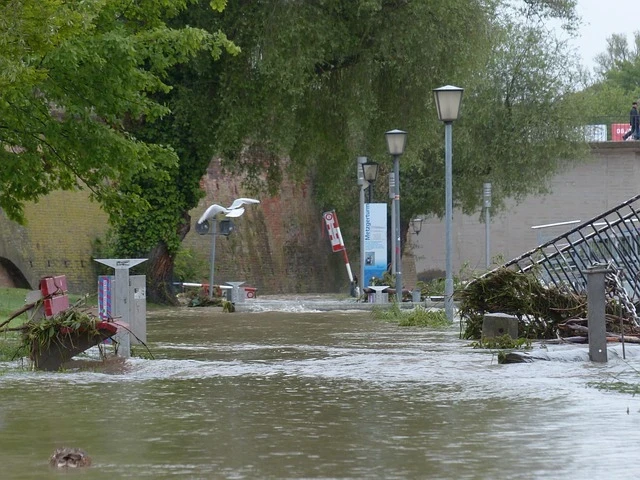
Nepal has thrust itself into the center of the global climate justice movement with an unprecedented diplomatic maneuver: an official demand for financial compensation from the world's largest carbon emitters. The Himalayan nation, battered by catastrophic monsoon floods that have claimed hundreds of lives and destroyed critical infrastructure, has formally named India, the United States, and China as the principal polluters it holds accountable for its climate-induced suffering. This bold declaration transforms a regional disaster into a landmark test case for international climate liability.
The demand arrives at a critical juncture in global climate politics, where the principle of "polluter pays" remains more rhetorical aspiration than enforceable reality. Nepal's position is uniquely compelling: a nation with negligible carbon footprint—contributing less than 0.1 percent of global emissions—yet bearing disproportionate consequences of a warming planet.
The floods of 2025-2026 have exposed the stark asymmetry between those who cause climate change and those who suffer its most violent manifestations, forcing the international community to confront uncomfortable questions about responsibility, reparations, and justice.
On This Page
This analysis examines the legal, political, and economic dimensions of Nepal's compensation claim, the scientific evidence linking Himalayan flooding to industrial emissions, and the broader implications for vulnerable nations worldwide. It explores the mechanisms available for climate reparations, the strategic calculations behind naming specific polluters, and the precedents that might shape the outcome of this audacious demand.
TL;DR Nepal has formally demanded climate compensation from India, the United States, and China following devastating floods that have caused catastrophic losses across the Himalayan nation. The demand leverages the "polluter pays" principle, positioning Nepal—a minimal emitter—as a test case for climate liability. This move intensifies the global debate on who bears financial responsibility for climate-induced disasters, potentially establishing legal and diplomatic precedents for vulnerable nations seeking reparations from major industrial powers.
The Science and Scale of Climate-Induced Flooding in Nepal
Nepal's geographical vulnerability is unmatched in the climate discourse. The country sits at the collision zone of the Indian and Eurasian tectonic plates, with terrain ranging from tropical lowlands to the highest peaks on Earth. This extreme elevation gradient creates a natural funnel for monsoon systems, making the nation exceptionally susceptible to catastrophic rainfall events.
Climate scientists have documented a troubling trend: warming temperatures in the Indian Ocean and the Tibetan Plateau are intensifying monsoon dynamics across South Asia. The 2025-2026 flood season demonstrated this phenomenon with brutal clarity, as unprecedented rainfall volumes overwhelmed river systems and triggered glacial lake outburst floods across the Himalayan region.
Attribution Science and the Polluter Connection
Attribution science has matured dramatically over the past decade, enabling researchers to quantify the precise contribution of anthropogenic climate change to specific weather events. Studies of the 2025 South Asian monsoon season indicate that human-induced warming increased rainfall intensity by approximately 15-20 percent, directly amplifying the destructive power of the floods that devastated Nepal.
The connection between industrial emissions and Himalayan flooding operates through multiple mechanisms. Rising global temperatures accelerate glacial melt, expanding glacial lakes that pose catastrophic outburst risks. Simultaneously, warmer air holds more moisture, intensifying precipitation events. Both phenomena trace directly to greenhouse gas emissions from industrialized nations.
China's role is particularly significant, as its massive coal consumption and industrial output contribute approximately 30 percent of global carbon dioxide emissions. India follows with roughly 7 percent, while the United States contributes about 13 percent. Together, these three nations account for half of all global emissions, making them logical targets for climate compensation claims.
The scientific consensus is unambiguous: without dramatic emission reductions, Himalayan nations face escalating flood risks. The Intergovernmental Panel on Climate Change projects that South Asian monsoon precipitation will increase by 5-20 percent per degree of global warming, with catastrophic implications for Nepal's densely populated river valleys and fragile mountain ecosystems.
Economic Devastation and the Cost of Inaction
The economic toll of Nepal's recent floods defies easy quantification. Preliminary assessments estimate damages exceeding $2 billion, representing nearly 5 percent of the nation's gross domestic product. Thousands of homes have been destroyed, agricultural lands rendered barren, and critical transportation infrastructure—including sections of the East-West Highway—washed away by raging torrents.
Beyond immediate infrastructure losses, the floods have triggered cascading economic consequences. Tourism, which contributes roughly 8 percent of Nepal's GDP, has suffered severe setbacks as trekking routes and heritage sites sustained damage. Agricultural productivity faces long-term decline as fertile valley soils are eroded and irrigation systems destroyed, threatening food security for millions.
The human cost compounds the economic devastation. Over 400 deaths have been confirmed, with hundreds more missing and presumed dead. More than 100,000 people have been displaced from their homes, creating a humanitarian crisis that strains Nepal's limited resources. The psychological trauma inflicted on survivors, particularly children, will reverberate through communities for generations.
Nepal's per capita income of approximately $1,400 places it among the world's poorest nations, with limited fiscal capacity to fund reconstruction. The government estimates that recovery and rebuilding efforts will require international assistance exceeding $3 billion—funds that Nepal simply cannot generate domestically without sacrificing other critical development priorities.
Legal Frameworks and Diplomatic Strategies for Climate Compensation
The legal architecture for climate compensation remains fragmented and contested. The 2015 Paris Agreement established the principle of "loss and damage" but stopped short of creating binding liability mechanisms. The landmark 2023 operationalization of the Loss and Damage Fund at COP28 provided a framework, yet funding commitments remain voluntary and woefully inadequate relative to actual needs.
Nepal's strategy of naming specific polluter nations represents a calculated departure from multilateral approaches. By directly identifying India, the United States, and China, Nepal seeks to create bilateral pressure that might yield more concrete results than diffuse international negotiations. This approach mirrors successful precedents in other domains of international law.
International Precedents and Legal Avenues
International environmental law offers several potential avenues for Nepal's claim. The International Court of Justice has recognized the principle that states must not cause transboundary environmental harm, established in the landmark Trail Smelter arbitration of 1941. More recently, the 2024 International Tribunal for the Law of the Sea advisory opinion affirmed that greenhouse gas emissions constitute marine pollution, creating new legal obligations for signatory states.
The doctrine of state responsibility provides another theoretical foundation. Under customary international law, states that cause significant transboundary harm may be obligated to provide compensation. However, establishing causation between specific emissions and specific damages remains legally challenging, requiring sophisticated scientific evidence and complex legal argumentation.
Human rights frameworks offer a complementary approach. The European Court of Human Rights ruled in 2024 that inadequate climate action violates fundamental rights to life and privacy. Similar arguments could be advanced before regional human rights bodies, framing climate compensation as a human rights obligation rather than merely an environmental matter.
Nepal's diplomatic calculus extends beyond legal technicalities. By naming India—its immediate neighbor and dominant regional power—Nepal signals that climate justice cannot be separated from regional geopolitics. The demand creates diplomatic leverage, potentially opening negotiations on broader issues including trade, energy cooperation, and transboundary water management.
Political Dynamics and the Response from Named Nations
India's response to Nepal's demand carries particular significance given the two nations' intertwined history and geography. Indian officials have historically resisted formal climate compensation claims, arguing that development needs justify continued emissions growth. However, India has also positioned itself as a leader of the Global South, creating tension between its climate advocacy and its resistance to liability.
The United States faces its own political constraints. Congressional opposition to international climate payments remains entrenched, particularly among Republicans who view such transfers as wasteful foreign aid. The Biden administration's commitment of $17.5 billion to international climate finance has faced persistent congressional scrutiny, suggesting limited appetite for expanded compensation mechanisms.
China's position is equally complex. As the world's largest emitter, China acknowledges historical responsibility but emphasizes its status as a developing nation. Beijing has consistently opposed binding emission reduction targets and has been reluctant to accept formal liability for climate damages, preferring voluntary cooperation mechanisms that preserve its policy flexibility.
The diplomatic responses will likely shape the trajectory of Nepal's claim. If any named nation offers substantive compensation, it could establish a powerful precedent for other vulnerable countries. Conversely, unified rejection might push Nepal toward alternative strategies, including litigation in domestic courts of the polluting nations or escalation through international tribunals.
We Also Published
Global Implications and the Future of Climate Reparations
Nepal's demand transcends its immediate national interests, potentially reshaping the global architecture of climate justice. The claim tests whether the international community can move beyond voluntary commitments toward enforceable mechanisms for compensating climate victims. The outcome will be watched closely by dozens of vulnerable nations facing similar existential threats.
The broader context is sobering. Developing nations require an estimated $1 trillion annually by 2030 to address climate impacts, yet current international climate finance flows total only a fraction of that amount. The gap between rhetoric and resources continues to widen, fueling frustration among nations that bear minimal responsibility for the crisis yet suffer its worst consequences.
Mechanisms for Climate Finance and Reparations
The Loss and Damage Fund represents the most concrete international mechanism for climate reparations, but its operational details remain contested. Initial pledges total approximately $700 million—a figure that represents less than 0.1 percent of annual global military spending. Nepal's claim highlights the inadequacy of current funding levels relative to actual disaster costs.
Alternative financing mechanisms are emerging. Climate bonds, debt-for-nature swaps, and carbon border adjustment mechanisms offer innovative approaches to channel resources toward vulnerable nations. The International Monetary Fund's Resilience and Sustainability Trust provides concessional financing for climate-vulnerable countries, though access remains limited by eligibility criteria and capacity constraints.
Private sector liability represents an emerging frontier. Litigation against fossil fuel companies has gained momentum, with dozens of cases filed worldwide seeking damages for climate-related harms. While most have faced procedural hurdles, recent rulings in Germany and the Netherlands suggest courts are increasingly willing to hold corporations accountable for their emissions contributions.
Insurance mechanisms could provide another pathway. Parametric insurance products that trigger automatic payouts based on weather indices offer rapid disaster response without lengthy claims processes. However, premium costs remain prohibitive for many developing nations, and coverage gaps persist for slow-onset events like glacial melt and sea-level rise.
Strategic Considerations for Vulnerable Nations
Nepal's approach offers a template for other climate-vulnerable nations contemplating compensation claims. The strategy of naming specific polluters creates clarity and focus, transforming abstract climate justice principles into concrete bilateral demands. This approach may prove more effective than relying solely on multilateral mechanisms that often produce vague commitments without meaningful enforcement.
However, vulnerable nations must weigh diplomatic risks carefully. Naming powerful polluters can strain bilateral relationships essential for trade, security, and development cooperation. Nepal's decision to include India—its dominant neighbor—carries particular risks, given the deep economic and cultural interdependence between the two nations.
Coalition-building offers a potential mitigation strategy. By coordinating claims with other affected nations, vulnerable countries can amplify their collective bargaining power while reducing individual diplomatic exposure. Regional groupings like the Climate Vulnerable Forum and the Alliance of Small Island States provide platforms for such coordination.
The timing of compensation claims matters strategically. Disasters create windows of political opportunity when public attention and international sympathy are heightened. Nepal's decision to press its claim immediately following the floods maximizes moral leverage, though it also risks being perceived as opportunistic if not carefully framed within broader climate justice narratives.
The Road Ahead: Negotiation, Litigation, or Stalemate
The immediate path forward likely involves diplomatic engagement rather than formal legal proceedings. Nepal may seek bilateral negotiations with each named nation, exploring possibilities for development assistance, infrastructure investment, or debt relief framed as climate solidarity rather than formal compensation. Such arrangements could provide tangible benefits while avoiding the legal and political complications of formal liability determinations.
Litigation remains a fallback option, though its prospects are uncertain. Domestic courts in the United States and other developed nations have shown increasing willingness to consider climate cases, but jurisdictional hurdles and political sensitivities present formidable obstacles. International tribunals offer theoretical avenues but face practical limitations in enforcement and compliance.
The ultimate resolution may depend on broader shifts in global climate politics. As climate impacts intensify and public pressure mounts, major emitters may find it increasingly difficult to resist compensation demands. The growing recognition that climate action is not merely an environmental issue but a matter of global justice and stability could eventually create political space for meaningful reparations.
Nepal's demand, whatever its immediate outcome, has already achieved a significant objective: forcing the international community to confront the question of climate liability with unprecedented specificity. The nation has transformed abstract principles into concrete demands, creating a precedent that other vulnerable countries will likely follow. The era of voluntary climate charity may be giving way to an era of climate accountability.
From our network :
- Norbert’s Uncertain Path: Why Hawaii’s Storm Watch Demands Patience Over PanicTropical Storm Norbert strengthens in the Eastern Pacific with winds near 50 mph, forecast to reach Category 1 hurricane status by Friday. Long-range models disagree sharply on whether Hawaii faces any threat around September 19–23, making official guidance essential.
- Forbidden Matrix Patterns and Visible Lattice Points: A Geometric DictionaryExplore how multidimensional 0–1 matrices encode geometric truths, linking forbidden patterns to visible lattice points and hypergraph theory, with applications in combinatorics and computational geometry.
- CISA’s Ten-Advisory Wave: Why Generic Patching Fails in OT and How to Build Product-Specific PlaybooksCISA released ten ICS advisories in one week, exposing critical infrastructure risks. Generic patching fails in OT. Learn to build product-specific remediation playbooks.
- Former Soap Stars Embark on Ambitious Writing Projects and Theatrical StagesDiscover how former soap opera actors are transitioning into independent scriptwriting and high-profile theatrical stage productions.
- Committed Mediterranean Precipitation Decline: Why Emissions Cuts Alone Cannot Restore Winter RainsNew NOAA research reveals that Mediterranean winter rains may decline irreversibly even with emissions cuts. Explore the science of committed climate change and regional impacts.
- The Hidden Cost of AI Convenience: Why Over-Permissioned Agents Are a Security Time BombDiscover why AI agents with excessive permissions create dangerous single points of failure, and learn how implementing least privilege principles can protect your organization from exploitation.
- How AI Agents Will Change the Way We Manage Personal FinancesExplore how AI agents are transforming personal finance through automated budgeting, bill payment, and investment management, while examining the critical security protocols and governance frameworks required for safe deployment.
- The Final Descent: How ESA Retired the Legendary Cluster Constellation After 24 Years of Space Weather ScienceAfter 24 years mapping Earth’s magnetosphere, ESA’s Cluster mission concluded with a precisely controlled reentry over the South Pacific. This analysis explores the scientific legacy, engineering decisions, and debris mitigation principles behind one of space exploration’s most responsible retirements.
- Analyzing Hoya Corporation’s Midday Volume Shifts and Financial FundamentalsExamine Hoya Corporation’s midday trading volume contraction, technical moving averages, robust solvency ratios, and stellar quarterly earnings performance.
RESOURCES
- Nepal is demanding 'climate compensation' after devastating floods ...facebook.com3 hours ago ... ... floods-death-toll- glacier-collapse-himalaya-ws-l-10303377. html. news18.com. 'Climate Compensation, Not Aid': Nepal Blames 'Top Polluters' ...
- Sign the petition to make rich polluters pay - Climate crisis - Oxfam GBoxfam.org.ukWe demand governments fairly tax the biggest and richest polluters and ... Donate to the Nepal Floods Appeal. Please donate today to help the…
- 'Climate Compensation, Not Aid': Nepal Blames 'Top Polluters' India ...news18.com7 hours ago ... Nepal has shifted its diplomatic pitch from seeking humanitarian assistance to demanding “climate compensation" for the devastating flash floods ...
- South Asian Workers Demand Climate Tax: Polluters Must Paydowntoearth.org.inMay 1, 2025 ... Workers from India, Sri Lanka, Bangladesh and Nepal call for climate compensation as Greenpeace report reveals sharp income losses from…
- Nepal Demands 'Climate Compensation' For Devastating Floods ...news18.com7 hours ago ... Nepal Demands 'Climate Compensation' For Devastating Floods, Names India, US, China Among Top Polluters · The devastating floods, that killed ...
- Who is responsible for climate change? | Oxfamoxfamamerica.orgFlash Flooding in Nuwakot District, Nepal. Nepal Flooding appeal. Emergency aid needed after powerful floods strike Nepal. ... polluters pay their fair share to ...
- The legal tussle to hold corporate polluters accountable for climate ...the-wave.netMar 5, 2025 ... The four islanders are demanding compensation for climate damages they have suffered, a financial contribution to flood–protection measures ...
- Global South calls to "Make Climate Polluters Pay" ahead of COP30thehimalayantimes.comOct 25, 2025 ... Nepal among hardest-hit nations as climate losses surge across South Asia · 2017 Terai floods affected 1.7 million people, causing…
- Pakistani farmers to sue German polluters over climate-linked flood ...theguardian.comOct 28, 2025 ... Claimants seek compensation from RWE and Heidelberg Materials after extreme flooding destroyed harvests.
- What if polluters footed the climate bill? - BBCbbc.comNov 22, 2024 ... Should rich countries and fossil fuel companies pay for the climate losses and damages they have caused?
- Nepal Demands 'Climate Compensation' For Devastating Floods ...justdial.comNepal Demands 'Climate Compensation' For Devastating Floods, Names India, US, China Among Top Polluters. The devastating floods, that killed more than 900 ...
- Polluters Pay Pact - Greenpeace Internationalgreenpeace.orgI know what it means to pay for the climate crisis with your life. My friend was swept away by floods, and I couldn't…
- At COP27, Developing Nations Have a Message for Polluters: Pay Upnytimes.comNov 10, 2022 ... Poor countries facing climate hazards want the United States and other industrialized nations to compensate them for the harm caused…
- Analysis of the climate change impact on water availability and the ...iwaponline.comAug 1, 2022 ... ... demand, pollution, and impacts of climate change ... Nepal's recent water resource policy (MoEWRI 2020) emphasises that the polluter…
- New York cannot enforce law demanding companies pay climate ...jpost.com13 hours ago ... "Taxpayers shouldn't have to foot the bill for damages caused by polluters," Lovett said. New York demands fossil fuel companies…
- 01
- 02
- 03
- 04
- 05
- 06
- 07
- 08
0 Comments