
American midterm elections have long functioned as a national referendum on the sitting president, and the 2026 cycle is shaping up to test that tradition with unusual intensity. With Donald Trump back in the White House, Democratic strategists are confronting a familiar but formidable challenge: converting diffuse public anxiety into a coherent, winning electoral coalition.
The stakes extend well beyond control of Congress, touching on the durability of democratic norms, the direction of economic policy, and America's standing abroad.
This analysis examines the structural forces, messaging battles, and institutional pressures that will define the 2026 midterms. It draws on historical patterns of presidential party losses, contemporary polling dynamics, and the evolving tactics both parties are deploying across swing districts.
On This Page
Rather than treating the election as a single event, the discussion frames it as a stress test for the American political system itself, where turnout, redistricting, and candidate quality will matter as much as national mood.
Understanding these dynamics requires attention to how opposition parties historically convert midterm discontent into legislative gains, and how incumbent administrations attempt to blunt those losses through policy delivery and base mobilization.
The sections that follow break down the electoral math, the messaging wars, and the institutional guardrails that will shape outcomes in November 2026.
TL;DR The 2026 midterms represent a referendum on Trump's second term, with Democrats seeking to translate public unease into congressional majorities while Republicans defend their agenda through base mobilization and economic messaging. Historical patterns suggest the president's party typically loses seats, but structural factors like redistricting, turnout models, and candidate quality will determine whether 2026 follows or breaks that precedent. The outcome will shape legislative gridlock, democratic norms, and America's global posture for years to come.
The Historical Logic of Midterm Referendums
Midterm elections in the United States have consistently punished the party holding the White House, a pattern rooted in the electorate's tendency to use these contests as a check on presidential power.
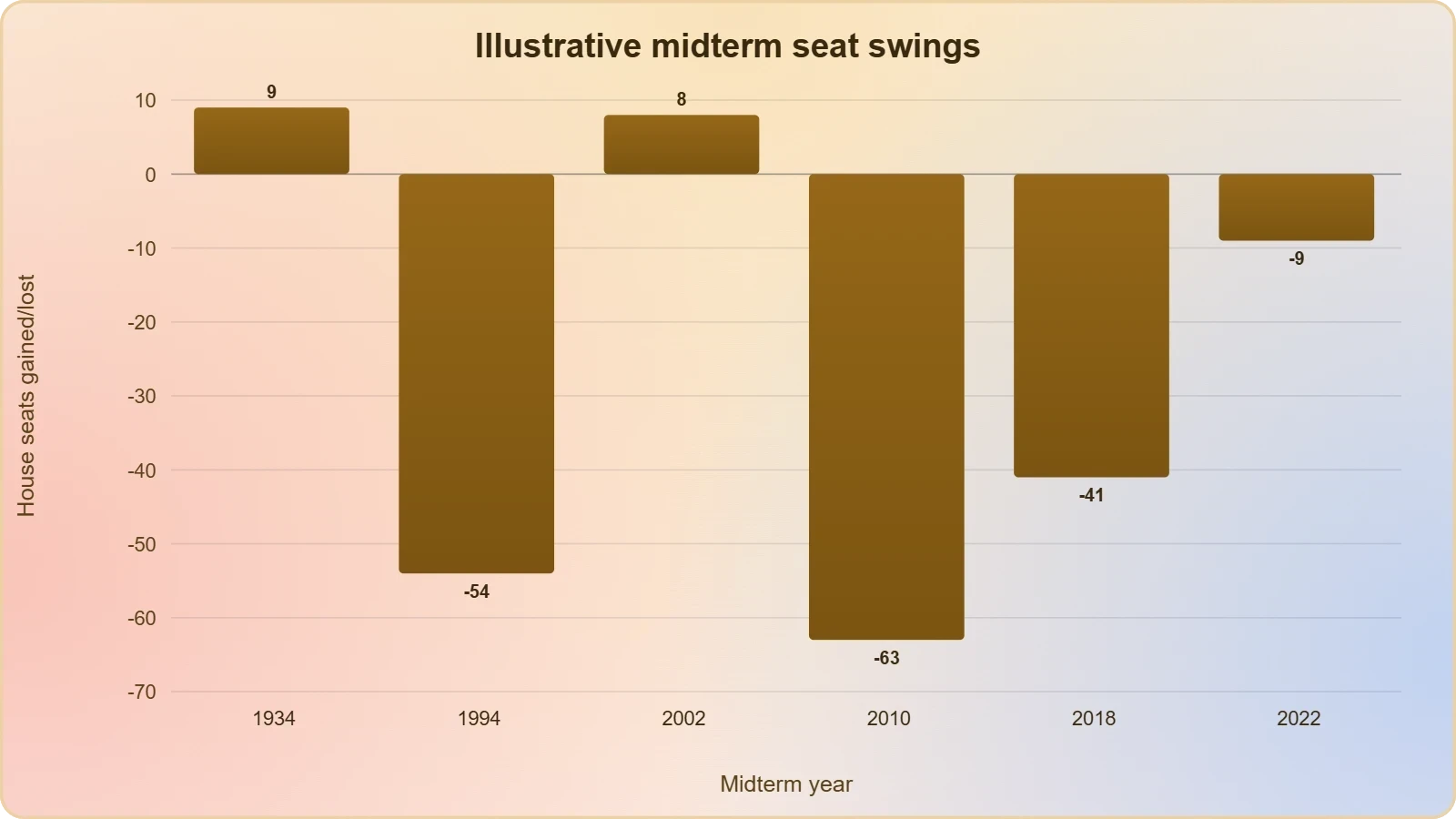
Since the Civil War, the president's party has lost House seats in nearly every midterm cycle, with only rare exceptions during moments of national unity or economic boom. This structural disadvantage reflects both turnout asymmetries and the psychological impulse to balance power.
Why the President's Party Usually Loses Ground
The coalition that elects a president is typically broader and more fragile than the one that turns out in midterms, where engaged, ideologically motivated voters dominate. Opposition voters, energized by grievances against the administration, often show up in disproportionate numbers, while the president's supporters may feel less urgency without a presidential contest on the ballot. This turnout gap compounds the natural attrition of governing.
Political scientists describe this as the "surge and decline" phenomenon, where presidential-year turnout spikes among casual voters who then recede in midterms. The result is a midterm electorate that skews older, wealthier, and more partisan, favoring the opposition in most circumstances. Trump's polarizing presence may amplify this dynamic, mobilizing both bases but potentially advantaging Democrats among swing voters.
Exceptions and the Limits of Historical Determinism
History offers instructive exceptions. In 1934, Democrats defied expectations by gaining seats during the New Deal's early momentum, and in 2002 Republicans bucked the trend amid post-9/11 rally effects.
These cases suggest that decisive policy victories, national security crises, or unusually strong presidential approval can override the structural tilt, though such conditions are rare and difficult to manufacture.
The 2026 cycle will test whether Trump's economic messaging and immigration enforcement agenda can replicate those exceptional conditions. If inflation cools and wages rise, Republicans may argue that voters should reward continuity rather than punish the incumbent.
Democrats, conversely, will frame the election as a referendum on democratic stability and institutional integrity, hoping to convert abstract concerns into ballot-box motivation.
We Also Published
The Democratic Coalition and Its Messaging Challenge
Democrats enter the 2026 cycle with structural advantages in fundraising and a motivated grassroots base, but they face persistent challenges in crafting a unified message. The party spans a broad ideological spectrum, from progressive activists demanding bold structural reforms to moderate swing-district incumbents focused on pragmatic governance. Bridging these factions without alienating either has historically proven difficult.
Turning Anxiety into Action
Opposition parties often struggle to convert generalized discontent into specific electoral gains, and Democrats must articulate a positive agenda rather than relying solely on anti-Trump sentiment. Voters respond to concrete proposals on healthcare, housing, and wages, and candidates who offer tangible solutions tend to outperform those running purely on opposition. The party's ability to frame a compelling economic narrative will be decisive.
Messaging discipline will matter enormously in competitive districts, where candidates must calibrate their positions to local sensibilities while maintaining national coherence. Democrats who won in 2018 and 2022 often emphasized kitchen-table issues over cultural flashpoints, a strategy that may again prove effective. The risk lies in overreaching on polarizing topics that energize the base but alienate persuadable voters.
Candidate Quality and Recruitment
Candidate quality has emerged as a decisive variable in recent elections, with both parties suffering from nominees who proved unelectable in general elections. Democrats have invested heavily in recruiting veterans, local officials, and business leaders with compelling biographies, hoping to avoid the self-inflicted wounds that plagued some past cycles. Recruitment success in swing districts often predicts overall performance.
Republicans, meanwhile, must navigate primary dynamics that sometimes elevate candidates with strong base appeal but limited general-election viability. Trump's endorsement power remains formidable, but his interventions can complicate recruitment in districts where moderation is essential. The interplay between primary incentives and general-election imperatives will shape the quality of both parties' nominee slates.
Trump's Second-Term Agenda as an Electoral Variable
Trump's return to office has reshaped the political landscape in ways that will directly influence midterm outcomes. His administration's aggressive posture on immigration enforcement, trade tariffs, and institutional reform has energized his base while galvanizing opposition.
The question is whether these policies produce tangible benefits that voters credit, or whether disruption fatigue erodes Republican support in suburban and moderate districts.
Economic Policy and Voter Perception
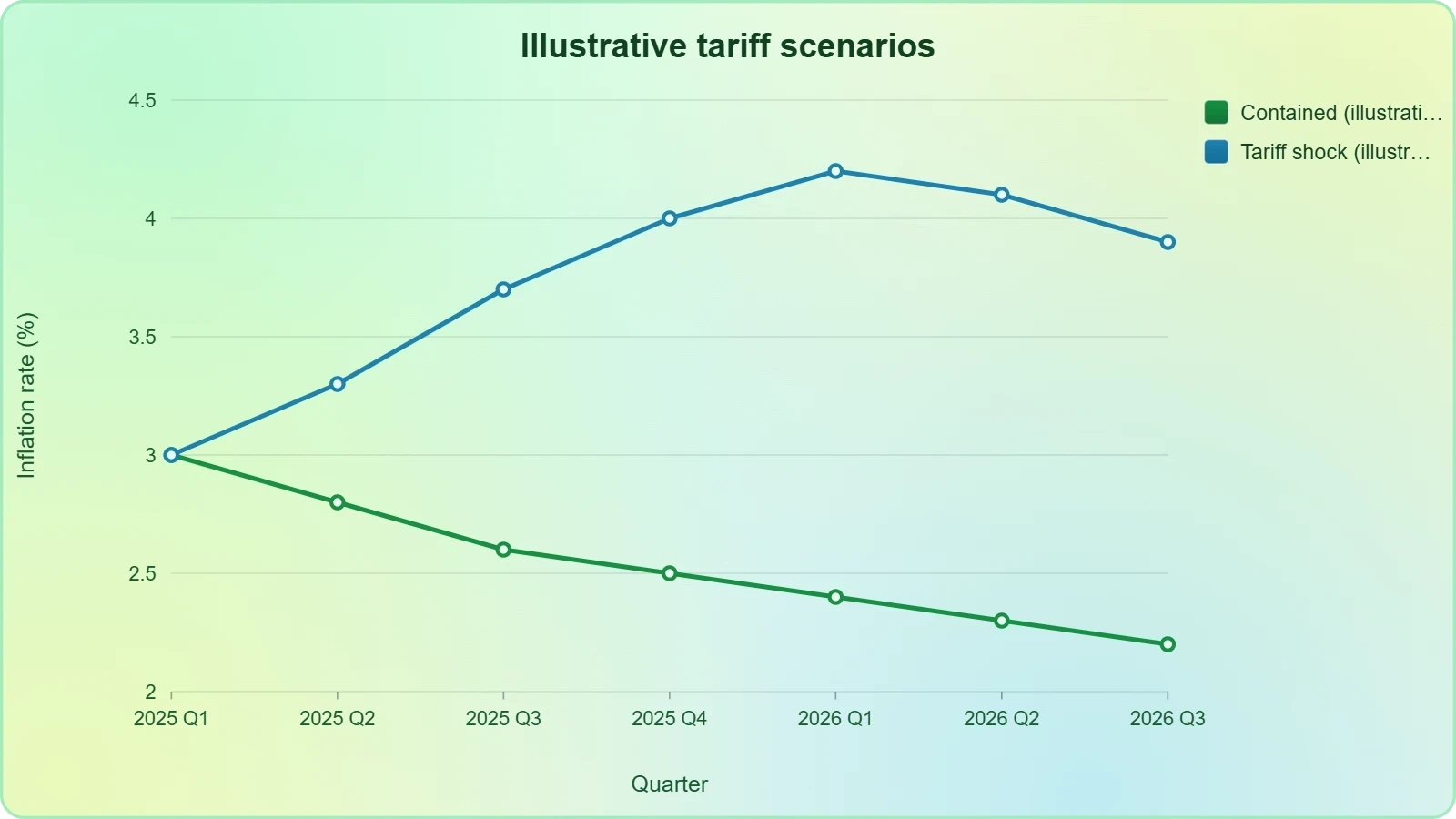
Economic conditions remain the single strongest predictor of midterm outcomes, and Trump's tariff-heavy trade policy carries both risks and rewards. If manufacturing reshoring accelerates and inflation remains contained, Republicans can claim vindication. If prices rise and supply chains falter, Democrats will weaponize the resulting discontent. Voter perception of economic trajectory often matters more than objective indicators.
The administration's deregulation agenda and tax posture will also shape the environment, particularly in districts with significant federal employment or industry exposure. Federal workforce reductions and agency restructuring have already generated localized backlash, which Democrats hope to convert into seats. Republicans counter that efficiency gains and reduced deficits will ultimately benefit taxpayers and businesses alike.
Institutional Conflict and Democratic Norms
The administration's confrontations with courts, the civil service, and independent agencies have raised alarms among legal scholars and civil society groups. Democrats frame these clashes as existential threats to democratic governance, hoping to motivate voters who might otherwise sit out a midterm.
Whether abstract institutional concerns translate into electoral behavior remains an open question, but they clearly animate the party's activist base.
Republicans argue that Trump's mandate includes restructuring a bureaucratic state they view as unaccountable, and that voters rewarded this agenda in 2024. They contend that resistance from entrenched institutions reflects partisan opposition rather than principled concern.
This framing contest over the meaning of democratic accountability will shape how swing voters interpret the administration's actions.
- 01
- 02
- 03
- 04
Redistricting, Turnout, and the Mechanics of Victory
Beyond national mood and messaging, the 2026 midterms will be decided by mechanical factors that often receive less attention than they deserve. Redistricting battles, voter registration trends, and turnout operations determine which voters actually cast ballots and how those ballots translate into seats.
These structural elements can amplify or neutralize broader political waves, making them essential to any serious electoral analysis.
The Redistricting Landscape
Redistricting following the 2020 census reshaped the House map in ways that continue to influence competitive dynamics, with several states facing ongoing litigation over map legality. Court-ordered redraws in states like Alabama, Louisiana, and New York have altered the partisan balance in specific districts, creating new opportunities and challenges for both parties. The legal uncertainty adds a layer of unpredictability to seat projections.
Gerrymandering remains a contentious issue, with both parties accused of drawing maps that entrench incumbents and dilute competitive districts. Reform advocates argue that independent commissions produce fairer outcomes, while critics contend that such bodies lack accountability.
The practical effect is that fewer districts are genuinely competitive, concentrating electoral power in a smaller number of swing seats.
Turnout Operations and Ground Game
Turnout operations have grown increasingly sophisticated, with both parties investing heavily in data analytics, micro-targeting, and volunteer mobilization. Democrats have historically excelled at early voting and mail-ballot programs, while Republicans have emphasized Election Day turnout and, more recently, expanded their own early-voting efforts. The party that better adapts to changing voting patterns often gains a decisive edge.
Grassroots organizing remains irreplaceable, particularly in close races where personal contact can move marginal voters. Unions, community organizations, and advocacy groups play crucial roles in mobilizing constituencies that might otherwise stay home. The effectiveness of these networks, rather than national advertising spending, frequently determines outcomes in the most competitive districts.
The Senate Map and Down-Ballot Dynamics
While the House captures most midterm attention, the Senate map and state-level contests carry enormous consequences for governance and policy. The 2026 Senate landscape features several vulnerable incumbents and open seats in swing states, with control potentially hinging on a handful of races. Down-ballot contests for governorships and state legislatures will shape redistricting, voting rules, and policy implementation for years.
Key Senate Battlegrounds
Senate races in states like Georgia, North Carolina, and Maine will draw national attention and resources, with outcomes likely determined by the same forces shaping the presidential-party dynamic. Incumbents in competitive states must balance national party loyalty with local priorities, a tension that has derailed many campaigns. Candidate quality and fundraising capacity will be decisive in these high-profile contests.
The Senate's structure means that even a modest wave can produce dramatic shifts, given the small number of seats needed to change control. Democrats face a challenging map, defending seats in states Trump carried, while Republicans must protect incumbents in increasingly competitive terrain. The interplay between presidential approval and state-level dynamics will determine whether either party achieves a decisive advantage.
Governorships and State Legislatures
State-level elections often receive less coverage but carry profound implications for policy on issues ranging from abortion to education to election administration. Governors elected in 2026 will preside over the 2030 redistricting process, making these contests strategically vital for both parties. State legislatures will shape voting laws, healthcare policy, and economic development incentives.
Democrats have invested heavily in state legislative races in recent cycles, recognizing that power at the state level often determines national outcomes. Republicans, meanwhile, have focused on consolidating control in states where they hold advantages.
The result is a patchwork of policy regimes that increasingly diverge on fundamental questions, reflecting the deepening geographic polarization of American politics.
What the 2026 Outcome Will Signal
The 2026 midterms will serve as a barometer of American political health, revealing whether the electorate rewards disruption or demands stability. A Democratic wave would signal deep dissatisfaction with Trump's governance and potentially constrain his agenda through congressional oversight and legislative resistance. A Republican hold, conversely, would validate the administration's approach and embolden further institutional restructuring.
Scenarios and Their Implications
If Democrats capture the House, they would gain subpoena power, control committee agendas, and the ability to block legislation, setting up two years of confrontation and investigation. A Senate flip would additionally allow Democrats to reject judicial nominees and cabinet appointments, fundamentally altering the administration's capacity to reshape the federal judiciary. Divided government would produce gridlock but also accountability.
If Republicans retain both chambers, Trump would enjoy unusual midterm validation, potentially interpreting the result as a mandate for further consolidation of executive power. Such an outcome would accelerate policy changes on immigration, trade, and the civil service, with fewer institutional checks. The long-term consequences for democratic norms would depend on how aggressively the administration interprets its victory.
The Longer Arc of American Politics
Beyond immediate legislative outcomes, the 2026 elections will shape the trajectory of both parties heading into 2028. A strong Democratic performance could accelerate generational turnover in party leadership and clarify the party's ideological direction. Republican success would strengthen Trump's hold on the party and potentially extend his policy legacy beyond his term.
The election also tests the resilience of American democratic institutions under sustained pressure. How voters respond to claims of institutional overreach, how courts adjudicate contested rules, and how citizens engage with the political process will determine whether the system self-corrects or drifts further toward polarization. The midterms are, in this sense, about more than seats—they are about the character of American governance.
From our network :
- CISA’s Ten-Advisory Wave: Why Generic Patching Fails in OT and How to Build Product-Specific PlaybooksCISA released ten ICS advisories in one week, exposing critical infrastructure risks. Generic patching fails in OT. Learn to build product-specific remediation playbooks.
- The Final Descent: How ESA Retired the Legendary Cluster Constellation After 24 Years of Space Weather ScienceAfter 24 years mapping Earth’s magnetosphere, ESA’s Cluster mission concluded with a precisely controlled reentry over the South Pacific. This analysis explores the scientific legacy, engineering decisions, and debris mitigation principles behind one of space exploration’s most responsible retirements.
- Live Online English Classes for Kids: Do They Actually Reduce Anxiety?A ten-week study reveals that synchronous online English classes can significantly reduce child language anxiety while improving listening and reading skills. Discover what makes these programs effective and how parents can select the right one.
- Mobile Learning and VR in English: What Global Evidence Reveals About Effective Language TechnologyA systematic review across 14 countries reveals which language-learning technologies genuinely work. Mobile learning, AI, and VR show measurable benefits when pedagogically integrated. This evidence-based guide helps educators and learners select technology that delivers real return on investment.
- Committed Mediterranean Precipitation Decline: Why Emissions Cuts Alone Cannot Restore Winter RainsNew NOAA research reveals that Mediterranean winter rains may decline irreversibly even with emissions cuts. Explore the science of committed climate change and regional impacts.
- The Hidden Cost of AI Convenience: Why Over-Permissioned Agents Are a Security Time BombDiscover why AI agents with excessive permissions create dangerous single points of failure, and learn how implementing least privilege principles can protect your organization from exploitation.
- University Language Proficiency Exams: Why Institutional Tests Demand Different Preparation Than IELTS and TOEFLDiscover why university-specific language proficiency examinations differ fundamentally from IELTS and TOEFL, and learn strategic preparation approaches for institutional assessment success.
- Forbidden Matrix Patterns and Visible Lattice Points: A Geometric DictionaryExplore how multidimensional 0–1 matrices encode geometric truths, linking forbidden patterns to visible lattice points and hypergraph theory, with applications in combinatorics and computational geometry.
- How AI Agents Will Change the Way We Manage Personal FinancesExplore how AI agents are transforming personal finance through automated budgeting, bill payment, and investment management, while examining the critical security protocols and governance frameworks required for safe deployment.
RESOURCES
- What history tells us about the 2026 midterm elections | Brookingsbrookings.eduAug 28, 2025 ... If Republicans lost control of either chamber in 2026, the legislative phase of Trump's presidency would end (unless he and…
- How Trump and Republicans lost the 2026 midterm elections ... - PBSpbs.org1 day ago ... After more than a decade with Donald Trump at the epicenter of U.S. politics, most voters appear exhausted and exasperated…
- Live updates: 2026 US midterm elections and results - BBC Newsbbc.com2 hours ago ... Summary · US President Donald Trump weighs in on Alaska's tight Senate race, as Republican Dan Sullivan trails Democrat Mary…
- Cook Political Report | Non-Partisan Political Analysis for US ...cookpolitical.comThe Cook Political Report with Amy Walter is an independent, non-partisan newsletter that analyzes state, federal and presidential elections, and American ...
- Top takeaways from the US midterm elections - Reutersreuters.com2 days ago ... Trump told media outlets he would accept the election results and was prepared to work with Democrats. AN ANGRY ELECTORATE.…
- 2026 election: Democrats win full control of Congress - NPRnpr.org2 days ago ... ... Trump and congressional Democrats in a new era of divided government. Sponsor Message. Supporters of Texas Democratic Senate candidate…
- Democrats flex congressional majorities as Trump accepts ... - Reutersreuters.com1 day ago ... Democrats flex congressional majorities as Trump accepts electoral losses ... 2026 US midterm elections. 16 hours ago Legalcategory · Democrats…
- Republican blame game begins as Democrat's Mississippi lead growstheguardian.com13 hours ago ... ... US politics live with Shrai PopatUS midterm elections 2026 ... 3h ago. Trump's wealth dented after Democrats trounce Republicans…
- Democratic Voters More Engaged in Midterms as Americans Are in ...pewresearch.orgOct 8, 2026 ... The 2026 midterm election comes amid deep public dissatisfaction with the state of the nation and near-record low approval ratings…
- US elections 2026 live: Republicans blast their party's midterms ...theguardian.com13 hours ago ... Ted Cruz and Newt Gingrich call the US midterms election a failure and 'Watergate-level repudiation' as Democrats overtake both chambers…
- Exposing and Disrupting Federal Attempts to Interfere in the 2026 ...democracyforward.orgOct 9, 2026 ... The midterms are an early test of how far the Trump-Vance administration will go to guarantee its electoral power, but…
- The Trump Administration Is Interfering in the 2026 Midterm ...americanprogress.orgAug 12, 2026 ... Seen in this light, the 15 election subversion tactics analyzed in this report are not an American innovation; instead, they…
- ElectIt - Gary Kinggking.harvard.edu3 days ago ... ... US House and Senate seats in the 11/3/2026 election. ... 2026, we estimate this regression for midterms and presidential…
- US Public Opinion and the Midterm Congressional Electionsgmfus.orgApr 1, 2026 ... Fourteen months into US President Donald Trump's ... What the 2026 Election Says About US Democracy. The 2026 midterm elections…
- Midterm forecast strongly favors Democrats to win House majoritynews.cornell.eduSep 3, 2026 ... The team's analysis is detailed in “A District-Level Forecast of the 2026 U.S. House of Representatives Midterm Elections,” presented during ...
- 01
- 02
- 03
- 04
- 05
- 06
- 07
- 08
0 Comments