
The sentencing of Tal, Alon, and Oren Alexander in Manhattan federal court marks the collapse of a gilded dynasty built on luxury real estate, social access, and carefully cultivated reputation.
Once fixtures of New York and Miami high society, the three brothers now face the possibility of life imprisonment after a jury convicted them on every count, including sex trafficking and conspiracy to commit sex trafficking.
Their story is not merely a crime chronicle; it is a case study in how wealth, status, and institutional deference can shield predatory conduct for nearly two decades.
On This Page
Prosecutors painted a methodical pattern stretching back to the brothers' high school years, when the alleged conduct first took root around 2001 or 2002.
Over time, the siblings allegedly weaponized their glamorous networks, luring women and girls to parties, vacation homes, and exotic trips before drugging and assaulting them.
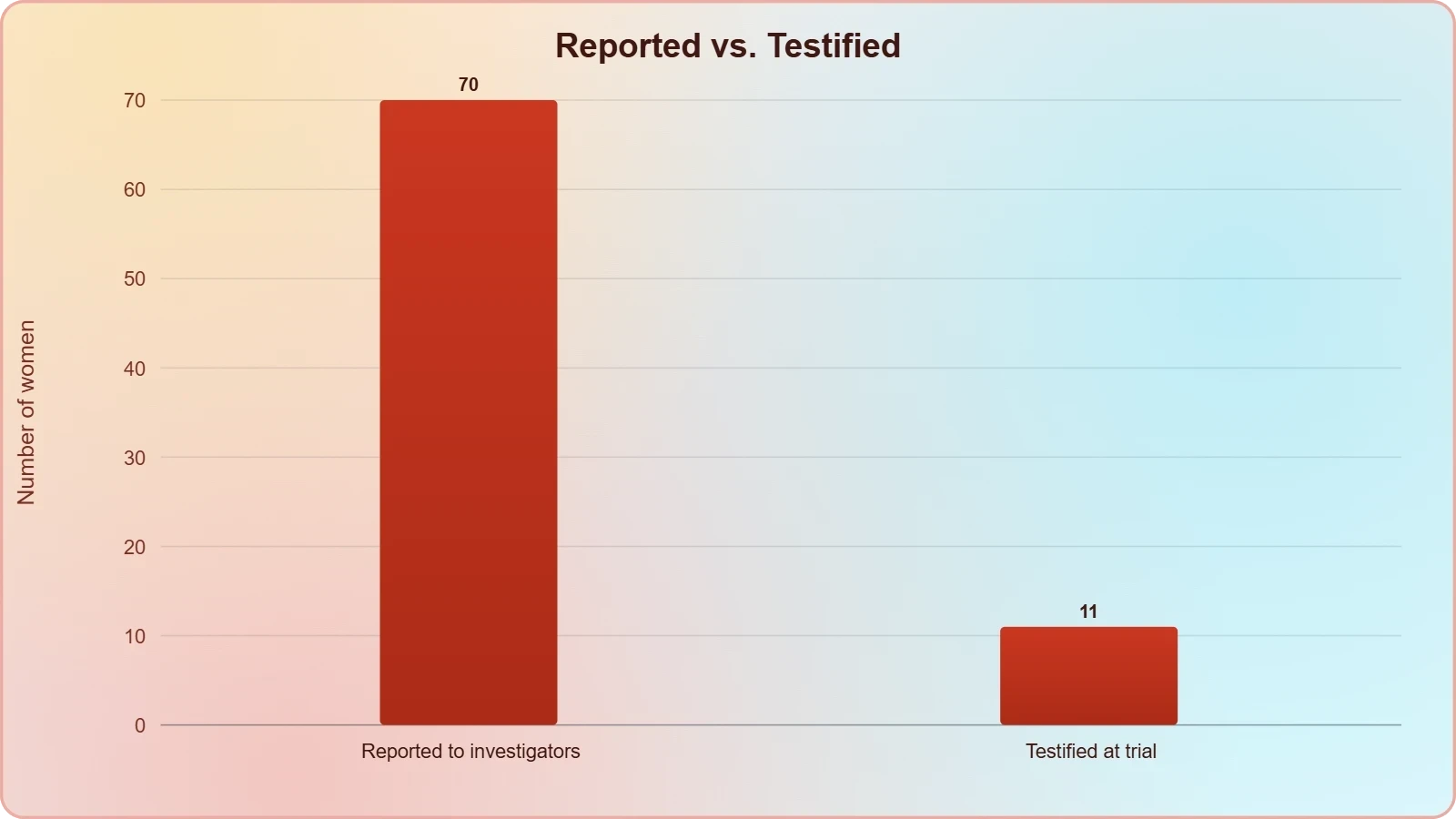
More than seventy women reported attacks to investigators, and eleven testified during a five-week trial that exposed recordings, shared files, and a culture of impunity among the accused.
The defense insists no drugging or rape occurred and asks for the statutory minimum of fifteen years, while prosecutors seek life sentences citing victim vulnerability, use of force, and an absence of remorse.
The gulf between those positions frames the central question of the sentencing hearing: whether privilege mitigates or aggravates accountability when the powerful prey on the vulnerable.
This analysis unpacks the evidence, the legal architecture, and the broader social lessons embedded in one of the most consequential trafficking prosecutions in recent memory.
TL;DR Tal, Alon, and Oren Alexander, once prominent in New York and Miami luxury real estate and security, were convicted of sex trafficking and related offenses spanning 2008 to 2021, with prosecutors alleging a pattern dating to 2001. More than seventy women reported attacks; eleven testified. Prosecutors seek life sentences, while defense attorneys request the fifteen-year minimum and deny wrongdoing. The case exposes how wealth and social status can enable predation and raises urgent questions about accountability, victim testimony, and sentencing equity.
The Anatomy of a Trafficking Enterprise Built on Privilege
The Alexander case illustrates how trafficking rarely announces itself with chains or cages; it arrives wrapped in champagne, private jets, and invitations to exclusive enclaves.
Prosecutors described a family brand of access that opened doors to the Hamptons, Aspen, Manhattan penthouses, the Bahamas, and Caribbean cruises. That geography of glamour became, according to the government, a geography of predation.
Wealth as a Weapon and a Shield
Tal and Oren Alexander built public identities as masters of New York's luxury real estate market, brokering trophy properties to celebrities and financiers.
Alon, Oren's twin, served as an executive at the family's security firm, adding an unsettling layer of operational discipline to the alleged scheme. Their combined profile gave them credibility that victims, investigators, and even peers initially struggled to question.
Prosecutors argued that this status was not incidental but instrumental, functioning as bait for women drawn to glamour and as armor against suspicion.
The brothers allegedly leveraged social proximity to powerful circles, making accusations easy to dismiss and victims easy to discredit. That dynamic is a recurring feature in trafficking cases involving elite defendants, where reputation becomes a defensive moat.
The five-week trial revealed that the brothers recorded some assaults and circulated the recordings among themselves and friends, a detail that transformed private horror into shared entertainment.
One victim, seventeen when Oren drugged her, only learned she had been raped when investigators identified her in a 2009 recording. Such evidence converted abstract allegations into documented, distributable cruelty.
Defense attorneys maintain that no drugging or rape occurred and characterize the government's narrative as overreach built on decades-old memories. They seek the minimum fifteen-year sentence, arguing that the evidence does not support the government's portrait of a coordinated enterprise.
The jury, however, convicted on all counts, including conspiracy, which requires agreement and intent.
The Geography of Harm
The assaults allegedly unfolded across a curated map of elite destinations: the Hamptons, Aspen, Manhattan, the Bahamas, and a Caribbean cruise. Each location offered seclusion, plausible deniability, and a social ecosystem inclined to protect its own.
Prosecutors argued that the brothers selected venues where wealth insulated them from immediate scrutiny.
This geographic spread also complicated investigation, scattering evidence and witnesses across jurisdictions and time zones. Federal prosecutors ultimately consolidated the case in Manhattan, where the brothers' reputations were strongest and the alleged enterprise most visible.
The venue choice underscored how trafficking cases often require federal coordination to overcome local deference.
The convictions cover crimes from 2008 to 2021, yet prosecutors say the pattern began as early as 2001 or 2002, when the brothers were in high school.
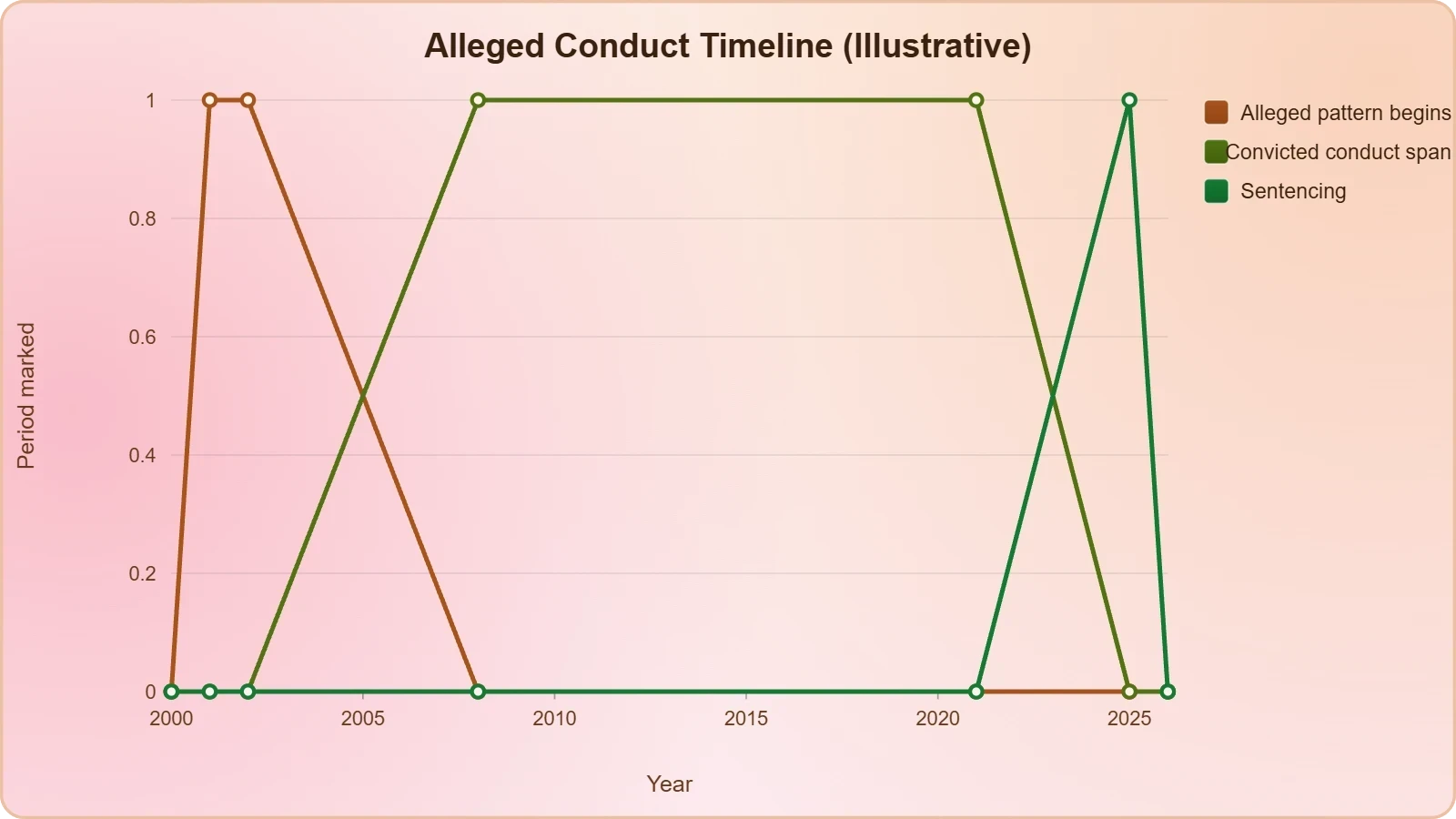
That timeline spans nearly two decades, raising uncomfortable questions about how many opportunities existed for intervention. Institutions that hosted, employed, or celebrated the brothers now face scrutiny over what they knew and when.
Victims' advocates note that the case's breadth reflects a broader truth: trafficking enterprises thrive in environments where victims are isolated and perpetrators are celebrated.
The Alexander brothers allegedly exploited both conditions simultaneously, using social status to attract targets and wealth to deter consequences. The sentencing hearing will test whether the justice system treats that combination as aggravating or mitigating.
Evidence, Recordings, and the Weight of Testimony
Central to the government's case were recordings of some assaults that the brothers allegedly shared with each other and friends. That evidence transformed the trial from a credibility contest into a documentary reckoning, giving jurors direct access to the defendants' conduct.
One victim learned of her rape only when investigators identified her in a 2009 recording.
More than seventy women reported attacks to investigators, and eleven testified during the five-week trial, a testament to the courage required to confront wealthy, well-represented defendants.
Several are expected to speak at sentencing, where victim impact statements often shape judicial perception of harm. Their voices will compete with defense arguments that the evidence is stale and the memories unreliable.
Prosecutors emphasized the vulnerability of victims, the use of force, and a lack of remorse as grounds for life sentences. Under federal sentencing guidelines, those factors can substantially elevate the recommended range, particularly when minors are involved.
The government's position reflects a deliberate strategy to frame the brothers as predators rather than wayward socialites.
Defense attorneys counter that the men neither drugged nor raped anyone and that the government's case relies on decades-old allegations. They seek the fifteen-year minimum, arguing that the convictions do not justify a life sentence.
The judge must weigh competing narratives against a record that includes recorded assaults and multiple corroborating witnesses.
The Legal Architecture of Accountability
Federal sex trafficking statutes criminalize causing a person to engage in a commercial sex act through force, fraud, or coercion, and conspiracy charges extend liability to coordinated conduct.
The Alexander convictions on conspiracy and inducement to travel for unlawful sexual activity reflect the government's theory of a joint enterprise. That architecture allows prosecutors to present a pattern rather than isolated incidents.
Sentencing in such cases hinges on statutory maximums, guideline calculations, and judicial discretion, with life sentences reserved for the most egregious conduct.
Prosecutors cited victim vulnerability, use of force, and lack of remorse as aggravating factors, each of which can elevate the guideline range. Defense arguments for the fifteen-year minimum rest on contesting those aggravators and emphasizing rehabilitation potential.
The inclusion of minor-related counts against Tal and Alon, and sexual exploitation of a minor against Oren, significantly raises the stakes. Federal law treats offenses involving minors with particular severity, and sentencing enhancements often follow automatically.
Those counts also complicate any defense narrative that the conduct was consensual or confined to adults.
Judges in high-profile trafficking cases face intense public scrutiny, balancing deterrence, punishment, and proportionality. The Alexander sentencing will be read as a signal about whether elite status influences outcomes in federal court.
Whatever the judge decides, the case has already reshaped conversations about privilege and predation in American society.
Victims, Voice, and the Long Road to Testimony
Seventy-plus reports and eleven trial witnesses represent only a fraction of the women who say they were harmed, a familiar ratio in trafficking prosecutions.
Many victims never report, deterred by shame, fear, or the perceived futility of accusing powerful men. The Alexander case illustrates both the barriers to disclosure and the possibility of accountability when victims persist.
The Psychology of Grooming and Control
Trafficking enterprises rarely rely on physical force alone; they exploit psychological vulnerabilities, social ambition, and the promise of belonging. The Alexander brothers allegedly used parties, travel, and glamour to lower defenses before introducing drugs and isolation. That sequence mirrors established grooming patterns documented in trafficking research worldwide.
Victims often experience confusion, self-blame, and delayed recognition of harm, particularly when perpetrators are celebrated public figures. The seventeen-year-old who learned of her rape through a 2009 recording embodies that delayed reckoning. Such revelations can retraumatize survivors even as they provide crucial evidence for prosecution.
Support systems, including victim advocates and trauma-informed prosecutors, are essential to helping survivors navigate lengthy trials and public exposure. The five-week trial required witnesses to recount deeply personal violations while facing well-funded defense teams.
Their willingness to testify reflects a broader shift toward believing survivors in elite abuse cases.
Sentencing hearings offer survivors a formal platform to describe impact, a moment that can be both empowering and exhausting. Several women are expected to speak, ensuring the courtroom hears directly from those harmed. Their statements will challenge any narrative that reduces the case to legal technicalities.
Institutional Deference and Its Discontents
Elite defendants often benefit from what sociologists call institutional deference, where schools, employers, and social circles hesitate to investigate credible allegations. The Alexander brothers allegedly operated within networks that prized reputation and discretion above accountability. That environment may have extended the timeline of harm by years.
Real estate, finance, and security industries thrive on relationships and trust, making accusations against insiders disruptive and costly. Colleagues and clients may rationalize away troubling behavior to preserve professional ties.
The case raises questions about whether industries should adopt stronger safeguards against known predators.
Media coverage also plays a dual role, amplifying victims' voices while sometimes glamorizing perpetrators before conviction. The brothers' social prominence guaranteed headlines, but early coverage often emphasized their success rather than allegations. Responsible reporting now must center survivors and avoid sensationalizing trauma.
Legal reforms, including extended statutes of limitations and improved evidence preservation, could help future cases involving delayed disclosure. The Alexander prosecution relied partly on recordings that might not exist in other cases. Policymakers should consider how to support investigations that span decades and jurisdictions.
What Survivors Need From the Justice System
Survivors of elite trafficking require more than convictions; they need safety, counseling, and recognition of harm across years of proceedings. Courtroom accommodations, anonymity protections, and victim compensation funds can reduce the burden of participation. The Alexander case highlights how long survivors may wait for validation.
Prosecutors who prioritize victim well-being can build stronger cases by earning trust and preserving evidence early. Trauma-informed interviewing and coordinated support services help survivors recount events without re-traumatization. These practices are increasingly standard but remain uneven across jurisdictions.
Public understanding also matters, because stigma discourages reporting and fuels defense narratives that blame victims. Media literacy campaigns and educational programs can shift cultural attitudes toward believing survivors. The Alexander trial's visibility offers an opportunity to advance that conversation.
Ultimately, justice for survivors includes sentencing outcomes that reflect the severity of harm and the vulnerability of those targeted. Life sentences, if imposed, would signal that wealth cannot purchase leniency in trafficking cases. Anything less will be scrutinized as evidence of persistent privilege.
We Also Published
- 01
- 02
- 03
- 04
Sentencing, Deterrence, and the Future of Elite Accountability
The sentencing of Tal, Alon, and Oren Alexander will be judged not only for its length but for its message about equality before the law. Prosecutors seek life sentences, arguing that vulnerability, force, and remorselessness demand maximum punishment.
Defense attorneys seek fifteen years, framing the men as redeemable and the evidence as dated.
Weighing Aggravating and Mitigating Factors
Federal judges consider statutory factors including the nature of the offense, the defendant's history, and the need for deterrence. Aggravating factors such as victim vulnerability and use of force can push sentences toward the upper range. Mitigating factors might include age, family ties, and absence of prior convictions.
Prosecutors emphasized that the brothers recorded assaults and shared them, conduct that suggests entertainment rather than isolated misconduct. That detail may weigh heavily against claims of remorse or rehabilitation potential. Judges often view recorded cruelty as evidence of deep-seated disregard for victims.
Defense attorneys argue that the men deny drugging or raping anyone, a position that complicates acceptance-of-responsibility reductions. A defendant who maintains innocence rarely receives leniency for remorse, creating a strategic dilemma. The court must decide whether denial reflects conviction or defiance.
The fifteen-year minimum reflects Congress's judgment that trafficking is a serious federal crime deserving substantial punishment. Life sentences are reserved for cases involving extreme conduct, multiple victims, or vulnerable populations. The Alexander case arguably fits all three categories.
Deterrence and the Message to Elites
Sentences in high-profile cases function as public signals, communicating what society will tolerate from its most privileged members. A life sentence would announce that wealth and status cannot insulate predators from severe consequences. A lighter sentence would invite cynicism about equal justice.
Deterrence operates through certainty and severity, and elite defendants may calculate risk differently than ordinary offenders. When prosecution is perceived as unlikely, deterrence weakens regardless of statutory maximums. The Alexander convictions demonstrate that federal investigators can overcome those calculations.
Corporate and social institutions also respond to sentencing signals, tightening vetting and reporting protocols when consequences become visible. Real estate firms, private clubs, and security companies may revisit how they handle allegations against powerful figures. Cultural change often follows legal precedent.
International dimensions matter as well, because trafficking frequently crosses borders and jurisdictions. The Caribbean cruise and Bahamas allegations highlight how travel can complicate investigation and prosecution. Strong sentencing sends a message that geography offers no refuge.
Lessons for Institutions and the Public
The Alexander case teaches that reputation is not evidence of character and that social prominence can mask predatory behavior for years. Institutions must build cultures where allegations are investigated rather than suppressed. Silence protects perpetrators and isolates victims.
Bystanders, including friends and colleagues who witnessed troubling behavior, bear moral responsibility to report concerns. The recordings shared among friends suggest that some knew or suspected harm and said nothing. Accountability extends beyond the courtroom to the communities that enabled abuse.
Public discourse should center survivors without reducing them to symbols, respecting their agency and diverse experiences. Not every victim wants publicity, and not every case follows the same trajectory. Responsible coverage amplifies voices without exploiting pain.
Policy reforms, from statute-of-limitations extensions to victim compensation, can strengthen the system's response to trafficking. The Alexander prosecution shows what is possible when resources and resolve align. Sustaining that commitment requires ongoing investment and vigilance.
The Road Ahead for the Alexander Brothers
Whatever sentence the court imposes, the Alexander brothers face years of appeals and collateral consequences, including civil suits and reputational ruin. Their convictions will follow them into any future legal proceeding or public appearance. The case has already redefined their legacy from luxury brokers to convicted traffickers.
Victims, meanwhile, will continue rebuilding lives disrupted by trauma and prolonged litigation. Support networks and advocacy organizations will remain essential to their recovery. The sentencing hearing is one milestone, not an ending.
For the public, the case offers a sobering reminder that predation can wear a tailored suit and that accountability requires vigilance. Institutions must ask hard questions about whom they celebrate and whom they protect. The answers will determine whether future Alexanders are stopped earlier.
Justice in this case will be measured not only by years imposed but by whether the system's response restores faith among survivors. The courtroom in Manhattan now holds that responsibility. The world is watching how America sentences its privileged predators.
From our network :
- How AI Agents Will Change the Way We Manage Personal FinancesExplore how AI agents are transforming personal finance through automated budgeting, bill payment, and investment management, while examining the critical security protocols and governance frameworks required for safe deployment.
- Live Online English Classes for Kids: Do They Actually Reduce Anxiety?A ten-week study reveals that synchronous online English classes can significantly reduce child language anxiety while improving listening and reading skills. Discover what makes these programs effective and how parents can select the right one.
- University Language Proficiency Exams: Why Institutional Tests Demand Different Preparation Than IELTS and TOEFLDiscover why university-specific language proficiency examinations differ fundamentally from IELTS and TOEFL, and learn strategic preparation approaches for institutional assessment success.
- Mobile Learning and VR in English: What Global Evidence Reveals About Effective Language TechnologyA systematic review across 14 countries reveals which language-learning technologies genuinely work. Mobile learning, AI, and VR show measurable benefits when pedagogically integrated. This evidence-based guide helps educators and learners select technology that delivers real return on investment.
- Forbidden Matrix Patterns and Visible Lattice Points: A Geometric DictionaryExplore how multidimensional 0–1 matrices encode geometric truths, linking forbidden patterns to visible lattice points and hypergraph theory, with applications in combinatorics and computational geometry.
- The Hidden Cost of AI Convenience: Why Over-Permissioned Agents Are a Security Time BombDiscover why AI agents with excessive permissions create dangerous single points of failure, and learn how implementing least privilege principles can protect your organization from exploitation.
- CISA’s Ten-Advisory Wave: Why Generic Patching Fails in OT and How to Build Product-Specific PlaybooksCISA released ten ICS advisories in one week, exposing critical infrastructure risks. Generic patching fails in OT. Learn to build product-specific remediation playbooks.
- Committed Mediterranean Precipitation Decline: Why Emissions Cuts Alone Cannot Restore Winter RainsNew NOAA research reveals that Mediterranean winter rains may decline irreversibly even with emissions cuts. Explore the science of committed climate change and regional impacts.
- The Final Descent: How ESA Retired the Legendary Cluster Constellation After 24 Years of Space Weather ScienceAfter 24 years mapping Earth’s magnetosphere, ESA’s Cluster mission concluded with a precisely controlled reentry over the South Pacific. This analysis explores the scientific legacy, engineering decisions, and debris mitigation principles behind one of space exploration’s most responsible retirements.
RESOURCES
- Alexander brothers face possible life sentences in sex trafficking casenewsnationnow.com17 hours ago ... Probation office recommends sentencing brothers to 15 years per victim ... A sex trafficking conviction carries a mandatory minimum sentence…
- The Alexander brothers will have to wait a little longer to learn their ...facebook.comSep 22, 2026 ... Oren, Alon and Tal Alexander, convicted in March of sex trafficking and related charges, now face sentencing Oct. 27. They…
- Alexander Brothers Face High-Stakes Sentencing Hearing - LAmaglamag.comThe brothers were initially scheduled to be sentenced in August, but that date was pushed to October. The brothers' sentencing was later moved again,…
- Tal, Alon and Oren Alexander set to be sentenced for sex traffickingcnn.com22 hours ago ... The defense has asked the judge to sentence the brothers to 15 years in prison, the lightest sentence possible for…
- Prosecutors urge life sentences for Alexander brothers for 'serial ...nbcmiami.comOct 15, 2026 ... The brothers were convicted in March of multiple charges including sex trafficking, which carries a mandatory minimum penalty of 15…
- Alexander brothers sex trafficking sentencing pushed back to Octoberamny.comMay 13, 2026 ... Brothers, former New York City real estate gurus and convicted sex traffickers Alon, Oren and Tal Alexander will now wait…
- Judge postpones Alexander brothers' sentencing - The Real Dealtherealdeal.comSep 21, 2026 ... The brothers are facing a minimum of 15 years and up to life in prison. Prosecutors said the brothers orchestrated…
- Alexander brothers found guilty on all counts in sex trafficking trialabcnews.comMar 9, 2026 ... A jury has found the Alexander brothers guilty on all counts in their federal sex trafficking trial in New York…
- Prosecutors seeking life sentences for real estate brokers, brother ...nbcnews.comOct 14, 2026 ... Oren, Alon and Tal Alexander were convicted in April of running a sex trafficking ring, with prosecutors accusing them of…
- Alon Alexander, Oren Alexander, And Tal Alexander Charged In ...justice.govDec 11, 2024 ... ... ALEXANDER (the “ALEXANDER BROTHERS”), with sex trafficking offenses. ... sentencing of the defendants will be determined by the judge.…
- Prosecutors seek life sentences for the Alexander brothersmiamiherald.com6 days ago ... The three Alexander brothers, who were convicted earlier this year on sex-trafficking and related charges after their 2024 arrests in…
- Alexander Brothers Sentencing: August 6 Date Set After Guilty Verdictmersonlaw.comApr 10, 2026 ... The jury found all three brothers guilty of sex trafficking and aggravated sexual abuse, delivering a verdict that covered all…
- Alexander brothers (sex offenders) - Wikipediaen.wikipedia.orgThey each face a minimum of fifteen years in federal prison when sentenced. The jury reached its verdict after approximately eight hours of deliberation.
- Alexander brothers are convicted of sex trafficking - NPRnpr.orgMar 10, 2026 ... Caproni set sentencing for Aug. 6. The brothers, jailed since their 2024 arrests, will appeal the verdict, their lawyers said.…
- Brothers Seeking Pardons for Sex Trafficking Hire a Former Trump ...nytimes.comSep 9, 2026 ... The brothers each face a minimum of 15 years and a potential life sentence. Their sentencing is scheduled for October…
- 01
- 02
- 03
- 04
- 05
- 06
- 07
- 08
0 Comments