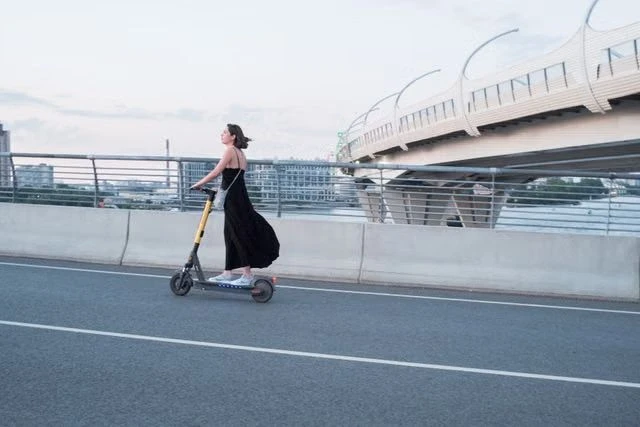
urban mobility: Reimagining the contemporary metropolitan landscape requires an uncompromising examination of how humanity traverses densely populated concrete expanses. Decades of vehicular dominance have left urban centers choked with congestion, toxic emissions, and inefficient land allocation designed exclusively for private automobiles. Today, forward-thinking transit departments are orchestrating a revolutionary paradigm shift by aggressively reclaiming public thoroughfares through autonomous vehicle pilots, expanding pedestrian-only zones, and integrating micro-mobility infrastructure. This holistic transformation transcends simple convenience; it represents an urgent architectural imperative to salvage our urban environments from ecological degradation and persistent psychological stress.
The convergence of cutting-edge technological innovation and radical spatial planning is fundamentally rewriting the rules of municipal existence. Autonomous shuttles and robotic delivery fleets promise to eliminate human error while drastically reducing the footprint of parked vehicles that currently sit idle for ninety-five percent of their operational lifespan. Concurrently, electric bicycles and lightweight scooters are bridging the notorious first-and-last-mile transit dilemma, rendering traditional car ownership increasingly obsolete for daily urban commutes. By synthesizing these disparate transit modalities into a cohesive digital network, metropolitan authorities can finally deliver fluid, equitable, and sustainable mobility ecosystems for millions of citizens.
On This Page
TL;DR Metropolitan transit systems are undergoing an unprecedented structural revolution driven by autonomous vehicles, micro-mobility, and human-centric street design. This transformation seeks to eliminate carbon emissions, alleviate commuting stress, and reclaim public asphalt for pedestrians and sustainable transit corridors.
Decoding the Paradigm Shift in Metropolitan Transit Infrastructures
The architecture of twenty-first-century cities is experiencing a profound identity crisis as urban planners challenge the century-old supremacy of the private combustion-engine automobile. Historically, municipal engineering prioritized vehicular throughput over human experience, sacrificing civic plazas and green spaces for expansive multi-lane highways and sprawling parking lots. Modern transit departments are now aggressively reversing this destructive trajectory by treating streets as dynamic public assets rather than mere conduits for metal boxes. This philosophical pivot demands rigorous spatial reallocation, where former vehicular lanes are repurposed into protected bicycle corridors, wider sidewalks, and dedicated rights-of-way for autonomous transit pods. Implementing these sweeping infrastructural overhauls requires sophisticated data analytics and predictive modeling to forecast commuter behavior under radically altered conditions. Urban designers utilize advanced geographic information systems alongside real-time telemetry from shared electric scooters and autonomous fleet operators to identify critical bottlenecks and optimize traffic signal timings. Furthermore, community engagement initiatives ensure that these spatial interventions address the socio-economic disparities inherent in legacy transit networks, guaranteeing that marginalized neighborhoods receive equitable access to clean, reliable, and high-frequency micro-mobility options.
Autonomous Vehicles as Catalysts for Spatial Efficiency
Autonomous vehicles are frequently misunderstood as mere replacements for human drivers, yet their true value lies in their capacity to revolutionize spatial efficiency through centralized fleet management. When automobiles transition from individually owned assets to on-demand robotic services, the staggering demand for stationary asphalt vanishes almost overnight. Multi-story parking structures and curbside parking lanes can be repurposed into affordable housing, pocket parks, and community commerce hubs, fundamentally healing the scars that car-centric zoning inflicted upon our inner cities. The mathematical modeling of autonomous platoon operations demonstrates exponential reductions in traffic friction, effectively increasing highway and arterial road capacities without pouring a single additional ounce of concrete.
###C_{opt} = BACKSLASH_29FCMfrac{v BACKSLASH_29FCMcdot BACKSLASH_29FCMrho_{max}}{1 + BACKSLASH_29FCMtau BACKSLASH_29FCMcdot v}###
Here, ##C_{opt}## represents the optimal lane capacity, ##v## denotes velocity, ##BACKSLASH_29FCMrho_{max## is maximum jam density, and ##BACKSLASH_29FCMtau## signifies reaction time latency, which drops near zero under algorithmic control. Safety profiles improve dramatically when autonomous systems supplant human drivers, virtually eradicating the catastrophic collisions caused by distraction, fatigue, or intoxication. Municipal insurance liabilities, emergency response expenditures, and healthcare burdens plummet as accident rates approach statistical zero across pilot metropolitan zones. This profound reliability liberates urban populations from the perpetual anxiety of traffic violence, transforming hostile thoroughfares into serene communal corridors where children can play and adults can congregate without fear.
def calculate_traffic_flow(velocity, density, reaction_time):
    optimum_capacity = (velocity * density) / (1 + reaction_time * velocity)
    return optimum_capacity

autonomous_capacity = calculate_traffic_flow(60, 120, 0.05)
print(f"Optimized Autonomous Lane Capacity: {autonomous_capacity} vehicles/hr")
Micro-Mobility Integration and the First-Mile Dilemma
The resurgence of micro-mobility—encompassing dockless electric scooters, pedal-assist bicycles, and personal transport devices—has dismantled the rigid boundaries of traditional fixed-route mass transit systems. Commuters no longer face insurmountable barriers when traversing the awkward spatial gap between their residential doorsteps and the nearest subway or light rail station. This seamless connectivity multiplies the effective catchment area of public transit lines, turning sprawling suburbs into interconnected networks that feed high-capacity corridors with unprecedented efficiency. Cities must proactively engineer dedicated protected micro-mobility lanes to prevent user conflicts between high-speed bicycles and vulnerable pedestrians navigating crowded commercial districts. Smart geo-fencing technologies are routinely deployed by municipal authorities to automatically throttle device speeds in high-pedestrian zones, ensuring harmonious coexistence across diverse user demographics. Furthermore, inductive charging docks integrated directly into street furniture eliminate the operational nightmare of collecting and recharging scattered lithium-ion fleets manually. Municipalities investing aggressively in micro-mobility infrastructure routinely observe measurable drops in acute respiratory illnesses and cardiovascular strain among urban residents due to reduced vehicular exhaust concentrations. Active transportation integration promotes daily physical exercise naturally, embedding wellness into the mechanical rhythm of getting from one destination to another. Ultimately, micro-mobility acts as the connective tissue binding autonomous trunk routes to human scale architecture, reestablishing the intimate connection between citizen and city.
Reclaiming Public Asphalt for Pedestrians and Ecological Restoration
The ideological crusade to reclaim public asphalt from automobile hegemony is rooted in the fundamental recognition that streets constitute the primary public realm of any democratic society. For decades, pedestrian mobility was treated as an afterthought, relegated to narrow, debris-strewn concrete strips immediately adjacent to high-speed, multi-ton vehicular traffic. Progressive urban designers are currently flipping this hierarchy upside down, establishing expansive car-free zones and pedestrian priority corridors that elevate human dignity above mechanical velocity. This reclamation sparks immediate economic revitalization for local storefronts, as foot traffic consistently generates superior retail conversion rates compared to transient vehicular drive-bys. Ecological restoration serves as an equally compelling motivator for pedestrianizing metropolitan cores, given the devastating urban heat island effect exacerbated by endless acres of dark asphalt. When municipal departments rip up redundant pavement to install bioswales, rain gardens, and native urban forests, local ambient temperatures drop noticeably while stormwater runoff management improves exponentially. These porous green networks capture and filter rainwater naturally, mitigating catastrophic urban flooding events and replenishing depleted subterranean aquifers beneath the concrete jungle.
The 15-Minute City Concept and Decentralized Urbanism
The philosophical framework of the 15-minute city suggests that residents should be able to access all essential daily needs—work, nourishment, education, health services, and leisure—within a fifteen-minute walk or micro-mobility trip from their front door. This decentralized structural model directly combats the soul-crushing commuter bottlenecks generated by traditional zoning laws that forcibly segregate residential suburbs from commercial districts. By nurturing hyper-local neighborhood economies, municipalities dramatically slash aggregate vehicle-miles traveled while fostering deep social cohesion among residents. Implementing 15-minute urbanism demands flexible zoning regulations that permit mixed-use commercial spaces to flourish within residential blocks without introducing noise or pollution hazards. Small-scale neighborhood retail, artisanal workshops, and remote-working co-op hubs replace monolithic office parks, distributing economic activity equitably across the entire metropolitan geography. This decentralized resilience ensures that urban populations remain functional and vibrant even during systemic transit disruptions or severe fuel supply shocks. Architects and urban sociologists collaborate closely to design human-scaled building facades and active ground-floor frontages that invite lingering and casual social interaction rather than hurried passage. Street furniture, public water fountains, and weather-protected arcades transform sidewalks into outdoor living rooms where generational bonds are forged naturally. This sensory richness enriches daily life, turning mundane errands into delightful sensory experiences that anchor individuals deeply to their local communities.
Mitigating Commuting Stress and Enhancing Mental Well-being
The psychological toll of daily gridlock and unpredictable transit delays constitutes an insidious public health crisis that degrades productivity and fuels chronic mental exhaustion among urban workforces. Sitting motionless in bumper-to-bumper traffic elevates cortisol levels, spikes blood pressure, and robs individuals of precious personal hours that could otherwise be dedicated to family, rest, or recreation. Transitioning toward active micro-mobility and predictable autonomous transit liberates commuters from this grinding psychological torture, replacing frustration with meditative movement and reliable scheduling. Environmental psychology confirms that exposure to green corridors and pedestrianized zones during daily commutes exerts a powerful restorative effect on cognitive fatigue and emotional resilience. When individuals navigate vibrant streetscapes free from the deafening roar of internal combustion engines and aggressive honking, nervous systems downshift from constant fight-or-flight vigilance into relaxed awareness. Municipalities investing in these holistic transit redesigns routinely report measurable gains in workforce morale, lower absenteeism, and enhanced community-wide happiness indexes.
We Also Published
- 01
- 02
- 03
- 04
Economic and Environmental Imperatives of Sustainable Transit Ecosystems
The transition toward sustainable transit ecosystems is no longer an idealistic environmental luxury; it represents an absolute economic necessity for metropolitan centers striving to remain globally competitive. Congestion costs billions of dollars annually in lost productivity, wasted fuel, and inflated logistics expenses that handicap local businesses and deter international investment. By deploying high-efficiency autonomous fleets and micro-mobility grids, cities slash these parasitic friction costs, injecting vital capital back into the productive economy. Furthermore, green transportation infrastructure attracts top-tier talent and innovative enterprises that prioritize sustainability and livability when choosing corporate headquarters. Financing these massive infrastructure upgrades requires innovative public-private partnerships, green municipal bonds, and congestion pricing mechanisms that internalize the hidden societal costs of private automobile usage. Revenues generated from low-emission zone tolls and curb management fees can be directly reinvested into expanding public transit networks and subsidizing micro-mobility access for low-income populations. This equitable financial architecture ensures that the green transition bridges existing socioeconomic divides rather than pricing vulnerable citizens out of metropolitan cores.
Decarbonization Pathways and Climate Resilience
Global carbon emission reduction targets cannot be met without radically reforming urban transportation, which currently accounts for a disproportionate share of greenhouse gas outputs worldwide. Electrifying public and private fleets represents only the first phase of this transformation; true climate resilience demands absolute minimization of energy consumption through compact land use and active mobility promotion. When cities prioritize walking, cycling, and shared autonomous pods over single-occupancy vehicles, total lifecycle carbon footprints collapse dramatically. Climate adaptation engineering must also integrate flood mitigation and extreme heat resistance directly into street design specifications. Permeable paving materials, underground retention cisterns, and multi-tiered tree canopies protect transportation arteries from torrential downpours and blistering heatwaves that threaten to paralyze metropolitan life. These living infrastructures act as robust shock absorbers against climate volatility, ensuring continuous operational stability for critical supply chains and commuter flows. Municipalities that embrace these comprehensive decarbonization pathways position themselves as resilient leaders in an era of profound environmental uncertainty. By harmonizing technological innovation with ecological stewardship, urban centers can transcend their historical role as environmental predators and evolve into self-sustaining habitats that nurture both planetary health and human prosperity.
Future-Proofing Metropolitan Governance and Policy Frameworks
Navigating the turbulent transition toward advanced urban mobility demands agile, forward-thinking governance structures capable of adapting to exponential technological disruption. Traditional municipal bureaucracies move slowly, whereas private tech innovators and shared mobility operators iterate at breakneck speeds, creating regulatory friction and compliance nightmares. Forward-looking cities are establishing regulatory sandboxes where autonomous vehicle pilots and novel micro-mobility modalities can be tested safely under real-world conditions before full-scale commercial deployment. Data sovereignty and algorithmic transparency emerge as critical governance battlegrounds as artificial intelligence assumes control over traffic signals, fleet routing, and curb allocations. Municipal authorities must enforce strict privacy standards to prevent the monetization of commuter telemetry by corporate entities while retaining full algorithmic oversight to prevent discriminatory service redlining. Collaborative policy frameworks that balance commercial innovation with public interest safeguards will ultimately determine whether our future cities become liberating havens or hyper-surveilled corporate techno-panopticons. The ultimate success of twenty-first-century urban mobility depends upon inclusive civic dialogue that empowers ordinary citizens to shape the physical evolution of their neighborhoods. When communities actively participate in redesigning their streets, the resulting spaces reflect genuine human needs rather than sterile technocratic efficiency metrics. By wedding visionary technology with compassionate civic design, humanity can reclaim the street and forge truly livable, sustainable, and joyful metropolitan centers for generations to come.
From our network :
- Norbert’s Uncertain Path: Why Hawaii’s Storm Watch Demands Patience Over PanicTropical Storm Norbert strengthens in the Eastern Pacific with winds near 50 mph, forecast to reach Category 1 hurricane status by Friday. Long-range models disagree sharply on whether Hawaii faces any threat around September 19–23, making official guidance essential.
- The Final Descent: How ESA Retired the Legendary Cluster Constellation After 24 Years of Space Weather ScienceAfter 24 years mapping Earth’s magnetosphere, ESA’s Cluster mission concluded with a precisely controlled reentry over the South Pacific. This analysis explores the scientific legacy, engineering decisions, and debris mitigation principles behind one of space exploration’s most responsible retirements.
- Committed Mediterranean Precipitation Decline: Why Emissions Cuts Alone Cannot Restore Winter RainsNew NOAA research reveals that Mediterranean winter rains may decline irreversibly even with emissions cuts. Explore the science of committed climate change and regional impacts.
- The Hidden Cost of AI Convenience: Why Over-Permissioned Agents Are a Security Time BombDiscover why AI agents with excessive permissions create dangerous single points of failure, and learn how implementing least privilege principles can protect your organization from exploitation.
- Former Soap Stars Embark on Ambitious Writing Projects and Theatrical StagesDiscover how former soap opera actors are transitioning into independent scriptwriting and high-profile theatrical stage productions.
- Analyzing Hoya Corporation’s Midday Volume Shifts and Financial FundamentalsExamine Hoya Corporation’s midday trading volume contraction, technical moving averages, robust solvency ratios, and stellar quarterly earnings performance.
- How AI Agents Will Change the Way We Manage Personal FinancesExplore how AI agents are transforming personal finance through automated budgeting, bill payment, and investment management, while examining the critical security protocols and governance frameworks required for safe deployment.
- Forbidden Matrix Patterns and Visible Lattice Points: A Geometric DictionaryExplore how multidimensional 0–1 matrices encode geometric truths, linking forbidden patterns to visible lattice points and hypergraph theory, with applications in combinatorics and computational geometry.
- CISA’s Ten-Advisory Wave: Why Generic Patching Fails in OT and How to Build Product-Specific PlaybooksCISA released ten ICS advisories in one week, exposing critical infrastructure risks. Generic patching fails in OT. Learn to build product-specific remediation playbooks.
RESOURCES
- EIT Urban Mobility - largest community for urban mobility innovationeiturbanmobility.euWe offer tailored courses, seminars and programmes on mobility entrepreneurship and innovation for learners across all levels of expertise. Explore education ...
- Urban Mobility Report - Mobility Division - Texas A&M Universitymobility.tamu.eduAmericans lost an average of 63 hours sitting in traffic in 2024 — the highest level ever measured — according to the 2025 Urban…
- Urban Mobility | World Resources Institutewri.orgWRI helps cities design and operate cleaner, safer, more efficient and more accessible mobility systems.
- Urban Mobility Days 2025 - Mobility and Transport - European Uniontransport.ec.europa.euAs the European Commission's principal urban mobility policy conference, Urban Mobility Days (UMD) provides the ideal opportunity to network, debate, ...
- Journal of Urban Mobility | ScienceDirect.com by Elseviersciencedirect.comThe journal publishes peer-reviewed contributions in all areas of urban mobility that will accelerate solutions that improve our collective use of livable urban ...
- 2025 Urban Mobility Report - Texas A&M Transportation Institutestatic.tti.tamu.eduOct 22, 2025 ... The authors would like to thank the Texas Department of Transportation for sponsorship of the 2025 Urban Mobility Report. The…
- Style: Urban Mobility(GT430) | Color: Gold Line(961) | Mohawk Groupmohawkgroup.comUrban Model offers an intricate base texture presented in three distinctive hues and contrast levels.
- EIT Urban Mobility - European Unioneit.europa.euEIT Urban Mobility's living labs enable smarter, greener and more inclusive ways of moving people, goods and waste, helping cities remain liveable, breathable, ...
- Urban Mobility Rug(GT430) | Color: Gold Line(961) - Mohawk Groupmohawkgroup.comUrban Model offers an intricate base texture presented in three distinctive hues and contrast levels, while Urban Mobility layers a metropolitan subway line ...
- Urban Mobility Explained (UMX) Open Call | EITeit.europa.euJul 2, 2025 ... This Call focuses on a series of specific activity areas aimed at enhancing the skills and capabilities of mobility professionals…
- 01
- 02
- 03
- 04
- 05
- 06
- 07
- 08
0 Comments