The third Chengdu-Chongqing Theatre Twin City Festival represents far more than a routine cultural calendar entry; it signals a deliberate, state-backed strategy to fuse regional identity, cross-border artistic exchange, and holiday-season economic stimulation into a single coherent instrument.
Opening on September 24 at the Chengdu High-tech Zhongyan Grand Theatre, the event unfolds across nineteen consecutive days, stretching from September 24 to October 12, and deliberately spills across three distinct urban territories: Chengdu, Chongqing, and the smaller satellite city of Pengzhou.
This geographic dispersal is not accidental logistics but a calculated design, one that treats theatre as a connective tissue binding a sprawling metropolitan cluster into a shared cultural narrative.
On This Page
What distinguishes this edition is its explicit framing around four cultural units, namely China, France, Britain, and Russia, which together anchor both the contemporary performance slate and the youth competition.
Across these units, organizers have assembled twenty-eight Chinese and foreign works and nearly ninety individual performances, blending established international productions with raw, experimental offerings from emerging theatre groups.
The festival therefore operates simultaneously as a showcase, a competition, and an incubation engine, refusing to separate artistic prestige from the messier, riskier work of nurturing new voices.
Beneath the headline numbers lies a deeper structural ambition: the permanent relocation of the youth theatre competition to Pengzhou, the launch of the Another New Sharp Theatre Incubation Plan by the Sichuan People's Art Theatre, and a "theatre plus other industries" model explicitly tied to National Day holiday consumption.
Together these moves reveal a festival designed not merely to entertain audiences but to build durable infrastructure for cultural production and tourism revenue across the Sichuan-Chongqing region.
TL;DR The third Chengdu-Chongqing Theatre Twin City Festival runs from September 24 to October 12 across Chengdu, Chongqing, and Pengzhou, presenting twenty-eight works and nearly ninety performances organized around Chinese, French, British, and Russian cultural units. The youth competition now permanently resides in Pengzhou, the Sichuan People's Art Theatre has launched a full-chain incubation plan, and outdoor programming featuring France's Birdman Theatre anchors a "theatre plus other industries" push to energize the National Day holiday economy and establish Longxingji as a new cultural consumption landmark.
The Strategic Architecture of a Twin-City Cultural Brand
Regional cultural branding rarely succeeds through slogans alone; it requires recurring, physically anchored events that audiences can anticipate and that media can reliably cover year after year.
The Chengdu-Chongqing Theatre Twin City Festival has now reached its third iteration, a milestone that transforms it from an experiment into an institution with measurable momentum.
By branding itself explicitly as a "twin city" endeavor, the festival leverages the broader national push to integrate Chengdu and Chongqing into a single economic and cultural pole in western China.
The nineteen-day window is itself a strategic choice, deliberately overlapping the National Day holiday, when hundreds of millions of Chinese citizens travel, spend, and seek entertainment.
Organizers clearly understand that cultural programming aligned with peak consumption periods multiplies its own visibility while feeding the broader holiday economy. The festival thus functions as both an artistic statement and a demand-generation mechanism, a dual identity that explains its unusual breadth of programming.
Four main sections structure the event: contemporary theatre performances, a youth theatre competition, outdoor and street performances, and exchanges and seminars. This quartet is carefully balanced, pairing high-art prestige with grassroots energy, indoor contemplation with open-air spectacle, and performance with intellectual discourse.
Such balance protects the festival from becoming either an elitist bubble or a purely populist carnival, positioning it instead as a layered cultural ecosystem.
The decision to spread activities across Chengdu, Chongqing, and Pengzhou also distributes both audience attention and economic benefit. Smaller cities like Pengzhou gain cultural legitimacy and visitor traffic, while the two major metropolises supply infrastructure, prestige, and media reach.
This hub-and-spoke geography mirrors broader regional development policy, which seeks to prevent cultural and economic resources from concentrating exclusively in the largest urban centers.
Why the Twin-City Model Matters Economically
The Chengdu-Chongqing economic circle ranks among China's most ambitious regional integration projects, encompassing tens of millions of residents and a rapidly maturing service economy.
Cultural festivals serve this integration by creating shared experiences that transcend administrative boundaries, giving citizens of both cities reasons to travel, spend, and identify with a common regional brand.
The theatre festival operationalizes that abstract policy goal through concrete, ticketed, and highly visible events.
Economic spillovers extend well beyond ticket sales, encompassing hospitality, dining, transportation, and retail activity in host districts. When a festival stages nearly ninety performances across nineteen days, the cumulative multiplier effect on local businesses becomes substantial, particularly during a holiday period when baseline demand is already elevated.
Organizers explicitly acknowledge this by describing cultural tourism consumption settings as a core festival objective.
Pengzhou's permanent role as host of the youth competition adds a longer-term dimension to these economic calculations. Permanent anchors attract recurring investment in venues, accommodation, and supporting services, converting a temporary event into durable infrastructure.
Over successive years, this can reshape a smaller city's cultural economy and its reputation among younger, mobile audiences.
The "theatre plus other industries" framing further signals that organizers view performance as a catalyst rather than an endpoint. By linking theatre to tourism, retail, and holiday economics, the festival positions itself within a broader consumption ecosystem, one where cultural credibility translates directly into measurable commercial activity for the region.
Four Cultural Units and International Exchange
Organizing programming around China, France, Britain, and Russia gives the festival a clear international architecture rather than a scattered assortment of foreign imports.
Each cultural unit presumably carries distinct aesthetic traditions and audience expectations, allowing organizers to curate coherent mini-festivals within the larger event. This structure also simplifies marketing, giving audiences recognizable thematic anchors when choosing performances.
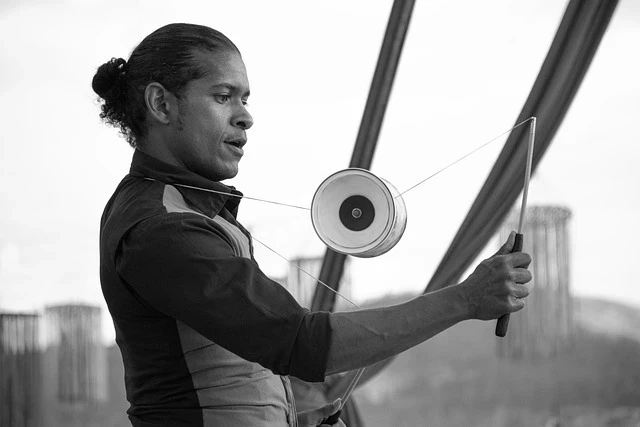
France's presence is particularly visible through the outdoor troupe known to Chinese audiences as "Birdman Theatre," which will perform four shows on October 1 and 2.
The company will present its classic work "Birdman and His Chimera Band" alongside the China premiere of "Three Heads and Its Chimera Band" in the Longxingji block.
Such premieres signal that China is not merely importing established hits but actively participating in the global circulation of new work.
Russia's contribution includes a children's theatre appearing at Longxingji, broadening the festival's demographic reach beyond adult audiences. Britain's inclusion, meanwhile, reinforces the festival's claim to genuine multilateral exchange rather than a bilateral arrangement dressed in international clothing.
Together, the four units create a diplomatic and artistic balance that mirrors broader geopolitical relationships.
Selected international productions sit alongside new experimental works by young theatre groups from China and abroad, ensuring that established names do not entirely overshadow emerging voices.
This curatorial balance is difficult to achieve and signals a mature festival administration capable of managing both prestige and risk simultaneously.
The Youth Competition's Permanent Home in Pengzhou
Starting this year, the youth theatre competition will be permanently based in Pengzhou, a decision with implications far beyond scheduling convenience. Permanence allows organizers, participants, and local authorities to plan multi-year investments in venues, mentorship programs, and audience development.
It also gives Pengzhou a distinctive cultural identity within the broader Chengdu-Chongqing region, one tied specifically to emerging theatrical talent.
Five incubated works have been selected for this year's youth competition, including "The Rider to the Sea" and "Theatre Audience Liu Hailong."
These titles suggest a curatorial interest in narrative experimentation and self-referential theatrical themes, hinting at the aesthetic criteria guiding the incubation process.
By selecting works with distinctive humanistic observation, organizers signal that innovation must remain grounded in recognizable human experience.
The Another New Sharp Theatre Incubation Plan, launched by the Sichuan People's Art Theatre, aims to build a full-chain incubation platform spanning creation to stage.
This is a significant institutional commitment, because most festivals stop at presentation while leaving development infrastructure untouched. A full-chain approach addresses the notorious gap between promising scripts and fully realized productions, a bottleneck that plagues theatre ecosystems worldwide.
Differentiated artistic experimentation serves as one stated criterion for incubation, suggesting that organizers actively seek work that cannot be easily categorized. Such criteria risk producing inaccessible art, yet they also protect against the homogenization that afflicts festivals overly reliant on proven commercial formulas.
The balance struck here will determine whether Pengzhou becomes a genuine laboratory or merely a provincial showcase.
Outdoor Spectacle and the Longxingji Landmark Strategy
During the National Day holiday, outdoor performances will run for five consecutive days at the Baili Yi · Longxingji outdoor space in Pengzhou, transforming a commercial district into an open-air stage.
This programming choice lowers barriers to entry, since passersby can encounter world-class performance without purchasing tickets or planning ahead. It also generates the kind of spontaneous crowd energy that indoor venues rarely replicate.
France's Birdman Theatre will perform four shows at Longxingji on October 1 and 2, presenting both its classic repertoire and a China premiere.
The troupe's name recognition among Chinese audiences makes it an ideal anchor for outdoor programming, drawing crowds that might otherwise remain indifferent to experimental theatre.
Pairing a familiar international brand with a premiere balances accessibility and novelty in a single booking.
A Russian children's theatre will also appear at Longxingji, and selected youth competition works will be performed in the block, weaving emerging artists into the same physical space as established international companies.
This deliberate mixing dissolves hierarchies between amateur and professional, local and foreign, giving young creators exposure to audiences they could not otherwise reach. The block becomes a microcosm of the festival's entire philosophy.
Organizers explicitly aim to make Longxingji a new cultural consumption landmark, a goal that ties artistic programming directly to urban branding and real estate value.
If successful, the district could become a year-round destination rather than a seasonal curiosity, embedding theatre into the commercial life of Pengzhou permanently. Such placemaking ambitions reveal how thoroughly cultural policy and urban development have merged in contemporary China.
Economic and Tourism Dimensions of the Festival
Cultural festivals increasingly function as economic instruments, and this event is no exception, with organizers explicitly framing it as support for the National Day holiday economy.
The nineteen-day window captures peak travel and spending behavior, when families seek entertainment options that justify trips and extended stays. By supplying nearly ninety performances, the festival gives visitors concrete reasons to choose Chengdu, Chongqing, or Pengzhou over competing destinations.
The "theatre plus other industries" approach acknowledges that performance alone rarely sustains a regional economy, but performance combined with dining, retail, and hospitality can.
Each ticketed event generates ancillary spending, from pre-show meals to post-show transportation, multiplying the festival's direct economic footprint. Local businesses in host districts therefore have strong incentives to support and promote the programming.
Cultural tourism consumption settings, another phrase used by organizers, describes the deliberate design of environments where cultural engagement and commercial transaction blend seamlessly.
Longxingji exemplifies this logic, since its outdoor performances occur within a commercial block where audiences naturally shop and dine. The festival thus converts aesthetic experience into economic activity without requiring heavy-handed sales tactics.
Longer-term, the festival's success could influence how other Chinese regions design cultural events, particularly those seeking to integrate multiple cities under a single brand.
If the twin-city model proves economically viable, it may become a template for similar collaborations across the country, reshaping the relationship between cultural policy and regional development.
Incubation as Cultural Infrastructure
Incubation programs represent the least glamorous yet most consequential layer of any cultural ecosystem, since they determine what audiences will eventually see.
The Another New Sharp Theatre Incubation Plan commits to a full chain from creation to stage, addressing the fragmented support that typically strands promising work.
By embedding incubation within a festival, organizers ensure that development and presentation reinforce each other rather than operating in isolation.
Five incubated works entering the youth competition demonstrate that the pipeline is already producing tangible outputs rather than remaining a purely aspirational framework.
Titles like "The Rider to the Sea" and "Theatre Audience Liu Hailong" suggest thematic diversity, ranging from journey narratives to meditations on spectatorship itself. Such range indicates that selection criteria prioritize artistic distinctiveness over commercial predictability.
Distinctive humanistic observation, one stated criterion, implies that experimental form must remain tethered to recognizable human concerns. This guards against the self-indulgence that can afflict avant-garde theatre, ensuring that innovation serves communication rather than obscuring it.
The criterion also aligns with broader cultural policy emphasizing art that resonates with ordinary audiences.
If the incubation plan succeeds, it could establish the Sichuan-Chongqing region as a recognized source of new theatrical work rather than merely a market for imported productions.
That shift would carry prestige, economic, and diplomatic benefits, positioning the region within national and international cultural circuits. The festival thus functions as both showcase and factory, presenting finished work while manufacturing the next generation.
Audience Development and Youth Engagement
Youth engagement runs through the festival's design, from the dedicated competition to the experimental works by young theatre groups from China and abroad.
Cultivating younger audiences is essential for any performing art facing competition from digital entertainment, and competitions provide emerging artists with visibility that commercial circuits rarely offer. The permanent Pengzhou base gives this engagement a geographic anchor and institutional memory.
Outdoor and street performances further lower barriers, reaching audiences who might never purchase tickets to an indoor theatre production. When a Russian children's theatre performs in a commercial block, families encounter international culture incidentally rather than deliberately, which can spark lifelong interest. Such incidental exposure is difficult to measure but potentially transformative for audience development.
Seminars and exchanges add an intellectual dimension, allowing practitioners and scholars to discuss the work presented and the conditions of its production. These conversations can influence future programming and policy, creating feedback loops between practice and reflection.
A festival that only presents without discussing risks stagnation, whereas one that debates itself remains vital.
The youth competition's permanence in Pengzhou also creates a talent pipeline with local roots, encouraging young artists to build careers within the region rather than migrating to Beijing or Shanghai.
Retaining creative talent strengthens the local ecosystem and contributes to the broader goal of balanced regional development. Over a decade, such retention could reshape the cultural geography of western China.
We Also Published
Critical Assessment and Future Trajectory
Any festival of this scale invites scrutiny, particularly when cultural programming is explicitly tied to economic and political objectives. The risk is that artistic criteria become subordinate to consumption targets, producing safe, crowd-pleasing work rather than genuinely challenging theatre.
The presence of experimental youth works and a full-chain incubation plan suggests organizers are aware of this risk and actively countering it.
Another tension lies between international prestige and local relevance, since importing French, British, and Russian productions can overshadow domestic work if curation is unbalanced.
The festival mitigates this by organizing programming around cultural units rather than treating foreign work as a separate, elevated category. Chinese works and youth groups occupy the same structural position as international companies, which is symbolically significant.
Measuring success will require more than attendance figures, since the festival's stated goals include incubation, placemaking, and audience development, all of which unfold over years.
Organizers would benefit from transparent reporting on incubated works that reach full production, youth artists who remain in the region, and Longxingji's year-round cultural activity. Such metrics would allow genuine evaluation rather than promotional assertion.
If the third edition consolidates the gains of its predecessors, the festival could become a durable institution shaping cultural life across the Chengdu-Chongqing region for decades.
Its twin-city model, permanent youth base, and incubation infrastructure together constitute a coherent long-term strategy rather than a one-off spectacle. That strategic coherence is ultimately what distinguishes a festival from a fair.
Regional Integration and Cultural Diplomacy
The festival's twin-city identity places it squarely within broader efforts to integrate Chengdu and Chongqing into a unified economic and cultural zone.
Cultural diplomacy of this kind operates subtly, building familiarity and shared identity through repeated exposure rather than explicit messaging. Audiences who attend performances in both cities gradually internalize the region as a single cultural space.
International participation adds another diplomatic layer, since French, British, and Russian companies bring their own cultural contexts into Chinese venues. These exchanges can foster goodwill and mutual understanding, particularly when premieres and children's programming reach broad audiences.
Cultural diplomacy through theatre is rarely dramatic in its effects, but it accumulates quietly over years.
Pengzhou's elevation as a permanent host city also redistributes cultural prestige within the region, countering the tendency for all significant events to concentrate in the largest metropolises.
Smaller cities that host recurring international programming develop their own cultural confidence and infrastructure. This decentralization aligns with national policy goals while producing genuine local benefits.
If the model succeeds, other Chinese regions may adopt similar twin-city or multi-city cultural festivals, adapting the structure to their own geographic and historical circumstances.
The Chengdu-Chongqing experiment thus functions as a prototype, its successes and failures informing broader cultural policy. That experimental status raises the stakes considerably beyond a single festival's fortunes.
Conclusion: Theatre as Regional Strategy
The third Chengdu-Chongqing Theatre Twin City Festival demonstrates how thoroughly cultural programming has been integrated into regional economic and diplomatic strategy. Its nineteen days, twenty-eight works, and nearly ninety performances constitute an impressive volume, but the deeper significance lies in its structural innovations.
Permanent youth competition hosting, full-chain incubation, and deliberate placemaking distinguish it from conventional festivals.
Whether these innovations produce lasting change depends on execution over multiple editions, since cultural infrastructure accumulates slowly and unevenly. The festival's explicit alignment with holiday economics and tourism consumption ensures continued political support, but also creates pressure to prioritize measurable returns. Navigating that pressure while protecting artistic risk-taking will define the festival's ultimate character.
For audiences, the immediate benefit is straightforward: an unusually rich concentration of international and domestic theatre across three cities during a holiday period. For the region, the benefit is potentially transformative, reshaping cultural geography, talent retention, and urban identity.
For observers elsewhere, the festival offers a case study in how culture, economics, and governance increasingly intertwine.
The Chengdu-Chongqing Theatre Twin City Festival ultimately represents a bet that theatre can serve as connective infrastructure for a sprawling urban region, binding cities, generations, and nations through shared performance.
That bet may or may not pay off, but its ambition alone merits attention. Few cultural events attempt so much across so many dimensions simultaneously.
From our network :
- Mobile Learning and VR in English: What Global Evidence Reveals About Effective Language TechnologyA systematic review across 14 countries reveals which language-learning technologies genuinely work. Mobile learning, AI, and VR show measurable benefits when pedagogically integrated. This evidence-based guide helps educators and learners select technology that delivers real return on investment.
- Live Online English Classes for Kids: Do They Actually Reduce Anxiety?A ten-week study reveals that synchronous online English classes can significantly reduce child language anxiety while improving listening and reading skills. Discover what makes these programs effective and how parents can select the right one.
- Committed Mediterranean Precipitation Decline: Why Emissions Cuts Alone Cannot Restore Winter RainsNew NOAA research reveals that Mediterranean winter rains may decline irreversibly even with emissions cuts. Explore the science of committed climate change and regional impacts.
- University Language Proficiency Exams: Why Institutional Tests Demand Different Preparation Than IELTS and TOEFLDiscover why university-specific language proficiency examinations differ fundamentally from IELTS and TOEFL, and learn strategic preparation approaches for institutional assessment success.
- The Hidden Cost of AI Convenience: Why Over-Permissioned Agents Are a Security Time BombDiscover why AI agents with excessive permissions create dangerous single points of failure, and learn how implementing least privilege principles can protect your organization from exploitation.
- The Final Descent: How ESA Retired the Legendary Cluster Constellation After 24 Years of Space Weather ScienceAfter 24 years mapping Earth’s magnetosphere, ESA’s Cluster mission concluded with a precisely controlled reentry over the South Pacific. This analysis explores the scientific legacy, engineering decisions, and debris mitigation principles behind one of space exploration’s most responsible retirements.
- How AI Agents Will Change the Way We Manage Personal FinancesExplore how AI agents are transforming personal finance through automated budgeting, bill payment, and investment management, while examining the critical security protocols and governance frameworks required for safe deployment.
- Forbidden Matrix Patterns and Visible Lattice Points: A Geometric DictionaryExplore how multidimensional 0–1 matrices encode geometric truths, linking forbidden patterns to visible lattice points and hypergraph theory, with applications in combinatorics and computational geometry.
- CISA’s Ten-Advisory Wave: Why Generic Patching Fails in OT and How to Build Product-Specific PlaybooksCISA released ten ICS advisories in one week, exposing critical infrastructure risks. Generic patching fails in OT. Learn to build product-specific remediation playbooks.
RESOURCES
- The Chengdu-Chongqing Theatre Festival has kicked off ... - Facebookfacebook.comSep 29, 2025 ... The Chengdu-Chongqing Theatre Festival has kicked off! Experience a diverse international lineup of performances in Pengzhou!
- Ecology, culture and Hi-tech Merge in Mountain and River Paradise ...ichongqing.infoSep 18, 2020 ... ... Theater, Guorui 303 Art Theater, and International Circus City. ... Soon, the first edition of the Chengdu-Chongqing Twin City…
- Wang Yinjie - China Academy of Artbaike.baidu.com... Chengdu-Chongqing International Twin Cities Drama Festival." Through her initiated "Off Theater Studio," she has organized dozens of cross-disciplinary ...
- Jiangbei District Builds Itself as the "Demonstration Area" of ...ichongqing.infoMay 9, 2020 ... ... Chengdu-Chongqing economic ... Chengdu to establish strategic cooperative relations of regional coordinated development and sister cities.
- Di Tian - Penn Statearts.psu.eduOrganized and held the Yuelai Crop Youth Art Festival. 2018 – Present ... Chengdu-Chongqing Twin City Public Artworks Invitation Exhibition,. Chongqing ...
- [AsiaNet] Pengzhou Builds "Pengzhou Lifestyle" as City Identityen.yna.co.krNov 27, 2025 ... on a series of programs, including the Chengdu-Chongqing International Theatre Festival, to elevate its international cultural profile through ...
- China itinerary for 10 days. Chengdu - Chongqing - Redditreddit.comFeb 8, 2026 ... twin towers, heming tea house, shu fen ya yun sichuan opera. or ... Chengdu and Chongqing: which city is more…
- Shanxi temple in 'Black Myth: Wukong' gears up for National Dayglobaltimes.cnSep 25, 2024 ... Among these events, the "Chengdu-Chongqing International Theatre Twin Cities" festival stands out as the largest urban theater festival in ...
- Comfort Eats: Mian in Honolulu is Backhonolulumagazine.comMay 22, 2020 ... ... Chongqing noodles on our island. SEE ALSO: Expanding Tastes ... Mian and its sister restaurant, Chengdu Taste, reopened for…
- Locations | Shake Shackshakeshack.comFind a Shake Shack. Country, Address, City, State, ZIP Code, or Location Name (ex. Battery Park City, ...
- 8-Day Guided Tour:Chengdu, Chongqing & Jiuzhaigougetyourguide.comExplore Chengdu, Jiuzhaigou and Chongqing, on an 8-day guided tour. See pandas, visit ancient towns, and enjoy a night cruise on the Yangtze River.
- Chongqing Nanbin Road|The Ultimate Night View Citywalkus.trip.comFeb 12, 2026 ... When you come to Chongqing, don't just squeeze into Hongya Cave! Nanbin Road is the real one-stop treasure spot for…
- Ciqikou Ancient Town Tickets & Tours - GetYourGuidegetyourguide.comYou first head to the Chongqing 1949 Grand Theatre, a striking circular venue built specially for the blockbuster immersive show “Chongqing · 1949”, and…
- Chongqing Travel Guide – China's Legendary 8D City - Advantouradvantour.comChongqing Theatres. Chongqing Grand Theatre, Chongqing. The Chongqing People's ... The Chongqing dialect belongs to the Chengdu-Chongqing branch of Southwestern ...
- Chengdu - Wikipediaen.wikipedia.orgChengdu is the capital city of the Chinese province of Sichuan. With a population of 20,937,757 at the 2020 census, it is the country's…
- 01
- 02
- 03
- 04
- 05
- 06
- 07
- 08
0 Comments