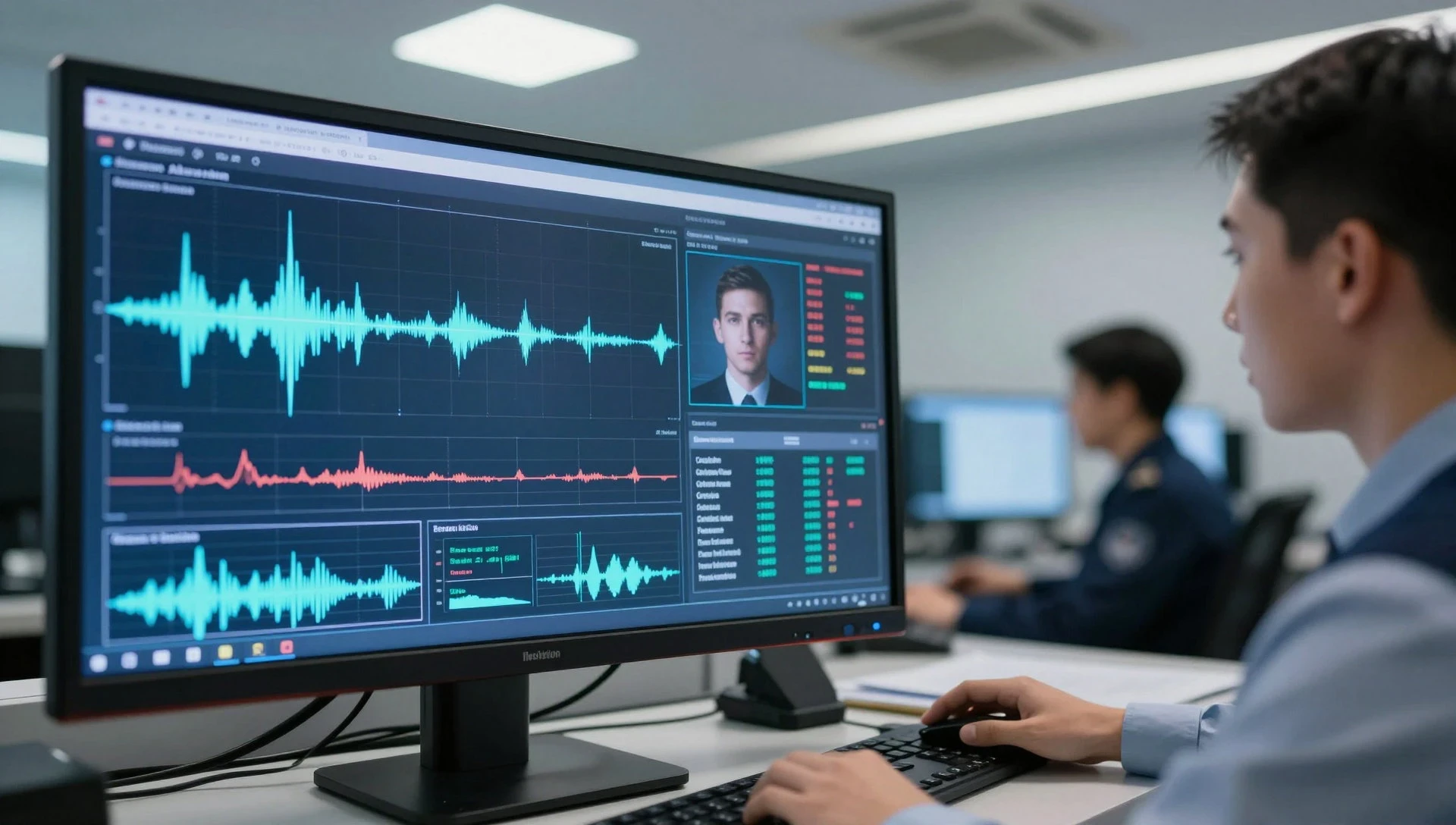
Emergency communications centres across North America are confronting a quiet but consequential shift in the nature of malicious calling. For decades, the professionals who answer 911 calls relied on a combination of instinct, vocal texture, and conversational inconsistency to separate genuine distress from deliberate fabrication. That informal detection system is now being dismantled by commercially available voice synthesis tools capable of producing speech that carries the hesitations, breathing patterns, and emotional cadence of a frightened human being. The result is a category of hoax that no longer announces itself through obvious artifice, and the people tasked with triaging emergencies are being asked to make high-stakes judgements with fewer reliable signals than ever before.
The practice at the centre of this problem is swatting, a form of harassment in which an individual reports a fabricated violent emergency in order to provoke a heavily armed police response against a target. A recent incident in Yuba County, California, illustrated the pattern with uncomfortable clarity: an AI-generated voice delivered a bomb threat against a school, prompting overnight police mobilisation and the cancellation of classes. No device was found, and no one was injured, but the operational cost was real and the disruption to students, staff, and responding officers was immediate. Such episodes are no longer isolated curiosities; they represent a maturing tactic that exploits the very trust infrastructure on which public safety depends.
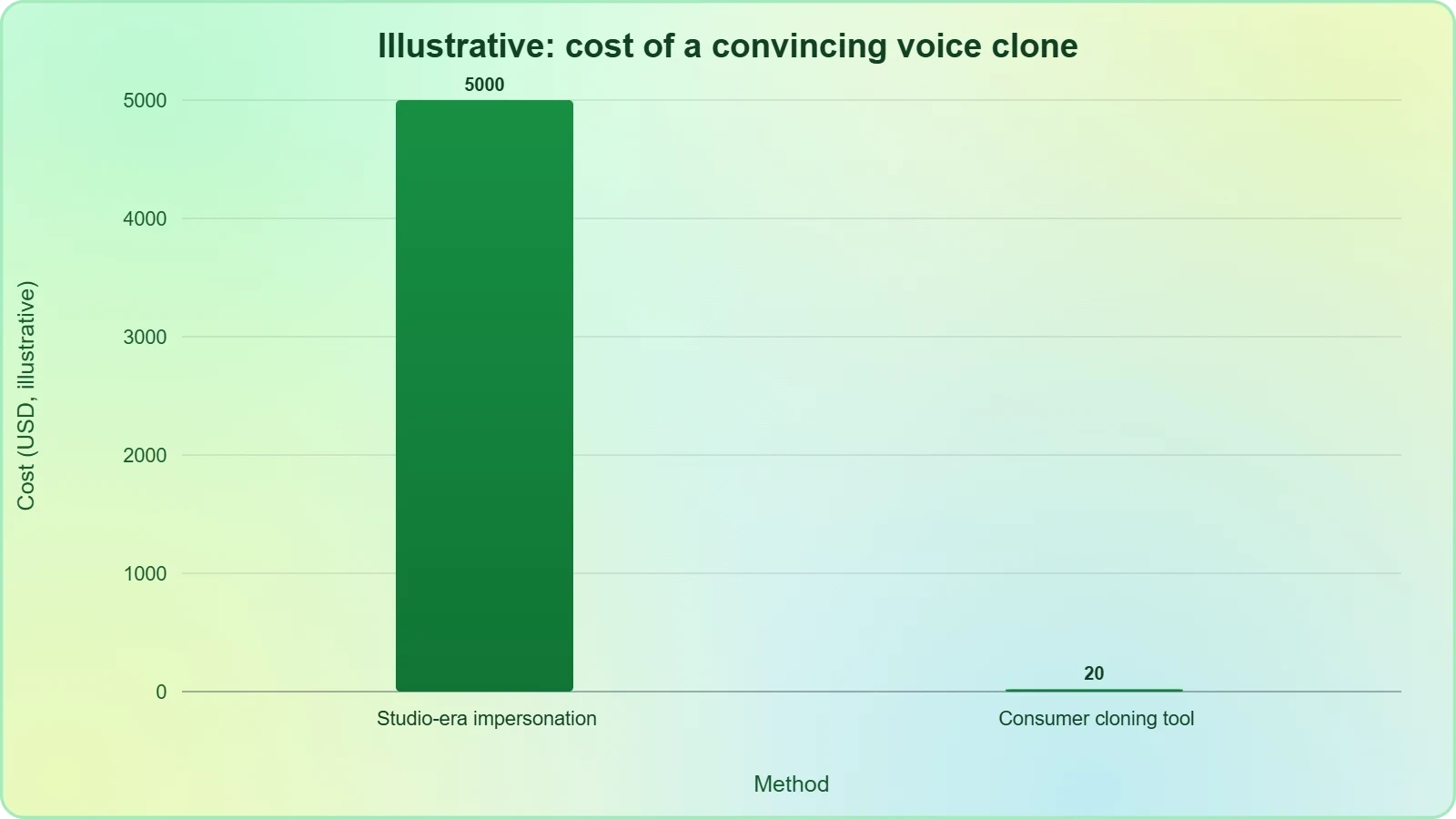
What makes this development analytically significant is not simply that the technology exists, but that it has become inexpensive and frictionless to deploy. Voice cloning that once required studio equipment and specialist expertise can now be accomplished for under twenty dollars, with adjustable pitch, tone, and pacing. That accessibility changes the threat model entirely, because it removes the technical barrier that previously limited impersonation to sophisticated actors. Understanding the full implications requires examining the operational pressures on dispatchers, the psychology of deception, the economics of synthetic voice, and the institutional response now taking shape among the associations that represent emergency communications professionals.
On This Page
TL;DR AI-generated voices are making swatting hoaxes substantially harder for 911 dispatchers to identify, because synthetic speech now reproduces the pauses, filler words, and emotional texture of genuine callers. A June survey by APCO and the Public Safety Threat Alliance found roughly 14% of public safety communications professionals reported being targeted with AI tools, and that figure is expected to climb as voice cloning becomes cheaper and more convincing. The Yuba County school bomb threat illustrates the operational consequences: mass police deployment, cancelled classes, and diverted resources. APCO and NENA are developing training programmes to help dispatchers adapt, but detection is becoming a structural rather than a technical problem.
The Anatomy of a Synthetic Emergency Call
Swatting has always depended on a specific asymmetry: the caller knows the report is false, while the dispatcher must treat every report as potentially true. That asymmetry is what gives the tactic its leverage, because the cost of under-reacting to a genuine emergency is measured in lives, while the cost of over-reacting to a hoax is measured in resources and disruption. AI voice synthesis does not create this asymmetry, but it sharpens it considerably by removing the audible tells that previously allowed experienced dispatchers to form a preliminary judgement. The result is a decision environment in which the rational response to uncertainty is escalation, which is precisely what the attacker wants.
Why Natural-Sounding Speech Defeats Human Instinct
Experienced dispatchers develop an intuitive ear for fabrication over years of call handling. They notice when a caller's emotional register does not match the content of the report, when the narrative is too rehearsed, or when the background soundscape is implausibly silent. Synthetic voice generation undermines each of these heuristics simultaneously. Modern text-to-speech systems insert disfluencies such as "uh" and "um" at statistically plausible intervals, vary prosody across a sentence, and can be tuned to sound panicked, breathless, or tearful. The output is not merely intelligible; it is convincingly human, and it arrives without the artefacts that once betrayed a recording or a crude voice changer.
Brandon May, an assistant professor of forensic psychology at the Florida Institute of Technology, has demonstrated the accessibility of this capability directly, cloning his own voice for less than twenty dollars and adjusting its pitch, tone, and pauses at will. His assessment is blunt: detection is becoming nearly impossible. That judgement matters because it reframes the problem. If the auditory signal can no longer be trusted, then dispatchers cannot be trained to hear deception more accurately; they must instead be equipped with procedural safeguards that do not depend on perceptual judgement at all.
The Operational Cost of a False Alarm
Every swatting call triggers a predictable sequence of institutional responses. Patrol units are dispatched, tactical teams may be placed on standby, schools and businesses are placed in lockdown, and command staff are pulled into incident coordination. In the Yuba County case, the response unfolded overnight, with officers searching a campus for a device that did not exist while students lost a day of instruction. These costs are borne publicly, but they are not abstract: they consume officer hours that cannot be spent on genuine incidents, they impose psychological strain on staff and students, and they erode confidence in the emergency reporting system itself.
Mel Maier, chief executive of the Association of Public Safety Communication Officials, has characterised the underlying motive clearly. Swatting is designed to harass or retaliate against a target, and its secondary effect is to divert public safety resources away from real emergencies. That dual harm is what distinguishes swatting from ordinary nuisance calling. It is a targeted act of aggression that weaponises the state's own protective apparatus, and the addition of synthetic voice simply lowers the skill threshold for carrying it out while raising the probability that the attack succeeds in provoking a response.
The Survey Evidence and the Scale of Exposure
Quantifying a threat of this kind is inherently difficult, because hoaxes are underreported and attribution is uncertain. Nevertheless, the June report issued jointly by APCO and the Public Safety Threat Alliance provides the most concrete baseline available. Drawing on 766 responses from public safety communications professionals, the study found that approximately 14% of dispatchers reported having been targeted using AI tools. That figure should be read carefully: it measures self-reported targeting among a professional population, not the total incidence of AI-assisted hoaxes, and it almost certainly understates exposure given the difficulty of confirming synthetic origin after the fact.
Reading the 14 Percent Figure Correctly
The headline number is striking, but its analytical value lies in its trajectory rather than its current magnitude. Maier expects the proportion to rise as the underlying technology improves, and there is little reason to doubt that projection. Voice synthesis quality has advanced rapidly, cost has fallen sharply, and distribution has become trivial. Each of these trends pushes in the same direction. A figure that stands at roughly one in seven today describes a threat that is still maturing, and the institutional planning horizon must therefore account for a materially higher rate of exposure within a few years.
There is also a methodological point worth registering. Survey respondents are professionals trained to recognise deception, which means their self-reported targeting rate may be lower than the true rate among the general public or among specific high-profile targets. Public figures, journalists, activists, and online personalities are disproportionately subjected to swatting, and these groups are precisely the ones most likely to be impersonated convincingly because abundant audio samples of their voices exist online. The survey therefore captures a professional baseline while leaving the highest-risk populations largely outside its frame.
Who Bears the Risk
The distribution of risk is uneven and follows the availability of training data. A public figure who has given interviews, appeared on podcasts, or posted video content has effectively supplied the raw material for a convincing clone. Private individuals are less exposed to targeted impersonation but remain vulnerable to generic synthetic calls placed by actors with no personal grievance. Meanwhile, the dispatchers themselves have become targets, a development that Maier's organisation treats as a direct occupational hazard. When the people who answer emergency calls can be harassed through the very systems they operate, the integrity of the reporting channel becomes a workforce safety issue as much as a technological one.
The Economics of Voice Cloning
The decisive variable in this story is not the sophistication of the technology but its price. May's demonstration that a convincing clone can be produced for under twenty dollars reframes the threat from a specialist capability into a consumer product. When the marginal cost of impersonation approaches zero, the population of potential attackers expands to include anyone with a grievance, a grudge, or simply a desire for notoriety. Deterrence strategies that rely on technical difficulty collapse under those conditions, because the barrier to entry no longer filters out the casual or the impulsive actor.
From Studio Equipment to Consumer Software
A decade ago, voice impersonation required either a skilled mimic or a professional impressionist, and recorded audio bore artefacts that trained listeners could identify. The intervening period has compressed that pipeline into a web interface. A user uploads a short sample, selects a target voice, types a script, and receives output within minutes. Pitch, tone, pacing, and emotional colour are adjustable parameters rather than artistic skills. The consequence is that the qualitative gap between a genuine caller and a synthetic one has narrowed to the point where passive listening can no longer resolve the question reliably.
This democratisation has a second-order effect that deserves attention. Because the tools are legitimate and widely marketed for entertainment, accessibility, and content creation, they cannot simply be banned or restricted without imposing substantial collateral costs. The same software that enables a hoax also enables voice restoration for people who have lost speech to illness, and dubbing for media localisation. Regulatory responses must therefore be surgical, targeting misuse rather than capability, which is a considerably harder problem than restricting a narrow dual-use technology.
Why Cheap Tools Change the Threat Model
Security analysis typically distinguishes between capability and intent. Voice synthesis has dramatically expanded capability while leaving intent distributed across the population as it always was. The result is a larger expected number of attacks even if the proportion of malicious actors remains constant. Emergency services, which must plan for volume rather than for individual incidents, feel this arithmetic directly. A modest rise in the rate of convincing hoaxes translates into a substantial rise in the number of expensive, disruptive deployments, and the operational burden falls on agencies that are already stretched.
Institutional Response and Training Gaps
The organisations that represent emergency communications professionals have not been passive. APCO and NENA: The 9-1-1 Association are jointly developing training designed to help members recognise and respond to synthetic voice threats. That work is necessary, but it confronts an uncomfortable premise: if May is right that detection is becoming nearly impossible, then training cannot be primarily about listening more carefully. It must instead focus on procedural resilience, including verification protocols, escalation discipline, and the use of secondary channels to confirm reports before committing large-scale resources.
What Dispatcher Training Can Realistically Achieve
Realistic training acknowledges the limits of perception. Dispatchers can be taught to probe for information that a scripted synthetic caller may struggle to supply, such as local geographic detail, real-time environmental description, or responses to unexpected questions. They can be trained to notice inconsistencies in the narrative rather than in the voice. They can also be equipped with decision frameworks that weigh the credibility of a report against the cost of the response it would trigger. None of these measures is foolproof, but together they shift the defensive burden from intuition to structure.
There is a workforce dimension here that is easily overlooked. Dispatchers already operate under significant psychological load, absorbing trauma from callers as a routine feature of the job. Adding the requirement to second-guess whether a distressed voice is genuine compounds that burden and risks normalising suspicion toward real victims. Training programmes must therefore be designed with care, ensuring that scepticism is applied to the report rather than to the caller, and that the default posture toward genuine distress remains one of belief and rapid assistance.
Verification Protocols and Their Limits
Callback verification, where a dispatcher attempts to reach the reporting party or the institution named in the call through an independent channel, is among the more promising procedural safeguards. It is also slow, and in genuine emergencies delay carries its own cost. The tension between verification and speed is irreducible, and no protocol resolves it entirely. What institutions can do is calibrate the level of verification to the scale of the response being contemplated, so that a report triggering a tactical deployment receives more scrutiny than one triggering a single patrol car.
Legislative responses are also emerging, though unevenly. Some jurisdictions have moved to criminalise swatting more severely, and there have been proposals to attach liability to the use of synthetic media in the commission of a crime. Enforcement remains difficult because perpetrators are often geographically distant and may route calls through anonymising infrastructure. The practical effect is that deterrence operates weakly, and prevention must therefore rest primarily on the resilience of the receiving institutions rather than on the certainty of punishment.
- 01
- 02
- 03
- 04
Detection Technology and the Adversarial Race
If human listening is losing its reliability, the natural question is whether machine detection can take its place. Audio forensics tools exist that analyse spectral artefacts, phase inconsistencies, and generative fingerprints left by synthesis models. Their performance, however, is measured against known systems, and the field is inherently adversarial. Each improvement in detection tends to be followed by an adjustment in generation, and the advantage shifts back and forth without settling. For emergency communications, this means detection software can serve as a supplementary signal but cannot be treated as an authoritative arbiter of authenticity.
The Promise and Fragility of Audio Forensics
Forensic classifiers trained on current synthesis models achieve impressive accuracy in laboratory conditions. Field conditions are less forgiving. Compressed telephony audio strips away much of the high-frequency detail on which detection depends, and background noise introduces ambiguity that classifiers handle poorly. A hoax caller who routes audio through a standard phone connection has already degraded the signal in ways that disadvantage the detector. The practical consequence is that detection tools perform best precisely where they are least needed, on clean recordings analysed after the fact, and worst where they are most needed, on live calls in real time.
There is also a governance question. If a detection system flags a call as synthetic and is wrong, the consequences for a genuine victim could be severe. False positives in this domain are not inconveniences; they are potential failures to respond to someone in danger. Any deployment of detection technology must therefore be calibrated conservatively, with human judgement retaining final authority and with clear protocols for overriding automated assessments. The technology can inform, but it cannot decide.
Why the Advantage Keeps Shifting
The structural dynamic here resembles other adversarial machine learning problems. Generation models are trained to produce output that is indistinguishable from real data, and detection models are trained to distinguish them. Each side's progress degrades the other's performance, and the equilibrium, if it exists, is unstable. For institutions planning years ahead, the prudent assumption is that detection will remain probabilistic rather than definitive. Resilience must therefore be built into process rather than purchased as a product, and the organisations that fare best will be those that treat authenticity as one input among several rather than as a binary verdict.
We Also Published
Broader Implications for Public Trust
Beyond the operational mechanics lies a question of institutional credibility. Emergency reporting systems function because the public believes that calling for help will produce a proportionate and timely response. If hoaxes become frequent enough to force routine scepticism, that belief erodes, and the erosion falls hardest on the people who most depend on the system. Victims of domestic violence, people experiencing medical emergencies, and residents of communities with strained police relations all have reason to be sensitive to signals that their reports may be doubted. The cost of synthetic hoaxes is therefore not only the resources they consume but the trust they corrode.
The Risk of Normalised Scepticism
There is a well-documented dynamic in which security measures designed to filter out abuse end up burdening legitimate users disproportionately. Applied to emergency calling, this would mean that the people most likely to be disbelieved before the arrival of synthetic voice become even less likely to be believed after it. Dispatchers are professionals, and most will manage the tension carefully, but the structural pressure toward scepticism is real. Institutions should monitor for signs that verification protocols are producing disparate outcomes across communities, and should treat such disparities as a signal that the balance has tipped too far.
Media coverage also shapes the public understanding of this problem, and coverage that emphasises the cleverness of the hoax can inadvertently encourage imitation. Responsible reporting frames swatting as a serious crime with real victims rather than as a prank enabled by novel technology. The Yuba County incident, in which a school community lost a night and a day to a threat that never existed, is a useful corrective to any framing that treats these calls as victimless mischief. The harm is concrete, distributed across students, staff, officers, and the public purse.
Designing Systems That Assume Deception
The most durable response may be architectural rather than behavioural. Systems that assume some proportion of reports will be false can be designed to verify cheaply and escalate gradually, so that the cost of a hoax is bounded rather than open-ended. This might include automated cross-checks against known institutional contacts, tiered dispatch protocols calibrated to report severity, and post-incident review that feeds learning back into procedure. None of these measures eliminates the threat, but together they reduce the leverage that a single convincing call can exert over an entire public safety apparatus.
What Comes Next for Emergency Communications
The trajectory of this problem is reasonably clear even if the specific countermeasures remain unsettled. Voice synthesis will continue to improve and to cheapen, the population of potential hoax callers will broaden, and the proportion of dispatchers reporting AI-assisted targeting will rise from its current level of roughly 14%. Institutions that plan on the assumption that detection will become reliable are likely to be disappointed. Institutions that plan on the assumption that some calls will be synthetic, and that design their procedures accordingly, will be better positioned to absorb the shock without compromising their response to genuine emergencies.
The most important insight may be that this is not fundamentally a technology problem. It is a problem of institutional design under conditions of degraded signal. The tools that make hoaxes convincing are legitimate, widely available, and unlikely to be meaningfully restricted. What can be changed is how emergency systems verify, escalate, and learn. APCO and NENA are right to invest in training, but the deeper work lies in procedure, in the calibration of response to evidence, and in the protection of the public's belief that calling for help will bring it. That belief is the asset most at risk, and it is not one that any detection model can secure.
| Dimension | Current Position | Direction of Travel |
|---|---|---|
| Voice cloning cost | Under twenty dollars | Falling further |
| Dispatcher targeting rate | Approximately 14% | Expected to rise |
| Human detection reliability | Declining | Continuing decline |
| Institutional training | In development | Expanding |
| Public trust in reporting | Under pressure | At risk |
From our network :
- Live Online English Classes for Kids: Do They Actually Reduce Anxiety?A ten-week study reveals that synchronous online English classes can significantly reduce child language anxiety while improving listening and reading skills. Discover what makes these programs effective and how parents can select the right one.
- Committed Mediterranean Precipitation Decline: Why Emissions Cuts Alone Cannot Restore Winter RainsNew NOAA research reveals that Mediterranean winter rains may decline irreversibly even with emissions cuts. Explore the science of committed climate change and regional impacts.
- CISA’s Ten-Advisory Wave: Why Generic Patching Fails in OT and How to Build Product-Specific PlaybooksCISA released ten ICS advisories in one week, exposing critical infrastructure risks. Generic patching fails in OT. Learn to build product-specific remediation playbooks.
- The Final Descent: How ESA Retired the Legendary Cluster Constellation After 24 Years of Space Weather ScienceAfter 24 years mapping Earth’s magnetosphere, ESA’s Cluster mission concluded with a precisely controlled reentry over the South Pacific. This analysis explores the scientific legacy, engineering decisions, and debris mitigation principles behind one of space exploration’s most responsible retirements.
- Forbidden Matrix Patterns and Visible Lattice Points: A Geometric DictionaryExplore how multidimensional 0–1 matrices encode geometric truths, linking forbidden patterns to visible lattice points and hypergraph theory, with applications in combinatorics and computational geometry.
- How AI Agents Will Change the Way We Manage Personal FinancesExplore how AI agents are transforming personal finance through automated budgeting, bill payment, and investment management, while examining the critical security protocols and governance frameworks required for safe deployment.
- University Language Proficiency Exams: Why Institutional Tests Demand Different Preparation Than IELTS and TOEFLDiscover why university-specific language proficiency examinations differ fundamentally from IELTS and TOEFL, and learn strategic preparation approaches for institutional assessment success.
- The Hidden Cost of AI Convenience: Why Over-Permissioned Agents Are a Security Time BombDiscover why AI agents with excessive permissions create dangerous single points of failure, and learn how implementing least privilege principles can protect your organization from exploitation.
- Mobile Learning and VR in English: What Global Evidence Reveals About Effective Language TechnologyA systematic review across 14 countries reveals which language-learning technologies genuinely work. Mobile learning, AI, and VR show measurable benefits when pedagogically integrated. This evidence-based guide helps educators and learners select technology that delivers real return on investment.
RESOURCES
- Swatting calls using AI means fake 911 calls are harder to detectnpr.org7 hours ago ... Swatting calls made by people using AI-generated voices or background sounds are making these hoax calls sound even more realistic,…
- AI is making it harder to detect fake emergency calls | Iowa Public ...iowapublicradio.org1 day ago ... AI-generated voices or background sounds are making hoax calls sound more realistic. ... Swatting calls are usually made to 911…
- AI hoaxes are deceiving 911 dispatchers, and they're only ... - WVIAwvia.org7 hours ago ... Swatting calls made by people using AI-generated voices or background sounds are making these hoax calls sound even more realistic,…
- AI hoaxes are deceiving 911 dispatchers, and they're only ... - WKMSwkms.org4 hours ago ... Swatting calls made by people using AI-generated voices or background sounds are making these hoax calls sound even more realistic,…
- AI is making it harder to detect fake emergency callsctpublic.org1 day ago ... AI-generated voices or background sounds are making hoax calls sound more realistic. ... Swatting calls are usually made to 911…
- AI is making it harder to detect fake emergency calls | KMUWkmuw.org19 hours ago ... AI-generated voices or background sounds are making hoax calls sound more realistic. ... Swatting calls are usually made to 911…
- AI is making it harder to detect fake emergency calls | WBOIwboi.org1 day ago ... AI-generated voices or background sounds are making hoax calls sound more realistic. ... Swatting calls are usually made to 911…
- AI is making it harder to detect fake emergency calls | KAXEkaxe.org19 hours ago ... AI-generated voices or background sounds are making hoax calls sound ... Swatting calls are usually made to 911 or police…
- AI is making it harder to detect fake emergency calls - WSIUwsiu.org1 day ago ... AI-generated voices or background sounds are making hoax calls sound more realistic. ... Swatting calls are usually made to 911…
- AI hoaxes are deceiving 911 dispatchers, and they're only ... - WCBUwcbu.org6 hours ago ... Swatting calls made by people using AI-generated voices or background sounds are making these hoax calls sound even more realistic,…
- Swatters are using AI voices to deceive 911 dispatchers, and it's ...ksmu.org2 hours ago ... Swatting calls made by people using AI-generated voices or background sounds are making these hoax calls sound even more realistic,…
- AI is making it harder to detect fake emergency calls - WUKYwuky.org1 day ago ... AI-generated voices or background sounds are making hoax calls sound more realistic. ... Swatting calls are usually made to 911…
- The Escalating Threats of Doxxing and Swattingnaag.orgIn particular, 2025 public warnings by the FBI and major media outlets noted the rising use of AI-generated voices in fraudulent emergency calls. Bot ...
- Are AI-generated/spoofed 911 calls something you're seeing in the ...reddit.comJul 11, 2025 ... Ai generated în the form of Apples crash detection. Never on the negative side. But ive had a TON of…
- Beyond the Panic Button: Verifying Swatting Calls - VOLT AIvolt.aiOct 16, 2025 ... ... emergencies from sophisticated swatting hoaxes. When dispatchers and security teams can see what AI systems are detecting (or not…
- 01
- 02
- 03
- 04
- 05
- 06
- 07
- 08
0 Comments