
Minneapolis is weighing possible new limits on data centers, according to a brief report from FOX 9 Minneapolis–St. Paul dated November 10, 2026. The report identifies a municipal policy discussion, but does not describe proposed rules, affected sites, a timetable, or the reasons behind the review. The central fact is therefore that the city is considering action—not that it has adopted restrictions.
The distinction matters because data centers sit at the intersection of digital infrastructure and local planning. They can support everyday online services while also raising questions about land use, electricity, water, construction, and neighborhood impacts.
Minneapolis’s reported consideration of limits signals those issues may be entering local debate, but the available account does not establish which concerns officials are prioritizing.
On This Page
TL;DRFOX 9 Minneapolis–St. Paul reported that Minneapolis is considering possible limits on data centers. The report supplied no specific proposals, decision date, affected locations, or explanation of the city’s aims, so the development should be treated as an active consideration rather than a confirmed policy.
The key questions are what any rules would cover, how officials assess local costs and benefits, and whether residents, utilities, businesses, and other stakeholders will help shape the process. Until details emerge, the most useful interpretation is cautious: the city is weighing options, and the substance and consequences remain unknown.
What the Minneapolis report establishes
The report provides a narrow but important update: Minneapolis is considering limits on data centers. It attributes that information to FOX 9 Minneapolis–St. Paul, while leaving the proposed measures and underlying rationale unspecified. That makes careful separation of confirmed facts and unanswered questions essential.
The known facts and their limits
The source identifies Minneapolis as the city considering possible restrictions and data centers as the subject. It does not name a department, elected official, planning body, company, or individual facility. Readers should not infer from the report alone that a formal ordinance has been drafted.
Its wording describes consideration, not approval. Municipal governments can explore options before deciding whether to commission analysis, consult the public, amend planning rules, or take no further action. The report does not indicate which stage Minneapolis has reached, so any account of a specific process would exceed the evidence.
The source also offers no policy text or concrete examples of proposed limits. It does not say whether the city is weighing restrictions on new construction, operating conditions, zoning, resource use, or another issue. Those possibilities are useful questions, not confirmed elements of Minneapolis’s deliberations.
The date and location provide context, but not a legislative calendar. The report is timestamped November 10, 2026, and identifies Minneapolis in the United States. It supplies no deadline, hearing notice, council vote, implementation schedule, or indication of when additional information might become available.
Why cautious interpretation matters
Short news summaries can accurately identify a development while omitting the details needed to judge its scale. Here, the phrase “considering new limits” signals possible policy work but does not reveal whether the discussion is preliminary, formally initiated, or connected to a particular proposal.
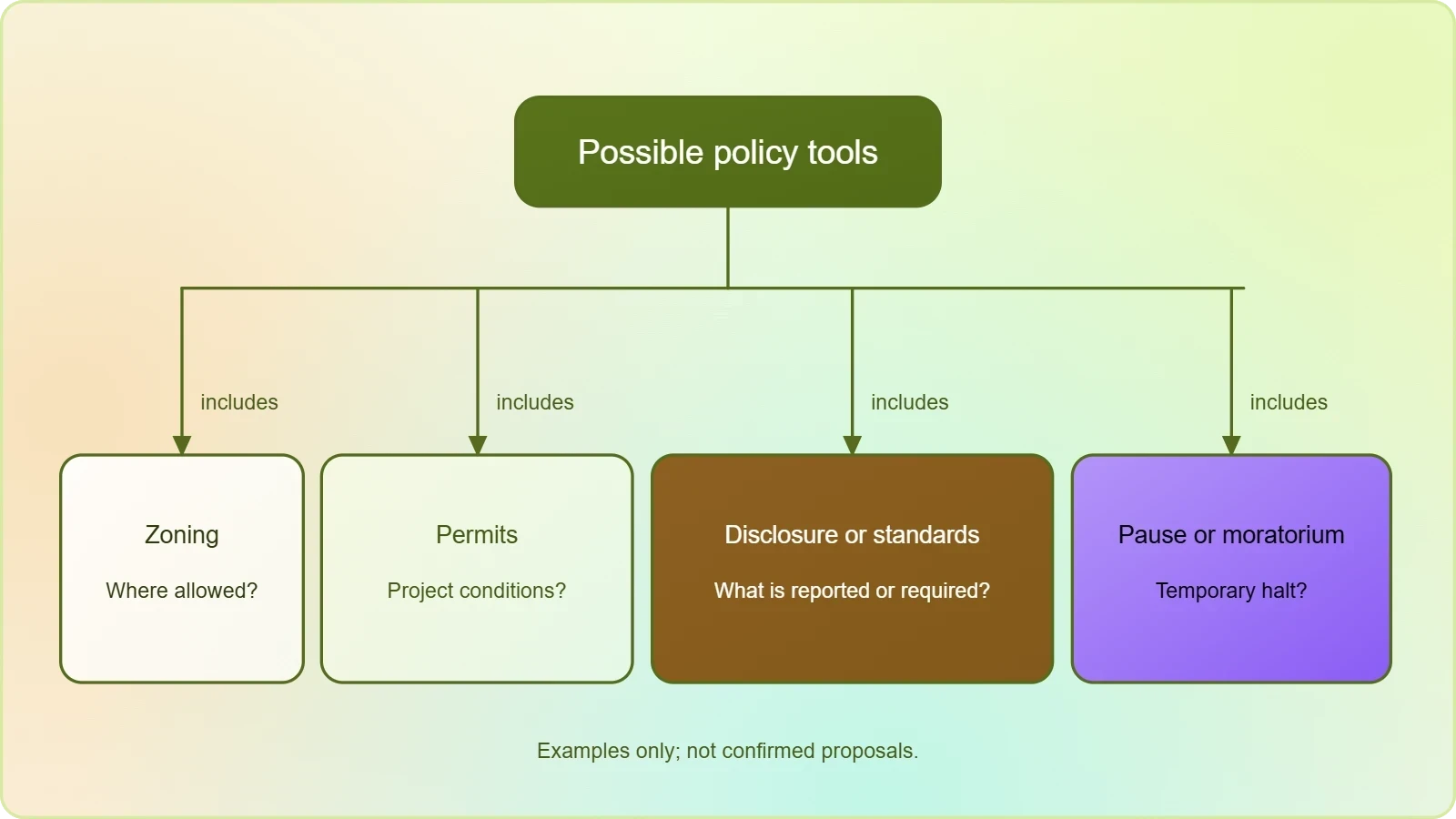
Words such as “limits,” “rules,” and “restrictions” can refer to substantially different policy tools. A temporary pause, a zoning amendment, a permit condition, and a general operating standard would have different legal effects. The report does not identify which meaning, if any, applies in Minneapolis.
It is also important not to treat the absence of details as evidence of a hidden proposal or settled controversy. The source gives no stated motivation, impact study, public reaction, or industry response. Any claims about conflict, urgency, or expected economic effects would require additional reporting.
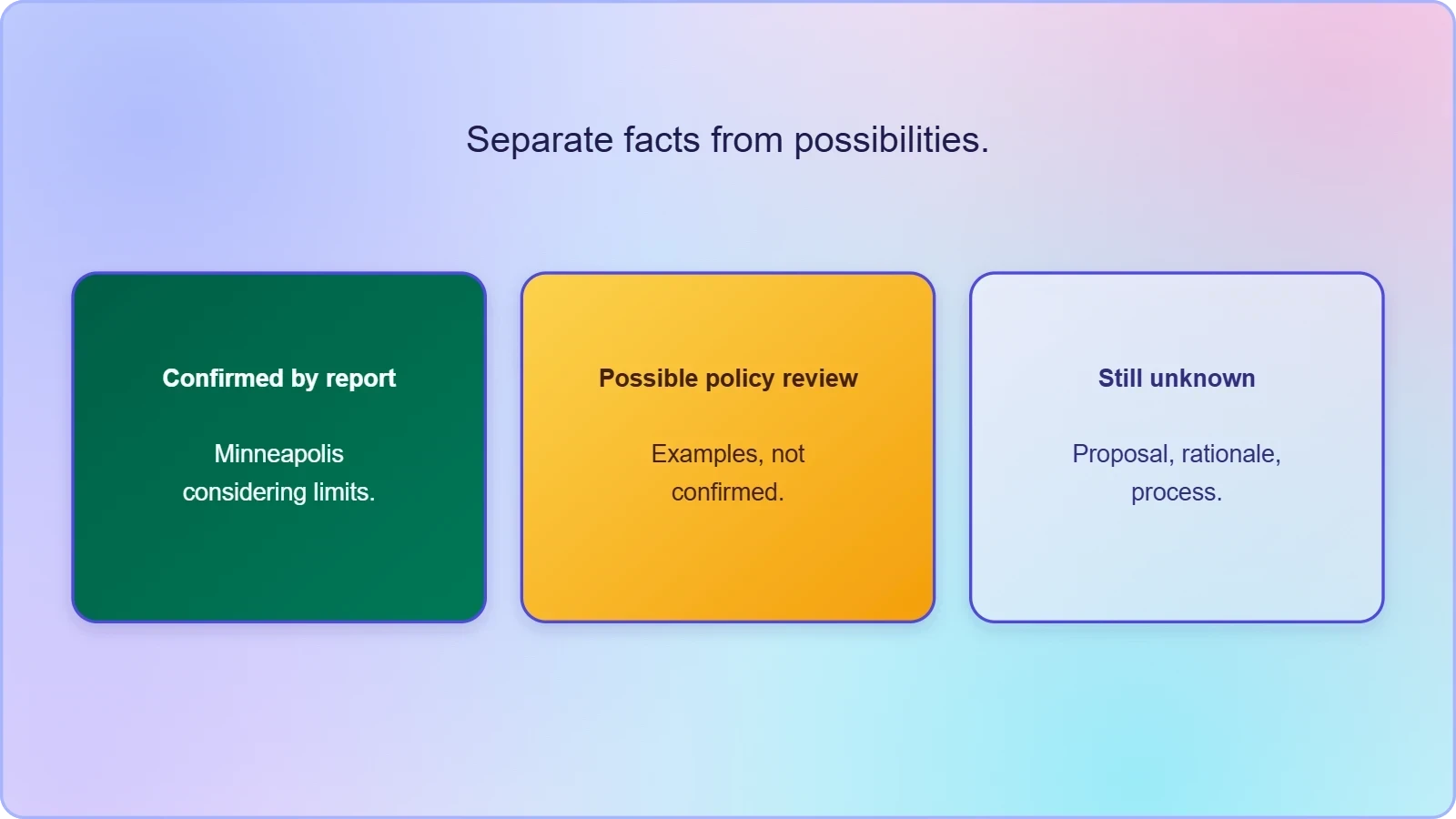
A sound reading keeps three categories separate: what the source confirms, what a city might examine in a data-center policy review, and what remains unknown. This discipline allows readers to understand the significance of the topic without turning plausible issues into unsupported claims about local decisions.
Why data centers become a local policy issue
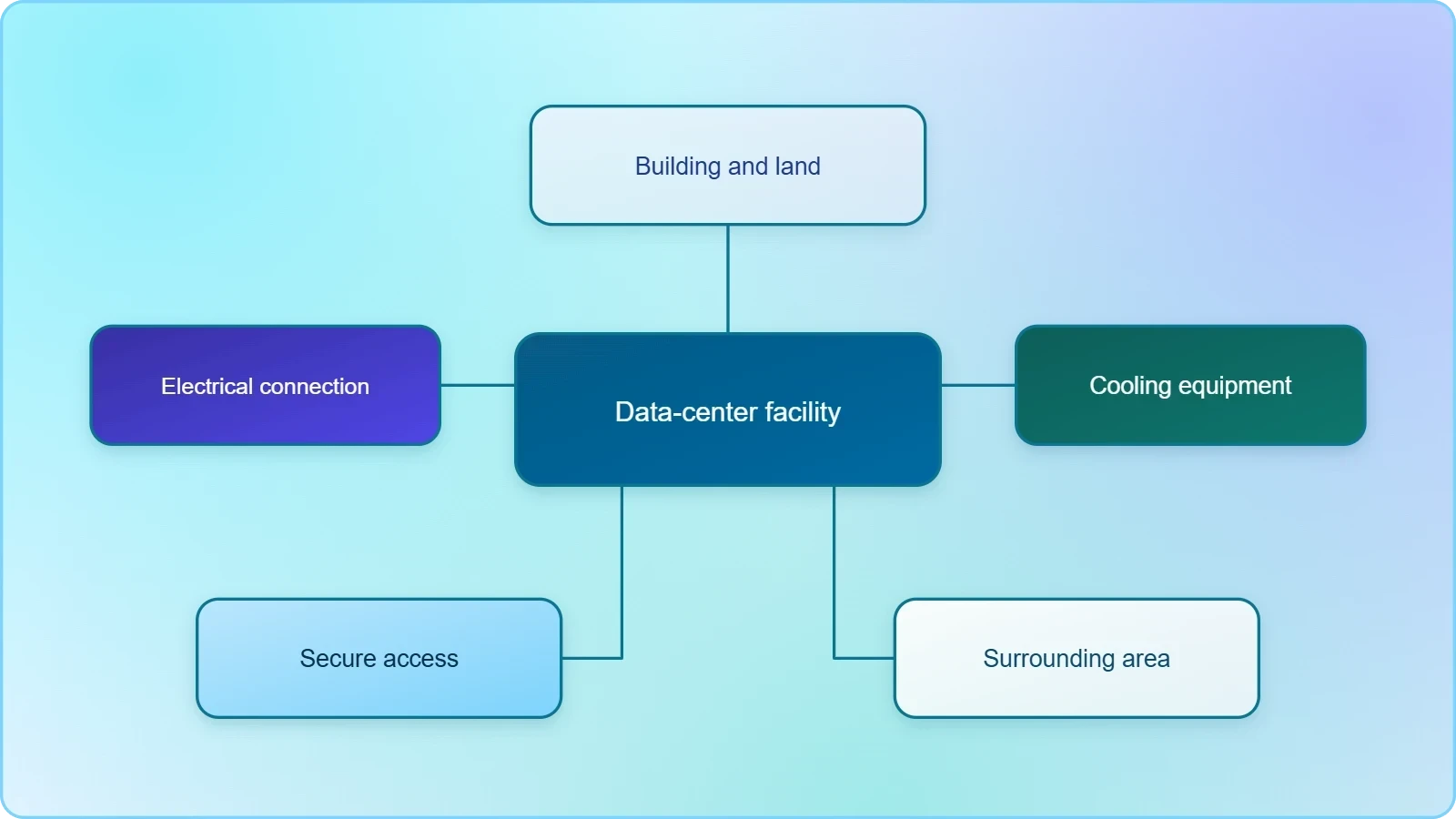
Data centers house computing equipment and the systems that keep digital services available. Their physical footprint can bring planning questions into focus, since facilities depend on buildings, power, cooling, network connections, and ongoing maintenance. Which of these issues matters most in Minneapolis is not stated in the report.
Infrastructure and land-use considerations
A large computing facility may require substantial space, secure access, electrical connections, and mechanical equipment. Those characteristics can intersect with zoning, building design, traffic during construction, and compatibility with nearby uses. Whether any Minneapolis site or application raises these questions is not established by the source.
Power demand is a common subject in data-center planning because servers and cooling systems require reliable electricity. Local officials may seek information about capacity, grid connections, backup systems, and timing. The FOX 9 summary does not mention power consumption or indicate that electricity is the city’s stated concern.
Cooling approaches can also shape facility design and resource needs. Some systems use air-based methods, while others may involve water, depending on engineering choices and operating conditions. The available report gives no information about cooling technology, water use, or environmental assessments in the Minneapolis discussion.
Construction and operations can affect surrounding areas in different ways. Building work may bring temporary activity, while a completed facility’s daily footprint depends on its design and location. Without named sites or applications, it is not possible to assess neighborhood effects or say that particular impacts have occurred.
Public benefits and potential trade-offs
Data centers underpin services people use for communication, storage, commerce, media, and computing. Their presence can also be associated with investment and specialized infrastructure. These general functions explain why municipalities may weigh both local impacts and broader digital needs when considering development rules.
Potential benefits should not be assumed to accrue automatically to nearby residents. Employment levels, tax treatment, local procurement, and infrastructure contributions vary by project and governing arrangements. The Minneapolis report contains no figures or commitments on any of these subjects, so local benefits cannot be quantified from it.
Likewise, broad claims about environmental or economic costs require project-level evidence. Facility size, energy source, cooling design, operating efficiency, and grid conditions can all affect an assessment. No such information appears in the brief report, which makes generalized predictions about Minneapolis premature.
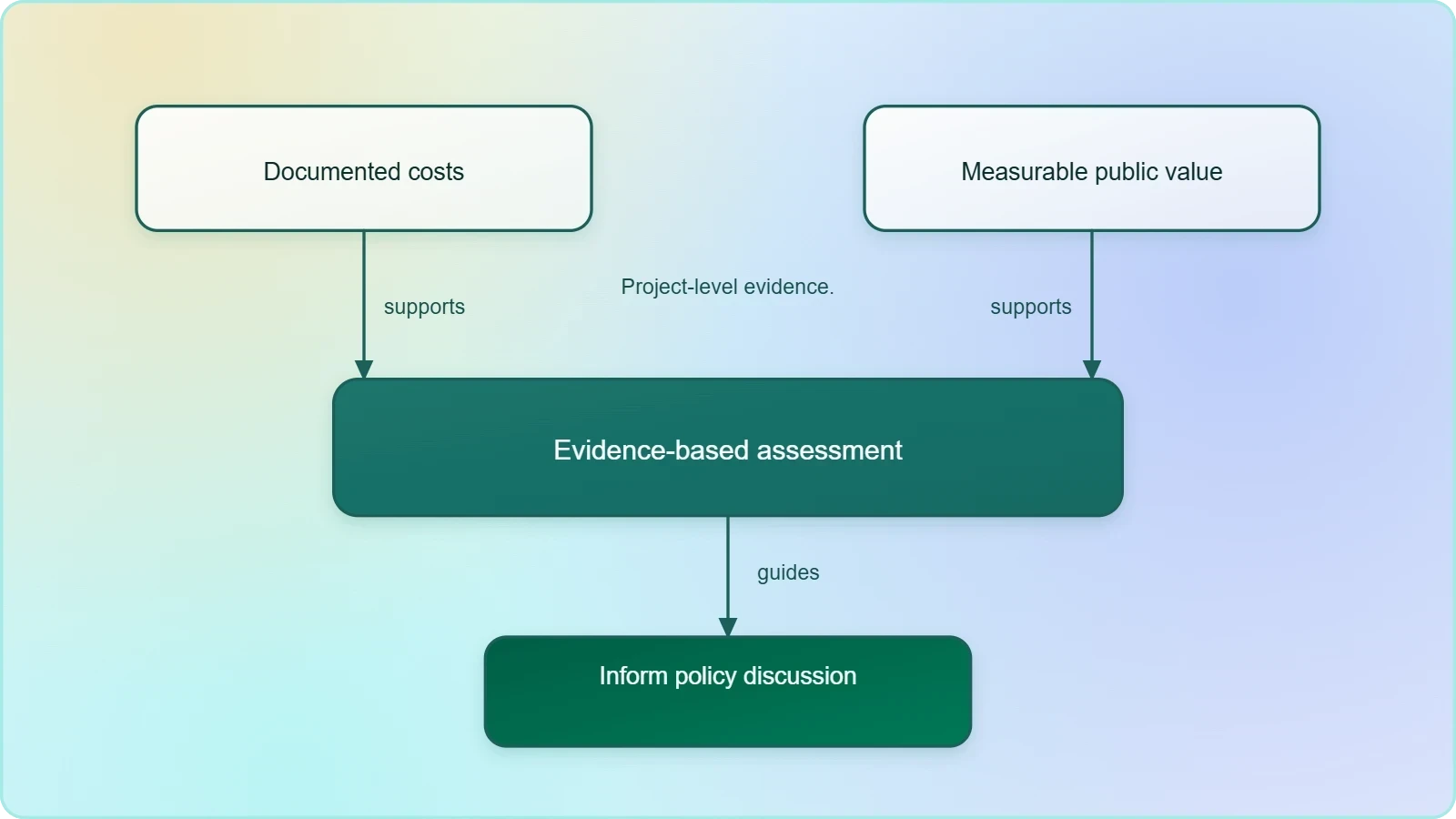
A policy discussion is most useful when it compares documented costs with measurable public value. Officials might seek consistent information across applicants, but the source does not say whether Minneapolis is doing so. Any conclusion about the city’s preferred balance between development and safeguards remains open.
What possible rules could mean
“New limits” is a broad description rather than a defined policy. In municipal practice, rules can operate through land-use plans, zoning, building permits, environmental review, utility coordination, or operating requirements. The source does not identify a preferred instrument or confirm that any draft language exists.
Different tools address different questions
Zoning rules can determine where certain uses are allowed and what conditions apply to development. A city could, in principle, review land-use categories or siting criteria when considering data-center proposals. The report does not say Minneapolis is pursuing zoning changes or identify any locations under review.
Permit requirements can focus on project-specific documentation, such as building plans, equipment, noise controls, or infrastructure coordination. Such mechanisms are distinct from a citywide prohibition. No permitting changes or application requirements are described in the source, so these remain examples of possible approaches only.
Some policy discussions focus on resource disclosure or performance standards, including electricity and water information. These measures can help decision-makers compare proposals, but they depend on clear definitions and reliable data. There is no indication in the report that Minneapolis has proposed disclosure rules or resource thresholds.
A pause or moratorium, if ever considered, would be different from a permanent standard and would require its own justification and legal review. The source does not mention a pause, a ban, or a suspension of permits. Readers should avoid translating the word “limits” into any one of these measures.
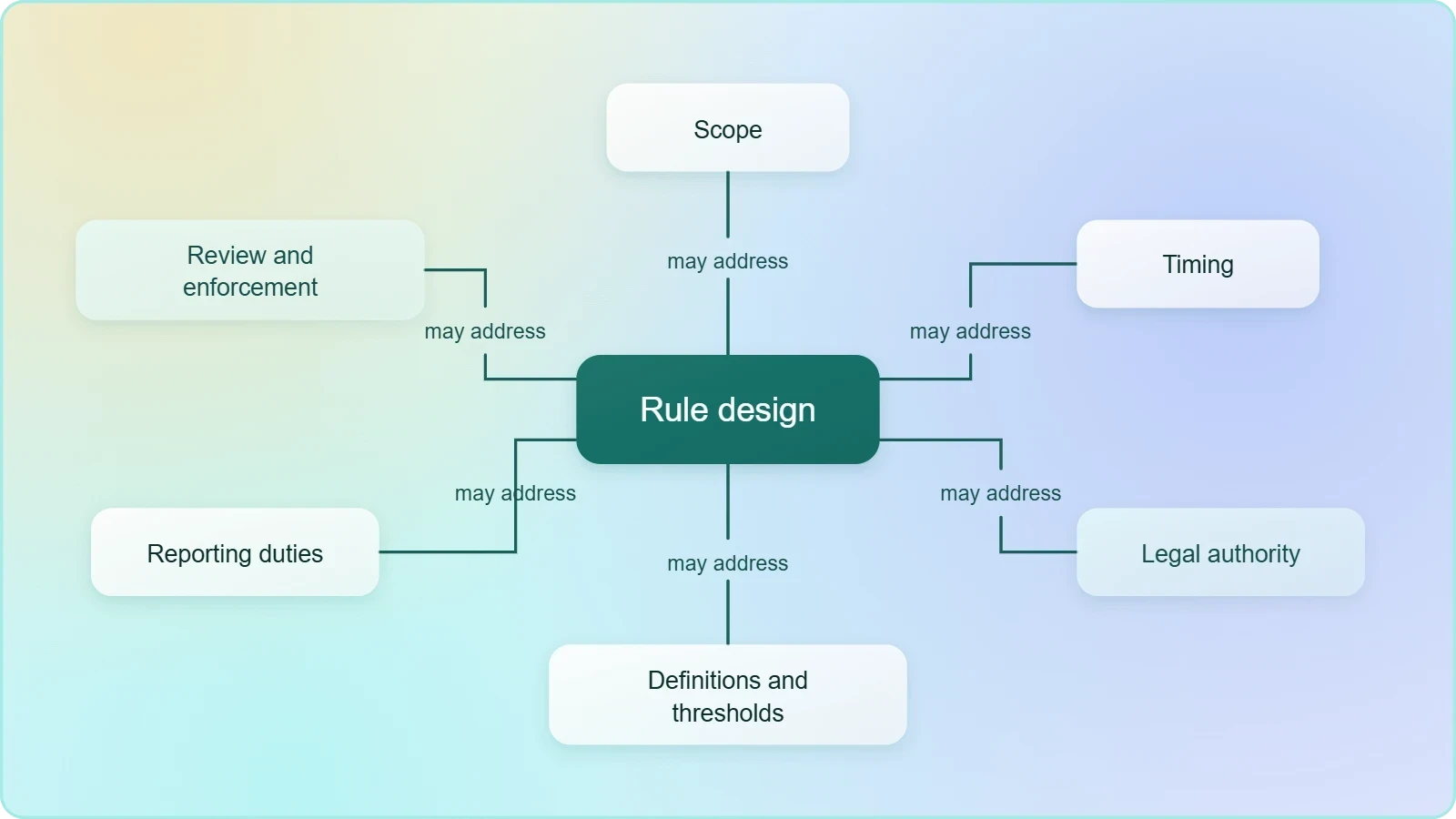
Scope, timing, and legal design
The scope of a rule determines whether it applies to new construction, expansions, existing facilities, or a particular type of operation. Each choice has different implications for property owners and city administration. The Minneapolis report supplies no scope definition, making it impossible to say who would be affected.
Timing also matters. A proposal may include transition periods, application deadlines, or different treatment for projects already in review. These details can shape predictability for residents and businesses alike. Nothing in the source establishes whether officials have discussed timing, grandfathering, or an implementation date.
Local regulations must fit within applicable legal authority and coordinate with other levels of government and utility arrangements. The exact boundaries depend on jurisdiction and the policy instrument involved. The report does not describe legal analysis or intergovernmental coordination, so no conclusion about feasibility can yet be drawn.
Clear drafting would matter if the city advances a proposal. Definitions, thresholds, reporting duties, review standards, and enforcement procedures determine how rules work in practice. Since no text is available in the source, the quality, consistency, and administrative burden of any potential regulation remain unknown.
Questions residents and stakeholders may ask
Any consequential local policy debate benefits from transparent information and opportunities for affected groups to participate. Residents, businesses, utilities, property owners, and public agencies may view the same proposal through different practical concerns. The report does not describe outreach or identify which stakeholders have been consulted.
Information that would clarify the debate
Residents may first want to know whether the discussion concerns a specific project or a citywide framework. That distinction affects the relevance of neighborhood-level concerns and the range of people likely to be affected. The source does not identify a project, application, or proposed geographic boundary.
Questions about energy and water require baseline information, not assumptions based on facility labels. Useful details could include anticipated demand, service capacity, cooling design, and how estimates were prepared. None appears in the FOX 9 summary, so local resource impacts cannot responsibly be inferred.
People may also ask how officials will evaluate community effects, including construction disruption, noise, land-use compatibility, and public infrastructure needs. The appropriate questions depend on the site and design. The report provides neither site details nor an assessment, leaving these issues unresolved rather than confirmed.
Finally, residents may seek clarity about decision-making: which public body is responsible, when discussion will occur, and how comments can be submitted. These practical details help distinguish an informal review from a formal rulemaking process. The available report supplies no meeting dates or participation instructions.
Balancing interests with evidence
Businesses and developers may value predictable standards and clear review timelines, while residents may emphasize safeguards and accountability. Utilities may focus on system planning and reliable service. These are general perspectives, not reported positions of Minneapolis stakeholders or evidence of disagreement in this case.
Public officials can make debate more productive by explaining what evidence they need and how it will inform decisions. Comparable project information can improve consistency, while public documentation allows scrutiny. The source does not say whether Minneapolis has established an evidence framework or invited formal submissions.
Consultation is most informative when it begins early enough to shape options rather than merely react to a finished decision. It can surface overlooked constraints and community priorities. However, the report provides no account of public engagement, so the timing and design of any consultation are unknown.
Stakeholder input does not replace technical review or legal analysis. Instead, it can help identify questions that specialists should answer and clarify the values behind policy choices. Without details about the city’s process, it is too soon to evaluate whether those elements are being integrated.
How to assess economic, environmental, and operational claims
Claims about data centers often rely on estimates that vary with facility design, scale, energy supply, and operating practices. A fair assessment should identify assumptions and distinguish projected effects from measured outcomes. The Minneapolis report offers no project data, cost estimates, or impact analysis to evaluate.
Metrics need context and transparent methods
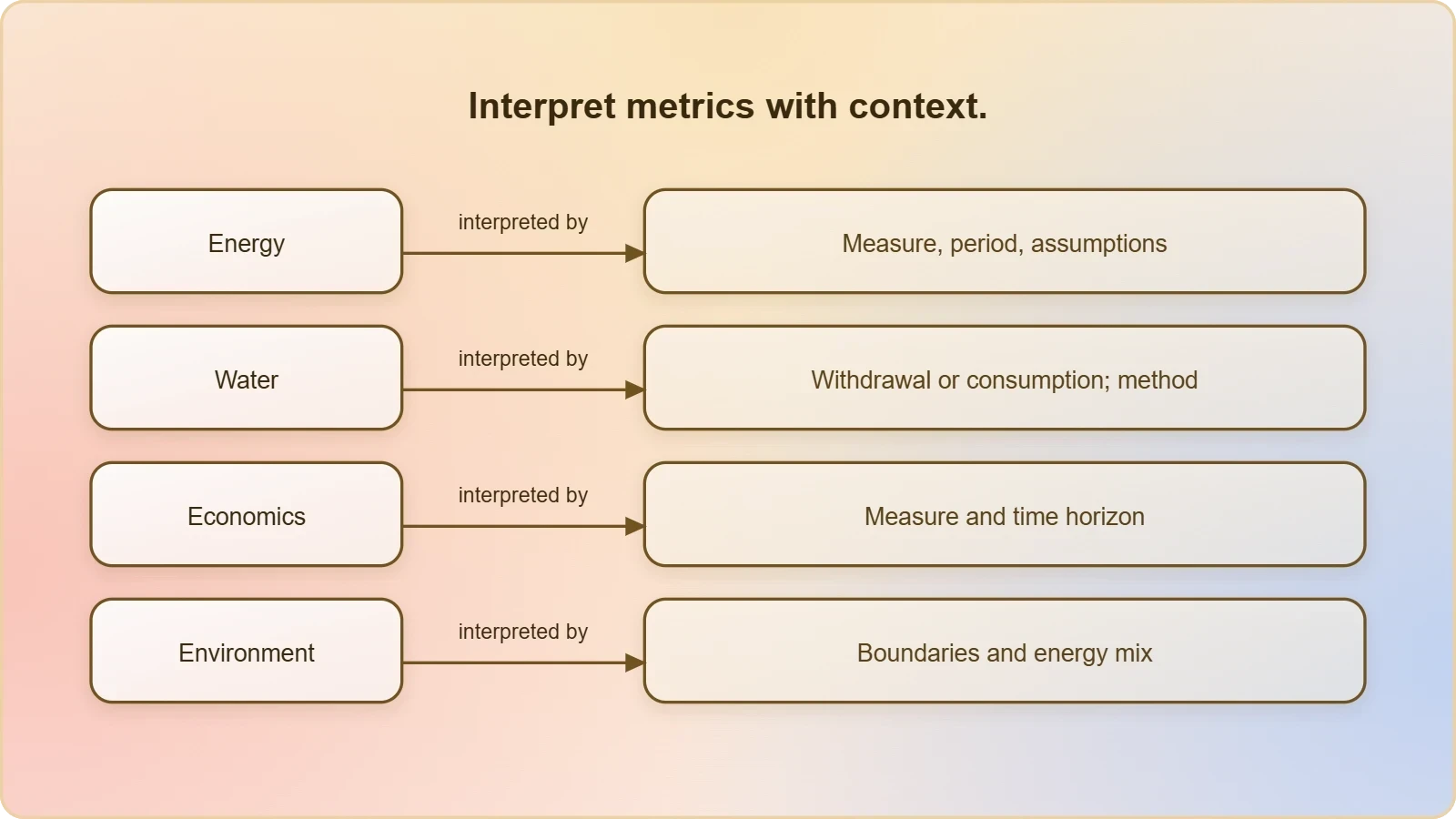
Energy figures are meaningful only when readers know what they measure, the period covered, and the assumptions behind them. Peak demand, annual consumption, and available grid capacity answer different questions. The report includes none of these metrics, so no local energy comparison is possible.
Water estimates likewise depend on cooling technology, climate, operating schedules, and whether the figure represents withdrawal or consumption. Those terms are not interchangeable. No water-related data is included in the source, and claims about Minneapolis facilities should wait for documented project-specific information.
Economic projections deserve similar scrutiny. Construction spending, permanent jobs, tax revenue, and indirect activity are distinct measures and may use different time horizons. The report provides no figures for any category, so it does not support claims that proposed limits would create or eliminate particular amounts of local value.
Environmental analysis should state its boundaries, including the energy mix and the lifecycle or operating period considered. A single headline metric can conceal important differences between projects. The source supplies no methodology or findings, making detailed environmental conclusions unavailable at this stage.
Comparison, accountability, and uncertainty
Comparisons are strongest when they use consistent definitions across facilities and disclose uncertainty. Otherwise, apparent differences may reflect reporting methods rather than real performance. If Minneapolis seeks to evaluate proposals, standardized information could help, but the report does not indicate that such a system is planned.
Monitoring conditions after approval can test whether projected performance matches actual operations. Reporting duties, verification, and corrective steps are among the design questions a city might consider. No operational monitoring regime is described in the source, and it would be inaccurate to imply that one already exists.
Economic claims should account for public costs as well as private investment, including any infrastructure work or administrative demands associated with a project. A net assessment requires evidence about both sides. The brief report gives no cost-benefit analysis, so the overall fiscal effect remains undetermined.
Uncertainty is not a reason to abandon analysis; it is a reason to state what is known and what is missing. Officials can publish assumptions and revise estimates as evidence improves. At present, the source supports a report of consideration, not a conclusion about likely outcomes.
What to watch as the discussion develops
The significance of Minneapolis’s consideration will become clearer only if additional reporting or city records provide substance. The next developments to watch include a formal proposal, public meeting materials, staff analysis, and statements identifying the issues officials intend to address. None is included in the source.
Signals of a formal policy process
A public agenda, staff memorandum, draft ordinance, or planning document would help establish whether the discussion has moved beyond preliminary consideration. Such materials could identify the responsible body and the policy questions under review. The brief report does not link to any municipal document or describe formal action.
Public meetings and comment periods can reveal how the city intends to gather input and weigh competing views. Their existence, timing, and scope should be verified through official notices. The source names no meeting and offers no participation details, so readers should not assume one is scheduled.
Any proposed text would clarify whether the city is considering broad standards or project-specific conditions. Definitions and exemptions would be especially important for understanding practical reach. Until such language is available, descriptions of what Minneapolis’s “limits” would require remain speculative.
Follow-up coverage may also identify the rationale officials provide, including whether they cite planning, infrastructure, environmental, or other concerns. A stated rationale would make analysis more precise. The report itself supplies no explanation, so attributing a particular motivation to the city would be unsupported.
A measured conclusion for now
At this point, the clearest conclusion is modest: Minneapolis is considering possible new limits on data centers, according to FOX 9 Minneapolis–St. Paul. The report does not establish a final decision, a specific proposal, or a timetable for city action.
Readers should look for primary records and fuller reporting before drawing conclusions about what a rule would cover or how it could affect local development. Official documents can confirm language and process, while project data can support claims about resource use, costs, and benefits.
The broader policy challenge is to match local decision-making with reliable evidence, transparent procedures, and clearly defined public objectives. Those principles apply whether a city ultimately tightens rules, adopts tailored standards, or decides existing measures are sufficient. The source does not reveal which direction Minneapolis may choose.
For now, the story is best understood as an early policy signal rather than a settled regulatory shift. Further details will determine whether the discussion becomes a formal process and what issues it addresses. Until then, the central facts remain limited and the principal questions unanswered.
From our network :
- University Language Proficiency Exams: Why Institutional Tests Demand Different Preparation Than IELTS and TOEFLDiscover why university-specific language proficiency examinations differ fundamentally from IELTS and TOEFL, and learn strategic preparation approaches for institutional assessment success.
- The Final Descent: How ESA Retired the Legendary Cluster Constellation After 24 Years of Space Weather ScienceAfter 24 years mapping Earth’s magnetosphere, ESA’s Cluster mission concluded with a precisely controlled reentry over the South Pacific. This analysis explores the scientific legacy, engineering decisions, and debris mitigation principles behind one of space exploration’s most responsible retirements.
- CISA’s Ten-Advisory Wave: Why Generic Patching Fails in OT and How to Build Product-Specific PlaybooksCISA released ten ICS advisories in one week, exposing critical infrastructure risks. Generic patching fails in OT. Learn to build product-specific remediation playbooks.
- The Hidden Cost of AI Convenience: Why Over-Permissioned Agents Are a Security Time BombDiscover why AI agents with excessive permissions create dangerous single points of failure, and learn how implementing least privilege principles can protect your organization from exploitation.
- Forbidden Matrix Patterns and Visible Lattice Points: A Geometric DictionaryExplore how multidimensional 0–1 matrices encode geometric truths, linking forbidden patterns to visible lattice points and hypergraph theory, with applications in combinatorics and computational geometry.
- Committed Mediterranean Precipitation Decline: Why Emissions Cuts Alone Cannot Restore Winter RainsNew NOAA research reveals that Mediterranean winter rains may decline irreversibly even with emissions cuts. Explore the science of committed climate change and regional impacts.
- Mobile Learning and VR in English: What Global Evidence Reveals About Effective Language TechnologyA systematic review across 14 countries reveals which language-learning technologies genuinely work. Mobile learning, AI, and VR show measurable benefits when pedagogically integrated. This evidence-based guide helps educators and learners select technology that delivers real return on investment.
- Live Online English Classes for Kids: Do They Actually Reduce Anxiety?A ten-week study reveals that synchronous online English classes can significantly reduce child language anxiety while improving listening and reading skills. Discover what makes these programs effective and how parents can select the right one.
- How AI Agents Will Change the Way We Manage Personal FinancesExplore how AI agents are transforming personal finance through automated budgeting, bill payment, and investment management, while examining the critical security protocols and governance frameworks required for safe deployment.
RESOURCES
- Data Centers - City of Minneapolisminneapolismn.govOct 16, 2026 ... The proposed zoning rules for data centers; The Planning Commission's recommendations. The committee will then make a recommendation to the…
- Minneapolis weighs data center regulations, angering residentsminnpost.comOct 19, 2026 ... Proposed rules would limit data centers' size, noise and location within the city, setting up a fight over an all-out…
- Minneapolis set to pass sweeping data center regulations - FOX 9fox9.com12 hours ago ... 12, on new data center rules before a six-month moratorium expires Nov. 21. The proposal would limit data centers to…
- Minneapolis Planning Commission advances data center zoning ...kare11.comOct 13, 2026 ... Among other requirements, the proposal allows new data centers only in existing buildings, keeps that space and mechanical equipment off…
- Minneapolis Planning Commission Advances Tougher Data Center ...minneapolimedia.town.newsOct 13, 2026 ... Minneapolis is moving closer to adopting its first zoning regulations specifically designed for modern data centers after the City Planning ...
- Minneapolis City Council advances data center plan, lays out ruleskstp.com8 hours ago ... Minneapolis leaders moved a data center ordinance ahead as members remained split over tax relief, oversight and environmental concerns.
- Minneapolis Mayor Jacob Frey says data centers should be ...cbsnews.comAug 21, 2026 ... Under the plan presented Tuesday to a Minneapolis City Council committee, the proposed regulations include: Prohibiting the construction of new ...
- Minneapolis data center overlay district map - Facebookfacebook.comAug 20, 2026 ... ... regulations. Minneapolis Planning Commission meeting on data center zoning regulations today. Katherine Perra ▻ South Uptown. 2w · Public ...
- Minneapolis officials weigh downtown data centers as tax-base tool ...minneapolistimes.comJul 9, 2026 ... As Minneapolis moves toward a permanent zoning framework for data centers, City Council Members Elizabeth Shaffer and Michael Rainville ...
- Minneapolis data center moratorium heads to City Council for votemprnews.orgJun 17, 2026 ... ... regulations on data centers. “I believe it's our responsibility to ensure that Minneapolis has the information, policies and the…
- Data Center public comment period : r/Minneapolis - Redditreddit.comAug 19, 2026 ... 102 votes, 15 comments. The city has just opened a 60 day public comment period about data center rules and…
- North Loop residents slam Star Tribune plant data center planmprnews.orgAug 23, 2026 ... Data centers have been top-of-mind for city leadership, and the Minneapolis City Council is in the process of updating its…
- Neighbors for More Neighbors feedback on Minneapolis's Data ...moreneighbors.orgNeighbors for More Neighbors feedback on Minneapolis's Data Center Regulations. Oct 7. Written by Neighbors for More Neighbors. To Whom It May Concern:.
- Stopping Data Centers in Minneapolis - GovDelivery - Granicuscontent.govdelivery.comAug 19, 2026 ... Earlier this summer, I shared that data center developers are lobbying inside City Hall to try and prevent or weaken…
- 01
- 02
- 03
- 04
- 05
- 06
- 07
- 08
0 Comments