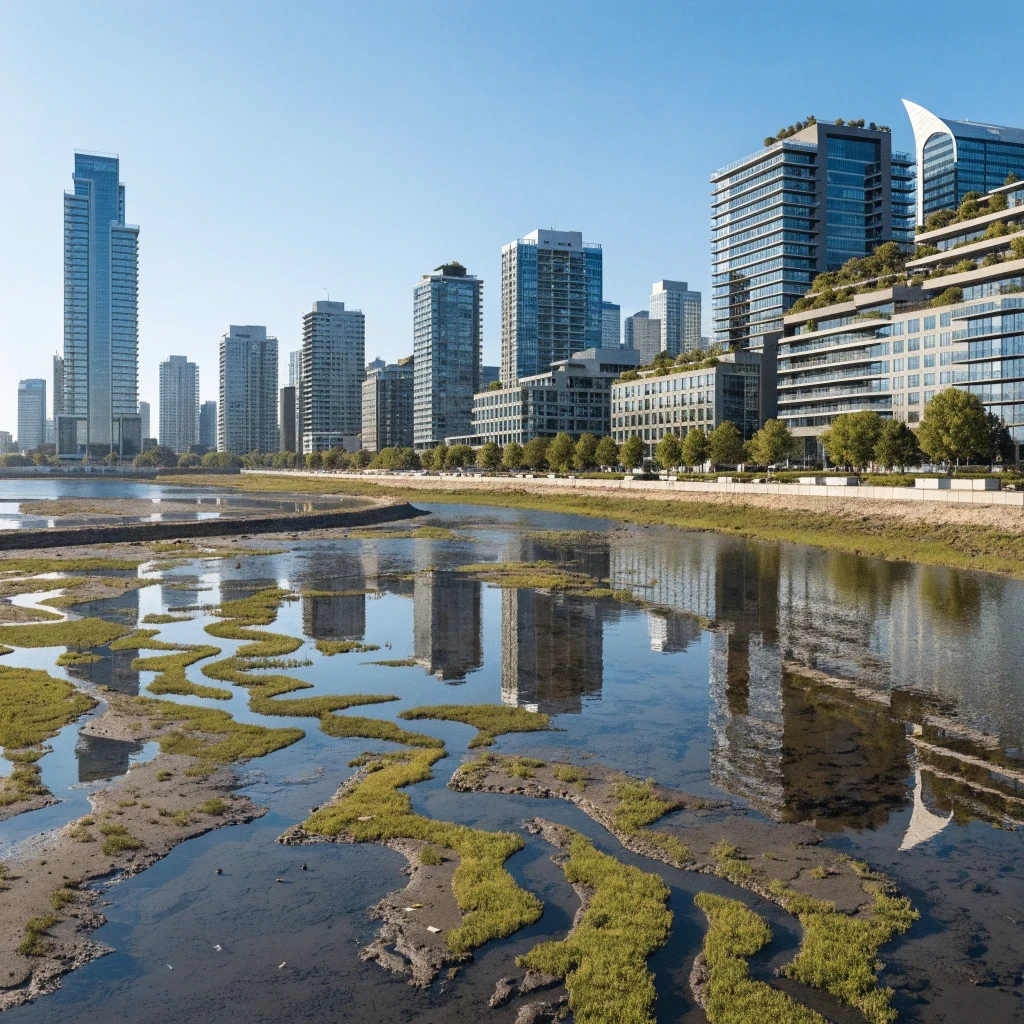
Urban civilization stands at a precipice, confronting a reality that architects and city planners can no longer ignore. The accelerating rhythm of climate volatility has transformed municipal design from an aesthetic exercise into a survival imperative, demanding radical rethinking of how we construct the spaces where billions live, work, and breathe.
Extreme weather events now strike with a ferocity that mocks historical building codes and infrastructure assumptions. Coastal metropolises face rising seas that threaten their very foundations, while inland cities grapple with thermal extremes that push energy grids to collapse. The engineering response must be proactive, comprehensive, and unapologetically bold.
This analysis dissects the architectural adaptation movement reshaping urban landscapes worldwide, examining the structural innovations, policy frameworks, and economic calculations that will determine whether our cities thrive or merely survive the coming decades.
On This Page
TL;DR Climate-resilient urban design has shifted from theoretical aspiration to urgent necessity as extreme weather events multiply globally. Cities must integrate flood defenses, heat-resistant materials, adaptive infrastructure, and revised building codes to withstand rising sea levels and thermal stress. Proactive engineering investments today will determine urban viability tomorrow, with coastal protection, green infrastructure, and policy reform leading the adaptation charge.
The Climate Imperative Reshaping Urban Architecture
Traditional urban planning assumed a stable climate, a presumption now shattered by accelerating environmental volatility. Architects must abandon static design philosophies in favor of adaptive systems capable of responding to dynamic threats. The stakes extend beyond aesthetics into fundamental questions of human survival and economic continuity.
Municipal governments worldwide are discovering that reactive responses to climate disasters cost exponentially more than preventive design. Every flood, wildfire, and heatwave exposes vulnerabilities embedded in outdated infrastructure, forcing expensive retrofits that proactive planning could have avoided entirely.
Rising Seas and Coastal Defense Systems
Coastal cities face an existential arithmetic: sea levels rising at accelerating rates against fixed land masses. The engineering response demands integrated flood barriers, elevated infrastructure, and strategic retreat from the most vulnerable zones. Rotterdam's innovative water plazas and Miami's pump systems represent early templates for survival.
Storm surge protection now requires multi-layered approaches combining hard engineering with natural buffers. Mangrove restoration, artificial reefs, and restored wetlands absorb wave energy while providing ecological benefits that concrete walls cannot replicate. These hybrid solutions offer both protection and environmental restoration.
The economic calculus of coastal defense grows steeper with each passing year. New York's post-Sandy investments exceeded twenty billion dollars, yet projections suggest far greater expenditures will be necessary. Cities must weigh relocation costs against defense expenditures, a calculation with profound demographic and economic consequences.
Innovative floating architecture emerges as a compelling alternative for water-adjacent communities. Amphibious housing, floating neighborhoods, and adaptable waterfront developments offer resilience without requiring permanent retreat from economically vital coastal zones.
Thermal Stress and Heat-Resistant Urban Design
Urban heat islands amplify global temperature rises, creating conditions that threaten public health and energy infrastructure. Cities must integrate reflective surfaces, expanded tree canopies, and ventilated building designs to mitigate extreme thermal loads. Los Angeles's cool pavement program demonstrates measurable temperature reductions across tested districts.
Building materials themselves require fundamental reconsideration under extreme thermal conditions. Phase-change materials that absorb and release heat, advanced insulation systems, and smart glass technologies reduce cooling demands while maintaining occupant comfort. These innovations transform energy consumption patterns across entire metropolitan areas.
Passive cooling strategies rooted in vernacular architecture offer proven solutions for extreme climates. Traditional Middle Eastern wind towers, Mediterranean courtyard designs, and Southeast Asian elevated structures provide templates that modern architects increasingly rediscover. Indigenous knowledge systems hold valuable lessons for contemporary resilience.
Green infrastructure emerges as a critical thermal management tool. Rooftop gardens, vertical forests, and urban parks reduce ambient temperatures while managing stormwater and improving air quality. Milan's Bosco Verticale towers demonstrate how vegetation can be integrated into high-density residential design.
Infrastructure Resilience and Adaptive Engineering
Critical infrastructure systems require redundant, decentralized designs that maintain function during extreme events. Power grids, water supplies, and transportation networks must withstand disruption while enabling rapid recovery. Microgrids and distributed energy systems offer resilience that centralized utilities cannot provide.
Transportation infrastructure demands elevation, reinforcement, and alternative routing strategies to survive flooding and thermal damage. Rail systems, highways, and airports must incorporate climate projections into their design parameters. London's Thames Barrier and Tokyo's underground flood storage represent ambitious infrastructure responses.
Water management requires integrated approaches addressing both excess and scarcity. Cities face simultaneous challenges of flooding and drought, demanding flexible systems that capture, store, and distribute water adaptively. Singapore's NEWater system exemplifies closed-loop water management for urban environments.
Digital monitoring and predictive analytics enable proactive infrastructure management. Sensor networks, AI-driven forecasting, and real-time response systems allow cities to anticipate failures before they occur. These technologies transform reactive maintenance into predictive resilience.
Policy Frameworks and Economic Realities
Climate-resilient construction demands regulatory frameworks that mandate adaptation rather than merely encourage it. Building codes must incorporate climate projections, zoning laws must restrict development in vulnerable areas, and permitting processes must prioritize resilience investments. These policy shifts require political courage and sustained public support.
The economic case for adaptation grows more compelling as disaster costs escalate. Every dollar invested in resilience saves multiple dollars in avoided damages, yet budget cycles and political horizons rarely align with climate timelines. Long-term thinking must overcome short-term political incentives.
Building Code Reform and Regulatory Innovation
Modern building codes must evolve from minimum safety standards to comprehensive resilience requirements. Flood elevation mandates, wind resistance ratings, and thermal performance standards must reflect projected climate conditions rather than historical baselines. Florida's post-hurricane code revisions demonstrate measurable damage reduction.
Zoning regulations require fundamental restructuring to prevent development in high-risk zones. Managed retreat programs, buyout initiatives, and land-use restrictions must guide population movement away from vulnerable coastal and floodplain areas. These policies face political resistance despite their long-term economic logic.
Permitting processes must accelerate to enable rapid resilience investment while maintaining environmental safeguards. Streamlined approvals for flood barriers, green infrastructure, and building retrofits reduce costs and encourage proactive adaptation. Administrative efficiency becomes a climate resilience tool.
Insurance markets play a critical role in shaping development decisions. Risk-based pricing, disclosure requirements, and resilience incentives can drive private investment in adaptation. Government backstops must balance market signals with affordability concerns for vulnerable populations.
Financing Climate-Resilient Urban Transformation
Municipal finance structures must evolve to support massive infrastructure investments. Green bonds, climate resilience funds, and public-private partnerships offer mechanisms for mobilizing capital at scale. The global green bond market has surpassed one trillion dollars in cumulative issuance.
Federal and state governments must provide sustained funding streams for local adaptation efforts. Competitive grant programs, formula-based allocations, and technical assistance support municipal capacity building. The U.S. Bipartisan Infrastructure Law represents a significant federal commitment to resilience.
Private capital increasingly recognizes climate resilience as an investment opportunity rather than a cost. Real estate markets are beginning to price climate risk into property values, creating market incentives for adaptation. Institutional investors increasingly demand climate-resilient portfolios.
Innovative financing mechanisms including resilience bonds, catastrophe bonds, and parametric insurance transfer risk while funding adaptation. These instruments align financial incentives with resilience outcomes, creating markets that reward proactive investment.
Social Equity and Community Engagement
Climate adaptation must address the disproportionate vulnerability of marginalized communities. Low-income neighborhoods often occupy the most flood-prone areas with the least infrastructure investment. Equitable adaptation requires prioritizing protection for those most exposed to climate risks.
Community engagement must move beyond consultation toward genuine co-design of resilience solutions. Local knowledge, cultural values, and neighborhood priorities must shape adaptation strategies. Participatory planning processes build trust and ensure solutions serve actual community needs.
Displacement and gentrification risks accompany adaptation investments, requiring deliberate policies to protect vulnerable residents. Anti-displacement measures, affordable housing requirements, and community land trusts ensure that resilience benefits are shared equitably.
Workforce development must prepare communities for the green economy emerging from climate adaptation. Training programs, apprenticeship pathways, and local hiring requirements create economic opportunity while building resilience capacity.
We Also Published
Technological Innovation and Future Urban Visions
Emerging technologies promise transformative approaches to urban climate resilience. Advanced materials, artificial intelligence, and autonomous systems offer unprecedented capabilities for monitoring, predicting, and responding to environmental threats. These innovations must be deployed equitably and effectively.
The cities of tomorrow will integrate resilience into every aspect of their design, from underground infrastructure to rooftop ecosystems. Adaptive buildings, responsive infrastructure, and intelligent systems will create urban environments capable of thriving amid climate uncertainty.
Smart Materials and Responsive Architecture
Self-healing concrete, shape-memory alloys, and adaptive facades represent the next generation of resilient building materials. These innovations repair damage automatically, respond to environmental conditions, and extend infrastructure lifespans. Research investments accelerate commercial deployment.
Biomimetic design draws inspiration from natural systems that have evolved resilience over millennia. Termite mound ventilation, mangrove root systems, and cactus water storage offer models for sustainable urban design. Nature's engineering solutions inform cutting-edge architectural practice.
Modular and prefabricated construction enables rapid deployment of resilient housing and infrastructure. Factory-built components reduce costs, improve quality control, and accelerate reconstruction after disasters. These approaches support both adaptation and disaster response.
Digital twins create virtual replicas of physical infrastructure, enabling simulation and optimization of resilience strategies. Cities can test flood responses, heat mitigation, and infrastructure failures in virtual environments before implementation. These tools transform urban planning.
Data-Driven Climate Adaptation Strategies
High-resolution climate modeling provides the scientific foundation for adaptation planning. Downscaled projections enable city-specific risk assessments and infrastructure design parameters. Continuous model refinement improves decision-making under uncertainty.
Sensor networks and Internet of Things devices enable real-time monitoring of environmental conditions and infrastructure performance. Flood sensors, temperature monitors, and structural health systems provide early warning and rapid response capabilities. Data streams inform adaptive management.
Artificial intelligence enhances predictive capabilities for extreme weather events and infrastructure failures. Machine learning algorithms identify patterns, forecast impacts, and optimize response strategies. These tools augment human decision-making with computational power.
Open data platforms democratize access to climate information, enabling informed decisions by residents, businesses, and policymakers. Transparent data sharing builds public trust and supports collaborative adaptation efforts.
Integrated Urban Systems for Climate Resilience
Resilient cities require integration across infrastructure systems, governance structures, and community networks. Siloed approaches fail against interconnected climate threats. Whole-systems thinking must guide urban adaptation planning.
Nature-based solutions offer cost-effective, multi-benefit approaches to climate adaptation. Urban forests, constructed wetlands, and green corridors provide flood control, heat mitigation, and biodiversity benefits simultaneously. These investments deliver compounding returns.
Circular economy principles reduce resource consumption while building resilience. Water recycling, waste-to-energy systems, and material reuse decrease environmental impact while enhancing self-sufficiency. Sustainable resource management supports long-term urban viability.
Regional coordination enables efficient adaptation across metropolitan areas. Watershed management, transportation networks, and energy systems transcend municipal boundaries, requiring collaborative governance. Regional resilience compacts align diverse stakeholders around shared goals.
The transformation of urban environments for climate resilience represents one of the defining challenges of our century. Cities that embrace proactive adaptation will thrive, while those that delay face escalating costs and mounting human suffering. The choice is clear, and the time for action is now.
Architectural adaptation is not merely an engineering challenge but a moral imperative. The decisions made today will shape urban life for generations, determining who is protected and who remains vulnerable. Equitable, comprehensive resilience must guide every design choice and policy decision.
From our network :
- How AI Agents Will Change the Way We Manage Personal FinancesExplore how AI agents are transforming personal finance through automated budgeting, bill payment, and investment management, while examining the critical security protocols and governance frameworks required for safe deployment.
- The Final Descent: How ESA Retired the Legendary Cluster Constellation After 24 Years of Space Weather ScienceAfter 24 years mapping Earth’s magnetosphere, ESA’s Cluster mission concluded with a precisely controlled reentry over the South Pacific. This analysis explores the scientific legacy, engineering decisions, and debris mitigation principles behind one of space exploration’s most responsible retirements.
- The Hidden Cost of AI Convenience: Why Over-Permissioned Agents Are a Security Time BombDiscover why AI agents with excessive permissions create dangerous single points of failure, and learn how implementing least privilege principles can protect your organization from exploitation.
- CISA’s Ten-Advisory Wave: Why Generic Patching Fails in OT and How to Build Product-Specific PlaybooksCISA released ten ICS advisories in one week, exposing critical infrastructure risks. Generic patching fails in OT. Learn to build product-specific remediation playbooks.
- Committed Mediterranean Precipitation Decline: Why Emissions Cuts Alone Cannot Restore Winter RainsNew NOAA research reveals that Mediterranean winter rains may decline irreversibly even with emissions cuts. Explore the science of committed climate change and regional impacts.
- Norbert’s Uncertain Path: Why Hawaii’s Storm Watch Demands Patience Over PanicTropical Storm Norbert strengthens in the Eastern Pacific with winds near 50 mph, forecast to reach Category 1 hurricane status by Friday. Long-range models disagree sharply on whether Hawaii faces any threat around September 19–23, making official guidance essential.
- Analyzing Hoya Corporation’s Midday Volume Shifts and Financial FundamentalsExamine Hoya Corporation’s midday trading volume contraction, technical moving averages, robust solvency ratios, and stellar quarterly earnings performance.
- Forbidden Matrix Patterns and Visible Lattice Points: A Geometric DictionaryExplore how multidimensional 0–1 matrices encode geometric truths, linking forbidden patterns to visible lattice points and hypergraph theory, with applications in combinatorics and computational geometry.
- Former Soap Stars Embark on Ambitious Writing Projects and Theatrical StagesDiscover how former soap opera actors are transitioning into independent scriptwriting and high-profile theatrical stage productions.
RESOURCES
- 12 Examples of Climate-Resilient City Solutionsstateofgreen.com... urban planning. Cities around the world are increasingly concerned with improving their resilience against the costly effects of climate change. Addressing ...
- Urban Climate Resilienceadaptation-undp.orgCities globally are highly exposed to disaster and climate-related risks. With accelerating urban growth, increasing exposure to climate change risks and ...
- Urban Planning and Design for Climate Resilience - UN-Habitatunhabitat.orgBuilding resilience must be at the core of planning and designing our cities. Aligned with the Philippine New Urban Agenda vision “Better, Greener, ...
- Climate Resilient Design Guidelines - Boston.govboston.govOct 30, 2025 ... Flood barrier opportunities are being identified during Climate Ready Boston neighborhood studies and other projects around the City. The ...
- Eight Ways Cities Are Building Climate Resilienceiisd.orgOne of the key qualities of a resilient city is robustness—that is, that the city is designed to anticipate and respond to potential issues.…
- National Ocean Service Education: Beat the Uncertaintyoceanservice.noaa.gov... city's resilience to climate change. ... Click the buttons below for the Beat the Uncertainty: Planning Climate-Resilient Cities instructions, checklist, and ...
- Urban planning for climate resilience: Adapting cities to challengesie.eduAug 25, 2025 ... Climate resilient urban design is how we adapt our cities to the natural environment. And it combines climate data and…
- Climate Resilient City Tool (CRCTool)climate-adapt.eea.europa.euMay 16, 2024 ... The Climate Resilient City Tool (CRCTool) supports the selection of nature-based adaptation options in urban adaptation planning and ...
- Climate resilient urban development: an agenda for Small Island ...nature.comNov 25, 2025 ... Urban climate change planning within SIDS is correspondingly weak. This is evidenced in particular by urban dimensions being largely absent ...
- Designing climate resilient energy systems in complex urban areas ...sciencedirect.comBy incorporating the proposed framework with data analytics and a dynamic model, urban energy infrastructure can be designed and optimized to withstand climate ...
- Climate Resiliency Design Guidelines - NYC.govnyc.govClimate Resiliency Design Guidelines ... Ensures city projects constructed today will be prepared for future climate change. ... This ensures projects built today ...
- CRC Tool - Climate Resilient Cities - Deltaresdeltares.nlThe Climate Resilient City Tool supports the collaborative planning of climate adaptation measures and strategy formulation for cities. Learn more.
- Planning for Climate Resilience—City of Asheville, North Carolinatoolkit.climate.govImprove soil stability by increasing root mass with more vegetation and limiting grading activities. Develop a program to buy out repetitive loss and high-risk ...
- Urban planning and IPCC-like city assessments integration for ...journals.sagepub.comMar 28, 2025 ... Cities are indispensable to building a resilient future. The IPCC's Special Report on Climate Change and Cities will provide a…
- Climate Resilient City Toolboxkbstoolbox.nlThis Website is a tool to demonstrate differences in resilience against flooding, drought and heat stress, resulting from choices in urban planning. The ...
- 01
- 02
- 03
- 04
- 05
- 06
- 07
- 08
0 Comments