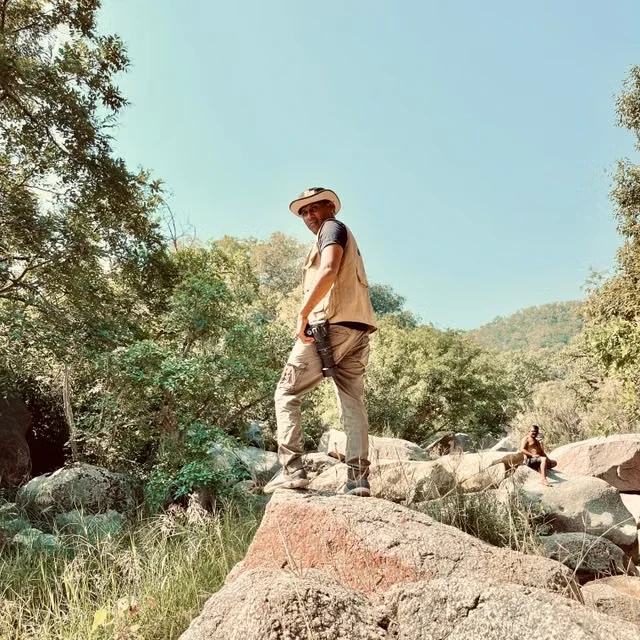
What Happened in Peru
Jordan Yap’s death in Peru is a stark reminder that even seasoned outdoor enthusiasts are vulnerable when travel, altitude, and isolation converge. A solo trek in a remote region can become unforgiving within hours, and once communication breaks down, search efforts must contend with extreme terrain, thin air, and vast distances. The facts of this case show how quickly a missing-person alert can turn into a multinational recovery operation.
The story also exposes the emotional and logistical burden borne by families when a loved one vanishes overseas. Relatives were left to coordinate private rescue support, liaise with authorities, and wait through days of uncertainty before receiving confirmation that his body had been found near Mitucocha Lagoon.
In cases like this, consular assistance becomes essential, but it cannot erase the central truth: remote expeditions demand discipline, redundancy, and strict itinerary control.
Key ideas at a glance
Use this visual map to navigate the major ideas developed in this exclusive analysis.
On This Page
At the same time, the public reaction to Yap’s disappearance illustrates how modern search efforts extend beyond official channels. Social media support pages, local rescue teams, and media coverage all fused into a single chain of awareness, proof that missing-person cases now unfold in both physical and digital terrain.
The resulting narrative is not merely about one traveler; it is about risk management, cross-border response, and the fragile margin between adventure and tragedy.
TL;DR Melbourne hiker Jordan Yap was found dead in Peru after disappearing during a solo hike in the Huayhuash region. His case underscores the hazards of remote trekking, the importance of reliable check-ins, and the difficult role families and consular officials play when a traveler goes missing abroad.
Jordan Yap, a 30-year-old Melburnian, vanished while hiking alone in Peru’s Huayhuash region, one of the country’s most demanding mountain landscapes. He had left a hostel in Huaraz on September 14 and was expected to continue a planned itinerary later in the month. When he failed to check in and missed a scheduled flight, concern escalated rapidly.
A journey that never reached its next stop
The timeline matters because it reveals how travel plans serve as the first safety net in remote environments. Yap’s expected hotel check-in and flight departure created clear points of accountability, and once those milestones were missed, his family had enough reason to trigger a missing-person response. That sequence is often what turns silence into an active search.
Authorities later said his body was discovered in the Mitucocha Lagoon area, a high-altitude lake zone roughly 200 kilometres north of Lima. The location is not merely scenic; it is harsh, isolated, and physically punishing, especially for a lone hiker. In such terrain, small navigational errors or sudden illness can quickly become fatal.
The rescue effort and public response
Yap’s family also engaged a private mountain rescue team, reflecting a common reality in international emergencies: official services may be overwhelmed, delayed, or simply too distant. Friends and supporters maintained a social media page dedicated to the search, turning the case into a wider community effort. That digital support became both a communication channel and an emotional anchor.
When the confirmation came, friends described him as vibrant and full of life, a tribute that reframed the story from a missing-person case into a personal loss. The public language surrounding such tragedies often becomes a final act of remembrance. It helps families and communities impose dignity on events that otherwise feel abrupt and senseless.
Why Solo Trekking Carries Real Risk
Solo hiking is not inherently reckless, but it leaves little room for error when a traveler enters remote terrain with weak connectivity and unpredictable weather. In mountainous regions like Huayhuash, a minor misstep can become a major emergency. Without a companion, there is no immediate backup for injury, exhaustion, or disorientation.
Altitude changes the equation
At high elevation, the body works harder for less oxygen, and that strain can magnify fatigue, confusion, and dehydration. Travelers who are experienced on ordinary trails may still underestimate how quickly altitude can degrade performance. The result is a physical environment that punishes hesitation and rewards preparation.
That is why expedition planning matters more than bravado. Route familiarity, weather intelligence, equipment checks, and scheduled contact points are not optional details; they are the architecture of survival. In remote areas, preparation is not a comfort feature—it is the difference between a manageable delay and a tragedy.
Why companions matter
A hiking partner can provide immediate aid, summon help, or recognize changes in behavior before they become catastrophic. On a solo trip, those safeguards disappear. If a person slips, becomes ill, or gets lost, there may be no witness to reconstruct the event or time the emergency accurately.
That is what makes solo trekking a calculated choice rather than a neutral one. The freedom it offers also carries structural vulnerability, particularly in countries where rescue access depends on terrain, weather, and available manpower. Yap’s case shows how that vulnerability can become irreversible.
How the Search Unfolded
Once Yap failed to appear at his next scheduled stop, his family moved quickly to alert authorities and gather support. They were not simply waiting in silence; they were actively assembling information, coordinating rescue resources, and trying to close the gap between itinerary and reality. That urgency is common in overseas disappearance cases.
- 01
- 02
- 03
- 04
From missing to confirmed dead
The confirmation that his body was found in the Mitucocha Lagoon area brought painful closure after weeks of uncertainty. This is the hardest turn in any missing-person case: hope narrows into grief, and the search transforms into recovery. The emotional force of that transition is often as severe as the event itself.
Authorities and family members then had to process the outcome across borders, time zones, and legal systems. When a death occurs abroad, the burden does not end with identification; it extends into paperwork, transportation, and consular coordination. The final stage of crisis management is often bureaucratic, even when the human loss is overwhelming.
Why communication saves time
Travelers should leave detailed itineraries with multiple contacts, establish hard check-in windows, and specify what action to take if those windows are missed. That is not paranoia; it is procedural discipline. In environments with limited signal and difficult terrain, communication is the cheapest and most powerful safety tool available.
Yap’s case shows the cost of relying on assumptions instead of systems. A missed hotel check-in might seem trivial in ordinary travel, but in the mountains it can be the first alarm bell. The difference between a delayed arrival and a disaster is often measured in hours, not days.
Consular Assistance and the Family’s Burden
Australia’s Department of Foreign Affairs and Trade confirmed it was providing consular assistance to the family, which is standard when a citizen dies overseas. Such support can help with communication, coordination, and official procedures. It is necessary, but it cannot replace the decisive limits of local rescue capacity or reverse the loss.
What consular help can and cannot do
Consular teams typically assist with liaison, documentation, and guidance during emergencies abroad. They can clarify next steps and help families navigate unfamiliar systems. They cannot, however, guarantee rapid access to remote locations or control the terrain where a person is missing.
That distinction matters because public expectations are often unrealistic. Families may assume that once a government is notified, the process becomes smooth and immediate. In reality, consular support is a bridge—not a rescue vehicle, not a legal shortcut, and not a substitute for local coordination.
The emotional cost of waiting
For relatives, the most punishing phase is often uncertainty. Every hour without information generates fresh theories, renewed hope, and deeper fear. This is why missing-person cases occupy a uniquely painful space: the family must live inside ambiguity while also making practical decisions.
The social media tribute to Yap reflected that burden and the need for shared remembrance. Public messages can soften isolation and preserve the person behind the headline. They also remind readers that every missing traveler is not a case file but a life with relationships, routines, and unfinished plans.
Lessons for Travelers and Search Planners
Yap’s death should not be reduced to a cautionary slogan. It is better understood as a case study in risk, preparation, and response. Remote travel can be rewarding, but it requires far more than fitness and enthusiasm; it demands a strict system of accountability.
Preparation must be non-negotiable
For solo trekkers, the correct mindset is not invulnerability but controlled caution. That means understanding the route, the weather, the elevation profile, and the evacuation options before departure. It also means assuming that in a crisis, help may be slower than expected and self-reliance may matter most.
Planning is not an administrative burden; it is an ethical obligation to oneself and to those who would be left to search. Yap’s disappearance demonstrates that adventure becomes dangerous when the margin for error disappears. The mountains do not reward improvisation.
A final, sobering takeaway
The human lesson here is simple and severe: isolated environments amplify every weakness in preparation. A missed check-in, a delayed flight, or a change in weather can snowball into a life-or-death emergency. That is why disciplined travel planning should be treated as essential, not optional.
Jordan Yap’s story will be remembered not only as a tragedy, but as a warning written in real terrain. Remote journeys require respect, and respect requires systems. In the end, the wilderness does not negotiate.
The Broader Meaning of the Story
Beyond the immediate grief, the case reflects how modern travel depends on invisible infrastructure—communication, accountability, rescue networks, and consular support. When those systems work, they compress danger. When they fail or arrive too late, the consequences can be irreversible. That is the wider lesson carried by Yap’s death.
Adventure, responsibility, and realism
Travel culture often celebrates autonomy, endurance, and discovery, but those ideals must be balanced with realism. Solo hikers need robust plans, local intelligence, and emergency redundancy. Adventure is not diminished by caution; it is made credible by it.
In that sense, this story is less about fear than about standards. It asks travelers to behave as if the environment deserves authority, because it does. The higher the risk, the more exacting the discipline must be, and the less room there is for casual optimism.
Why this case will resonate
People remember such stories because they are both specific and universal: one man, one route, one family, one irreversible outcome. Yet the implications stretch far beyond one hiker. Every remote expedition carries the same hidden question—what happens if the plan stops working?
The answer should never be left to chance. That is the enduring meaning of this report, and the reason it matters to any traveler, family member, or planner who assumes that experience alone can substitute for preparation.
Key Facts at a Glance
These details capture the central chronology and response pattern in the case. The table below condenses the event into a quick reference for readers who need the essential facts without losing the broader context of risk, search, and confirmation.
From our network :
- The Hidden Cost of AI Convenience: Why Over-Permissioned Agents Are a Security Time BombDiscover why AI agents with excessive permissions create dangerous single points of failure, and learn how implementing least privilege principles can protect your organization from exploitation.
- How AI Agents Will Change the Way We Manage Personal FinancesExplore how AI agents are transforming personal finance through automated budgeting, bill payment, and investment management, while examining the critical security protocols and governance frameworks required for safe deployment.
- Mobile Learning and VR in English: What Global Evidence Reveals About Effective Language TechnologyA systematic review across 14 countries reveals which language-learning technologies genuinely work. Mobile learning, AI, and VR show measurable benefits when pedagogically integrated. This evidence-based guide helps educators and learners select technology that delivers real return on investment.
- The Final Descent: How ESA Retired the Legendary Cluster Constellation After 24 Years of Space Weather ScienceAfter 24 years mapping Earth’s magnetosphere, ESA’s Cluster mission concluded with a precisely controlled reentry over the South Pacific. This analysis explores the scientific legacy, engineering decisions, and debris mitigation principles behind one of space exploration’s most responsible retirements.
- University Language Proficiency Exams: Why Institutional Tests Demand Different Preparation Than IELTS and TOEFLDiscover why university-specific language proficiency examinations differ fundamentally from IELTS and TOEFL, and learn strategic preparation approaches for institutional assessment success.
- Forbidden Matrix Patterns and Visible Lattice Points: A Geometric DictionaryExplore how multidimensional 0–1 matrices encode geometric truths, linking forbidden patterns to visible lattice points and hypergraph theory, with applications in combinatorics and computational geometry.
- Committed Mediterranean Precipitation Decline: Why Emissions Cuts Alone Cannot Restore Winter RainsNew NOAA research reveals that Mediterranean winter rains may decline irreversibly even with emissions cuts. Explore the science of committed climate change and regional impacts.
- Live Online English Classes for Kids: Do They Actually Reduce Anxiety?A ten-week study reveals that synchronous online English classes can significantly reduce child language anxiety while improving listening and reading skills. Discover what makes these programs effective and how parents can select the right one.
- CISA’s Ten-Advisory Wave: Why Generic Patching Fails in OT and How to Build Product-Specific PlaybooksCISA released ten ICS advisories in one week, exposing critical infrastructure risks. Generic patching fails in OT. Learn to build product-specific remediation playbooks.
RESOURCES
- Missing Australian hiker Jordan Yap last seen on remote trail found ...theguardian.com1 day ago ... ... solo trek along Peru's Huayhuash mountain range. Photograph: AAP/Supplied by Kevin Nguyen. Melbourne. Missing Australian hiker Jordan Yap last ...
- Melbourne hiker Jordan Yap found dead after weeks missing in Peruabc.net.au2 days ago ... Australian man Jordan Yap has been found dead, weeks after he failed to return home from a solo hike in…
- Missing Australian trekker Jordan Yap has been found dead after ...instagram.com1 day ago ... Missing Australian hiker Jordan Yap has been found dead in Peru, weeks after he failed to return from a solo…
- A Melbourne man who went missing in a mountainous region of ...facebook.com2 days ago ... ... found dead, weeks after he failed to return from a remote solo hike. ... Hiker dies during solo trek…
- Missing Australian hiker Jordan Yap has been found dead in Peru ...youtube.com2 days ago ... ... dead in Peru, weeks after he failed to return from a solo trek. The 30-year-old Melbourne man set off…
- Jordan Yap: Melbourne hiker found dead in remote Peru lagoonnews.com.au1 day ago ... A solo hiking trip through Peru's rugged mountains has ended in heartbreak, with Melbourne man Jordan Yap found dead after…
- Missing Australian hiker found dead weeks after embarking on solo ...nz.news.yahoo.com1 day ago ... Jordan Yap from Melbourne was preparing for a 120km hike through remote Huayhuash mountain range when he last contacted friends…
- Missing Melbourne hiker Jordan Yap found dead in Peru after solo trek7news.com.au2 days ago ... An Australian hiker who went missing during a solo trek in Peru has been found dead after an almost three-week…
- Family heartbroken as Aussie hiker found deadau.news.yahoo.com1 day ago ... A solo hiking trip through Peru's rugged mountains has ended in heartbreak, with Melbourne man Jordan Yap found dead after…
- Man, 30, Missing After Going on Remote Solo Hike During Vacationpeople.comSep 26, 2026 ... An urgent search has been launched to find missing hiker Jordan Yap. He was last seen in Peru's Huayhuash mountain…
- Missing Melbourne hiker Jordan Yap found dead in Peru - The Agetheage.com.au2 days ago ... Tributes have flowed for Jordan Yap after his family confirmed he died during a solo trek through Peru's remote Huayhuash…
- Body of Australian hiker Jordan Yap found in Peru weeks after ... - SBSsbs.com.au2 days ago ... ... solo trek along the Huayhuash mountain range. An Australian trekker has been found dead after going missing on a…
- Australian trekker found dead in Peru after remote mountain hikethe-independent.com1 day ago ... ... Melbourne, has been found dead after going missing ... Missing Australian hiker found dead weeks after embarking on solo…
- Australian hiker found dead after going missing in Peru - Ninenine.com.au2 days ago ... ... after going missing while trekking in Peru ... The Melbourne man's family and friends had been desperately searching for…
- Aussie hiker who went missing in remote Peru wilderness found deaddailymail.com2 days ago ... ... found dead after he went missing during a solo hike in Peru. ... The Melbourne man was last seen…
- 01
- 02
- 03
- 04
- 05
- 06
- 07
- 08
0 Comments