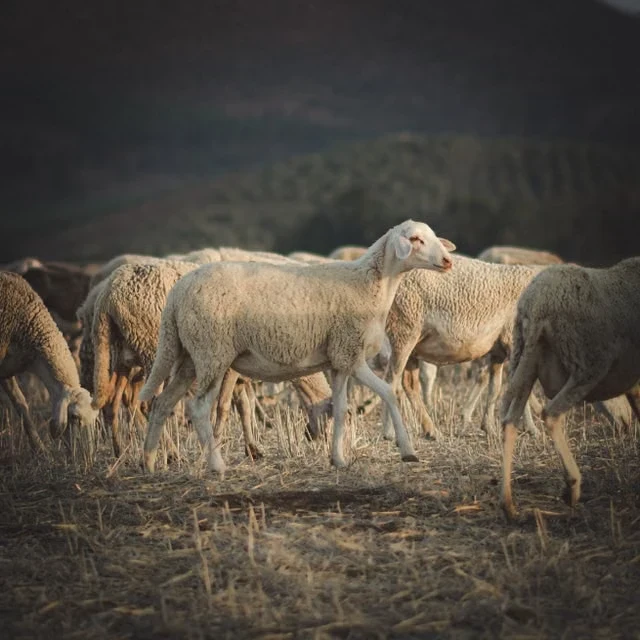
A rare-livestock disappearance in the Adelaide Hills has crystallized a harsh truth about premium animal breeding: scarcity creates value, and value attracts opportunists. A Swiss Valais Blacknose lamb, born only days earlier and already valued at up to $25,000, vanished from a hobby farm under circumstances that point as much to human intervention as to natural predation.
The case is not merely a local oddity; it is a study in how niche agricultural markets, emotional attachment, and practical biosecurity collide.
At the center of the matter stands Madeleine Babos, a veterinarian and dedicated breeder who had invested years of intent and substantial capital into a breed famed for its plush fleece, dark mask, curled horns, and unusually calm temperament. Her account of a distressed mother ewe, a missing lamb, and other vulnerable animals in the paddock gives the incident a troubling texture.
On This Page
In livestock circles, the loss of one animal can unravel a carefully planned breeding program, especially when the offspring represents the next phase of financial recovery.
The story also exposes the uneasy economics of hobby farming. What begins as a passion project can quickly become an asset portfolio in wool, genetics, and future progeny. When police describe livestock theft as common, the message is unmistakable: rural property is not automatically safe property, and rare breeds are especially exposed because their market desirability makes them easy to recognize, transport, and quietly resell.
TL;DR A valuable Swiss Valais Blacknose lamb disappeared from an Adelaide Hills property, and the facts suggest theft may be more likely than predation. The case highlights the rising vulnerability of rare livestock, the financial strain placed on small breeders, and the wider problem of livestock theft in rural Australia. For the owners, the loss is both emotional and economic; for the sector, it is a warning that rare-breed farming demands stronger security, tighter records, and faster reporting.
What Happened and Why It Matters
A rare Swiss Valais Blacknose ewe lamb vanished from an Adelaide Hills farm only days after birth, triggering concern far beyond one property. The animal’s estimated value, up to $25,000, makes the incident significant in agricultural terms, but the deeper issue is the vulnerability of high-value livestock in semi-rural settings where access is often easier than owners assume.
The Disappearance in Context
The lamb had been seen as healthy hours before it disappeared, which narrows the timeline and sharpens suspicion. Its mother later showed clear signs of distress, a behavioral clue that often matters in farm management because ewes typically respond strongly when offspring are missing. That detail helped shift attention away from ordinary loss and toward a likely human act.
Such cases are especially unsettling because rare-breed animals are not lost in the abstract; they are often tracked closely from birth, tied to breeding plans, and identified by unique markings. When an animal disappears under these conditions, the loss is not only physical but genealogical, removing potential future value from a carefully constructed breeding line.
Why Rare Breeds Draw Unwanted Attention
Swiss Valais Blacknose sheep are prized for their appearance and temperament, making them attractive to boutique breeders and, unfortunately, to thieves who may see a collectible pet rather than livestock. Their distinctive look also makes them marketable in informal circles, where proof of origin may be weak and traceability can be neglected.
That combination of visibility and portability is dangerous. Animals that can be loaded quickly, concealed easily, and sold through private channels are exposed to theft in ways that cattle or commercial sheep may not always be. In premium breeding, the very traits that raise value can also increase risk.
The Breed Behind the Headlines
The Swiss Valais Blacknose is not an ordinary farm sheep; it is a specialty breed with global appeal. Originating in the Swiss Alps, it is admired for its fleece, dark facial markings, spiral horns, and docile nature. Those characteristics have turned it into a status breed among smallholders, lifestyle farmers, and luxury animal collectors.
Traits That Create Market Value
Breed value is built on a narrow set of qualities: appearance, temperament, rarity, and breeding potential. In this case, the lamb’s value reflects not only its novelty but its place in a long-term breeding strategy. A single ewe can represent multiple future offspring, and each progeny may carry substantial commercial promise.
That is why the loss of one lamb can be disproportionate. In rare-breed farming, assets are not interchangeable. The genetic quality, physical markings, and lineage of each animal matter, and those factors are difficult to replace quickly even when a breeder has the money to try.
A Market Built on Patience and Capital
Rare livestock breeding typically demands patience, specialized knowledge, and heavy upfront spending. Animals may cost thousands before any offspring are sold, and returns can take years to materialize. This is not a fast-turnover business; it is a slow, disciplined build of genetics and reputation.
For that reason, a theft is not just a stolen animal; it is a stolen timetable. It interrupts future sales, damages confidence, and can undermine the fragile financial logic that makes hobby-scale breeding viable in the first place. One missing lamb can unsettle an entire business model.
| Factor | Observed Detail |
|---|---|
| Animal type | Swiss Valais Blacknose ewe lamb |
| Estimated value | Up to $25,000 |
| Likely risk | Livestock theft rather than predation |
| Primary impact | Financial loss, breeding disruption, emotional distress |
Why Theft Seemed More Likely Than Predation
Babos’ suspicion was not based on instinct alone. The timing, the lamb’s apparent health earlier in the day, and the mother’s behavior all contributed to a conclusion that someone may have taken the animal. Predators leave their own signatures, and the owner’s description suggests the scene did not fit that pattern cleanly.
Behavioral Clues on the Property
In livestock incidents, behavior can be as revealing as physical evidence. A ewe searching persistently for her missing offspring is a common indicator that the separation was sudden rather than the result of a long, natural decline. When several vulnerable lambs remain in the paddock, the absence of one animal becomes even more suspicious.
Owners of small farms often learn to read these signs with precision. They know when a predator attack would likely leave evidence, when a storm or escape is plausible, and when the simplest explanation is that a person entered the property. In this case, that judgment pointed toward theft.
The Pet-Collector Hypothesis
One possibility raised by the owner is that the lamb may have been taken because someone found it appealing as a pet. That is not as far-fetched as it sounds when a breed is marketed through images of cuteness, rarity, and calm temperament. What looks charming online can become a target offline.
Yet taking a farm animal as a pet is neither harmless nor acceptable. Rare livestock require husbandry, identification, and legal ownership. Without those, the animal’s welfare can deteriorate quickly, and the breeder loses a carefully tracked investment that should never have left the property in the first place.
The Financial Weight on a Small Breeding Operation
The farm’s breeding project was not casual indulgence. Babos and her partner, Alasdair Rodgers, had invested with the expectation that the animals would eventually generate a return. Their first purchase was the missing lamb’s mother, Sugar, acquired for $25,000, underscoring the scale of the commitment behind what some might mistakenly dismiss as a hobby.
Breeding as Recovery Strategy
Rodgers had stepped away from work for more than a year to care for their daughter during serious health complications, which made the breeding plan more than a pastime. It was part emotional resilience, part financial rebuilding. In such households, livestock can become a bridge between personal hardship and future stability.
That is why the loss stings so sharply. The lamb represented the next stage of a long, expensive recovery plan. When one animal disappears, the setback is multiplied by the lost breeding potential, the wasted care already invested, and the uncertainty that now shadows future planning.
How a Single Loss Cascades
In small breeding operations, margins are thin and dependency is high. Veterinary care, feed, fencing, record keeping, and genetics all demand continuous attention. Remove one elite animal from the equation, and the breeder may lose months or years of projected income along with the confidence needed to continue scaling.
That is the brutal arithmetic of rare livestock. A lamb is never just a lamb when it belongs to a planned line. It is an asset, a future mother, a marketable example of a breed, and a symbol of the time, money, and discipline already spent.
| Operational Area | Impact of the Loss |
|---|---|
| Cash flow | Delayed return on investment |
| Breeding stock | Reduced future genetic output |
| Property security | Need for tighter access control |
| Emotional load | Heightened stress and uncertainty |
Livestock Theft as a Rural Crime Pattern
Police advising that livestock theft is common turns a single missing lamb into part of a broader rural security problem. Farms are often assumed to be self-policing spaces, but valuable animals, open paddocks, and limited surveillance can create ideal conditions for theft, especially when thieves know the breed’s worth.
Why the Crime Is Hard to Stop
Livestock theft is difficult because animals are mobile, time-sensitive, and quickly rehomed. Unlike many other stolen goods, a sheep can be moved through transport networks and transferred with minimal public scrutiny. Unless owners have strong identification systems and rapid reporting habits, recovery becomes much harder.
This is where rural prevention matters. Visible fencing, accurate identification, trail cameras, visitor logs, and close animal counts are no longer optional luxuries for high-value stock. They are basic defenses against a crime that exploits trust, distance, and the assumption that no one would bother.
What the Case Signals to Other Breeders
Other breeders should read this as a warning, not a curiosity. Rare breeds require the same level of professionalism as any other high-value asset class. Aesthetic appeal cannot substitute for security, and a small farm cannot rely on sentiment alone to protect animals worth many thousands of dollars.
The lesson is plain: rare livestock must be treated with the discipline of any valuable inventory. Registration, documentation, property controls, and community awareness are not bureaucratic burdens; they are the minimum infrastructure of survival in an environment where theft is already normalized.
We Also Published
- 01
- 02
- 03
- 04
Lessons, Protections, and the Wider Takeaway
What happened in the Adelaide Hills is tragic, but it is also instructive. The missing lamb reveals the fragility of rare-breed farming and the financial exposure faced by households that build livelihoods around specialty animals. Passion may initiate the venture, but systems determine whether it endures.
Security Must Match Value
Owners of rare livestock need more than fences and hope. They need layered deterrence, including animal identification, perimeter controls, motion awareness, and immediate incident reporting. The value of the animal should determine the seriousness of the security response, not the scale of the farmyard.
That principle is especially important for breeders operating on family land or hobby properties, where a relaxed atmosphere can mask serious risk. A few preventive steps can mean the difference between a recoverable incident and a permanent, costly loss.
A Reminder About Rural Reality
The broader message is that rural life is not immune to organized opportunism. High-value sheep, rare breeds, and boutique breeding projects exist in a market where aesthetics and scarcity create incentives. When that market is poorly protected, theft becomes not only possible but predictably tempting.
For the owners, the missing lamb is a deeply personal loss. For everyone else in the sector, it is a blunt warning: if an animal is worth $25,000, it must be guarded like $25,000 property. Anything less is negligence dressed up as optimism.
| Recommended Action | Purpose |
|---|---|
| Tag and record animals | Improve identification and recovery odds |
| Review fencing and access points | Reduce unauthorized entry |
| Use cameras and alerts | Deter theft and gather evidence |
| Report suspicious activity quickly | Increase chances of timely intervention |
Reader Takeaway: Value Demands Vigilance
This case is not really about one missing lamb; it is about what happens when high-value rural assets are left in a world that does not respect their fragility. Rare breeds reward patience and dedication, but they also demand a level of protection that matches their commercial and emotional importance.
If the lamb was stolen, the loss is instructive beyond the immediate grief. It exposes the asymmetry between the breeder’s long-term investment and the thief’s brief advantage. That imbalance is exactly why rare livestock must be monitored with uncompromising seriousness.
| Core Insight | Editorial Meaning |
|---|---|
| Scarcity | Raises both market value and criminal interest |
| Breeding investment | Turns every animal into a long-term asset |
| Security gap | Creates opportunity for theft |
| Community awareness | Improves reporting and deterrence |
From our network :
- How AI Agents Will Change the Way We Manage Personal FinancesExplore how AI agents are transforming personal finance through automated budgeting, bill payment, and investment management, while examining the critical security protocols and governance frameworks required for safe deployment.
- CISA’s Ten-Advisory Wave: Why Generic Patching Fails in OT and How to Build Product-Specific PlaybooksCISA released ten ICS advisories in one week, exposing critical infrastructure risks. Generic patching fails in OT. Learn to build product-specific remediation playbooks.
- Live Online English Classes for Kids: Do They Actually Reduce Anxiety?A ten-week study reveals that synchronous online English classes can significantly reduce child language anxiety while improving listening and reading skills. Discover what makes these programs effective and how parents can select the right one.
- The Hidden Cost of AI Convenience: Why Over-Permissioned Agents Are a Security Time BombDiscover why AI agents with excessive permissions create dangerous single points of failure, and learn how implementing least privilege principles can protect your organization from exploitation.
- Forbidden Matrix Patterns and Visible Lattice Points: A Geometric DictionaryExplore how multidimensional 0–1 matrices encode geometric truths, linking forbidden patterns to visible lattice points and hypergraph theory, with applications in combinatorics and computational geometry.
- The Final Descent: How ESA Retired the Legendary Cluster Constellation After 24 Years of Space Weather ScienceAfter 24 years mapping Earth’s magnetosphere, ESA’s Cluster mission concluded with a precisely controlled reentry over the South Pacific. This analysis explores the scientific legacy, engineering decisions, and debris mitigation principles behind one of space exploration’s most responsible retirements.
- Mobile Learning and VR in English: What Global Evidence Reveals About Effective Language TechnologyA systematic review across 14 countries reveals which language-learning technologies genuinely work. Mobile learning, AI, and VR show measurable benefits when pedagogically integrated. This evidence-based guide helps educators and learners select technology that delivers real return on investment.
- Committed Mediterranean Precipitation Decline: Why Emissions Cuts Alone Cannot Restore Winter RainsNew NOAA research reveals that Mediterranean winter rains may decline irreversibly even with emissions cuts. Explore the science of committed climate change and regional impacts.
- University Language Proficiency Exams: Why Institutional Tests Demand Different Preparation Than IELTS and TOEFLDiscover why university-specific language proficiency examinations differ fundamentally from IELTS and TOEFL, and learn strategic preparation approaches for institutional assessment success.
RESOURCES
- Anyone heard of this rare breed? : r/DoggyDNA - Redditreddit.comFeb 3, 2025 ... Karakachan and maremma are both livestock guardian dog breeds. Primitive guard breeds used for guarding flocks of livestock for hundreds…
- Flock of 23 rare breeding rams in Ashford stolen from a field - BBCbbc.comSep 12, 2025 ... The sheep are Bleu du Maine, Beltex and Millennium Bleu breeds, not commonly found in Kent.
- Owners fear rare days-old lamb worth up to $25k stolen - ABC Newsabc.net.au2 days ago ... lamb and maddy. Madeleine Babos started breeding the species after a decade-long interest in the unique animal. (ABC News: Steve…
- Bangladesh Agricultural University has reported the theft of 14 rare ...facebook.comSep 21, 2025 ... ... breed Dorper and Garole sheep were stolen, disrupting key breeding and research projects. The theft undermines years of work,…
- A baa-d heist: 56 rare research sheep stolen from central Israel ...ynetnews.comApr 6, 2026 ... ... livestock theft, theft of property with scientific value and other related crimes. Two of the defendants have prior criminal…
- Miss Baabuka - Sheep Conservation Program - Baabukbaabuk.com... breeders to calculate and thus avoid high inbreeding values; Assistance with animal placement: If someone wants to get involved in breeding rare Saas…
- Evaluating Domestic Sheep Survival with Different Breeds of ...sciencedirect.com... breeds that have been bred and trained to protect livestock from depredation, injury, and theft. LGDs are effective at reducing depredations by a…
- Bluefaced Leicester breed in a class all its ownproducer.comAug 28, 2025 ... A Saskatchewan sheep producer brings the rare breed to a recent industry exhibition, showing the sector's diversity · Read Also…
- Farm animals | Port Townsend | Wilderbee Farmwilderbeefarm.comSoay are the UK's oldest surviving livestock breed. They are designated ... Breeders register sheep with the UK's Rare Breed Survival Trust (RBST), and ...
- Part of world's last flock of rare New Zealand sheep stolen and ...theguardian.comSep 5, 2017 ... According to the Rare Breeds Conservation Society of New Zealand, the first sheep ... Stock theft is an increasingly common…
- Behavior of Sheep - Merck Veterinary Manualmerckvetmanual.comHowever, males compete for access to females during the breeding season through head butting and chasing sexually mature males. Aggression between sheep is rare ...
- Livestock vaccination campaigns to support the breeders in Central ...reliefweb.intApr 5, 2017 ... Livestock breeders, however, are faced with attacks of armed groups who steal ... “Pens and sheepfolds are rare, and we…
- Animals | Farmstead Wiki - Fandomfarmstead.fandom.comHowever, unlike Cows and Sheep, there is an ultra-rare pig breed that can ... Crows can steal crops from players who don't have scarecrows…
- Navajo-Churro Sheep at Dot Ranchdotranchchurros.com... rare breed doesn't mean that they should all be bred. I select my breeding stock with great care, because I only want the…
- Settler attacks, soaring prices cripple Hebron livestock market before ...thearabweekly.comMay 25, 2026 ... ... livestock theft, assaults on shepherds and restrictions ... An unusual state of stagnation has gripped the sheep market in…
- 01
- 02
- 03
- 04
- 05
- 06
- 07
- 08
0 Comments