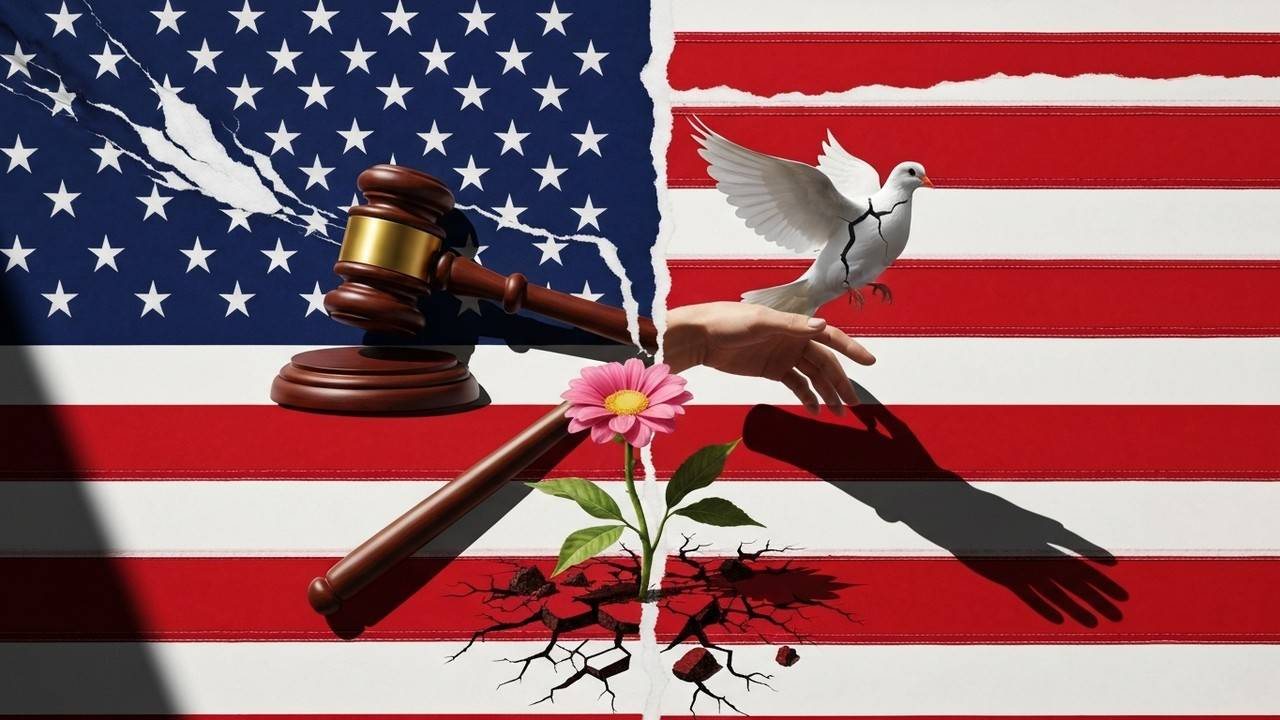
Political violence in America has reached a critical juncture, demanding urgent attention and thoughtful analysis. Recent events underscore the deep fissures within society, where blame often overshadows solutions. This introduction explores the dynamics at play, emphasizing the need for leadership that prioritizes unity over division. By examining causes and responses, we can better understand how to mitigate such conflicts and foster a more cohesive national discourse.
Political violence in America has escalated to alarming levels, with recent events highlighting deep societal divisions. The assassination of a prominent activist has sparked intense debates over responsibility and the role of leadership in fostering unity or furthering discord.
The Escalation of Political Violence
Violence in political spheres is not new, but its frequency and intensity have surged, driven by polarized ideologies and inflammatory rhetoric. This trend poses significant risks to democratic stability and public safety.
Root Causes and Contributing Factors
Factors such as economic inequality, social media echo chambers, and historical grievances fuel political violence. For instance, studies show that periods of high polarization correlate with increased incidents of aggression.
Leadership plays a crucial role; when figures in power assign blame rather than seek solutions, it exacerbates tensions. This dynamic was evident in recent high-profile cases where accusations flew without evidence.
Media coverage often amplifies conflicts, sometimes prioritizing sensationalism over nuanced analysis. This can lead to a cycle of retaliation and misunderstanding among the public.
Psychological aspects, including group identity and dehumanization of opponents, make individuals more prone to violent actions. Understanding these mechanisms is key to prevention.
International comparisons reveal that nations with strong institutions and bipartisan cooperation experience less political violence, underscoring the importance of structural safeguards.
Leadership Responses to Crisis
In times of national trauma, leaders are expected to provide solace and direction, but responses vary widely. Some choose division, while others advocate for reconciliation.
Case Study: Recent Assassination Aftermath
Following the tragic death of a young activist, immediate reactions included blame-shifting and calls for vengeance. This mirrored patterns seen in other politically charged incidents.
Contrastingly, figures like Governor Cox emphasized de-escalation, urging a shift from hatred to dialogue. His approach highlighted alternative paths that prioritize national healing.
Historical precedents, such as responses to past assassinations, show that unifying leadership can reduce long-term violence. For example, after similar events, some leaders successfully bridged divides.
The role of social movements and civil society in countering violence is critical. Grassroots efforts often fill voids left by inadequate governmental responses.
Effective communication strategies, including empathetic messaging and factual reporting, can mitigate the spread of incendiary narratives that fuel further conflict.
- 01
- 02
- 03
- 04
Strategies for Mitigation and Prevention
Addressing political violence requires multifaceted approaches, from policy reforms to cultural shifts. Proactive measures can prevent escalation and promote peace.
Policy Interventions and Best Practices
Legislative actions, such as hate crime laws and campaign finance reforms, can reduce incentives for violence. Countries with robust legal frameworks see lower incidence rates.
Educational initiatives that teach critical thinking and empathy in schools help build resilience against extremist ideologies. Programs focused on media literacy are particularly effective.
Community engagement, through dialogues and collaborative projects, fosters understanding across political divides. Real-world examples demonstrate how local efforts can have national impact.
Technology solutions, like AI monitoring for harmful content, offer tools to identify and address threats early. However, these must balance security with privacy concerns.
International cooperation, sharing best practices and resources, enhances global efforts to combat political violence. Cross-border initiatives have proven successful in various regions.
Key Takeaways
Political violence is a complex issue rooted in division and poor leadership, but it is not inevitable. Through unified efforts, education, and thoughtful policies, societies can forge paths toward peace and stability, ensuring a safer future for all.
|
Aspect |
Details |
|
Key Issue |
Rise in political violence linked to polarization and leadership failures |
|
Recent Example |
Assassination of activist leading to blame and calls for vengeance |
|
Leadership Response |
Varied approaches: some divisive, others advocating for de-escalation |
|
Mitigation Strategies |
Policy reforms, education, community engagement, and technology solutions |
|
Global Context |
International cooperation and best practices reduce violence incidence |
From our network :
- Troubleshooting C# Parameterized SQL Queries: A Step-by-Step Guide
- Clustered Index Scan vs. Table Scan: Performance Differences Explained
- Derivative of \({e}^x\) using First Principle
- Long-Snouted Vine Snake: A Newly Discovered Species in India
- The Mystery of Noah’s Ark Location and Research
- The Unsung Hero of the Moon Landing: Francis Bacon and the Fuel Cell
- 01
- 02
- 03
- 04
- 05
- 06
- 07
- 08
0 Comments