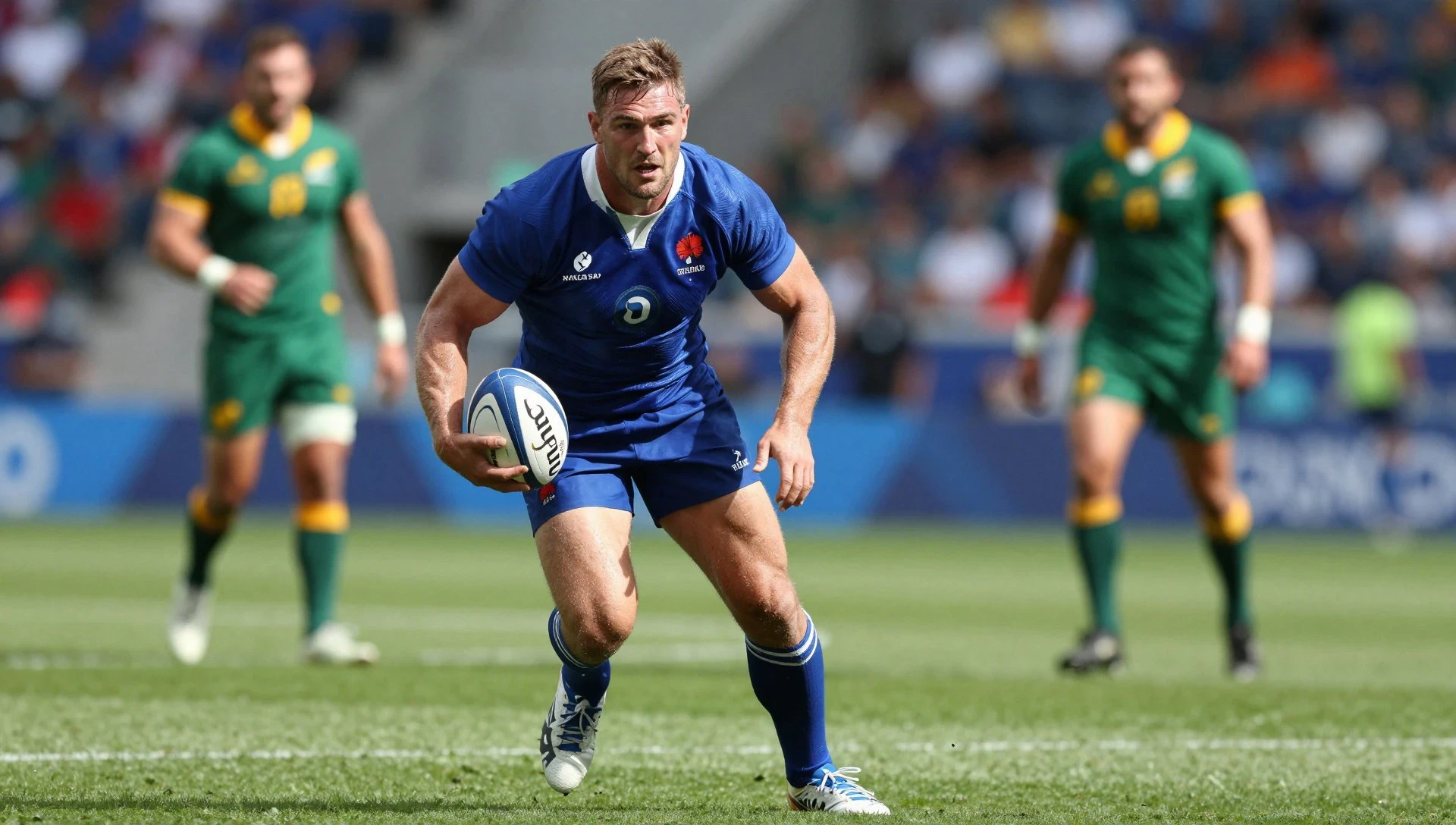
When France coach Fabien Galthié named captain Antoine Dupont at flyhalf for the November 2026 Test against South Africa's Springboks at the Stade de France, the announcement read on its surface like a routine team sheet. It was anything but. Dupont, widely regarded as the finest scrumhalf of his generation, was being repositioned into the pivotal playmaking channel for a fixture framed as part of the Nations Championship, a match that pits French tactical invention against South African forward brutality. The selection, first reported by News24 under the evocative headline of Galthié's "master key," instantly became the dominant talking point of the international window.
The decision carries weight far beyond one Friday evening in Saint-Denis. It touches on squad depth, tactical flexibility, the evolving role of the number ten in the modern game, and the calculated risk a national coach accepts when he moves his most influential player out of his natural habitat. South Africa, back-to-back world champions, present a defensive system designed to squeeze the flyhalf channel and disrupt rhythm at the source. Placing Dupont there is simultaneously a statement of confidence and an admission that France believe conventional selection may not be enough against the Springboks' pressure game.
This analysis unpacks the layers beneath the headline: the tactical logic of the switch, the historical precedents of elite scrumhalves operating at ten, the specific threat South Africa poses, and what the experiment signals about France's ambitions. It also examines the commercial and psychological dimensions of a captain leading from the front in an unfamiliar position, and considers how the outcome may shape selection philosophy well beyond this single Test match.
On This Page
TL;DR France coach Fabien Galthié selected captain Antoine Dupont at flyhalf rather than his customary scrumhalf for the November 2026 Test against South Africa at the Stade de France, a Nations Championship fixture reported by News24. The move is a deliberate tactical gambit: it concentrates France's decision-making in one player, challenges South Africa's rush defence, and tests squad adaptability ahead of a demanding international calendar. Dupont's dual-position capability gives Galthié a strategic lever, but it also exposes France to risk if the Springboks' forward dominance denies the flyhalf clean ball. The selection is best read as a calculated experiment with implications for how elite teams structure their playmaking spine.
The Tactical Logic Behind Moving Dupont to Flyhalf
Modern rugby has progressively blurred the distinction between the nine and the ten. The scrumhalf remains the primary distributor from the base, but the flyhalf is the orchestrator who decides whether a phase becomes a strike move, a territorial kick, or a pressure-building sequence. By installing Dupont at ten, Galthié effectively merges both functions into a single decision-maker, removing the handover moment that opposing defences love to attack. The flyhalf channel becomes less a fixed station and more a roaming command post from which Dupont can read the defensive line and respond in real time.
There is also a counter-intuitive defensive benefit. Dupont's tackling and breakdown work are exceptional for a halfback, and his presence in the wider channel gives France a second openside-style operator in the front line. Against South Africa, whose centres and back row thrive on carrying into the ten channel, that added physicality matters. The selection is not merely about attack; it is about denying the Springboks their favourite point of entry while retaining a playmaker capable of turning turnover ball into immediate points.
Concentrating Decision-Making in One Player
Rugby's great sides have often concentrated authority in a single tactical brain. When that brain also possesses the pace and footwork to threaten the line personally, defences face a dilemma: rush the playmaker and risk being beaten on the inside, or hold and allow him time to pick the pass. Dupont at ten forces South Africa to choose. His running threat from first receiver compresses the defensive line, which in turn creates space for France's back three and opens the short side for the blindside winger.
The trade-off is dependency. If Dupont is neutralised, France's attacking structure loses its primary reference point. Galthié mitigates this by retaining a specialist scrumhalf on the field to service the base, allowing Dupont to operate as a second distributor rather than the sole conduit. That dual-pivot arrangement is increasingly common at the highest level, and it reflects a broader shift toward fluid, position-agnostic backlines in which roles are defined by phase context rather than by jersey number.
Challenging the Springboks' Rush Defence
South Africa's defensive identity is built on line speed and aggressive line pressure, designed to force the flyhalf into hurried decisions and interceptable passes. A conventional ten can be rattled by that pressure. Dupont, however, has spent his career operating in the tightest spaces on the field, where the scrumhalf must make split-second choices with forwards bearing down on him. That conditioning makes him unusually resistant to rush defence, and it allows France to attack the very system South Africa trust most.
The Springboks will likely respond by targeting Dupont physically, sending back-row carriers down his channel and contesting the breakdown to slow French ball. Whether France can protect their captain while still asking him to playmake is the central tactical question of the match. If they can, the experiment validates a new model; if they cannot, it becomes a cautionary tale about the limits of positional flexibility against the world's most physically imposing side.
Historical Precedents for Scrumhalves at Flyhalf
Positional crossovers are not new, though they are rarely attempted at the highest level with a captain and talisman. Historically, scrumhalves who moved to flyhalf tended to be strong kickers with a structured, conservative game, men who could manage territory without demanding the running threat of a natural ten. Dupont inverts that profile entirely. He is a running, offloading, breakdown-oriented player whose instinct is to attack space rather than manage it, which makes his deployment at ten a genuinely novel proposition rather than a nostalgic throwback.
Coaches have long used hybrid halfbacks to solve specific problems. Sometimes the motive is injury cover; sometimes it is a desire to get two playmakers on the field simultaneously. Galthié's reasoning appears to belong to the second category. By pairing Dupont with a specialist scrumhalf, France can field two distributors without sacrificing the breakdown presence that a traditional ten would not provide. The arrangement echoes the dual-playmaker models seen in the southern hemisphere, where the ten and fullback often share the kicking and distribution load.
Lessons From Dual-Playmaker Systems
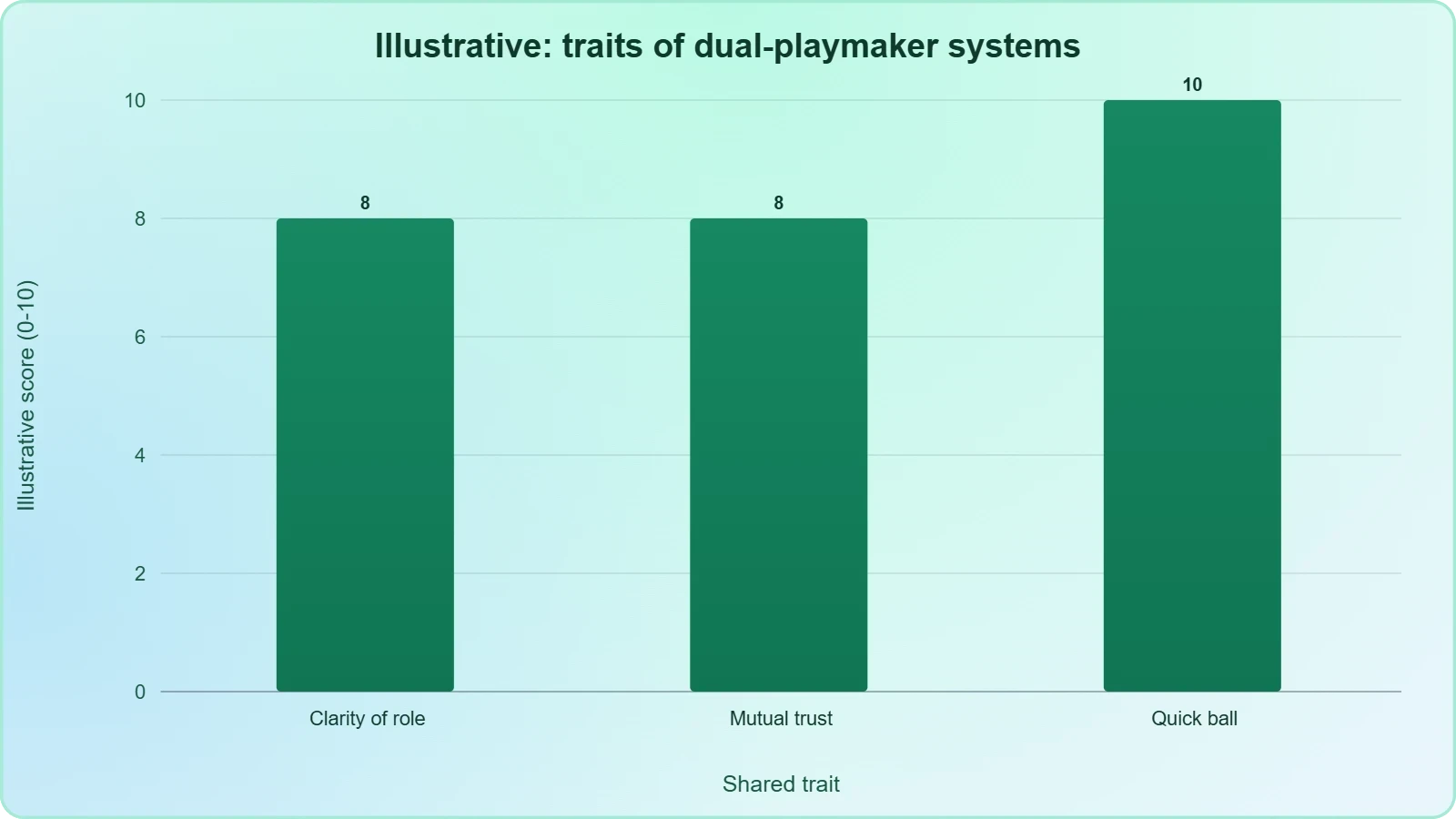
Teams that have successfully fielded two primary distributors tend to share three traits: clarity of role, mutual trust, and a forward pack capable of generating quick ball. Without quick ball, dual playmakers become decorative. France's pack, built around a mobile back row and technically proficient front five, is designed to supply exactly that platform. The question is whether it can do so against a Springbok pack that specializes in slowing possession and forcing teams into static, one-out carrying.
The dual-playmaker model also demands defensive discipline. Two distributors in the front line means two potential targets for opposition carriers, and South Africa will not hesitate to exploit that. France must therefore ensure their back-row cover is positioned to protect both channels, a structural demand that may pull resources away from the wide defence. Every tactical gain carries a corresponding cost, and Galthié's selection is a wager that the attacking upside outweighs the defensive exposure.
The Captaincy Dimension
Captaining from an unfamiliar position adds a psychological layer that tactical diagrams cannot capture. A captain at scrumhalf is close to the referee, close to the forwards, and close to the rhythm of the game. A captain at flyhalf is further from the breakdown, more exposed to pressure, and more dependent on the service he receives. Dupont must therefore lead through communication and example rather than proximity, directing the pack from a position where his voice competes with the crowd and the defensive line.
There is, however, an argument that this makes him a more effective leader. By placing himself in the most scrutinised position on the field, Dupont signals accountability. He is not asking a teammate to absorb the pressure he has avoided; he is absorbing it himself. That gesture can galvanise a squad, particularly in a fixture where France are expected to be tested physically and mentally. Leadership, in this reading, is less about where the captain stands and more about what his stance communicates.
South Africa's Counter-Strategy and the Physical Contest
South Africa will not be passive observers of Galthié's experiment. Their coaching staff are among the most adaptable in world rugby, and they will have prepared for the possibility that Dupont operates at ten. The most likely counter is a targeted physical assault on the flyhalf channel, using back-row carriers and centres to force Dupont into repeated defensive engagements. The aim is cumulative: fatigue the playmaker, reduce his sharpness in attack, and force France to commit extra defenders to his protection.
A second counter involves the breakdown. If South Africa can slow French possession, Dupont's ability to scan and distribute is neutralised regardless of where he stands. The Springboks will therefore contest aggressively at the tackle, accepting the risk of conceding penalties in exchange for denying France the quick ball their dual-playmaker system requires. This is a familiar South African trade-off, and it has dismantled more sophisticated attacking structures than France's.
Set-Piece as the Deciding Battleground
Every tactical innovation in rugby ultimately rests on set-piece parity. If France's scrum and lineout function, Dupont receives the platform his game demands. If they creak, the flyhalf becomes a firefighter rather than an architect. South Africa's set-piece is their foundational weapon, and their ability to win penalties at scrum time gives them both territory and psychological leverage. France must therefore match the Springboks physically before any of Galthié's backline creativity becomes relevant.
The lineout offers France a potential edge. Their throwing and lifting combinations are precise, and a functioning lineout maul can drag South African forwards into defensive duties that tire them and reduce their carrying output. If France can use the lineout to generate momentum and quick ball, Dupont's positioning becomes an asset rather than a vulnerability. The set-piece contest is therefore not a preliminary to the tactical story; it is the story.
Managing Risk Across the Tournament
One match does not define a selection philosophy, but it can shape one. Galthié must weigh the value of this experiment against the risk of disrupting a settled halfback pairing ahead of a demanding Nations Championship schedule. If the Dupont-at-ten model works, France gain a flexible tactical option that opponents cannot easily prepare for. If it fails, the coach must decide whether to persist, refine, or abandon the idea before it becomes a distraction.
The broader lesson concerns squad development. International rugby rewards teams that can adapt within matches, and positional flexibility is a form of insurance. A squad with players capable of covering multiple roles is more resilient to injury, suspension, and tactical surprise. Galthié's selection is therefore best understood not as a one-off stunt but as an investment in adaptability, a deliberate stress test of his squad's capacity to solve problems in real time under maximum pressure.
- 01
- 02
- 03
- 04
We Also Published
The Broader Implications for Modern Rugby Selection
Galthié's decision sits within a wider trend toward positional fluidity in elite rugby. The traditional numbering system, in which each jersey carries a fixed job description, is being eroded by players who can operate across multiple roles and coaches who design systems around capabilities rather than positions. Dupont at flyhalf is a high-profile expression of that trend, and its outcome will be studied by coaches across the international game as evidence of how far flexibility can be pushed.
The commercial dimension is equally significant. Dupont is one of the sport's most recognisable figures, and his deployment in the most consequential position on the field generates narrative, attention, and ticket demand. The Nations Championship, a relatively new competition seeking to establish its prestige, benefits from a storyline of this magnitude. Whether or not the experiment succeeds tactically, it has already succeeded as a promotional event, which is itself a consideration in the modern governance of the sport.
What Success Would Look Like
Success need not mean a French victory, though that would help. A more meaningful measure is whether Dupont influences the game in the ways Galthié intends: controlling tempo, creating space for others, and surviving the physical examination. If France generate quick ball and Dupont finds the edges of South Africa's rush defence, the model has validity regardless of the final score. If he is repeatedly caught behind the gain line and forced into defensive duty, the experiment has failed on its own terms.
The coaching staff will also assess the second-order effects: how the pack responds to a flyhalf who demands quick ball, how the back three adjust to a distributor with a running instinct, and how the defensive structure holds when the captain is targeted. These are the details that determine whether a tactical idea becomes a durable system or remains a one-off curiosity. The scoreboard matters, but the structural evidence matters more.
Implications Beyond This Test
If the model proves viable, France gain a strategic option that opponents must prepare for throughout the Nations Championship and beyond. A team that can present two different playmaking configurations from the same starting fifteen is harder to analyse and harder to counter. That ambiguity is valuable in tournament rugby, where preparation time is limited and surprise has measurable value. Galthié may have stumbled onto a template that other coaches will copy.
If it fails, the lesson is equally instructive. Positional flexibility has limits, and the flyhalf channel remains one of the most demanding roles in the sport for good reason. The experiment would then be remembered as a bold but ultimately impractical gamble, a reminder that tactical creativity must respect the physical realities of the game. Either way, the selection has already changed the conversation around how national teams construct their playmaking spine.
Reading the Selection as a Statement of Intent
Every selection decision communicates something, and Galthié's choice speaks to a coach who believes his team must evolve rather than merely compete. France have the talent to challenge any side, but talent alone has not always translated into trophies. By asking his captain to shoulder a new and demanding role, Galthié is signalling that comfort is not the objective. The selection is a challenge to the squad, a demand for adaptability, and a public declaration that France intend to be tactically proactive rather than reactive.
The Springboks, for their part, will treat the fixture as an opportunity to assert their own identity. They are comfortable being the team others must solve, and they will relish the chance to test whether France's innovation holds up under sustained physical pressure. The contrast between French invention and South African power is the oldest storyline in the sport, and this iteration carries fresh intrigue because the invention is being attempted in the most exposed position on the field.
What Observers Should Watch
The first twenty minutes will reveal much. If Dupont receives clean ball and France generate quick rucks, the experiment has a platform. If South Africa dominate the breakdown and force Dupont into defensive duty, the tactical rationale begins to erode. Watch also the positioning of France's back row: their ability to protect the flyhalf channel while still contesting the tackle area will determine whether the dual-playmaker model is sustainable or merely aspirational.
Beyond the tactical, watch the body language. A captain playing out of position is under intense scrutiny, and how Dupont responds to early setbacks will influence the team's composure. If he settles quickly, France will grow into the game. If he struggles, the Springboks will sense it and intensify the pressure. Rugby matches are often decided by these psychological currents as much as by set-piece statistics.
The Verdict on a Calculated Gamble
Galthié's selection is best judged as a calculated gamble rather than a reckless one. Dupont has the skill set, the temperament, and the experience to operate at flyhalf, and the dual-playmaker structure gives France a genuine tactical edge if the platform holds. The risks are real, but they are understood and, to some degree, mitigated by the presence of a specialist scrumhalf alongside him. The coach has not gambled blindly; he has gambled with his best player in a role designed to maximise his influence.
Whether the gamble pays off will be settled on the field, but its significance extends beyond the result. It demonstrates that elite rugby is increasingly a contest of adaptability, where the teams that win are those that can reconfigure under pressure. France, under Galthié, are betting that flexibility is a competitive advantage. The Springboks will provide the sternest possible test of that thesis, and the rugby world will be watching closely.
From our network :
- The Hidden Cost of AI Convenience: Why Over-Permissioned Agents Are a Security Time BombDiscover why AI agents with excessive permissions create dangerous single points of failure, and learn how implementing least privilege principles can protect your organization from exploitation.
- Mobile Learning and VR in English: What Global Evidence Reveals About Effective Language TechnologyA systematic review across 14 countries reveals which language-learning technologies genuinely work. Mobile learning, AI, and VR show measurable benefits when pedagogically integrated. This evidence-based guide helps educators and learners select technology that delivers real return on investment.
- CISA’s Ten-Advisory Wave: Why Generic Patching Fails in OT and How to Build Product-Specific PlaybooksCISA released ten ICS advisories in one week, exposing critical infrastructure risks. Generic patching fails in OT. Learn to build product-specific remediation playbooks.
- University Language Proficiency Exams: Why Institutional Tests Demand Different Preparation Than IELTS and TOEFLDiscover why university-specific language proficiency examinations differ fundamentally from IELTS and TOEFL, and learn strategic preparation approaches for institutional assessment success.
- Forbidden Matrix Patterns and Visible Lattice Points: A Geometric DictionaryExplore how multidimensional 0–1 matrices encode geometric truths, linking forbidden patterns to visible lattice points and hypergraph theory, with applications in combinatorics and computational geometry.
- How AI Agents Will Change the Way We Manage Personal FinancesExplore how AI agents are transforming personal finance through automated budgeting, bill payment, and investment management, while examining the critical security protocols and governance frameworks required for safe deployment.
- Live Online English Classes for Kids: Do They Actually Reduce Anxiety?A ten-week study reveals that synchronous online English classes can significantly reduce child language anxiety while improving listening and reading skills. Discover what makes these programs effective and how parents can select the right one.
- Committed Mediterranean Precipitation Decline: Why Emissions Cuts Alone Cannot Restore Winter RainsNew NOAA research reveals that Mediterranean winter rains may decline irreversibly even with emissions cuts. Explore the science of committed climate change and regional impacts.
- The Final Descent: How ESA Retired the Legendary Cluster Constellation After 24 Years of Space Weather ScienceAfter 24 years mapping Earth’s magnetosphere, ESA’s Cluster mission concluded with a precisely controlled reentry over the South Pacific. This analysis explores the scientific legacy, engineering decisions, and debris mitigation principles behind one of space exploration’s most responsible retirements.
RESOURCES
- France make bold fly half call for Springboks clash as Antoine ...sports.yahoo.com6 hours ago ... Head coach Fabien Galthie saw Romain Ntamack go down with a shoulder injury in the Nations Championship win over Fiji,…
- DUPONT FORCED INTO FLYHALF ROLE! France have named their ...instagram.com6 hours ago ... ... Springboks #AntoineDupont #NationsChampionship ... Nations Championship clash against the Springboks, with several key players sidelined.
- Dupont picked at 10 amid France fly-half crisis - Yahoo Sportssports.yahoo.com4 hours ago ... France captain Antoine Dupont will fill in at fly-half for Friday's Nations Championship game against world champions South Africa in…
- Antoine Dupont at fly-half! With all four of France's first-choice 10s ...instagram.com6 hours ago ... ... Springboks in the Nations Championship on Friday. With two of international rugby's biggest heavyweights set to collide, France know…
- France named captain Antoine Dupont at flyhalf for Friday's Nations ...facebook.com4 hours ago ... France named captain Antoine Dupont at flyhalf for Friday's Nations Championship match against South Africa, according to the team list ...
- France team: Antoine Dupont answers SOS over fly-half crisis as ...planetrugby.com5 hours ago ... Captain Antoine Dupont will fill the void at fly-half as France named their team to take on the Springboks in…
- Antoine Dupont at fly-half! With all four of France's first - Facebookfacebook.com6 hours ago ... #FranceRugby #AntoineDupont #FRAvRSA #NationsChampionship #Springboks ... ALSO READ: Who will the Springboks play in the semi- finals if they BEAT ...
- France team v Springboks: Five takeaways as Antoine Dupont is Les ...planetrugby.com14 hours ago ... Following the announcement of the France team that will face the Springboks in the Nations Championship, here are our five…
- All Things Rugby on Xtwitter.com6 hours ago ... DUPONT FORCED INTO FLYHALF ROLE! France have named their starting XV to face the Springboks on Friday, with captain Antoine…
- Antoine Dupont to start at fly half for France for first time - The Timesthetimes.com6 hours ago ... France's scrum-half Antoine Dupont makes a break with the ball during the Six Nations ... Nations Championship. How experience at…
- Ntamack injury mars France rout of Fiji before Springboks clashabcnews.com4 days ago ... ... flyhalf Romain Ntamack for the showdown with South Africa in Nations Championship rugby. ... Antoine Dupont. France scored eight…
- France forced into bold Antoine Dupont call for Springboksrugbypass.com6 hours ago ... Fabien Galthié has made the bold call to move Antoine Dupont to fly-half for France's Nations Championship clash with South…
- 01
- 02
- 03
- 04
- 05
- 06
- 07
- 08
0 Comments