When The New York Times publishes a recipe, the culinary world tends to take notice, and its recent entry for peanut noodles with spicy tofu is a case study in how a modest weeknight dish can carry outsized cultural weight. The item, dated November 2, 2026, and catalogued under the paper's dining section, presents a preparation described simply as easy, pairing noodles with a peanut-based sauce and tofu rendered spicy. What the original notice leaves unsaid is as revealing as what it states: no ingredient list, no cooking steps, no preparation time. That sparseness invites a deeper reading of why such a dish matters.
The recipe's significance lies less in novelty than in positioning. Peanut noodles and spicy tofu are staples across East and Southeast Asian kitchens, from Sichuan dan dan mian to Indonesian gado-gado and Thai satay-adjacent noodle bowls. When a legacy American publication elevates this pairing, it signals the mainstreaming of pantry-driven, plant-forward cooking that prioritizes speed, affordability, and bold flavor over technique. The dish becomes a bridge between home cooks seeking convenience and a culinary tradition whose depth far exceeds the simplified version presented.
This analysis examines the announcement through several lenses: the cultural lineage of the dish, the editorial logic behind publishing it, the nutritional and economic case for peanut-and-tofu cooking, and the practical realities of recreating it without a formal recipe. It treats the sparse source as a starting point rather than a limitation, drawing on broader culinary knowledge to reconstruct meaning, context, and utility for readers who want to understand both the dish and the decision to feature it.
On This Page
- The Cultural Lineage Behind Peanut Noodles and Spicy Tofu
- The Editorial Logic of Publishing a Sparse Recipe Notice
- Nutritional and Economic Case for Peanut-and-Tofu Cooking
- Reconstructing the Recipe Without a Published Method
- Pantry Economics and the Broader Shift in Home Cooking
- What the Sparse Announcement Reveals About Modern Food Media
- Practical Guidance for Cooks Seeking to Recreate the Dish
TL;DR The New York Times has published a recipe for simple peanut noodles with spicy tofu, described as easy to prepare but disclosed without ingredient lists, cooking steps, or timing. The dish sits at the intersection of Asian culinary tradition, plant-based eating, and pantry economics, and its publication reflects a broader editorial appetite for fast, affordable, flavor-forward home cooking. This analysis reconstructs the cultural lineage, nutritional logic, and practical execution of the dish, and considers what the sparse announcement reveals about how modern food media frames accessibility.
The Cultural Lineage Behind Peanut Noodles and Spicy Tofu
Peanut noodles are not a single dish but a family of preparations spanning continents, each shaped by local agriculture, trade routes, and migration. In Sichuan cuisine, sesame and chili dominate noodle dressings, while peanut appears more prominently in Southeast Asian satay sauces and Indonesian peanut-based gado-gado dressings. The American conception of "peanut noodles" often merges these traditions into a single saucy bowl, a simplification that nonetheless captures something authentic: the region's long reliance on ground nuts as a thickening, enriching base for sauces.
Tofu carries an equally layered history. Originating in Han-dynasty China, it spread across East Asia and became a protein staple long before plant-based eating entered Western vocabulary. Spicy tofu preparations, from Sichuan mapo tofu to Korean dubu jorim, demonstrate how chili, fermentation, and texture transform a neutral soybean curd into a centerpiece. Pairing peanut sauce with spicy tofu is therefore not fusion for its own sake but a recombination of two deeply established traditions that share a pantry logic rooted in soy, chili, and groundnuts.
Regional Variations That Inform the Modern Bowl
Understanding the dish requires acknowledging how differently it appears across regions. Sichuan dan dan mian uses sesame paste, chili oil, and preserved vegetables, with peanuts as garnish rather than sauce base. Thai and Vietnamese kitchens lean on peanut sauces for satay and fresh rolls, balancing sweetness with lime and fish sauce. Indonesian gado-gado dresses vegetables in a peanut sauce thickened with kecap manis, while Malaysian and Singaporean hawker stalls offer peanut-sauced noodles with varying heat levels.
The New York Times version, described only as peanut-based sauce with spicy tofu, likely occupies a pragmatic middle ground: a sauce built from peanut butter, soy, vinegar, and chili, paired with pan-fried or baked tofu. This is the diaspora adaptation, engineered for Western supermarket shelves where natural peanut butter and firm tofu are readily available. Its authenticity is not diminished by that adaptation; rather, it reflects the ongoing evolution of dishes as they travel and settle into new kitchens.
Why the Pairing Works Culinarily
The pairing succeeds because it balances fat, acid, salt, heat, and texture in a way that satisfies both palate and practicality. Peanut butter supplies richness and body, soy sauce delivers umami and salinity, vinegar or lime cuts through the fat, and chili provides the heat that the tofu absorbs. Noodles act as a neutral canvas that carries sauce efficiently, while tofu contributes protein and a contrasting texture when crisped at the edges.
From a cooking-science perspective, the emulsion of peanut butter with a liquid such as hot water, soy, and vinegar creates a stable sauce that clings to noodles without breaking. Spicy tofu, when pressed and seared, develops a Maillard-driven crust that resists sogginess and holds sauce. These are not incidental details; they explain why the dish is described as easy. The technique is forgiving, the ingredients are shelf-stable, and the margin for error is wide.
We Also Published
The Editorial Logic of Publishing a Sparse Recipe Notice
Food journalism operates on a different rhythm from hard news, and the decision to publish a brief notice about a recipe reflects that rhythm. The New York Times maintains a vast recipe archive, and its dining coverage often functions as a discovery service rather than a technical manual. A short item announcing a new recipe directs readers to the full preparation while signaling the publication's editorial priorities: speed, accessibility, and seasonal relevance.
The notice's minimalism is also a function of format. Wire-style summaries and aggregation feeds frequently strip recipes down to their headline and a one-line description, leaving the substantive content behind a paywall or within the paper's cooking platform. Readers encountering the summary learn what the dish is and that it is easy, but not how to make it. That gap is precisely where independent analysis adds value, reconstructing the likely method from culinary first principles.
What the Description Reveals About Editorial Priorities
The words chosen matter. "Simple" and "easy" are not neutral descriptors; they are marketing signals calibrated to a readership that values weeknight feasibility over weekend projects. By foregrounding ease, the publication aligns the dish with a broader genre of fast, pantry-driven recipes that have dominated food media for the past decade. The pairing of peanut and tofu also signals plant-forward intent without using the word vegan, a framing strategy that broadens appeal.
The absence of preparation time is notable. Most contemporary recipe announcements include a time estimate because readers use it as a filter. Its omission may indicate that the full recipe page carries the detail, or that the summary was generated from metadata rather than editorial copy. Either way, the notice functions as a pointer, and its value depends on the reader following that pointer to the source.
The Role of Legacy Media in Shaping Home Cooking
Legacy publications retain disproportionate influence over what home cooks attempt. A recipe featured by The New York Times can drive ingredient searches, supermarket stocking decisions, and social media replication within days. This gatekeeping power means editorial choices carry economic weight: a single feature can elevate a niche ingredient or normalize a technique. Peanut noodles and spicy tofu, already familiar to millions, gain further legitimacy when framed by an institution with global reach.
That influence also invites scrutiny. Critics note that mainstream food media has historically simplified and commodified immigrant cuisines, stripping context in favor of accessibility. The peanut noodle recipe sits within that tension. It is genuinely useful and genuinely reductive, offering a convenient entry point while flattening regional distinctions. A balanced reading acknowledges both the utility and the erasure, treating the recipe as an invitation to explore rather than a definitive statement.
Nutritional and Economic Case for Peanut-and-Tofu Cooking
Peanuts and tofu together form a nutritionally complementary pairing that deserves more attention than it typically receives. Peanuts supply monounsaturated fats, protein, vitamin E, magnesium, and resveratrol, while tofu delivers complete plant protein, calcium, iron, and isoflavones. Combined in a single bowl with noodles, the dish covers macronutrients and micronutrients efficiently, making it a credible option for budget-conscious households seeking satiety without meat.
The economic argument is equally strong. Peanut butter, dried or fresh noodles, firm tofu, soy sauce, vinegar, and chili paste are among the most cost-effective pantry staples available. A single batch of peanut sauce can dress multiple meals, and tofu's neutral flavor absorbs whatever seasoning the cook provides. In an era of volatile food prices, dishes built on shelf-stable proteins and grains offer both resilience and flavor, a combination that explains their growing presence in home kitchens.
Macronutrient and Micronutrient Profile
A typical serving of peanut noodles with spicy tofu delivers roughly 500 to 650 calories, depending on noodle quantity and oil used, with 20 to 28 grams of protein and 15 to 20 grams of fat, most of it unsaturated. Carbohydrates from noodles provide sustained energy, while peanuts' fiber and tofu's protein moderate glycemic response. Sodium can run high if soy sauce is used liberally, so cooks benefit from tasting and adjusting rather than following fixed quantities.
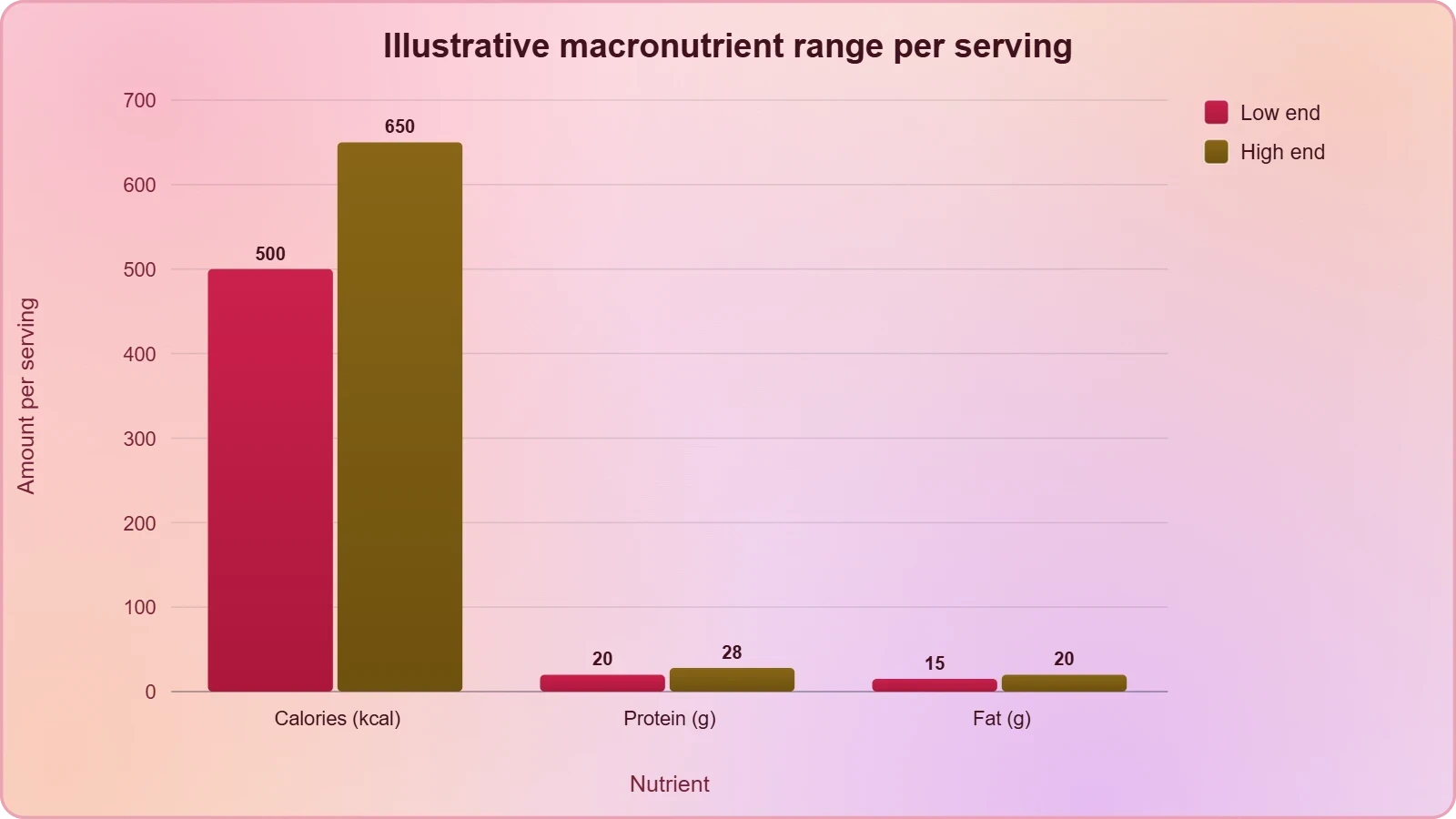
Micronutrient density is a quieter strength. Peanuts contribute niacin, folate, and manganese; tofu adds calcium when set with calcium sulfate, along with selenium and copper. Chili peppers introduce vitamin C and capsaicin, the latter associated with modest metabolic and anti-inflammatory effects. These benefits are not a substitute for dietary variety, but they demonstrate that a fast, inexpensive bowl can be nutritionally serious rather than merely convenient.
Cost Comparison Against Alternative Meals
Cost comparisons favor the peanut-tofu bowl decisively. A pound of firm tofu typically costs less than a pound of chicken or beef, and peanut butter stretches further per serving than most animal proteins. Noodles are among the cheapest calorie sources available, and the sauce's flavor intensity means smaller portions satisfy. For households feeding families or students managing tight budgets, the dish offers a rare combination of low cost and high palatability.
The comparison extends to time, which is itself an economic resource. A peanut noodle bowl can be assembled in under thirty minutes with minimal active cooking, whereas meat-based meals often require longer preparation and cleanup. When labor is valued at even a modest hourly rate, the effective cost gap widens further. This is why the dish appears so frequently in budget-cooking literature and why its mainstream endorsement carries practical weight.
Reconstructing the Recipe Without a Published Method
Because the source notice provides no ingredients or steps, reconstructing the dish requires applying established technique rather than following instructions. The core architecture is straightforward: cook noodles, prepare a peanut sauce, crisp or season tofu, combine, and garnish. Each component tolerates variation, which is why the dish is genuinely easy. The cook's task is to balance the sauce's fat, acid, salt, and heat against the neutral canvas of noodles and tofu.
A reliable sauce begins with peanut butter loosened by hot water or stock, seasoned with soy sauce, rice vinegar, a touch of sugar or honey, grated garlic, and chili paste or oil. The consistency should coat a spoon but remain pourable. Tofu, pressed to remove excess moisture, is cubed and pan-fried until golden, then tossed in chili crisp, soy, and a pinch of sugar. Noodles, ideally wheat or rice, are cooked just shy of tender and tossed with the sauce while warm.
Ingredient Ratios and Sauce Chemistry
Sauce chemistry rewards attention to ratios. A workable baseline is three parts peanut butter to one part soy sauce, one part acid, and one to two parts hot liquid, adjusted for desired thickness. Sugar should be restrained, perhaps a teaspoon per half cup of peanut butter, because sweetness quickly overwhelms. Garlic and ginger add aromatic depth, while chili paste supplies heat and color. Emulsification depends on whisking the liquid in gradually rather than dumping it all at once.
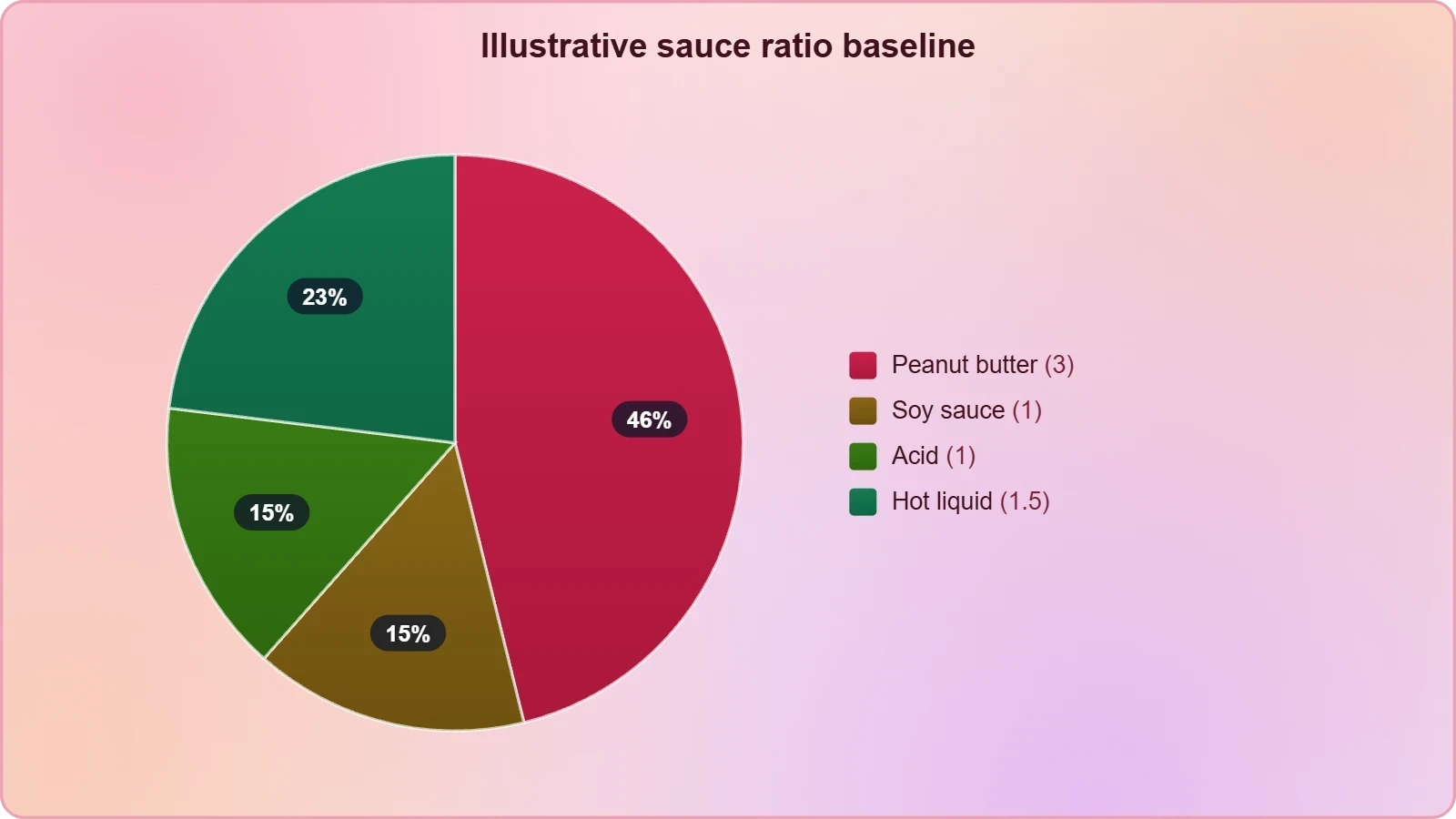
The sauce's stability matters for texture. Peanut butter emulsions can seize if acid is added too quickly, so incorporating vinegar after the liquid helps maintain smoothness. A small amount of toasted sesame oil added at the end contributes aroma without weighing the sauce down. Cooks who prefer a looser sauce can add noodle cooking water, whose starch aids adhesion. These adjustments are simple but distinguish a balanced bowl from a clumpy one.
Technique for Spicy Tofu That Holds Its Texture
Tofu's texture is the dish's most common failure point. Pressing firm or extra-firm tofu for fifteen to thirty minutes removes water that would otherwise steam rather than sear. Cubing before pressing accelerates the process, and a light dusting of cornstarch encourages browning. A hot pan with adequate oil, and patience to let each side develop color before turning, produces the crisp exterior and custardy interior that make the tofu worth eating on its own.
Spicing can happen in two stages. A marinade or toss before cooking infuses the interior, while a finishing toss in chili oil, soy, and aromatics coats the exterior. This dual approach prevents the common problem of tofu that is spicy on the surface and bland within. Cooks seeking deeper flavor can add fermented bean paste or gochujang to the finishing toss, though these intensify salt and heat and should be balanced with a squeeze of lime.
- 01
- 02
- 03
- 04
Pantry Economics and the Broader Shift in Home Cooking
The peanut noodle bowl exemplifies a broader shift toward pantry-driven cooking that accelerated during the pandemic and has persisted. Households discovered that shelf-stable staples could produce satisfying meals without frequent shopping, and food media responded with recipes built around what people already owned. The New York Times feature fits this pattern, offering a dish whose ingredients are likely already in many kitchens or easily acquired in a single trip.
This shift has implications beyond convenience. Pantry cooking reduces food waste by encouraging cooks to use what they have, and it lowers the barrier to trying new cuisines because the ingredient list is short and familiar. Peanut butter and tofu are not exotic to most Western shoppers; they are everyday items. The recipe's accessibility is therefore structural, not merely rhetorical, and that structure explains its appeal to editors and readers alike.
Supply Chain and Ingredient Availability
Peanuts and soybeans are among the most widely traded agricultural commodities, and their derived products are available in virtually every supermarket. Peanut butter's shelf stability and tofu's growing presence in refrigerated sections mean the dish can be made year-round regardless of season. This reliability matters for food media, which favors recipes that readers can actually execute without hunting for specialty items.
Supply chain resilience also plays a role. Both peanuts and soy are domestically produced in significant quantities in the United States, reducing exposure to import disruptions. For consumers, that translates into stable pricing and consistent availability. The dish's economics are therefore underpinned by agricultural realities that make it a dependable choice for budget-conscious cooking, not merely a fashionable one.
Environmental Footprint of Plant-Based Proteins
The environmental case for peanut-and-tofu meals is substantial. Plant proteins generally require far less land and water than animal proteins, and both peanuts and soy fix nitrogen, improving soil fertility. Tofu production emits a fraction of the greenhouse gases associated with beef, and peanut cultivation supports crop rotation in regions where monoculture depletes soil. These factors make the dish a modest but meaningful choice for environmentally conscious eaters.
That said, the footprint depends on sourcing and processing. Imported tofu and heavily packaged peanut butter carry transport and packaging costs that offset some gains. Local sourcing and minimal packaging improve the equation. The broader point is that the dish demonstrates how everyday meals can align with sustainability goals without requiring sacrifice, a message that resonates with readers navigating both budget and climate concerns.
What the Sparse Announcement Reveals About Modern Food Media
The notice's brevity is itself a data point about how food media now operates. Aggregation feeds, newsletters, and social cards increasingly deliver recipes as headlines and one-line descriptions, with the full method living behind a subscription or app. Readers encounter the idea of a dish before its instructions, and their decision to engage depends on whether the description resonates. "Simple" and "easy" are therefore not throwaway adjectives but conversion signals.
This format has consequences for culinary literacy. When recipes arrive as fragments, cooks must fill gaps with prior knowledge or improvisation, which can be empowering or frustrating depending on experience. The peanut noodle bowl, with its forgiving structure, is well suited to improvisation, which may explain why it circulates so effectively in summary form. Its simplicity is both the message and the method.
The Tension Between Accessibility and Authenticity
Accessibility and authenticity are often framed as opposites, but the peanut noodle bowl suggests they can coexist. The dish is accessible because its ingredients are common and its technique is forgiving; it is authentic because it draws on genuine culinary traditions, even if simplified. The tension arises when simplification erases context, presenting a dish as generic when it belongs to specific cultures with specific histories.
Responsible food media navigates this by crediting origins and offering depth alongside convenience. A short notice cannot do that work alone, but it can point toward fuller treatment. Readers who follow the pointer to the full recipe may encounter context; those who do not still gain a useful meal. The question is whether the ecosystem as a whole provides enough context, and the answer depends on the publication's broader commitments.
Reader Behavior and the Lifecycle of a Recipe
Recipes have lifecycles. A feature generates initial attention, social sharing sustains it, and repetition in home kitchens determines whether it endures. The peanut noodle bowl's lifecycle is likely to be long because its ingredients are staples and its method is adaptable. Unlike trend-driven dishes that require specialty items, it can be made repeatedly without fatigue, which is the hallmark of a recipe that becomes part of a household's rotation.
Reader behavior reinforces this pattern. Cooks return to recipes that work reliably, and they modify them over time, adding vegetables, swapping proteins, or adjusting heat. The sparse announcement does not constrain this process; if anything, it invites it by leaving room for interpretation. The dish's future lies less in the original recipe than in the variations it inspires, which is how culinary traditions have always evolved.
Practical Guidance for Cooks Seeking to Recreate the Dish
For cooks inspired by the announcement, the practical path is clear even without a published method. Begin with firm or extra-firm tofu, press it, cube it, and sear it until golden. Meanwhile, whisk peanut butter with hot water, soy sauce, vinegar, garlic, and chili until smooth. Cook noodles according to package directions, reserve a little cooking water, and toss everything together, loosening with the reserved water as needed. Finish with scallions, crushed peanuts, and extra chili oil.
Variations abound. Rice noodles suit gluten-free diets, while whole-wheat noodles add fiber. Vegetables such as shredded cabbage, cucumber, or blanched broccoli increase volume and nutrition. For a saucier bowl, increase the hot liquid; for a thicker coating, reduce it. The dish rewards tasting at each stage, and its forgiving nature means mistakes are correctable. This adaptability is precisely what makes it a reliable weeknight option.
Common Pitfalls and How to Avoid Them
The most frequent pitfall is dry, bland tofu, which results from insufficient pressing and inadequate seasoning. Pressing for at least fifteen minutes and seasoning in two stages solves this. A second pitfall is a sauce that clumps or seizes, usually caused by adding acid too quickly or using cold liquid. Warming the liquid and whisking gradually prevents it. A third is overcooked noodles, which turn mushy and fail to hold sauce.
Balance is the final consideration. Peanut sauces can become heavy, so acid and heat are essential counterweights. If the sauce tastes flat, add vinegar or lime; if it tastes sharp, add a touch of sugar or more peanut butter. If it lacks depth, add soy or a fermented paste. These adjustments require no special skill, only attention, and they transform a competent bowl into a memorable one.
Scaling and Meal-Prep Considerations
The dish scales easily, which makes it suitable for meal preparation. Sauce can be made in bulk and refrigerated for up to a week, and tofu can be pressed and seared ahead of time. Noodles are best cooked fresh, but they can be stored separately and revived with a splash of hot water. Keeping components separate until serving prevents sogginess and allows eaters to adjust ratios to their preference.
Meal-prep logic favors the dish because its components have different shelf lives. Sauce and tofu keep longer than dressed noodles, so storing them separately extends usability. Portioning into containers with vegetables added at serving time maintains texture. For households cooking for one or two, this flexibility reduces waste and ensures that a single batch provides multiple meals without repetition fatigue.
The New York Times announcement of simple peanut noodles with spicy tofu is a small item with a large footprint. It signals the continued mainstreaming of plant-forward, pantry-driven cooking, connects readers to culinary traditions that span continents, and demonstrates how a forgiving dish can travel through media formats without losing utility. Its sparseness is not a flaw but a feature of the ecosystem in which it appears, inviting cooks to fill gaps with technique and judgment.
For readers, the practical takeaway is straightforward: the dish is worth making, adaptable to available ingredients, and economical in both cost and time. For observers of food media, the notice illustrates how editorial framing shapes what home cooks attempt and how legacy institutions retain influence over everyday eating. Both readings converge on the same conclusion: a simple bowl of noodles and tofu carries more meaning than its brevity suggests.
From our network :
- Forbidden Matrix Patterns and Visible Lattice Points: A Geometric DictionaryExplore how multidimensional 0–1 matrices encode geometric truths, linking forbidden patterns to visible lattice points and hypergraph theory, with applications in combinatorics and computational geometry.
- The Hidden Cost of AI Convenience: Why Over-Permissioned Agents Are a Security Time BombDiscover why AI agents with excessive permissions create dangerous single points of failure, and learn how implementing least privilege principles can protect your organization from exploitation.
- How AI Agents Will Change the Way We Manage Personal FinancesExplore how AI agents are transforming personal finance through automated budgeting, bill payment, and investment management, while examining the critical security protocols and governance frameworks required for safe deployment.
- Mobile Learning and VR in English: What Global Evidence Reveals About Effective Language TechnologyA systematic review across 14 countries reveals which language-learning technologies genuinely work. Mobile learning, AI, and VR show measurable benefits when pedagogically integrated. This evidence-based guide helps educators and learners select technology that delivers real return on investment.
- The Final Descent: How ESA Retired the Legendary Cluster Constellation After 24 Years of Space Weather ScienceAfter 24 years mapping Earth’s magnetosphere, ESA’s Cluster mission concluded with a precisely controlled reentry over the South Pacific. This analysis explores the scientific legacy, engineering decisions, and debris mitigation principles behind one of space exploration’s most responsible retirements.
- University Language Proficiency Exams: Why Institutional Tests Demand Different Preparation Than IELTS and TOEFLDiscover why university-specific language proficiency examinations differ fundamentally from IELTS and TOEFL, and learn strategic preparation approaches for institutional assessment success.
- CISA’s Ten-Advisory Wave: Why Generic Patching Fails in OT and How to Build Product-Specific PlaybooksCISA released ten ICS advisories in one week, exposing critical infrastructure risks. Generic patching fails in OT. Learn to build product-specific remediation playbooks.
- Live Online English Classes for Kids: Do They Actually Reduce Anxiety?A ten-week study reveals that synchronous online English classes can significantly reduce child language anxiety while improving listening and reading skills. Discover what makes these programs effective and how parents can select the right one.
- Committed Mediterranean Precipitation Decline: Why Emissions Cuts Alone Cannot Restore Winter RainsNew NOAA research reveals that Mediterranean winter rains may decline irreversibly even with emissions cuts. Explore the science of committed climate change and regional impacts.
RESOURCES
- Peanut Noodles With Spicy Tofu Recipe - NYT Cookingcooking.nytimes.comMay 4, 2026 ... Ingredients · ⅓ cup unsweetened smooth, natural peanut butter · 1 tablespoon light brown sugar · 1 tablespoon rice vinegar…
- Spicy Peanut Noodles with Crispy Tofu - School Night Veganschoolnightvegan.comJun 1, 2021 ... Peanut it Up! Here come the peanuts!! I like to use a really chunky, dark roast peanut butter from Pip…
- Peanut Noodles with Tofu - My Plantiful Cookingmyplantifulcooking.comApr 9, 2024 ... ... noodles, vegan jjajangmyeon, or vegan japchae for a quick weekday dinner. ... Serve hot or cold - If you…
- Tofu Peanut Noodles - Healthier Stepshealthiersteps.comMay 27, 2024 ... This Peanut Noodles with Tofu recipe is an easy Asian noodles recipe ... Add chili oil or sauce to make…
- Easy-Peasy Peanut Noodles With Spicy Tofu - The New York Timesnytimes.com6 hours ago ... More food for thought. Weeknight recipes with a little kick are just the thing to counterbalance the soft, buttery flavors…
- Spicy Peanut Butter Noodles - Eat With Clarityeatwithclarity.comNov 13, 2025 ... Hungry but don't have time to cook?! This spicy peanut butter noodle recipe is just for you. It's vegan, gluten…
- Peanut Sesame Noodles with Crispy Tofu - Bianca Zapatka | Recipesbiancazapatka.comSep 15, 2026 ... Recipe for asia noodles with a spicy sauce made of peanuts, sesame and chili - vegan, quick and easy to…
- Peanut Noodles Recipe - Love and Lemonsloveandlemons.comApr 30, 2025 ... This peanut noodles recipe is a quick, delicious meal! You can stir together the spicy, creamy peanut sauce while the…
- Creamy Peanut Noodles (Easy Vegan) - Cooking With Ayehcookingwithayeh.comJul 30, 2026 ... It makes for an easy dinner using noodles, tofu, veggies with a creamy peanut sauce. ... Chili sauce or chili…
- Peanut Tofu Noodle Bowls - Budget Bytesbudgetbytes.comApr 3, 2021 ... Ready in 30 minutes, my Ramen Noodle Salad is an easy answer to hot-weather dinners. More Tofu Recipes. Close up…
- Peanut Tofu Noodles with Veggies - Food with Feelingfoodwithfeeling.comApr 9, 2026 ... Want more sauce noodle recipes? Try my Roasted Red Pepper Tofu Sauce as well as my super simple Alfredo Sauce…
- Sweet and Spicy Asian Noodle Bowl with Hoisin Baked Crunchy Tofuthetwincookingproject.netJun 15, 2020 ... Made with basic pantry staples & probably the easiest vegan and simple noodle bowl recipe in the world (followed by…
- Thai Peanut Noodles - Nora Cooksnoracooks.comJun 30, 2022 ... 20 Vegan Fall Recipes for Cozy Dinners · overhead view of a spicy ginger ground tofu rice bowl. ... This…
- Saucy Peanut Noodles with Crispy Tofu (Gluten-Free) - Thai-inspiredmamagourmand.comAug 19, 2024 ... Begin by pressing the tofu. · Next, soften the noodles. · Meanwhile, prepare the peanut sauce. · Add ⅓ cup…
- Spicy Tofu Peanut Noodles - By The Forkfulbytheforkful.comJan 12, 2026 ... While the tofu is cooking and the noodles are boiling, make your spicy peanut sauce. ... Served with crispy tofu,…
- 01
- 02
- 03
- 04
- 05
- 06
- 07
- 08
0 Comments