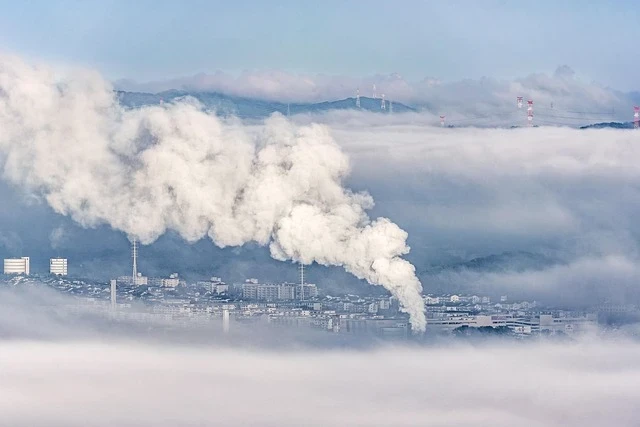
When the heavens above Sumatra and Kalimantan turn the colour of rusted iron, the phenomenon ceases to be a mere weather report and becomes a civilisational alarm. The orange smog that has draped Indonesian cities is not a curious atmospheric quirk but the visible signature of peatland and forest fires burning with industrial ferocity across some of the most carbon-rich landscapes on Earth.
Residents of Palembang, Jambi, and Pontianak have watched their skylines dissolve into a sepia haze that smells of burnt earth and carries particulate matter deep into human lungs.
This is a story about fire, but it is equally a story about economics, land policy, and the fragile arithmetic of a planet warming faster than its forests can regenerate.
On This Page
Wildfire pollution does not respect maritime borders; it drifts across the Malacca Strait into Malaysia and Singapore, forcing schools to close and airlines to ground fleets. What begins as an Indonesian land-management crisis metastasises into a regional public-health emergency, and the orange pall is merely the most photogenic symptom of a far deeper malaise.
Understanding this event demands that we look beyond the dramatic photographs and interrogate the machinery that produces such catastrophes with grim annual regularity. The smog is a ledger entry, recording decades of drainage, plantation expansion, and governance failure. It is also a warning that climate feedback loops, once triggered, are extraordinarily difficult to reverse.
TL;DR Orange smog blanketing Indonesian cities is the visible consequence of massive peatland and forest fires, driven largely by land-clearing for agriculture and exacerbated by drought linked to climate patterns. The pollution spreads across Southeast Asia, causing respiratory illness, school closures, and diplomatic friction. Addressing it requires peatland restoration, stricter enforcement, sustainable supply chains, and regional cooperation, because the fires are as much an economic and governance problem as an environmental one.
The Anatomy of an Orange Sky
The peculiar amber hue that settles over Indonesian cities is a product of physics as much as combustion. Smoke particles of a specific size scatter blue light while transmitting yellow and red wavelengths, so daylight arrives filtered through a lens of fire. The result is an eerie, cinematic glow that belies the toxicity suspended within it.
This optical phenomenon, known scientifically as Mie scattering, intensifies when smoke plumes are dense and the sun sits low on the horizon. Under such conditions, the atmosphere effectively becomes a stained-glass window forged from ash, carbon monoxide, and fine particulate matter. The beauty is entirely deceptive.
What Exactly Is Burning
The fires consuming Indonesia are rarely accidental infernos of the Hollywood variety. Most are deliberately ignited to clear land cheaply, a practice known locally as pembakaran, targeting peatlands and secondary forest for palm oil, pulpwood, and smallholder agriculture. These are managed burns that escape management.
Peat is the critical variable. Unlike ordinary forest, peatland stores carbon accumulated over millennia in waterlogged organic matter. Once drained by canals dug for plantations, peat becomes a tinderbox that burns underground, producing far more smoke and carbon dioxide than a surface fire ever could.
These subterranean fires can smoulder for weeks, resurfacing unpredictably and defeating conventional firefighting. Extinguishing them requires re-flooding the landscape, an expensive and slow remedy that few commercial actors are willing to finance voluntarily. The economics of cheap land clearing simply outcompete the economics of prevention.
Consequently, each dry season becomes a gamble, and each gamble, increasingly, is lost. The orange smog is therefore not an aberration but the predictable output of a system that externalises environmental costs onto the public. Until that arithmetic changes, the skies will keep burning.
The Meteorology That Amplifies Disaster
Drought conditions linked to the El Niño-Southern Oscillation dramatically worsen the situation. When rainfall falters across the Indonesian archipelago, drained peatlands desiccate, and the window for catastrophic burning widens from weeks to months. Climate variability thus acts as an accelerant.
Compounding this, prevailing monsoon winds transport smoke across the region with remarkable efficiency. The haze becomes a transnational export that no customs authority can intercept, drifting into Malaysia, Singapore, and occasionally as far as southern Thailand and the Philippines.
Meteorologists note that the intensity of recent fire seasons correlates with ocean-atmosphere oscillations that are themselves being altered by global warming. The feedback is vicious: hotter seas intensify droughts, droughts intensify fires, and fires release carbon that further heats the planet.
This coupling of natural variability with human land use creates a hybrid disaster, neither purely natural nor purely man-made. It is a textbook illustration of how environmental degradation and climate change conspire to produce outcomes far worse than either would alone.
The Human Cost Beneath the Haze
Behind every satellite image of smoke plumes lies a public-health catastrophe measured in hospital admissions and lost school days. Fine particulate matter, specifically PM2.5, penetrates deep into the alveoli, triggering asthma, bronchitis, and cardiovascular complications. Children and the elderly bear the heaviest burden.
Clinics across Sumatra and Kalimantan report surges in acute respiratory infections during peak haze episodes. Oxygen supplies run thin, and masks become a ubiquitous urban accessory. The orange sky is, in clinical terms, a mass exposure event unfolding in slow motion.
Health Impacts and Vulnerable Populations
Epidemiological studies from previous severe haze years document elevated rates of preterm birth, reduced lung function in schoolchildren, and increased cardiovascular mortality. The damage is cumulative, meaning repeated exposure seasons compound the harm across a lifetime. Recovery is neither quick nor complete.
Pregnant women face particular risk, as particulate exposure has been linked to low birth weight and developmental complications. Yet public-health advisories often arrive late, and many affected communities lack the resources to relocate or purchase effective filtration. Vulnerability is distributed along existing lines of poverty.
Mental-health consequences are equally underappreciated. Prolonged confinement indoors, uncertainty about when the air will clear, and the economic disruption of closed schools and businesses generate anxiety and depression. The psychological smog lingers long after the visible haze dissipates.
Governments have distributed masks and issued advisories, but critics argue these are palliative measures that treat symptoms rather than causes. Without addressing the underlying land-use drivers, each dry season will deliver another round of preventable illness. Public health and environmental policy are, in this instance, inseparable.
Economic Disruption and Regional Friction
The economic toll extends far beyond healthcare costs. Airlines cancel flights when visibility collapses, tourism evaporates, and outdoor labour becomes hazardous. Small businesses dependent on foot traffic suffer disproportionately, while agricultural productivity declines as sunlight is blocked. The haze is an economy-wide tax.
Diplomatic tensions flare as neighbouring states demand accountability. Malaysia and Singapore have repeatedly urged Indonesia to ratify and enforce the ASEAN Agreement on Transboundary Haze Pollution, a framework that has struggled to translate principle into practice. Sovereignty concerns complicate intervention.
Singapore's Transboundary Haze Pollution Act allows regulators to pursue entities whose burning causes domestic harm, a legal innovation that unsettles some Indonesian officials. The dispute reveals how environmental externalities strain regional solidarity, turning smoke into a matter of statecraft and litigation.
Ultimately, the economic argument for prevention is overwhelming, yet it remains politically difficult because the costs of burning are borne by the public while the benefits accrue to a narrow set of landholders. Correcting that asymmetry is the central policy challenge.
Root Causes: Land, Money, and Governance
To understand why Indonesia burns, one must follow the money. Palm oil, pulp, and paper command global markets, and demand creates relentless pressure to expand cultivated area. Clearing land by fire remains the cheapest method, particularly on peat soils where mechanised clearing is difficult and costly.
Smallholders and large conglomerates alike participate, though the scale differs enormously. A single corporation's concession can span hundreds of thousands of hectares, while millions of small farmers clear plots for subsistence and cash crops. Both are entangled in a supply chain that reaches supermarket shelves worldwide.
The Political Economy of Burning
Weak enforcement is not merely a matter of insufficient resources; it reflects political incentives. Local governments depend on plantation revenue, and powerful agribusiness interests wield considerable influence. Prosecuting major offenders risks economic backlash and political fallout, so enforcement often targets small actors instead.
Corruption and patronage networks further complicate accountability. Concession maps are sometimes opaque, overlapping, or disputed, making it difficult to attribute fires to specific entities. Without clear land tenure and transparent ownership records, legal responsibility becomes a labyrinth.
International consumers and financiers have attempted to exert pressure through sustainability certifications and no-deforestation pledges. These initiatives have achieved measurable progress in some supply chains, yet leakage persists as production shifts to less scrutinised regions and actors. Certification is necessary but insufficient.
Meaningful reform therefore requires aligning local political incentives with environmental outcomes, a task that demands revenue-sharing mechanisms, transparent spatial planning, and credible penalties. Without such alignment, fire will remain the rational choice for those who profit from it.
Climate Feedback and Global Implications
Indonesia's peat fires are a globally significant emissions source, releasing carbon that accumulated over thousands of years in a matter of weeks. This transforms a regional pollution event into a contributor to planetary warming, closing a loop of cause and effect that implicates every nation.
Scientists describe drained peatlands as carbon bombs waiting for ignition. When they burn, the emissions can exceed those of entire industrial economies for the duration of the event. The climate consequences are therefore disproportionate to the geographic footprint of the fires themselves.
There is also a biodiversity dimension. Indonesian forests harbour extraordinary species richness, including orangutans, tigers, and countless endemic plants. Fires destroy habitat, fragment ecosystems, and push vulnerable species closer to extinction, an irreversible loss.
Addressing the crisis thus serves both local and global interests. Peatland restoration, rewetting, and fire prevention are climate mitigation strategies with immediate public-health co-benefits. The orange smog is a local symptom of a planetary problem.
- 01
- 02
- 03
- 04
We Also Published
Solutions and the Road to Clearer Skies
If the causes are systemic, so too must be the remedies. Peatland rewetting stands at the centre of any credible strategy, because saturated peat resists combustion. Blocking drainage canals, restoring hydrology, and prohibiting new conversion on deep peat are technically feasible and increasingly well understood.
Fire prevention must be paired with early detection. Satellite monitoring, drone surveillance, and community-based reporting can identify hotspots before they escalate. Indonesia has invested in such systems, yet translating alerts into rapid ground response remains the operational bottleneck.
Policy Levers and Enforcement
Enforcement requires teeth. Penalising large concession holders for fires on their land, regardless of who struck the match, creates powerful incentives for vigilance. Strict liability provisions shift the burden of proof and make negligence expensive, a design that has shown promise where applied.
Transparency is equally vital. Publicly accessible concession maps, beneficial-ownership registries, and supply-chain traceability allow consumers, investors, and regulators to distinguish responsible producers from recalcitrant ones. Sunlight, in this context, is a genuine disinfectant.
Financial mechanisms can reinforce these levers. Conditional credit, sustainability-linked loans, and insurance pricing that reflects fire risk all align private incentives with public goods. When burning becomes more expensive than preventing it, behaviour changes.
Regional cooperation remains indispensable, since smoke ignores borders. Joint monitoring, shared firefighting resources, and dispute-resolution mechanisms can transform a source of friction into a platform for collective action. The ASEAN framework needs strengthening, not abandonment.
Technology, Restoration, and Community Action
Restoration science has advanced considerably. Rewetting techniques, paludiculture, and alternative livelihoods for peatland communities offer pathways to economic activity without drainage. These approaches require investment and patient extension work, but they are proven in pilot contexts.
Communities are often the first responders and the most motivated stewards. Empowering village fire brigades, clarifying land rights, and sharing restoration benefits can convert local knowledge into durable protection. Top-down mandates without local buy-in tend to falter.
Technology complements these efforts. Machine learning models can forecast fire risk from weather, land-cover, and historical data, enabling pre-positioning of resources. Remote sensing provides accountability, documenting where and when burning occurs.
None of this is utopian; each element exists somewhere in practice. The challenge is integration and political will. Clearer skies are achievable, but only through sustained, coordinated effort across governments, corporations, and communities.
Lessons for a Warming World
Indonesia's orange smog is a parable for the Anthropocene, illustrating how human land use, climate variability, and governance failures converge to produce disasters that transcend borders. The phenomenon is local in origin yet global in implication, a reminder that ecological systems do not honour political maps.
Other regions face analogous risks. Peatlands in Siberia, the Amazon, and the Congo Basin store vast carbon reserves vulnerable to drainage and fire. The Indonesian experience offers both warning and template, demonstrating how quickly a manageable hazard can become a continental emergency.
Comparative Peatland Risks Globally
Each peatland region has distinct hydrology, governance, and economic pressures, yet common vulnerabilities recur. Drainage for agriculture, weak enforcement, and climate-driven drought appear everywhere. Solutions must be adapted locally while learning from shared failures and successes.
International climate finance can play a constructive role by funding restoration and monitoring where domestic resources are scarce. However, finance without governance reform risks subsidising the very actors responsible for degradation. Conditionality and transparency are essential safeguards.
Research collaboration across tropical peatland nations can accelerate innovation in rewetting, paludiculture, and fire forecasting. Shared data platforms and open science reduce duplication and build collective capacity. The problem is global enough to warrant global science.
Ultimately, the lesson is one of interdependence. Smoke from Indonesian peatlands affects Singaporean schoolchildren and Malaysian commuters, just as emissions from any nation affect the climate all nations share. Sovereignty does not insulate anyone from atmospheric consequences.
The Imperative of Prevention
Firefighting is expensive, dangerous, and often futile once peat ignites. Prevention, by contrast, is comparatively cheap and reliably effective. The policy implication is unambiguous: invest in rewetting, enforcement, and sustainable land use before the dry season arrives, not after the skies turn orange.
Prevention also delivers co-benefits that extend beyond haze reduction. Restored peatlands support biodiversity, regulate water, and sequester carbon. Sustainable supply chains protect forests while maintaining market access. The economics increasingly favour responsibility over extraction.
Public pressure and consumer awareness can accelerate this transition, but they must be informed and sustained. Boycotts that merely shift production to unregulated jurisdictions achieve little. Constructive engagement that rewards verified improvement is more likely to produce durable change.
The orange smog will return unless the underlying system changes. Yet the tools exist, the science is clear, and the costs of inaction are mounting. What remains is the political will to act before the next burning season, and the one after that, and the one after that.
Conclusion: Reading the Sky as a Ledger
The orange smog over Indonesian cities is not merely a meteorological curiosity to be photographed and forgotten. It is a ledger entry recording the true cost of cheap land, weak enforcement, and global demand for commodities produced at environmental expense. The sky itself has become an accounting document.
Reading that ledger honestly requires acknowledging uncomfortable truths. The fires are set deliberately, the benefits accrue narrowly, and the costs are socialised across millions of lungs and livelihoods. Until that asymmetry is corrected, the haze will return with each dry season, as reliable as the monsoon.
Yet the ledger also records possibility. Peatland restoration works. Enforcement can be strengthened. Supply chains can be traced. Communities can be empowered. Regional cooperation can be deepened. None of these solutions is speculative; each has demonstrated results somewhere, awaiting scale.
What the orange sky ultimately demands is a shift in how we value forests, peat, and air itself. When clean air is treated as infrastructure rather than a free good, policy priorities change. The smog is a symptom, but it is also an invitation to build a different relationship with the land.
Future generations will judge this moment by what was done, not what was understood. The science is settled, the technology exists, and the moral case is overwhelming. The only remaining variable is collective will, and that, unlike the weather, remains within human control.
From our network :
- The Final Descent: How ESA Retired the Legendary Cluster Constellation After 24 Years of Space Weather ScienceAfter 24 years mapping Earth’s magnetosphere, ESA’s Cluster mission concluded with a precisely controlled reentry over the South Pacific. This analysis explores the scientific legacy, engineering decisions, and debris mitigation principles behind one of space exploration’s most responsible retirements.
- Forbidden Matrix Patterns and Visible Lattice Points: A Geometric DictionaryExplore how multidimensional 0–1 matrices encode geometric truths, linking forbidden patterns to visible lattice points and hypergraph theory, with applications in combinatorics and computational geometry.
- How AI Agents Will Change the Way We Manage Personal FinancesExplore how AI agents are transforming personal finance through automated budgeting, bill payment, and investment management, while examining the critical security protocols and governance frameworks required for safe deployment.
- Committed Mediterranean Precipitation Decline: Why Emissions Cuts Alone Cannot Restore Winter RainsNew NOAA research reveals that Mediterranean winter rains may decline irreversibly even with emissions cuts. Explore the science of committed climate change and regional impacts.
- Mobile Learning and VR in English: What Global Evidence Reveals About Effective Language TechnologyA systematic review across 14 countries reveals which language-learning technologies genuinely work. Mobile learning, AI, and VR show measurable benefits when pedagogically integrated. This evidence-based guide helps educators and learners select technology that delivers real return on investment.
- Live Online English Classes for Kids: Do They Actually Reduce Anxiety?A ten-week study reveals that synchronous online English classes can significantly reduce child language anxiety while improving listening and reading skills. Discover what makes these programs effective and how parents can select the right one.
- CISA’s Ten-Advisory Wave: Why Generic Patching Fails in OT and How to Build Product-Specific PlaybooksCISA released ten ICS advisories in one week, exposing critical infrastructure risks. Generic patching fails in OT. Learn to build product-specific remediation playbooks.
- University Language Proficiency Exams: Why Institutional Tests Demand Different Preparation Than IELTS and TOEFLDiscover why university-specific language proficiency examinations differ fundamentally from IELTS and TOEFL, and learn strategic preparation approaches for institutional assessment success.
- The Hidden Cost of AI Convenience: Why Over-Permissioned Agents Are a Security Time BombDiscover why AI agents with excessive permissions create dangerous single points of failure, and learn how implementing least privilege principles can protect your organization from exploitation.
RESOURCES
- Resources will be updated soon.
- 01
- 02
- 03
- 04
- 05
- 06
- 07
- 08
0 Comments