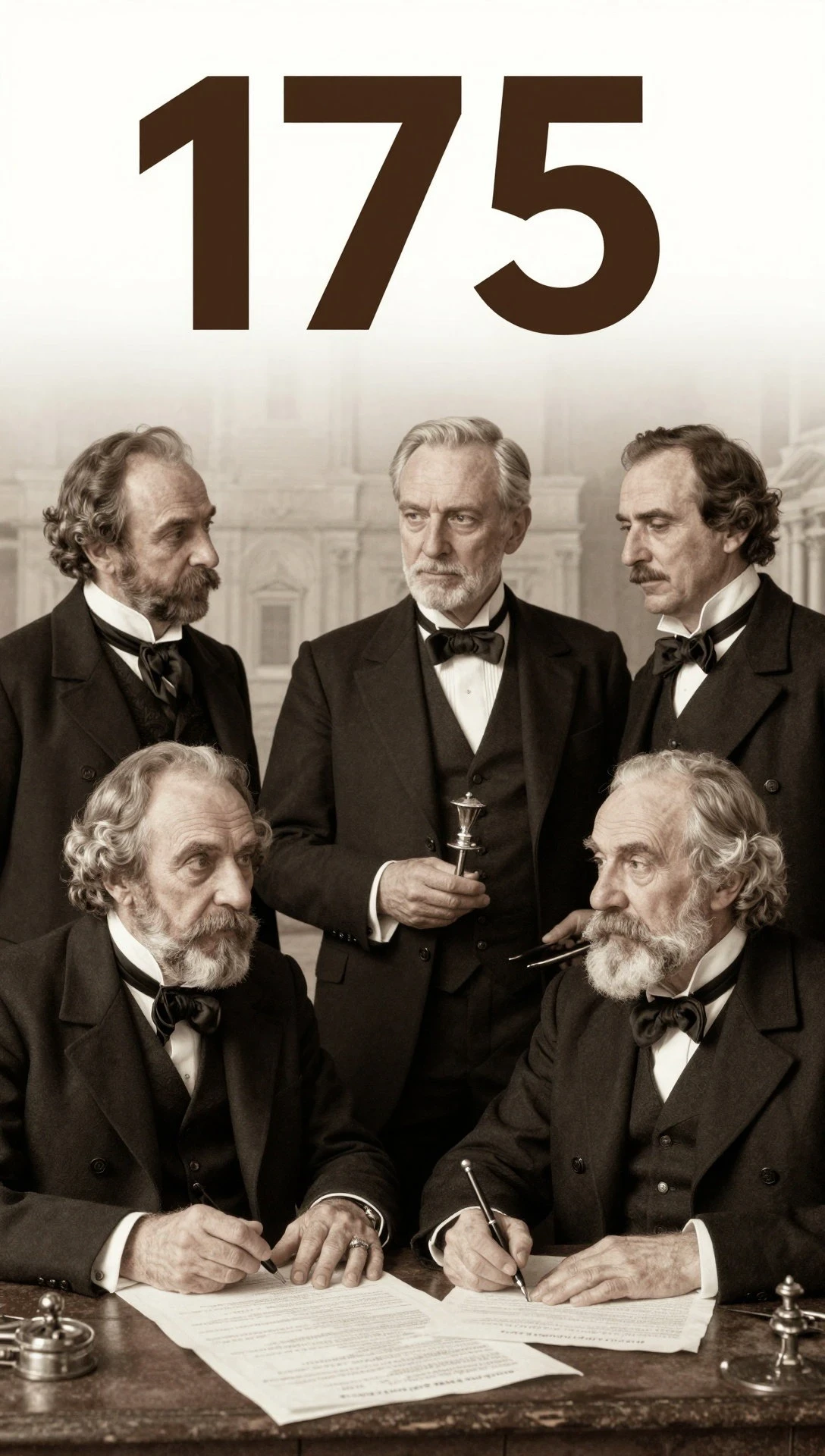
History is rarely a settled ledger. When The New York Times marked 175 years of continuous publication, it invited a panel of historians and scholars to weigh which single days had most decisively shaped the modern world.
More than one hundred nominations arrived, ranging from the assassination of Archduke Franz Ferdinand to the premiere of "Soul Train," and the panel spent several lively sessions arguing over which ten deserved the final list.
The exercise reveals something important about how historical significance is constructed. A date does not become pivotal on its own; it becomes pivotal when scholars, readers, and institutions agree to treat it as a hinge between one era and the next. The runner-up days, presented chronologically with the panelists' arguments for and against each, offer a rare window into that deliberative process at work.
On This Page
What follows examines the deeper meaning of this debate: the criteria historians apply, the tension between political rupture and cultural evolution, and why the days that narrowly missed the final cut often illuminate the past more vividly than the winners. The analysis also considers what such canon-building tells us about memory, media, and the stories nations choose to tell about themselves.
TL;DR A panel of historians convened to select the most consequential days in the 175 years since The New York Times began publishing, sifting through more than one hundred nominations to arrive at a final ten. The runner-up dates, presented chronologically with arguments for and against each, expose how historical significance is negotiated rather than discovered. The debate balanced political ruptures like the fall of the Berlin Wall against cultural and technological turning points such as the iPhone's release, revealing that the discipline of history is as much about judgment and framing as it is about facts.
The Architecture of Historical Significance
Selecting a single day as historically decisive is an act of compression. Historians must distill decades of causation into a twenty-four-hour window, knowing that most transformations unfold gradually rather than at a stroke. The panel's deliberations therefore became a meditation on what counts as change, and who gets to certify it.
Criteria the Panel Weighed
Panelists reportedly considered whether a date marked a rupture or an acceleration, whether its consequences were global or regional, and whether it represented a broad theme such as decolonization or the Cold War. These criteria rarely align neatly, which is precisely why the arguments grew lively and the final list remained contested.
A date like the 1858 trans-Atlantic cable message illustrates the difficulty. It compressed communication from weeks to minutes, yet its immediate effects were modest compared with the telegraph's slower spread. Significance, in other words, is often retrospective, assigned by later generations who can see what a moment set in motion.
Why Runner-Ups Matter
The days that missed the final ten are not footnotes. They reveal the panel's working assumptions more clearly than the winners, because each rejection required an explicit rationale. An excluded date becomes a lens onto the values and blind spots of the scholars who judged it.
Readers were also invited to submit their own suggestions, which widened the exercise beyond academic consensus. That participatory dimension matters: public memory is shaped as much by popular nomination as by scholarly verdict, and the two do not always converge on the same days.
Political Rupture and the Weight of Catastrophe
Certain dates carry an almost gravitational pull. The assassination of Archduke Franz Ferdinand in Sarajevo and the fall of the Berlin Wall both appear on the nomination list because they mark visible thresholds between worlds. Historians instinctively reach for such moments when asked to name a turning point.
The Seduction of the Single Event
The appeal of a single dramatic day lies in its narrative clarity. A shot in Sarajevo, a wall coming down, a regime collapsing: these moments offer clean beginnings and endings that complex processes rarely provide. Yet the panel recognized that clarity can distort as much as it illuminates.
Scholars have long cautioned against event-driven history. The First World War emerged from entangled alliances, imperial rivalries, and mobilization schedules that no single assassination could have created alone. The Sarajevo shot was a trigger, not a cause, and the distinction matters enormously for how we teach the past.
Anti-Colonialism and the Cold War Frame
The panel explicitly debated whether to include a date tied to anti-colonialism or the Cold War, recognizing that both themes shaped the post-1945 world. Choosing one over the other would signal which geopolitical story the final list considered more foundational, a decision freighted with interpretive consequence.
This tension reflects a broader historiographical shift. Older accounts centered on superpower rivalry, while newer scholarship foregrounds decolonization and the agency of newly independent nations. A list of ten days inevitably takes a position in that ongoing argument, whether or not its authors intend to.
We Also Published
Culture, Technology, and the Quiet Turning Points
Not every hinge is political. The panel's inclusion of the 1872 creation of Yellowstone National Park and the 1971 premiere of "Soul Train" signals a willingness to treat environmental policy and popular culture as historically weighty. These nominations push against the assumption that only wars and treaties merit commemoration.
Yellowstone and the Idea of Preservation
Yellowstone's designation as the world's first national park established a template that spread across continents. It encoded a novel proposition: that landscapes could be protected for public benefit rather than exploited for private gain. That idea now underpins conservation regimes worldwide, from African game reserves to European nature parks.
Environmental historians argue that such administrative decisions deserve the same scrutiny as battlefield victories. A park boundary is a political act, drawing lines around land and determining who may enter, extract, or dwell. Yellowstone's anniversary thus raises questions about preservation, displacement, and the selective memory of conservation.
Soul Train and the Cultural Register
"Soul Train" brought Black music and dance into millions of American homes, shaping popular culture for decades. Its premiere represents a different kind of historical force: the slow, cumulative influence of media on identity, style, and social boundaries. Such influence rarely announces itself as a turning point.
The panel's willingness to nominate it suggests a broadening definition of significance. Cultural history has gained standing within the academy, and the tools of media analysis now sit alongside diplomatic archives. A television premiere can therefore be weighed against a treaty signing, though the comparison remains uneasy.
Communication and the Compression of Distance
When the panel turned to global communication, three candidates dominated discussion: the first trans-Atlantic cable message in 1858, the 2007 release of the iPhone, and changes to Facebook's news feed. Each represents a different era of connectivity, and each raises the question of whether speed alone constitutes significance.
The Cable and the Victorian Internet
The 1858 cable collapsed the time lag between continents from weeks to minutes, prompting contemporaries to speak of the annihilation of distance. Its early failure did little to diminish the symbolic force of the achievement, which convinced Victorians that global instantaneity was now possible.
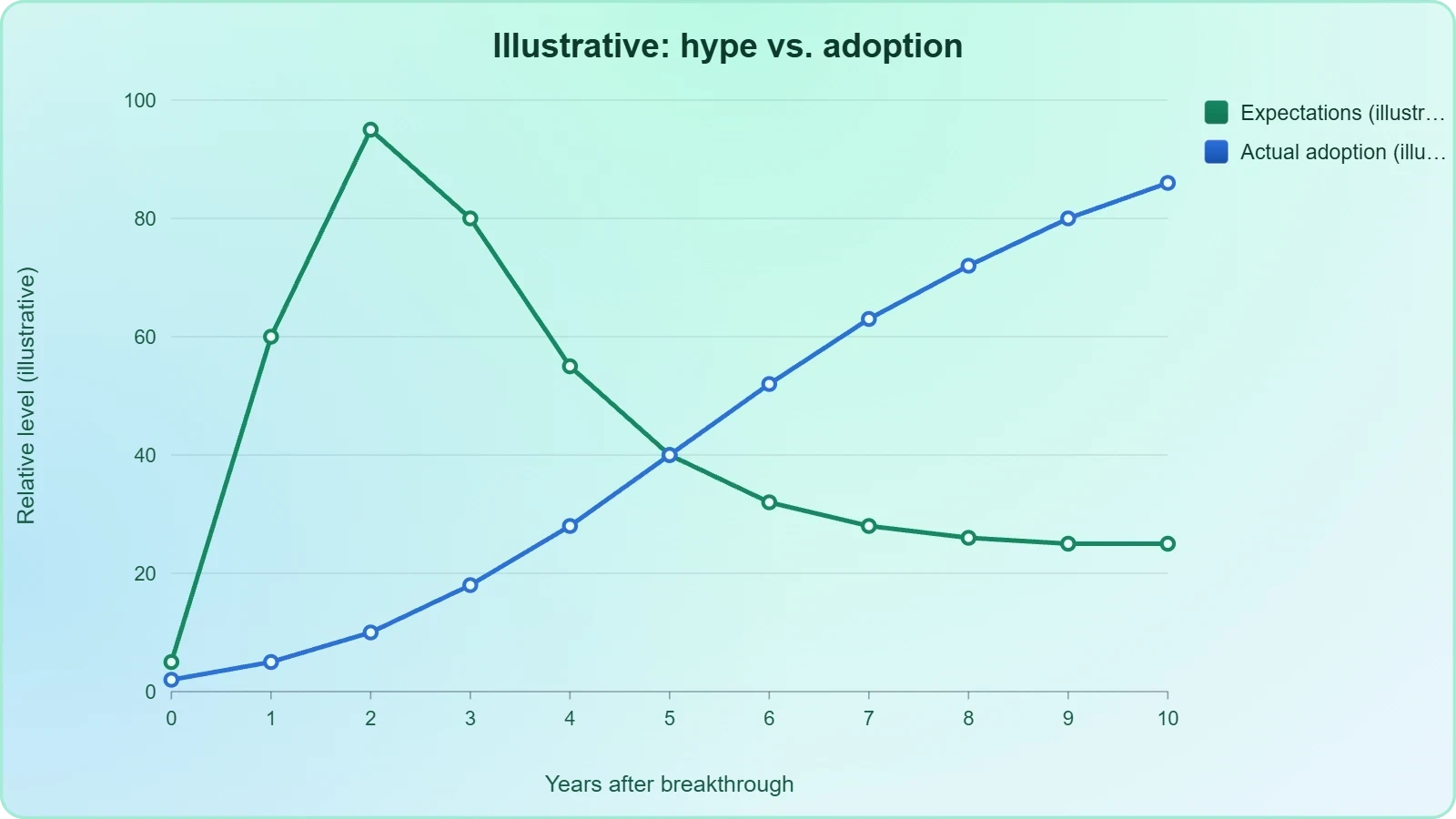
Historians of technology note that the cable inaugurated a pattern repeated ever since: a breakthrough arrives, expectations soar, infrastructure struggles to keep pace, and the eventual transformation proves slower and messier than the initial promise. The telegraph's real revolution unfolded over decades, not days.
The iPhone and the Platform Feed
The iPhone's 2007 debut and Facebook's news feed changes represent the platform era, in which communication became personalized, algorithmic, and continuous. These developments reshaped journalism, politics, and social life, though their consequences remain actively contested and difficult to assess from close range.
Proximity to an event complicates historical judgment. Scholars can see the cable's effects with clarity because a century and a half has passed, while the smartphone's full implications remain unfolding. The panel's debate thus became a lesson in the uneven visibility of historical consequence.
How Canon Formation Works in Public Memory
A list of ten days is a canon, and canons are built through negotiation. The panel's process, with its hundred-plus nominations and its lively disagreements, mirrors how textbooks, museums, and anniversaries settle on shared reference points. Consensus emerges not because everyone agrees but because enough people accept the result as workable.
- 01
- 02
- 03
- 04
The Role of Institutions and Media
The New York Times occupies a distinctive position in this process. As a publication of record, its editorial choices influence what readers regard as historically important. By staging the debate publicly, it invited scrutiny of its own authority while simultaneously exercising it.
Media organizations have long shaped historical memory, from anniversary coverage to obituary pages. Their selections ripple outward into curricula and public conversation. The panel format adds transparency, showing readers the arguments rather than presenting a verdict as self-evident truth.
Readers as Participants in Memory
Inviting readers to submit suggestions transforms the exercise from an academic seminar into a civic conversation. Public memory is not simply handed down; it is continually revised through popular engagement. Reader nominations may surface events that scholarly panels overlook, particularly those tied to local or marginalized experiences.
This participatory turn carries risks as well as benefits. Popularity can amplify nostalgia or nationalism, and online suggestion boxes may skew toward the already famous. The most valuable outcome is not the final list but the argument it provokes about what deserves remembrance.
What the Runner-Ups Reveal About the Discipline
The excluded days function as a diagnostic. They show which themes the panel considered important enough to debate and which it set aside, exposing the boundaries of mainstream historical attention. Reading the runner-ups alongside the winners offers a fuller picture than either list alone.
Blind Spots and Broadening Horizons
Any selection of ten days will omit vast regions and experiences. The panel's list, however carefully argued, reflects the priorities of its members and the institutions they represent. Recognizing those limits is itself a form of historical literacy, and it invites future panels to widen the frame.
Scholars increasingly argue for histories that foreground ordinary life, environmental change, and non-Western perspectives. A list dominated by political ruptures and Western media may underrepresent these currents. The runner-ups offer a partial corrective, hinting at the richness that a broader canon might include.
Judgment as a Historical Skill
Ultimately, the exercise demonstrates that history is not a fixed inventory of facts but a disciplined practice of judgment. Deciding what mattered requires weighing evidence, acknowledging uncertainty, and defending interpretations against informed challenge. Those skills matter far beyond any single list of dates.
Readers who follow the panel's reasoning learn to ask better questions of their own historical assumptions. Why this day and not another? Whose experience does this date center? What would change if we chose differently? Such questions keep the past alive as a subject of inquiry rather than a monument.
From our network :
- How AI Agents Will Change the Way We Manage Personal FinancesExplore how AI agents are transforming personal finance through automated budgeting, bill payment, and investment management, while examining the critical security protocols and governance frameworks required for safe deployment.
- CISA’s Ten-Advisory Wave: Why Generic Patching Fails in OT and How to Build Product-Specific PlaybooksCISA released ten ICS advisories in one week, exposing critical infrastructure risks. Generic patching fails in OT. Learn to build product-specific remediation playbooks.
- Mobile Learning and VR in English: What Global Evidence Reveals About Effective Language TechnologyA systematic review across 14 countries reveals which language-learning technologies genuinely work. Mobile learning, AI, and VR show measurable benefits when pedagogically integrated. This evidence-based guide helps educators and learners select technology that delivers real return on investment.
- Committed Mediterranean Precipitation Decline: Why Emissions Cuts Alone Cannot Restore Winter RainsNew NOAA research reveals that Mediterranean winter rains may decline irreversibly even with emissions cuts. Explore the science of committed climate change and regional impacts.
- The Hidden Cost of AI Convenience: Why Over-Permissioned Agents Are a Security Time BombDiscover why AI agents with excessive permissions create dangerous single points of failure, and learn how implementing least privilege principles can protect your organization from exploitation.
- Forbidden Matrix Patterns and Visible Lattice Points: A Geometric DictionaryExplore how multidimensional 0–1 matrices encode geometric truths, linking forbidden patterns to visible lattice points and hypergraph theory, with applications in combinatorics and computational geometry.
- Live Online English Classes for Kids: Do They Actually Reduce Anxiety?A ten-week study reveals that synchronous online English classes can significantly reduce child language anxiety while improving listening and reading skills. Discover what makes these programs effective and how parents can select the right one.
- The Final Descent: How ESA Retired the Legendary Cluster Constellation After 24 Years of Space Weather ScienceAfter 24 years mapping Earth’s magnetosphere, ESA’s Cluster mission concluded with a precisely controlled reentry over the South Pacific. This analysis explores the scientific legacy, engineering decisions, and debris mitigation principles behind one of space exploration’s most responsible retirements.
- University Language Proficiency Exams: Why Institutional Tests Demand Different Preparation Than IELTS and TOEFLDiscover why university-specific language proficiency examinations differ fundamentally from IELTS and TOEFL, and learn strategic preparation approaches for institutional assessment success.
RESOURCES
- 175 years of U-M medical history come alive in museum exhibitmichiganmedicine.organ interactive map, timeline and stories of U-M medical history;; a way ... History Society and the Washtenaw County Historical Society. More Articles ...
- A History of 175 Years of WELS (1847-present)welshistoricalinstitute.orgIt is also hoped that this timeline page will be a resource for Lutheran elementary and high school teachers, as well as pastors teaching…
- History - Siemenssiemens.comHow Siemens evolved since our founding in 1847. This global pioneer in electrical engineering began as a simple startup. Today, more than 175 years…
- Epileptic spasms - 175 years on: Trying to teach an old dog new trickspubmed.ncbi.nlm.nih.govDec 6, 2016 ... Despite extensive study, the pathogenic mechanisms remain an area of debate and in need of further exploration. The enigma, however,…
- 175 Years of History - Alpha Delta Pialphadeltapi.orgHighlights in ADPi History: The Timeline. 1836 Wesleyan Female College, the first college for women in the world, was chartered to grant degrees to…
- Once upon a time the cell membranes: 175 years of cell boundary ...pmc.ncbi.nlm.nih.govDec 19, 2014 ... Timeline 1925–1972. Summary of the main contributions related to cell membrane discovery between the first studies on cell membrane structures ...
- Historical Timeline | Rhodes Collegerhodes.eduControversy emerges over whether a student group, the “Gay-Straight Alliance ... Celebrating 175 Years · Historical Timeline · Southwestern Hall · Facebook ...
- French and Indian War/Seven Years' War, 1754–63history.state.govMilestones: 1750–1775. NOTE TO READERS “Milestones in the History of U.S. Foreign Relations” has been retired and is no longer maintained ...
- Exploring the 175-year history of spirometry and the vital lessons it ...publications.ersnet.orgOct 5, 2021 ... However, some controversy still exists around the optimal role for spirometry in several important respiratory conditions [35, 37–42]. The work ...
- Mount Union Historical Timelinemountunion.eduThis page contains merely a few of the moments that have shaped Mount Union over the past 175 years.
- 175 years of U-M medical history come alive in new exhibitrecord.umich.eduSep 15, 2025 ... ... Main” University ... 17, with a live discussion about U-M medical history with four faculty experts who are both…
- Celebrating 175 years of California history - USC Dornsifedornsife.usc.eduNov 4, 2025 ... ... key points across 175 years of California's history, ranging from ... How truly dire wolf the cubs are remains…
- AMA History | American Medical Associationama-assn.orgLearn more in this discussion with James Madara, MD, on AMA's continuing commitment to doctors 175 years later. ... AMA's 175th Anniversary: Key dates…
- Creating the Future of Medicine for 175 Yearsevents.umich.eduOpen to the public at the Museum on Main Street operated by the Washtenaw County Historical Society, the exhibit includes artifacts, photos and facts…
- Interrogating the Historical Basis for a Unitary Executivereview.law.stanford.eduThe evidence surveyed in this Article has important implications for debates over the unitary executive theory in general and for debates over the ...
- 01
- 02
- 03
- 04
- 05
- 06
- 07
- 08
0 Comments