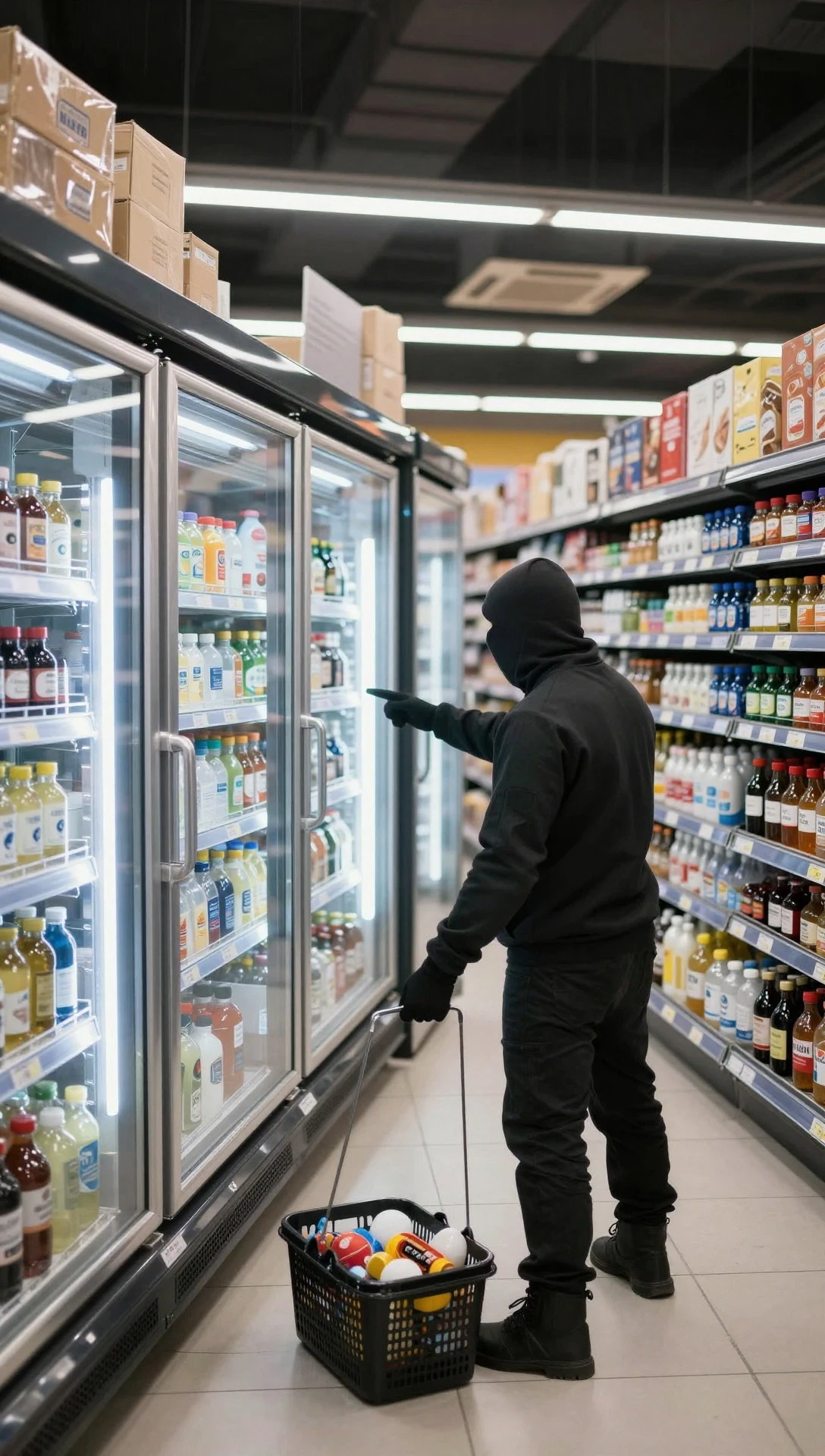
When a nation-state reaches into the refrigeration aisle of a suburban supermarket, the boundary between geopolitics and daily life collapses in a way that is difficult to ignore. France is now weighing how to answer a cyber intrusion that disabled freezer systems inside retail stores, an operation French authorities have linked to Iran according to reporting by Le Monde.
The incident matters far beyond spoiled inventory, because it demonstrates how connected cooling infrastructure has become a viable pressure point in modern statecraft.
What makes this episode instructive is the ambiguity that surrounds it. Paris has confirmed neither the scale of the disruption nor the precise technical evidence tying the operation to Tehran, and no retaliatory package has been made public. That silence is itself a strategic instrument, granting policymakers room to calibrate a response without prematurely locking themselves into escalation. The story is therefore less about a single breach than about how governments manage attribution, deterrence, and public reassurance simultaneously.
On This Page
- The Anatomy of an Attack on Retail Refrigeration
- Attribution, Evidence, and the Politics of Naming Iran
- France's Menu of Proportional Responses
- The Economic Cost of a Broken Cold Chain
- Iran's Cyber Posture and Europe's Threat Landscape
- Lessons for Retailers and Critical Infrastructure Operators
- Scenarios, Escalation Dynamics, and What Comes Next
This analysis examines the incident through the lenses that matter to security professionals, retailers, and diplomats alike. It considers the architecture of operational technology in food retail, the doctrine of proportional response, the economics of cold-chain failure, and the wider pattern of Iranian-linked intrusions across Europe.
Each section isolates a distinct dimension so that readers can see how a technical event becomes a diplomatic problem, and how a diplomatic problem eventually reshapes corporate risk models.
TL;DR France is evaluating retaliation options after a cyber operation, attributed by Le Monde to Iran, disrupted supermarket freezer systems. No official evidence dossier or response package has been published, leaving diplomatic, technical, and economic levers open. The episode illustrates the growing targeting of operational technology in civilian retail, the difficulty of attribution in state-linked intrusions, and the delicate balance between deterrence and escalation. For retailers, it is a reminder that refrigeration is now critical infrastructure; for governments, it is a test of how credibility is built without disclosing sensitive intelligence.
The Anatomy of an Attack on Retail Refrigeration
Supermarket freezers are not ordinary appliances. They are networked endpoints inside building management systems that regulate temperature, compressors, alarms, and energy draw across hundreds of stores. When adversaries reach these controllers, they touch a layer of infrastructure that sits beneath the point-of-sale and corporate IT stack, often with weaker monitoring and longer patch cycles than conventional enterprise systems.
Why Operational Technology Is an Attractive Target
Operational technology prioritizes availability over confidentiality, which inverts the security assumptions of most corporate networks. A freezer controller must keep running, so engineers resist disruptive updates and remote lockdowns. Attackers exploit precisely this conservatism, because a device that cannot be rebooted casually is a device that cannot be hardened casually either.
The retail sector compounds the problem through scale and fragmentation. A single grocery chain may operate thousands of sites with heterogeneous equipment from multiple vendors, each with its own firmware lineage. Central visibility is rare, and local maintenance staff often hold privileged credentials. That combination produces a broad, shallow attack surface that is cheap to probe and difficult to defend uniformly.
From Disruption to Deterrence Signal
Disabling freezers is a low-casualty, high-visibility act. It generates headlines, imposes measurable financial loss through spoiled stock, and signals reach without crossing the threshold into physical violence. For a state seeking leverage, that profile is attractive because it demonstrates capability while preserving deniability and leaving room for negotiation.
The psychological dimension deserves equal weight. Consumers encountering empty chilled shelves experience disruption as a tangible failure of governance, not an abstraction. Adversaries understand that public confidence is a strategic asset, and that eroding it in mundane settings can be more corrosive than attacking a hardened military network that the public never sees.
Attribution, Evidence, and the Politics of Naming Iran
Attribution is the hinge on which every response turns. Naming a state actor requires technical indicators, intelligence reporting, and political judgment about what can be disclosed without burning sources. Le Monde's reporting attributes the operation to Iran, yet the public record remains thin, and that gap shapes how Paris can act while retaining international credibility.
The Intelligence Dilemma
Governments frequently possess conclusive private evidence that cannot survive public scrutiny. Signals intelligence, human sources, and allied sharing arrangements are fragile assets. Releasing them to justify retaliation may win a news cycle while permanently degrading future collection, a trade-off that security services resist and diplomats often underestimate.
This asymmetry gives the accused state room to deny. Tehran can dismiss the allegation as unsubstantiated, and without a published technical dossier, skeptical audiences abroad may treat the claim as political rather than forensic. The result is a contest over narrative in which the attacker's plausible deniability is itself a weapon.
Building a Defensible Public Case
Mature practice involves tiered disclosure. Allies receive full intelligence, parliaments receive classified briefings, and the public receives a sanitized technical summary with indicators of compromise. This layered approach preserves collection while establishing enough factual scaffolding for sanctions or indictments to withstand legal and diplomatic challenge.
France has historically favored this measured model, coordinating with European partners and the United States before naming adversaries publicly. Any eventual statement is therefore likely to be multilateral in tone, framing the incident within a pattern of Iranian activity rather than as an isolated bilateral grievance between Paris and Tehran.
We Also Published
France's Menu of Proportional Responses
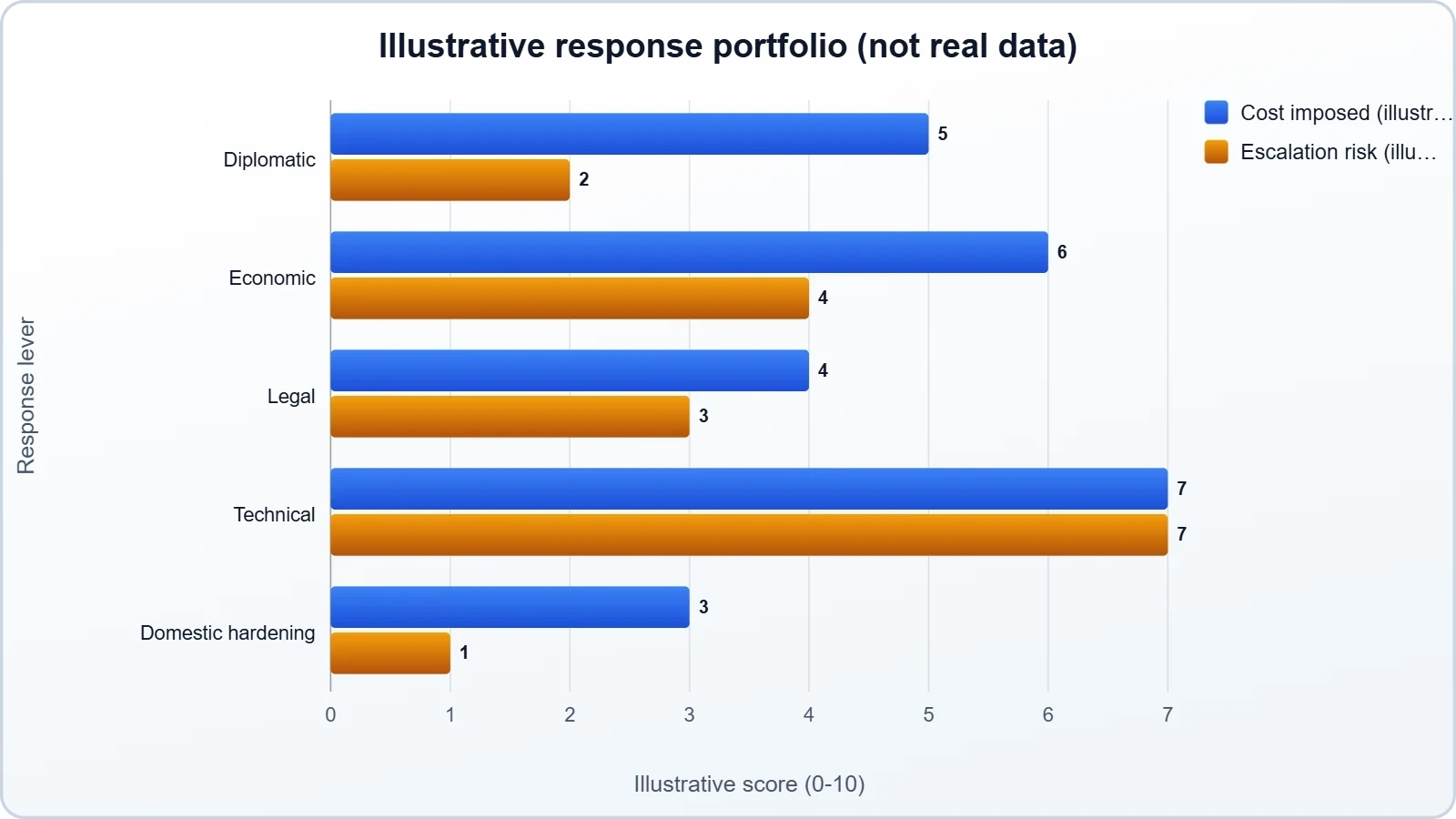
Retaliation in cyberspace is rarely a single dramatic act. It is a portfolio of measures calibrated to impose cost, signal resolve, and preserve escalation control. Paris can draw on diplomatic, economic, legal, and technical instruments, and the art lies in sequencing them so that each reinforces the others without foreclosing de-escalation.
Diplomatic and Economic Levers
Summoning an ambassador, expelling declared intelligence officers, or coordinating European Union sanctions are the most visible options. They impose reputational and material costs while remaining reversible. France may also press for designations under existing EU cyber sanctions frameworks, which allow asset freezes and travel bans on named individuals and entities.
Economic measures carry collateral risk. France maintains commercial and energy interests that complicate aggressive action, and European consensus is slow to assemble. A unilateral package would signal resolve but might fracture the unified front that gives European cyber diplomacy its weight, so Paris will likely prioritize coalition building over solitary gestures.
Technical and Legal Countermeasures
Covert technical responses, ranging from network disruption to intelligence collection, are almost never acknowledged. Their value lies in deterrence by denial and by cost imposition, demonstrating that hostile operations invite reciprocal exposure. Legal instruments complement this, including indictments, mutual legal assistance requests, and support for international norms against civilian infrastructure attacks.
Domestic hardening is the least glamorous but most durable answer. Funding for critical infrastructure protection, mandatory incident reporting for operational technology, and sector-specific exercises all reduce future vulnerability. Deterrence ultimately rests on the adversary's assessment that repeated attacks will yield diminishing returns against a resilient target.
The Economic Cost of a Broken Cold Chain
Refrigeration failure converts inventory into waste within hours. Chilled goods have narrow safety windows, and frozen products degrade once the cold chain breaks. For a large grocery operator, a coordinated outage across multiple stores can translate into seven-figure losses before any ransom or recovery expense is counted, and insurance recovery is rarely complete.
Direct Losses and Insurance Gaps
Direct costs include spoiled stock, emergency logistics, overtime labor, and accelerated equipment wear from forced cycling. Cyber insurance policies increasingly exclude state-sponsored acts, and war exclusions can leave retailers exposed precisely when the attacker is a foreign government. That contractual gap turns a technical incident into a balance-sheet event.
Indirect costs compound the damage. Reputational harm, regulatory scrutiny, and customer attrition follow visible disruption. Retailers that cannot guarantee fresh and frozen availability lose basket share to competitors, and rebuilding trust requires sustained investment in transparency and resilience that extends well beyond the remediation budget.
Supply Chain Ripple Effects
Grocery chains anchor regional food distribution. When freezer capacity collapses, upstream producers face cancelled orders and downstream consumers face scarcity. In concentrated markets, a handful of affected distribution centers can distort prices across an entire region, turning a cyber event into a localized inflation shock with political consequences.
Resilience planning must therefore extend beyond the store. Redundant cooling capacity, manual override procedures, and pre-arranged emergency logistics contracts all reduce the duration of disruption. The most effective investments are often unglamorous operational redundancies rather than sophisticated detection tools that arrive after the damage is done.
Iran's Cyber Posture and Europe's Threat Landscape
Iran has built a dispersed ecosystem of state, quasi-state, and proxy-aligned cyber operators over more than a decade. These groups range from sophisticated intelligence units to ideologically motivated crews, and their targeting reflects Tehran's shifting grievances. European infrastructure has featured repeatedly in this activity, particularly when diplomatic tensions rise over sanctions or regional conflicts.
Patterns Across European Targets
Observed campaigns against European entities have favored disruption over espionage when signaling is the objective. Water utilities, transport operators, and municipal services have all appeared in reporting, often with limited technical sophistication but meaningful psychological impact. The common thread is accessibility: civilian systems with weak segmentation offer disproportionate visibility.
Attribution in these cases is complicated by the ecosystem's fluidity. Contractors, front companies, and loosely affiliated crews blur the line between state direction and tolerated initiative. That ambiguity serves Tehran, allowing plausible deniability while preserving the deterrent message that hostile actions carry consequences for European societies.
Deterrence in a Fragmented Threat Environment
Deterring a dispersed adversary requires more than punishing a single unit. Effective strategy combines public attribution, sanctions on enabling entities, and defensive measures that raise the cost of repeated intrusion. It also demands patience, because the adversary's decision calculus is shaped by domestic politics and regional conflict rather than by any single European signal.
Alliances matter here. France's response will be stronger if embedded in a coordinated European and transatlantic posture that shares indicators, aligns sanctions, and conducts joint exercises. Isolated national reactions invite the adversary to exploit seams, while collective action raises the political price of continued aggression against civilian infrastructure.
- 01
- 02
- 03
- 04
Lessons for Retailers and Critical Infrastructure Operators
The supermarket freezer incident carries a blunt message for every organization running operational technology: civilian infrastructure is now part of the geopolitical battlefield. Retailers that treat cooling systems as facilities management rather than cybersecurity assets are effectively outsourcing their risk posture to vendors and luck, neither of which offers reliable protection against a determined state actor.
Segmentation and Visibility First
Network segmentation remains the highest-leverage control. Isolating building management systems from corporate IT, enforcing strict egress rules, and requiring authenticated access for maintenance traffic dramatically reduces the paths an intruder can traverse. Visibility follows segmentation, because isolated segments can be monitored with tailored telemetry rather than generic enterprise tooling.
Asset inventories are equally foundational. Organizations cannot defend devices they have not catalogued, and many retailers discover the true extent of their operational estate only during an incident. Continuous discovery, firmware tracking, and vendor accountability clauses in procurement contracts convert an opaque environment into a manageable one.
Governance, Exercises, and Vendor Risk
Board-level ownership of cyber risk is no longer optional. Resilience requires budget authority, clear escalation paths, and rehearsed playbooks that include manual operation of critical systems. Tabletop exercises involving store managers, facilities engineers, and communications teams expose the coordination gaps that pure technical planning tends to miss.
Vendor concentration deserves particular scrutiny. When a single supplier provides refrigeration controls to a large share of the market, that supplier becomes systemic infrastructure. Contractual security requirements, independent audits, and contingency plans for vendor compromise should be standard, not exceptional, for any operator with meaningful physical footprint.
Scenarios, Escalation Dynamics, and What Comes Next
Because Paris has disclosed neither its evidence nor its intentions, the trajectory remains genuinely open. Several pathways are plausible, and each carries distinct implications for European security, transatlantic coordination, and the retail sector's operating environment. Mapping them clarifies what observers should watch in the coming weeks.
Pathways Toward Calibrated Response
A measured scenario would see France coordinate with European partners, publish a sanitized attribution statement, and pursue targeted sanctions alongside quiet technical measures. This approach preserves alliance cohesion and signals resolve without inviting dramatic retaliation. It is the most likely path given France's institutional preferences and the EU's existing cyber sanctions machinery.
An escalatory scenario would involve public naming of specific units, indictments, and visible counteroperations. Such a course raises the political cost for Tehran but risks reciprocal action against European networks. The probability rises if further incidents occur or if evidence of physical safety consequences emerges from the freezer disruption.
Indicators to Monitor
Observers should track official French statements, EU Council conclusions, and any coordinated announcements with Washington or London. Technical indicators matter too, including new advisories from national cyber agencies and updates to threat intelligence platforms. Retail earnings calls may reveal the financial scale more candidly than government briefings ever will.
The deeper signal concerns norms. If attacks on civilian cooling infrastructure pass without meaningful consequence, the threshold for acceptable state behavior erodes further. Deterrence is built through consistent, proportionate responses over time, and the freezer incident will be judged by whether it strengthens or weakens that fragile international consensus.
From our network :
- The Final Descent: How ESA Retired the Legendary Cluster Constellation After 24 Years of Space Weather ScienceAfter 24 years mapping Earth’s magnetosphere, ESA’s Cluster mission concluded with a precisely controlled reentry over the South Pacific. This analysis explores the scientific legacy, engineering decisions, and debris mitigation principles behind one of space exploration’s most responsible retirements.
- How AI Agents Will Change the Way We Manage Personal FinancesExplore how AI agents are transforming personal finance through automated budgeting, bill payment, and investment management, while examining the critical security protocols and governance frameworks required for safe deployment.
- Live Online English Classes for Kids: Do They Actually Reduce Anxiety?A ten-week study reveals that synchronous online English classes can significantly reduce child language anxiety while improving listening and reading skills. Discover what makes these programs effective and how parents can select the right one.
- Forbidden Matrix Patterns and Visible Lattice Points: A Geometric DictionaryExplore how multidimensional 0–1 matrices encode geometric truths, linking forbidden patterns to visible lattice points and hypergraph theory, with applications in combinatorics and computational geometry.
- The Hidden Cost of AI Convenience: Why Over-Permissioned Agents Are a Security Time BombDiscover why AI agents with excessive permissions create dangerous single points of failure, and learn how implementing least privilege principles can protect your organization from exploitation.
- Committed Mediterranean Precipitation Decline: Why Emissions Cuts Alone Cannot Restore Winter RainsNew NOAA research reveals that Mediterranean winter rains may decline irreversibly even with emissions cuts. Explore the science of committed climate change and regional impacts.
- Mobile Learning and VR in English: What Global Evidence Reveals About Effective Language TechnologyA systematic review across 14 countries reveals which language-learning technologies genuinely work. Mobile learning, AI, and VR show measurable benefits when pedagogically integrated. This evidence-based guide helps educators and learners select technology that delivers real return on investment.
- CISA’s Ten-Advisory Wave: Why Generic Patching Fails in OT and How to Build Product-Specific PlaybooksCISA released ten ICS advisories in one week, exposing critical infrastructure risks. Generic patching fails in OT. Learn to build product-specific remediation playbooks.
- University Language Proficiency Exams: Why Institutional Tests Demand Different Preparation Than IELTS and TOEFLDiscover why university-specific language proficiency examinations differ fundamentally from IELTS and TOEFL, and learn strategic preparation approaches for institutional assessment success.
RESOURCES
- Iran was behind cyber-attack on French supermarket freezers, Paris ...theguardian.comNov 9, 2026 ... It is not clear whether the two attacks are linked. The following day retailers in 11 European countries including the…
- Iran rejects French claims it was behind supermarket fridge hackingbbc.com7 days ago ... Iran has described French accusations that it was behind cyber-attacks that raised the temperatures of supermarket fridges and freezers as ...
- France attributes grocery hacks to Iran-backed threat actorscybersecuritydive.com7 days ago ... ... France. A shopper stands in front of supermarket display freezers in Paris. ... linked the a wave of cyberattacks…
- Iran behind France grocery store refrigerator and freezer hacks ...cbsnews.com7 days ago ... ... Iran." French Foreign Minister Jean-Noel Barrot said Tuesday that the country "rules nothing out" in terms of its response…
- France vows nothing is off the table in response to suspected Iran ...trtworld.com... linked an October cyberattack on supermarket refrigeration facilities to ... RelatedTRT World - France accuses Iran of cyberattacks on commercial freezers.
- France vows tough response to freezer cyberattack blamed on Iranafp.com7 days ago ... France's foreign minister said Tuesday that Paris ruled out "nothing" to respond to a major cyberattack on hundreds of supermarket…
- France, US suspect Iran behind cyberattacks on refrigeration ...industrialcyber.co6 days ago ... French and U.S. authorities suspect Iran was behind a cyberattack targeting supermarket refrigerators and freezers ... In response, Iran ...
- France has vowed a tough response to a major cyberattack that ...instagram.com7 days ago ... 10G WORLD FRANCE THREATENS STRONG RESPONSE AFTER IRAN-LINKED CYBERATTACK DISRUPTS HUNDREDS OF SUPERMARKET FREEZERS YouTube ТИТя. thedaily ...
- France attributes grocery hacks to Iran-backed threat actorsfacilitiesdive.com6 days ago ... ... France. A shopper stands in front of supermarket display freezers in Paris. ... linked a wave of cyberattacks in…
- France is considering all possible responses to a #cyberattack ...facebook.com7 days ago ... France rules 'nothing out' in response to suspected Iran-linked cyberattack ... supermarket freezer can become a target of cyberwarfare.
- What are France's options in response to the Iranian cyberattack on ...lemonde.fr17 hours ago ... France's attribution to Iran of the attack on the refrigeration systems of numerous French supermarkets is only its first response.
- Iran denies it was behind cyber fridge attacks targeting France - NPRnpr.orgNov 9, 2026 ... ... related protests, and came just before the attacks on French supermarket fridges. Cyber incident response firm Profero attributed the…
- France says Iran is to blame for last month's cyberattack ... - Facebookfacebook.comNov 9, 2026 ... Why are freezers connected ... “It was not clear if there was any link between the French supermarket attack and…
- France vows tough response to supermarket freezer cyberattack ...timesofisrael.com7 days ago ... Barrot said yesterday that Iran's Islamic Revolutionary Guard Corps (IRGC) was behind cyberattacks on supermarkets in the first such large-scale ...
- 01
- 02
- 03
- 04
- 05
- 06
- 07
- 08
0 Comments