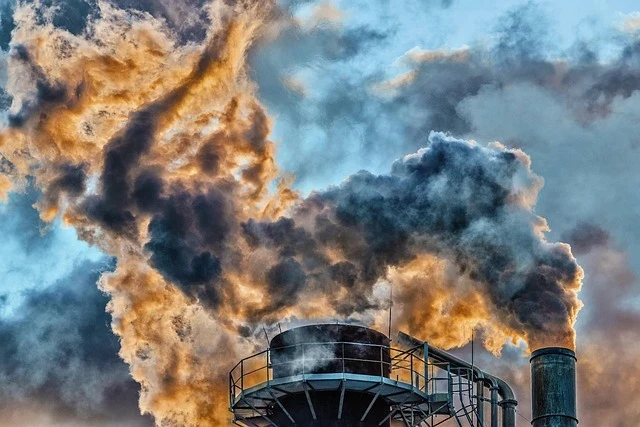
India stands at a critical crossroads in its battle against air pollution, a crisis that claims hundreds of thousands of lives annually and chokes major metropolitan centers with hazardous particulate matter. The traditional approach of addressing pollution city-by-city or state-by-state has proven woefully inadequate, as pollutants do not respect administrative boundaries.
A new publication from the Climate and Clean Air Coalition (CCAC) presents a compelling alternative: the airshed-level approach, a coordinated strategy that treats air quality as a regional challenge requiring collective action across political jurisdictions.
An airshed functions as a natural atmospheric basin, a defined geographical area where pollutants travel, disperse, and settle based on wind patterns, topography, and meteorological conditions. When Delhi implements strict emission controls, the benefits may be undermined by coal plants operating hundreds of kilometers away in neighboring states.
On This Page
Conversely, coordinated action across an entire airshed can produce dramatic improvements that no single jurisdiction could achieve alone. This interconnected reality demands a fundamental rethinking of how India approaches environmental governance.
The CCAC publication draws upon successful international implementations to demonstrate that airshed management is not merely theoretical but practically achievable. From the United States' regional haze program to Europe's transboundary air pollution conventions, nations have demonstrated that collaborative frameworks produce measurable results.
For India, home to 22 of the world's 30 most polluted cities, adopting this approach could represent the most significant environmental policy shift in the nation's history.
TL;DR India's air pollution crisis demands a paradigm shift from fragmented, jurisdiction-based responses to coordinated airshed-level management. The Climate and Clean Air Coalition's new publication outlines how India can learn from successful global implementations, emphasizing joint emission reduction strategies, unified monitoring networks, and cross-border public health protections. By treating air quality as a regional commons rather than a local problem, India can achieve meaningful, sustainable improvements in air quality for its 1.4 billion citizens.
Understanding the Airshed Framework and Its Scientific Foundations
The airshed concept emerges from atmospheric science, recognizing that air pollution operates as a fluid system governed by physical laws rather than political boundaries. When emissions enter the atmosphere from any source, they become part of a regional air mass that transports them across hundreds or even thousands of kilometers. This scientific reality forms the foundation for why localized solutions consistently fail to deliver lasting improvements.
India's geography presents unique challenges and opportunities for airshed management. The Indo-Gangetic Plain, stretching from Punjab through Uttar Pradesh and Bihar to West Bengal, functions as a single massive airshed where pollution from agricultural burning, industrial activity, and vehicular emissions intermingles and circulates.
The Himalayan mountain range to the north acts as a natural barrier, trapping pollutants and creating seasonal inversions that intensify winter smog episodes.
The Mechanics of Pollutant Transport and Dispersion
Atmospheric pollutants follow predictable patterns governed by wind speed, temperature gradients, and atmospheric stability. During winter months, temperature inversions trap cold air near the ground, preventing vertical dispersion and causing pollutants to accumulate at dangerous concentrations. These meteorological conditions transform the entire Indo-Gangetic Plain into a single pollution reservoir, where emissions from any location affect air quality throughout the region.
Particulate matter smaller than 2.5 micrometers, known as PM2.5, poses the greatest health threat because these particles penetrate deep into lung tissue and enter the bloodstream. Research demonstrates that PM2.5 concentrations in Indian cities frequently exceed World Health Organization guidelines by factors of ten or more. The transboundary nature of these particles means that even cities with aggressive local controls cannot achieve safe levels without regional cooperation.
Satellite imagery and ground-based monitoring consistently reveal that crop residue burning in Punjab and Haryana during October and November produces smoke plumes that travel hundreds of kilometers, dramatically degrading air quality in Delhi, Lucknow, and beyond. This seasonal phenomenon exemplifies why airshed-level coordination is not optional but essential for effective pollution control. No amount of local action in Delhi can prevent the influx of agricultural smoke from neighboring states.
Wind patterns also transport industrial emissions from coal-fired power plants, steel mills, and cement factories across state boundaries. The National Clean Air Programme has identified 132 non-attainment cities, yet many of these cities receive significant pollution contributions from sources outside their jurisdiction. This spatial mismatch between pollution sources and affected populations underscores the fundamental limitation of city-centric approaches.
Global Success Stories in Airshed Management
The United States pioneered airshed management through the Clean Air Act's regional haze program, which requires states to coordinate efforts to improve visibility in national parks and wilderness areas. This framework established a precedent for treating air quality as a regional commons requiring collective stewardship. The program's success in reducing sulfur dioxide emissions from power plants demonstrates the power of coordinated regulatory action.
Europe's approach through the Convention on Long-Range Transboundary Air Pollution represents the most comprehensive international framework for airshed management. Signed in 1979 under the United Nations Economic Commission for Europe, this convention has produced eight protocols targeting specific pollutants, including sulfur, nitrogen oxides, heavy metals, and persistent organic pollutants. European nations have achieved dramatic emission reductions through binding targets and cooperative monitoring.
China's recent experience offers particularly relevant lessons for India. The Chinese government established regional air pollution control zones, coordinating emission reduction strategies across provinces surrounding major metropolitan areas. Beijing's air quality improvements, achieved through coordinated regional action, demonstrate that even the most severe pollution challenges can be addressed through systematic airshed management.
Mexico City's transformation provides another compelling case study. Once considered one of the world's most polluted cities, Mexico's capital implemented coordinated regional strategies that reduced ozone and particulate concentrations significantly. The city's experience highlights the importance of political will and sustained institutional commitment in achieving air quality improvements.
Scientific Monitoring and Data Integration Requirements
Effective airshed management requires comprehensive monitoring infrastructure capable of tracking pollution sources, transport patterns, and health impacts across the entire region. India's current monitoring network, while expanding, remains insufficient for the granular data needed to support coordinated action. The Central Pollution Control Board operates approximately 300 continuous monitoring stations, a fraction of what the country requires.
Satellite-based monitoring offers complementary capabilities, providing comprehensive spatial coverage that ground stations cannot achieve. NASA and ISRO satellite data can track pollution plumes, identify emission hotspots, and quantify transboundary flows with increasing precision. Integrating satellite observations with ground-based monitoring creates a complete picture of airshed dynamics essential for evidence-based policymaking.
Health impact assessment represents another critical component of airshed management. By quantifying the health burden attributable to air pollution across the entire region, policymakers can prioritize interventions based on their potential to reduce mortality and morbidity. Studies estimate that air pollution contributes to over 1.6 million premature deaths annually in India, making health-based prioritization essential.
Data sharing protocols and standardized reporting mechanisms enable jurisdictions within an airshed to coordinate effectively. The CCAC publication emphasizes the importance of establishing common metrics, compatible monitoring standards, and transparent data platforms that allow all stakeholders to access and interpret air quality information. Without such infrastructure, coordinated action becomes impossible.
We Also Published
Implementing Airshed Management in the Indian Context
India's federal structure presents both obstacles and opportunities for airshed-level governance. The Constitution assigns environmental regulation to both central and state governments, creating a complex jurisdictional landscape. However, this same federal framework provides mechanisms for inter-state coordination through institutions like the Inter-State Council and the Ministry of Environment, Forest and Climate Change.
The Commission for Air Quality Management in the National Capital Region, established in 2021, represents India's first significant experiment in airshed governance. This statutory body coordinates air quality management across Delhi, Haryana, Punjab, Rajasthan, and Uttar Pradesh, with powers to issue binding directions. While its mandate currently focuses on the NCR, the commission's structure offers a template for expanding airshed management nationwide.
Institutional Architecture for Coordinated Action
Successful airshed management requires dedicated institutions with clear mandates, adequate resources, and enforcement authority. The CCAC publication emphasizes that coordination mechanisms must be formalized through legal frameworks rather than relying on voluntary cooperation. India's constitutional provisions for inter-state coordination provide the legal foundation for establishing regional airshed authorities.
Each airshed authority would require representation from all constituent states, technical experts, and civil society stakeholders. The authority's mandate should encompass emission inventory development, monitoring network coordination, public health surveillance, and enforcement of regional standards. Clear accountability mechanisms ensure that all jurisdictions fulfill their obligations under the regional framework.
Funding arrangements represent a critical institutional consideration. Airshed management requires substantial investment in monitoring infrastructure, enforcement capacity, and pollution control technologies. The CCAC publication suggests exploring innovative financing mechanisms, including pollution cesses, green bonds, and international climate finance. Equitable cost-sharing arrangements prevent wealthier states from shouldering disproportionate burdens.
Technical capacity building across state pollution control boards remains essential for effective implementation. Many state boards lack the personnel, equipment, and expertise needed for comprehensive air quality management. Regional training programs, technology transfer, and knowledge sharing can help build the institutional capacity required for successful airshed governance.
Emission Reduction Strategies Across Sectors
Transportation emissions require coordinated regional strategies addressing vehicle standards, fuel quality, and traffic management. India's transition to Bharat Stage VI emission standards represents significant progress, but enforcement varies across states. Regional coordination can harmonize implementation timelines and ensure consistent enforcement across the airshed.
Industrial emissions from power plants, manufacturing facilities, and construction activities contribute substantially to regional pollution loads. The CCAC publication emphasizes the importance of adopting best available control technologies and implementing stringent emission standards uniformly across the airshed. This prevents industries from relocating to jurisdictions with weaker environmental enforcement.
Agricultural residue burning, a major contributor to seasonal pollution spikes, requires regionally coordinated solutions. Rather than simply banning burning, effective strategies must provide farmers with economically viable alternatives for crop residue management. The Happy Seeder technology, which enables no-till farming, offers a promising solution when supported by equipment subsidies and awareness campaigns.
Household emissions from solid fuel cooking and heating remain significant pollution sources, particularly in rural areas. The Pradhan Mantri Ujjwala Yojana's success in providing LPG connections to millions of households demonstrates the potential for coordinated action. Expanding clean cooking access across the entire airshed would yield substantial public health and air quality benefits.
Public Health Integration and Community Engagement
Airshed management must prioritize public health outcomes, using health data to guide intervention priorities and evaluate program effectiveness. The CCAC publication recommends establishing health impact assessment frameworks that quantify the mortality and morbidity burden attributable to air pollution. This evidence base enables policymakers to target interventions where they deliver the greatest health benefits.
Community engagement and public awareness campaigns play a vital role in building political support for airshed management. Citizens must understand that air quality is a shared responsibility requiring collective action across jurisdictional boundaries. Transparent communication about pollution sources, health risks, and progress metrics builds public trust and accountability.
Vulnerable populations, including children, elderly individuals, and those with pre-existing respiratory conditions, require targeted protections during high-pollution episodes. Regional early warning systems can trigger coordinated responses, including school closures, traffic restrictions, and health advisories. These protective measures must be implemented consistently across the entire airshed to be effective.
Health sector engagement extends beyond emergency responses to include long-term epidemiological research. Indian medical institutions can contribute to understanding the health impacts of air pollution through cohort studies and health surveillance systems. This research strengthens the evidence base for policy decisions and helps quantify the benefits of airshed management investments.
- 01
- 02
- 03
- 04
Overcoming Implementation Challenges and Charting the Path Forward
Political economy considerations present significant challenges to airshed management implementation. States may resist ceding authority over environmental regulation to regional bodies, particularly when emission reduction requirements impose economic costs. Building political consensus requires demonstrating that airshed cooperation delivers benefits for all participating jurisdictions, not merely downstream areas.
Data availability and quality remain persistent challenges for Indian environmental governance. Emission inventories, source apportionment studies, and health impact assessments require substantial data collection and analysis capacity. The CCAC publication emphasizes the importance of investing in monitoring infrastructure and analytical capabilities as foundational elements of airshed management.
Addressing Political and Administrative Barriers
Inter-state coordination mechanisms must navigate complex political relationships and competing development priorities. States may perceive emission reduction requirements as constraints on economic growth, particularly in industrial sectors. The CCAC publication recommends framing airshed management as an economic opportunity, highlighting the productivity gains and healthcare cost savings associated with cleaner air.
Administrative capacity varies significantly across Indian states, with some pollution control boards better equipped than others. Regional institutions must account for these disparities, providing technical assistance and capacity building to weaker jurisdictions. Phased implementation timelines can accommodate varying levels of readiness while maintaining momentum toward regional coordination.
Legal frameworks must clearly define the authority and accountability of airshed institutions. The Commission for Air Quality Management's experience demonstrates both the potential and limitations of current arrangements. Strengthening legal mandates, clarifying enforcement mechanisms, and establishing judicial review processes will enhance the effectiveness of regional governance.
International cooperation offers additional opportunities for knowledge exchange and technical support. India can learn from the experiences of other countries implementing airshed management, adapting successful approaches to local conditions. Bilateral and multilateral partnerships can provide access to monitoring technology, analytical tools, and implementation expertise.
Financing Airshed Management at Scale
Estimates suggest that comprehensive airshed management in India would require substantial investment, potentially exceeding several billion dollars annually. The CCAC publication emphasizes that these investments must be viewed as essential infrastructure spending rather than discretionary environmental expenditure. The economic returns from improved health outcomes and productivity gains justify the required investment.
Innovative financing mechanisms can supplement traditional government budgets. Green bonds, which have gained traction in Indian financial markets, offer a vehicle for raising capital for air quality infrastructure. Multilateral development banks and climate funds provide additional sources of concessional financing for pollution control investments.
Private sector engagement through corporate social responsibility and environmental, social, and governance (ESG) frameworks can mobilize additional resources. Companies operating in the airshed have a direct interest in improving air quality, as pollution affects worker productivity, healthcare costs, and regulatory compliance. Public-private partnerships can accelerate the deployment of pollution control technologies.
Economic instruments, including pollution taxes and emissions trading systems, can create market-based incentives for emission reductions. India's experience with the Perform, Achieve and Trade scheme for energy efficiency provides a foundation for developing similar mechanisms for air pollution. These market-based approaches complement regulatory mandates and drive cost-effective emission reductions.
Monitoring Progress and Ensuring Accountability
Robust monitoring and evaluation frameworks are essential for tracking progress toward airshed management goals. The CCAC publication recommends establishing clear performance indicators, including ambient air quality concentrations, emission reduction targets, and health outcome measures. Regular reporting against these indicators enables adaptive management and course correction.
Independent evaluation mechanisms provide accountability and build public trust in airshed governance. The CCAC publication suggests establishing scientific advisory committees to review monitoring data, assess program effectiveness, and recommend policy adjustments. These advisory bodies ensure that decisions are grounded in evidence rather than political expediency.
Transparency in decision-making and data sharing builds stakeholder confidence and facilitates public participation. The CCAC publication emphasizes the importance of making air quality data publicly accessible through user-friendly platforms. Citizens can then hold governments accountable for meeting air quality commitments and advocate for stronger action.
Continuous improvement requires regular review and updating of airshed management plans. As monitoring data accumulates and scientific understanding advances, strategies must evolve to address emerging challenges. The CCAC publication recommends establishing formal review cycles that incorporate new evidence and adjust targets accordingly.
The path forward for India's airshed approach requires sustained political commitment, institutional innovation, and substantial investment. The CCAC publication provides a practical framework for translating the airshed concept into actionable policy. By learning from global experiences and adapting them to Indian conditions, the nation can achieve meaningful improvements in air quality and public health.
Immediate action is essential, as every year of delay condemns millions to preventable illness and premature death. The scientific understanding, technological tools, and international examples needed for successful implementation already exist. What remains is the political will to embrace regional coordination and the institutional capacity to execute it effectively.
From our network :
- CISA’s Ten-Advisory Wave: Why Generic Patching Fails in OT and How to Build Product-Specific PlaybooksCISA released ten ICS advisories in one week, exposing critical infrastructure risks. Generic patching fails in OT. Learn to build product-specific remediation playbooks.
- How AI Agents Will Change the Way We Manage Personal FinancesExplore how AI agents are transforming personal finance through automated budgeting, bill payment, and investment management, while examining the critical security protocols and governance frameworks required for safe deployment.
- Forbidden Matrix Patterns and Visible Lattice Points: A Geometric DictionaryExplore how multidimensional 0–1 matrices encode geometric truths, linking forbidden patterns to visible lattice points and hypergraph theory, with applications in combinatorics and computational geometry.
- The Hidden Cost of AI Convenience: Why Over-Permissioned Agents Are a Security Time BombDiscover why AI agents with excessive permissions create dangerous single points of failure, and learn how implementing least privilege principles can protect your organization from exploitation.
- Norbert’s Uncertain Path: Why Hawaii’s Storm Watch Demands Patience Over PanicTropical Storm Norbert strengthens in the Eastern Pacific with winds near 50 mph, forecast to reach Category 1 hurricane status by Friday. Long-range models disagree sharply on whether Hawaii faces any threat around September 19–23, making official guidance essential.
- Former Soap Stars Embark on Ambitious Writing Projects and Theatrical StagesDiscover how former soap opera actors are transitioning into independent scriptwriting and high-profile theatrical stage productions.
- Committed Mediterranean Precipitation Decline: Why Emissions Cuts Alone Cannot Restore Winter RainsNew NOAA research reveals that Mediterranean winter rains may decline irreversibly even with emissions cuts. Explore the science of committed climate change and regional impacts.
- Analyzing Hoya Corporation’s Midday Volume Shifts and Financial FundamentalsExamine Hoya Corporation’s midday trading volume contraction, technical moving averages, robust solvency ratios, and stellar quarterly earnings performance.
- The Final Descent: How ESA Retired the Legendary Cluster Constellation After 24 Years of Space Weather ScienceAfter 24 years mapping Earth’s magnetosphere, ESA’s Cluster mission concluded with a precisely controlled reentry over the South Pacific. This analysis explores the scientific legacy, engineering decisions, and debris mitigation principles behind one of space exploration’s most responsible retirements.
RESOURCES
- A critical review of managing air pollution through airshed approachsciencedirect.comThe transboundary movement of aerosol particles from the burning of biomass is a major concern of poor regional air quality in Southeast Asia including…
- What Is an Airshed? Airshed Management & Regional Air Qualityceew.inApr 22, 2026 ... 2026. How Can India Tackle Air Pollution with an Airshed-level Approach? Lessons From Global Experiences: Council on Energy, Environment and ...
- A Data-Driven Airshed Approach in the Eastern IGP Regionspubs.acs.orgNov 25, 2025 ... M. A critical review of managing air pollution through airshed approach . ... Designating Airsheds in India for Urban and…
- World Bank Support to Address India's Air Pollution Challengeworldbank.orgJun 3, 2026 ... The solution lies in managing pollution across an entire airshed — not city by city – built on rigorous modelling…
- Designating Airsheds in India for Urban and Regional Air Quality ...mdpi.comMethods and Materials. The primary objective of designating an airshed is to aid the framework for emissions and pollution management. While the initial ...
- A Data-Driven Airshed Approach in the Eastern IGP Regionspubmed.ncbi.nlm.nih.govDec 9, 2025 ... 5; airsheds; low-cost sensors; machine learning. MeSH terms. Air Pollutants; Air Pollution*; Environmental Monitoring*; India; Particulate ...
- How Can India Tackle Air Pollution with an Airshed-level Approach ...ccacoalition.org16 hours ago ... The key interventions focused on fuel transition from coal to gas in the industry and residential sector, and improved end-of-pipe…
- Exploring airshed management as a solution to India's pollution woesindia.mongabay.comSep 1, 2023 ... “Given the scale and nature of the air pollution crisis in India, urgent systemic reforms that adopt an airshed level…
- How 'airshed management' could tackle India's air pollution crisisdialogue.earthNov 3, 2022 ... The government is moving to airshed management in India to deal with air pollution, recognising that the problem does not…
- Quantifying responsibility for cross-state air pollution: an airshed ...iopscience.iop.orgDec 12, 2025 ... Abstract. Air pollution is the leading risk factor for premature human mortality and poses major challenges for air-quality management because ...
- Cleaning the air in South Asia: Why science and cooperation matteriiasa.ac.atApr 27, 2026 ... Pallav Purohit Senior Research Scholar in the Pollution Management ... Air Pollution Interactions and Synergies (GAINS) Bangladesh Bhutan India ...
- Together for Clean Air: Governance of transboundary air pollution ...energyandcleanair.orgSep 7, 2023 ... ... air quality must consider an airshed wide approach to tackle ... India enacted its Air (Prevention and Control of…
- Clean air for blue skies and healthy lives: 3 considerations for ...blogs.worldbank.orgSep 7, 2023 ... This regional airshed approach will ensure that targeted solutions ... air pollution management. In Egypt, climate change has worsened ...
- Tackling the growing challenge of urban air pollution - IIASAiiasa.ac.atNov 18, 2020 ... ... Air Pollution Interactions and Synergies (GAINS) China India Japan Mexico ... Pollution Management and Environmental Health (PMEH) Program.
- Long-Term Solutions to India's Winter Air Pollution Crisis - TERIteriin.orgJan 28, 2026 ... Airshed Approach to Air Pollution Management. Equally important is governance at the airshed level, as air pollution transcends ...
- 01
- 02
- 03
- 04
- 05
- 06
- 07
- 08
0 Comments