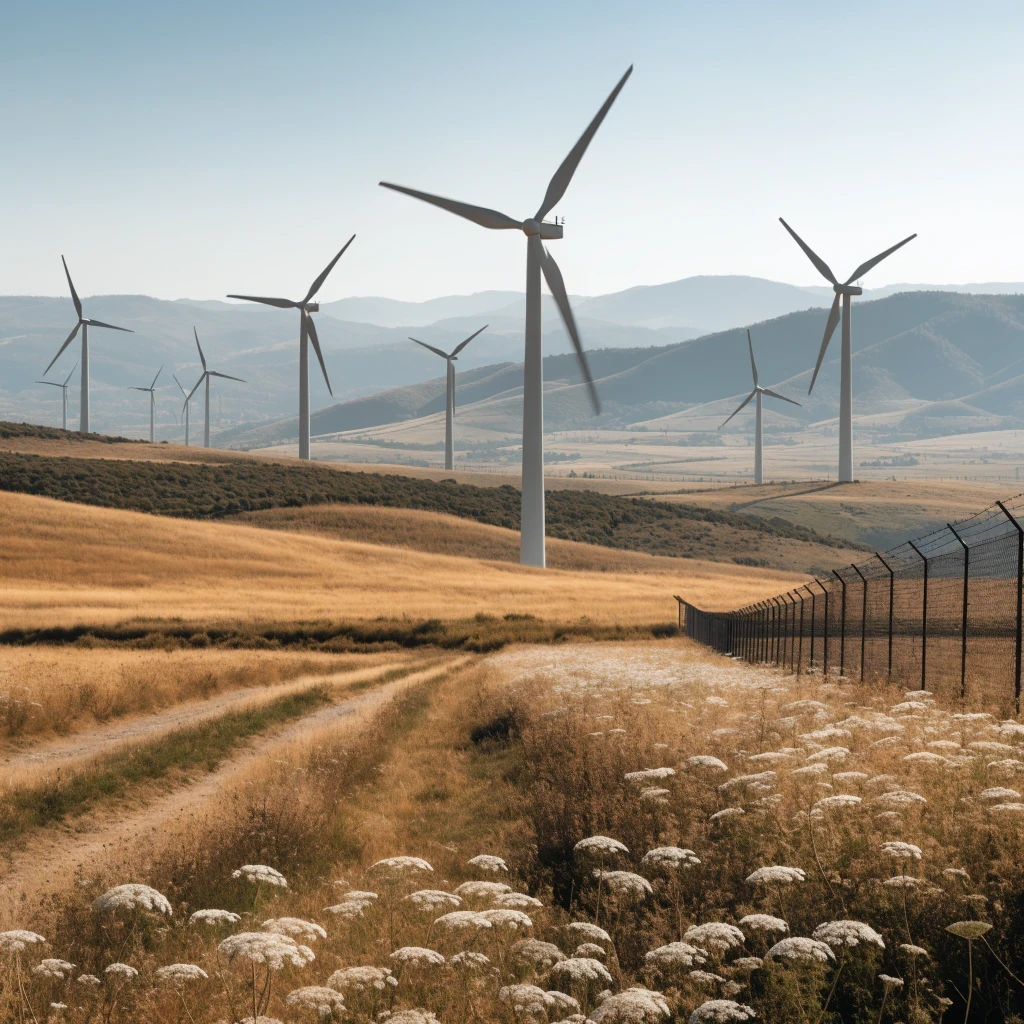
The era of treating renewable energy as a purely environmental talking point has ended with a bang, not a whimper. Maritime blockades in the Middle East have violently reframed the global conversation, transforming solar panels and wind turbines from eco-friendly luxuries into hard-nosed instruments of national survival. The calculus is no longer about carbon footprints; it is about who controls the energy lifeline when the sea lanes turn hostile.
This geopolitical pivot represents a profound inversion of priorities. For decades, climate policy was framed as a moral obligation, a costly burden that nations bore to save the planet. Today, that same infrastructure is being rebranded as a defense imperative, a shield against the weaponization of fossil fuel supply chains.
The Strait of Hormuz, a narrow passage carrying roughly a fifth of global oil consumption, has become the world's most dangerous chokepoint, and every nation is now scrambling for an exit.
On This Page
The result is a breathtaking acceleration of green investment, driven not by idealism but by cold, calculating self-interest. Governments that once debated carbon taxes are now fast-tracking grid upgrades, battery storage, and domestic generation capacity with wartime urgency. This is the new energy reality: renewables are no longer just the future; they are the immediate, strategic answer to a volatile and increasingly hostile world.
TL;DR The weaponization of maritime energy routes, particularly the Strait of Hormuz, has transformed renewable energy from an environmental policy into a critical national security imperative. Nations are now aggressively accelerating green infrastructure to escape fossil fuel dependency and insulate themselves from geopolitical supply shocks. This shift redefines the green transition as a defense strategy, prioritizing energy independence, grid resilience, and domestic generation capacity over purely environmental goals.
The Maritime Chokepoint Crisis: How Blockades Rewrote the Energy Playbook
The Strait of Hormuz is not merely a geographic feature; it is the jugular of the global energy economy. When tankers are threatened or blockaded, the shockwaves ripple through every national economy, exposing the fragility of long-distance fossil fuel supply chains. This vulnerability has turned energy security into the dominant variable in geopolitical strategy.
Recent escalations in the Middle East have demonstrated that no nation, regardless of its military might, is immune to the leverage gained by controlling a maritime chokepoint. The threat of closure is a weapon in itself, capable of spiking prices and sowing panic without a single shot fired. This reality has forced a fundamental reassessment of what constitutes a reliable energy source.
The Strategic Vulnerability of Fossil Fuels
Fossil fuels are inherently centralized and transport-dependent, making them uniquely susceptible to disruption at sea. A single hostile actor or rogue state can threaten the supply that powers entire continents, creating a strategic vulnerability that is simply unacceptable in the modern era. This dependency is a national security flaw.
Every barrel of oil that crosses an ocean is a potential hostage to geopolitical events. The concentration of production in volatile regions compounds this risk, ensuring that any local conflict has immediate global consequences. Nations are realizing that their energy security is only as strong as the weakest link in the maritime chain.
The economic cost of this vulnerability is staggering, with price spikes and supply shortages acting as a constant tax on global growth. This instability discourages long-term investment and forces governments to maintain expensive strategic reserves. The inefficiency of this system is becoming impossible to ignore.
Consequently, the argument for energy independence has shifted from a matter of economic preference to one of existential necessity. The question is no longer whether a nation can afford to transition to renewables, but whether it can afford not to. The calculus has been settled by the blockade.
Hormuz as a Geopolitical Weapon
The Strait of Hormuz has been repeatedly threatened with closure, serving as a constant reminder of the leverage held by regional powers. The mere threat of disruption is enough to influence global markets and diplomatic negotiations, making it a potent tool of statecraft. This weaponization of geography has profound implications.
Iran's historical use of the strait as a bargaining chip has demonstrated that energy routes are not neutral conduits but active instruments of foreign policy. The ability to choke off supply is a form of asymmetric warfare that can level the playing field against larger powers. This dynamic has forced a global rethink of energy sourcing.
For nations like China, Japan, and India, which rely heavily on Middle Eastern oil, the threat is existential. Their economic growth and social stability are directly tied to the uninterrupted flow of tankers through this narrow passage. This dependency is a strategic weakness that adversaries can exploit at will.
The response has been a frantic diversification of energy sources, with renewables emerging as the most viable path to true independence. By generating power domestically, nations can insulate themselves from the whims of foreign powers and the volatility of maritime trade. The sun and wind are the only resources that cannot be blockaded.
The Economic Shockwaves of Supply Disruption
When maritime routes are threatened, the immediate impact is felt in the price of energy, which cascades into every sector of the economy. Manufacturing costs rise, transportation becomes more expensive, and consumers face higher bills, creating a ripple effect of inflation and economic slowdown. This is the price of fossil fuel dependency.
The volatility of energy prices makes long-term planning nearly impossible for businesses, stifling investment and innovation. Companies are forced to hedge against uncertainty rather than focus on growth, creating a drag on the entire economy. This instability is a hidden tax on prosperity.
Developing nations are hit hardest by these shocks, as they lack the financial reserves to absorb sudden price spikes. The resulting economic pain can lead to social unrest and political instability, creating a vicious cycle of crisis. Energy security is thus a prerequisite for sustainable development.
Renewable energy offers a hedge against this volatility by providing a stable, predictable cost structure over the long term. Once the infrastructure is built, the fuel is free, insulating economies from the whims of global markets. This economic stability is a powerful argument for the green transition.
The Defense Imperative: Rebooting Green Infrastructure for National Security
The language of national security is now being used to justify and accelerate green energy projects that were previously stalled by political or economic objections. Solar farms, wind turbines, and battery storage are being reclassified as critical infrastructure, deserving of the same protection and investment as military bases. This is a fundamental shift in perception.
Energy independence is now viewed as a component of national defense, on par with a strong military or a robust intelligence network. A nation that can power itself is a nation that cannot be easily coerced. This realization is driving a new wave of strategic investment in domestic energy generation.
The military itself is becoming a major consumer and advocate for renewable energy, recognizing that reducing its reliance on vulnerable fuel convoys enhances operational effectiveness. Forward operating bases powered by solar panels are less exposed to attack than those dependent on diesel supply lines. This is a tactical advantage that is impossible to ignore.
Grid Resilience as a Defense Strategy
A centralized, fossil-fuel-dependent grid is a prime target for both physical and cyber attacks, capable of crippling a nation in a matter of hours. The push for distributed renewable generation is, in part, a strategy to create a more resilient and harder-to-disable energy network. This is a matter of national survival.
Microgrids and local generation allow communities to continue functioning even if the main grid is compromised, providing a critical buffer against disruption. This decentralization of power generation is a direct response to the vulnerabilities of the current system. The defense establishment is taking note.
Investing in grid resilience is not just about preventing blackouts; it is about ensuring the continuity of government, military, and essential services during a crisis. A nation that can keep the lights on is a nation that can maintain order and respond to threats. This is the ultimate test of national resilience.
The cost of grid modernization is significant, but it pales in comparison to the economic and human cost of a prolonged energy outage. The return on investment is measured not just in dollars, but in national security and social stability. This is a price worth paying.
Domestic Generation as a Sovereignty Tool
Every megawatt of energy generated domestically is a megawatt that cannot be held hostage by a foreign power. This simple equation is driving a global push for energy sovereignty, with nations seeking to maximize their self-sufficiency. The goal is to eliminate the leverage that energy import dependency creates.
Countries blessed with abundant sun, wind, or geothermal resources are realizing that they possess a strategic asset that can be developed for national advantage. This is leading to a new form of resource nationalism, where clean energy is treated as a precious national resource. The race is on to harness these assets.
For nations without significant fossil fuel reserves, renewables offer a path to parity that was previously unattainable. They can now generate their own power, reducing their reliance on imports and their vulnerability to geopolitical pressure. This is a democratization of energy.
The strategic benefits of domestic generation extend beyond security, fostering economic development and technological innovation. By building a domestic clean energy industry, nations can create jobs, stimulate growth, and position themselves as leaders in the new global economy. This is a virtuous cycle.
The Military's Green Energy Pivot
The world's most powerful militaries are leading the charge toward renewable energy, driven by operational necessity rather than environmental concern. The US Department of Defense, for example, is a massive consumer of energy and sees renewables as a way to reduce its logistical footprint and vulnerability. This is a pragmatic decision.
Fuel convoys are a leading cause of casualties in modern conflicts, making the reduction of fuel dependency a matter of force protection. By using solar and wind power at forward bases, militaries can reduce the number of convoys and the risk to their personnel. This is a direct tactical benefit.
The resilience of renewable systems in the field is also a major advantage, as they are less dependent on fragile supply lines that can be targeted by adversaries. A solar panel array is a much harder target than a fuel depot. This makes green energy a force multiplier.
The military's adoption of renewables is sending a powerful signal to the private sector, validating the technology and driving down costs through economies of scale. This is accelerating the broader energy transition and making green energy more accessible to all. The defense sector is a powerful catalyst.
We Also Published
The New World Order: Green Energy as the Currency of Power
The geopolitical landscape is being redrawn along energy lines, with nations that control clean energy technology and resources gaining a new form of leverage. The countries that lead in solar manufacturing, battery technology, and grid management will be the superpowers of the 21st century. This is a new form of strategic competition.
China has already positioned itself as the dominant player in this new order, controlling a significant portion of the global supply chain for solar panels, batteries, and rare earth minerals. This dominance gives it immense influence over the pace and direction of the global energy transition. Other nations are scrambling to catch up.
The transition to green energy is not just about replacing one fuel source with another; it is about restructuring the global balance of power. Nations that were once energy importers can become energy exporters, while those that relied on fossil fuel wealth may see their influence wane. This is a fundamental shift in the global order.
The Race for Critical Minerals
The green energy transition is fundamentally dependent on a handful of critical minerals, including lithium, cobalt, and rare earth elements. The supply chains for these minerals are just as concentrated and vulnerable as those for fossil fuels, creating a new set of geopolitical risks. This is a new chokepoint.
The Democratic Republic of Congo controls a vast majority of the world's cobalt, while Australia and Chile dominate lithium production, and China processes most rare earths. This concentration of supply creates a new form of dependency that could be weaponized. Nations are now racing to secure their access to these resources.
This has led to a new era of resource diplomacy, with nations offering investment and aid in exchange for access to mineral deposits. The competition for these resources is intense, and it is reshaping alliances and rivalries. The scramble for critical minerals is the new great game.
Recycling and the development of alternative battery chemistries are emerging as strategic priorities to reduce this dependency. However, these solutions are years away from scaling, leaving nations vulnerable in the interim. The race to secure supply chains is a defining challenge of our time.
Energy Independence and Diplomatic Leverage
A nation that is energy independent is a nation that can pursue a foreign policy free from the constraints of energy coercion. This freedom of action is a powerful diplomatic asset, allowing nations to take principled stands without fear of economic retaliation. This is the ultimate prize of the green transition.
For Europe, which has long been dependent on Russian gas, the push for renewables is a direct response to the weaponization of energy by Moscow. The invasion of Ukraine was a wake-up call, demonstrating the dangers of energy dependency. The EU's aggressive green agenda is a strategy for survival.
Energy independence also allows nations to build new alliances based on shared values rather than shared energy dependencies. This can lead to a more stable and principled international order. The green transition is thus a tool for reshaping global politics.
The ability to generate one's own power is a form of sovereignty that cannot be overstated. It is the foundation upon which true independence is built. This is why the green transition is now a matter of national security.
The Economic Race for Green Supremacy
The economic stakes of the green transition are immense, with trillions of dollars in investment up for grabs. Nations that lead in clean energy technology will reap enormous economic rewards, while those that lag will face decline. This is a race that no nation can afford to lose.
The US Inflation Reduction Act and the EU's Green Deal are massive investment programs designed to capture a share of this new economy. These are not just environmental policies; they are industrial strategies aimed at securing economic dominance. The competition is fierce.
Subsidies, tax credits, and trade barriers are being deployed to protect and promote domestic green industries, leading to a new era of economic nationalism. This is a departure from the free trade orthodoxy of recent decades. The rules of the global economy are being rewritten.
The nations that win this race will not only secure their energy future but will also define the technological standards and economic models of the coming century. This is a battle for the future, and the stakes could not be higher. The green transition is the defining economic challenge of our era.
The transformation of green energy from an environmental cause to a geopolitical necessity is the defining narrative of our time. The blockades in the Middle East have served as a brutal reminder that energy is power, and that dependence is vulnerability.
Nations are now racing to secure their energy futures, and the winners will be those who embrace the green transition with the urgency of a wartime mobilization.
This is not a story about saving the planet; it is a story about saving ourselves from the chaos of a volatile and weaponized energy landscape. The sun and the wind are the only resources that cannot be blockaded, and they are now the foundation of a new world order. The future belongs to the energy independent.
From our network :
- The Hidden Cost of AI Convenience: Why Over-Permissioned Agents Are a Security Time BombDiscover why AI agents with excessive permissions create dangerous single points of failure, and learn how implementing least privilege principles can protect your organization from exploitation.
- How AI Agents Will Change the Way We Manage Personal FinancesExplore how AI agents are transforming personal finance through automated budgeting, bill payment, and investment management, while examining the critical security protocols and governance frameworks required for safe deployment.
- Analyzing Hoya Corporation’s Midday Volume Shifts and Financial FundamentalsExamine Hoya Corporation’s midday trading volume contraction, technical moving averages, robust solvency ratios, and stellar quarterly earnings performance.
- Forbidden Matrix Patterns and Visible Lattice Points: A Geometric DictionaryExplore how multidimensional 0–1 matrices encode geometric truths, linking forbidden patterns to visible lattice points and hypergraph theory, with applications in combinatorics and computational geometry.
- The Final Descent: How ESA Retired the Legendary Cluster Constellation After 24 Years of Space Weather ScienceAfter 24 years mapping Earth’s magnetosphere, ESA’s Cluster mission concluded with a precisely controlled reentry over the South Pacific. This analysis explores the scientific legacy, engineering decisions, and debris mitigation principles behind one of space exploration’s most responsible retirements.
- Committed Mediterranean Precipitation Decline: Why Emissions Cuts Alone Cannot Restore Winter RainsNew NOAA research reveals that Mediterranean winter rains may decline irreversibly even with emissions cuts. Explore the science of committed climate change and regional impacts.
- CISA’s Ten-Advisory Wave: Why Generic Patching Fails in OT and How to Build Product-Specific PlaybooksCISA released ten ICS advisories in one week, exposing critical infrastructure risks. Generic patching fails in OT. Learn to build product-specific remediation playbooks.
- Norbert’s Uncertain Path: Why Hawaii’s Storm Watch Demands Patience Over PanicTropical Storm Norbert strengthens in the Eastern Pacific with winds near 50 mph, forecast to reach Category 1 hurricane status by Friday. Long-range models disagree sharply on whether Hawaii faces any threat around September 19–23, making official guidance essential.
- Former Soap Stars Embark on Ambitious Writing Projects and Theatrical StagesDiscover how former soap opera actors are transitioning into independent scriptwriting and high-profile theatrical stage productions.
RESOURCES
- Japan Workshop Readout: Renewable Energy is National Securitycouncilonstrategicrisks.orgMar 4, 2025 ... Through increased energy independence, Japan could further stabilize its national security and economic security, and better navigate rising ...
- Renewable energy is the "fastest path to energy security, economic ...unfccc.intThe fastest path to energy security, economic security, and national security is clear: speed up a just transition away from fossil fuels and toward…
- Renewable Energy and National Security - Paul Krugman - Substackpaulkrugman.substack.comMar 6, 2026 ... The usual argument for promoting solar and wind power is that relying on renewable energy avoids the environmental damage caused…
- The National Security Rationale for Japan's Transition to Renewable ...councilonstrategicrisks.orgMay 20, 2025 ... Renewable energy can play a role in realizing Japan's national security goals, which not only depend upon a reliable stream…
- Climate and National Security: Bridging the Divide in Energy Policybusiness.columbia.eduApr 25, 2025 ... ... Professors David Schizer and Gernot Wagner explored how climate and national security priorities can accelerate the transition to clean…
- In Case You Missed It: Energy Security is National Security - DOI.govdoi.govSep 10, 2019 ... Just as energy independence is fundamental to our nation's security, reducing our dependence upon foreign countries for critical minerals is ...
- National Laboratories - Department of Energyenergy.govToday, LANL conducts cutting-edge research across diverse fields including nuclear security, renewable energy, supercomputing, materials science, bioscience, ...
- Renewable energy will boost national security and protect UK from ...theguardian.comApr 26, 2026 ... Widely dispersed wind farms and solar panels are harder to target than fossil fuel power stations, Michael Shanks says.
- DOE to Update Public Interest Analysis to Enhance National ...energy.govJan 26, 2024 ... DOE to Update Public Interest Analysis to Enhance National Security, Achieve Clean Energy Goals and Continue Support for Global Allies.…
- Energy and national security - the good, the bad, and the regulatoryhlc.comOct 6, 2025 ... The EU's Green Deal Industrial Plan aims to enhance the competitiveness of Europe's net-zero industry by creating a more supportive…
- Renewable Energy as a National Security Strategy in the Arcticamericansecurityproject.orgDec 15, 2021 ... The U.S. should focus on expanding renewable energy in the Arctic not only to meet its climate change goals, but…
- The National Security Case for Renewable Energyprospect.orgMar 13, 2026 ... But there's been no crusade by Trump to invoke national security to promote the production and installation of domestic renewable…
- Project on National Security, Energy, and Climatepew.orgEnergy independence, climate change and national security are interrelated global challenges. U.S. dependence on foreign sources of energy constitutes a ...
- Iran war shows renewable energy is now a national security ...theinvadingsea.comMay 28, 2026 ... The lesson is clear: We must treat renewable energy as national security rather than partisan politics. Carol Becker is a…
- Clean Energy and the National Security Strategytheari.usTogether, the ingenuity of Americans can raise our security through smart clean energy policies. We can end frivolous government actions that simply cause ...
- 01
- 02
- 03
- 04
- 05
- 06
- 07
- 08
0 Comments