When Rockstar Games confirmed that Grand Theft Auto VI would arrive at midnight on a Thursday in November 2026, the announcement did more than ignite a decade of pent-up anticipation. It triggered a quiet but remarkable reorganisation of ordinary working lives across the United States. Players began filing leave requests, drafting spreadsheets, booking theatre screens, and negotiating domestic truces with spouses and children. The launch of a video game had become a scheduling event of genuine economic and cultural weight.
The pattern is striking because it inverts the usual relationship between leisure and labour. Here, leisure dictates the calendar, and work bends around it. An Airbnb manager weighs a themed house party against a cinema projection. A father of two carves out a long weekend and pledges to cook breakfast at dawn after five hours in Vice City.
An event planner in Kentucky clears ten days. A military base trades four days of freedom for a multi-year reenlistment commitment. Each decision reveals how deeply a fictional city named after Miami has embedded itself in real lives.
On This Page
- The Cultural Weight of a Decade-Long Wait
- The Billion-Dollar Production and Its Economics
- Workplace Culture and the Gaming Stigma
- The Logistics of a Midnight Launch
- The Military Offer and the Value of Reenlistment
- What the Launch Reveals About Modern Leisure
- Conclusion: A Game That Rearranged the Calendar
This analysis examines what the GTA VI launch moment actually signifies: the economics of a billion-dollar production, the workplace culture shift it exposes, the logistics fans are engineering, and the institutional responses from employers and the military. It also considers the delays, the cost estimates, and the broader question of whether gaming has finally shed its stigma as wasted time.
TL;DR Grand Theft Auto VI, the first mainline entry in over a decade, launches at midnight on a Thursday in November 2026, returning players to the Miami-inspired Vice City. The release has prompted fans to take annual leave, plan themed parties, and build detailed play schedules, while a Georgia military base offers four days off in exchange for reenlistment and Logitech grants staff a company holiday. Development spanned more than a decade, with delays pushing the date from 2025 to May 2026 and finally to November. Analysts estimate the production cost exceeded $1 billion, making it one of the most expensive entertainment products ever assembled.
The Cultural Weight of a Decade-Long Wait
Grand Theft Auto VI is not merely a product launch; it is the resolution of an unusually long cultural suspense. Rockstar Games has kept players waiting since the previous mainline entry, and that interval has allowed expectation to compound into something closer to a social ritual than a consumer purchase. The game's return to Vice City, a fictional Miami analogue, adds nostalgia to novelty.
Why Vice City Resonates
Vice City carries a specific place in the series' mythology, associated with neon, satire, and a sun-bleached criminal underworld that players remember fondly. Returning there after so many years gives the launch an emotional anchor that a brand-new setting could not provide. Fans are not just buying a game; they are revisiting a place they once inhabited.
The open-world design amplifies this attachment. Players can pursue structured missions or simply roam, steal cars, and explore the city at their own pace. That freedom is precisely what long-time players cite as the draw, and it explains why the launch feels like an appointment with a familiar world rather than a passive entertainment choice.
The Psychology of Anticipation
Psychologists who study anticipation note that expected pleasure often rivals or exceeds the pleasure of the event itself. The planning, the countdown, and the shared conversation generate their own reward. For a fanbase that has waited over ten years, the launch week becomes a collective peak experience that justifies rearranging ordinary obligations around it.
This helps explain the intensity of the preparations described by players. A spreadsheet allocating time for sleep, meals, and showers is not eccentricity for its own sake; it is a deliberate attempt to protect an anticipated experience from the friction of daily life. The planning is part of the ritual, not a distraction from it.
The Billion-Dollar Production and Its Economics
Analysts estimate that Grand Theft Auto VI cost more than $1 billion to develop, a figure that places it among the most expensive entertainment products ever made. Rockstar has not confirmed the number, but the scale of the open world, the years of development, and the marketing machinery all point to a production of extraordinary ambition. The economics of such a bet deserve careful attention.
Where the Money Goes
A production of this size absorbs capital across art, engineering, voice performance, motion capture, music licensing, and years of salaried labour. Open-world games are especially expensive because every street, vehicle, and interior must be built and tested. The longer the development runs, the more the cost compounds through salaries and overheads.
The delays themselves carry a financial dimension. Each postponement extends the payroll and shifts revenue expectations, yet publishers often accept the cost because a flawed launch can damage a franchise permanently. For a title expected to generate billions in lifetime sales, patience is a rational strategy rather than a sign of mismanagement.
The Revenue Logic of a Blockbuster
The commercial logic rests on lifetime revenue rather than launch-week sales alone. A mainline GTA title typically sells across consoles and PC for years, supported by an online mode that generates recurring income. That model justifies the upfront cost, because the game functions less as a product and more as a long-running platform.
This is why the launch date matters so much to the wider industry. A release of this magnitude can move console hardware, dominate streaming charts, and reshape the seasonal calendar for competitors. Few entertainment products carry comparable gravitational pull, and the industry watches the November window accordingly.
Workplace Culture and the Gaming Stigma
The most revealing aspect of the launch is how employers responded. Logitech granted its staff the day off, and its chief executive, Hanneke Faber, told IGN that the moment had arrived to retire the stereotype that gaming is a waste of time. That statement carries weight because it comes from a hardware company whose business depends on gamers being taken seriously.
When a Company Validates a Hobby
Granting leave for a game launch signals that a firm recognises gaming as a legitimate cultural pursuit rather than a guilty pleasure. For employees, that recognition can matter more than the day itself. It suggests that personal passions are understood and accommodated, which tends to strengthen loyalty and morale far beyond a single holiday.
The gesture also carries commercial logic. Logitech sells peripherals to the very audience staying up for the midnight release. Aligning corporate policy with customer culture is a form of brand authenticity that advertising alone struggles to manufacture. The day off functions simultaneously as employee benefit and marketing statement.
The Persistent Skeptics
Not everyone understands. Malcolm Bixby, a software engineer in Oregon taking two weeks off, noted that his father and most friends grasp why the game matters to him, though a few do not. That minority reflects a lingering generational divide in how interactive entertainment is valued compared with film or literature.
The divide is narrowing, however. A medium that generates more revenue than cinema and commands decades of loyalty from its audience is difficult to dismiss as trivial. Each launch like this one normalises the idea that scheduling life around a game is no stranger than scheduling it around a film premiere or a sporting final.
We Also Published
The Logistics of a Midnight Launch
Behind the enthusiasm lies a surprising amount of operational planning. Ciara Singleton, who manages an Airbnb, is weighing a themed house party with multiple televisions and consoles against watching a friend project the game onto a movie theatre screen. She intends to begin playing the moment it becomes available, which means coordinating hardware, space, and guests in advance.
Preparing the Environment
A midnight launch demands preparation that resembles event management more than casual entertainment. Consoles must be updated, downloads preloaded, displays configured, and refreshments arranged. For those hosting others, seating, network capacity, and noise considerations all enter the calculation. The game itself is only one component of a carefully staged evening.
Eldridge, the Kentucky event planner, applied his professional instincts to the task. He plans to prepare meals for the days following launch and to maintain his gym routine throughout. That combination of indulgence and discipline reflects a mature approach: the goal is sustained enjoyment, not collapse, and preparation protects both health and enthusiasm.
The Spreadsheet Approach
Bixby's spreadsheet, allocating time for playing, sleeping, meals, and showers, is the most literal expression of this planning culture. It treats leisure with the same rigour applied to a work project, blocking out time and defending it against encroachment. The document is both practical tool and declaration of intent.
Such scheduling reveals something important about modern fandom. Devotion is expressed not through passive consumption but through active organisation. Time becomes the scarce resource, and fans allocate it deliberately. The spreadsheet is a small artefact of a culture that takes its entertainment seriously enough to plan around it.
- 01
- 02
- 03
- 04
The Military Offer and the Value of Reenlistment
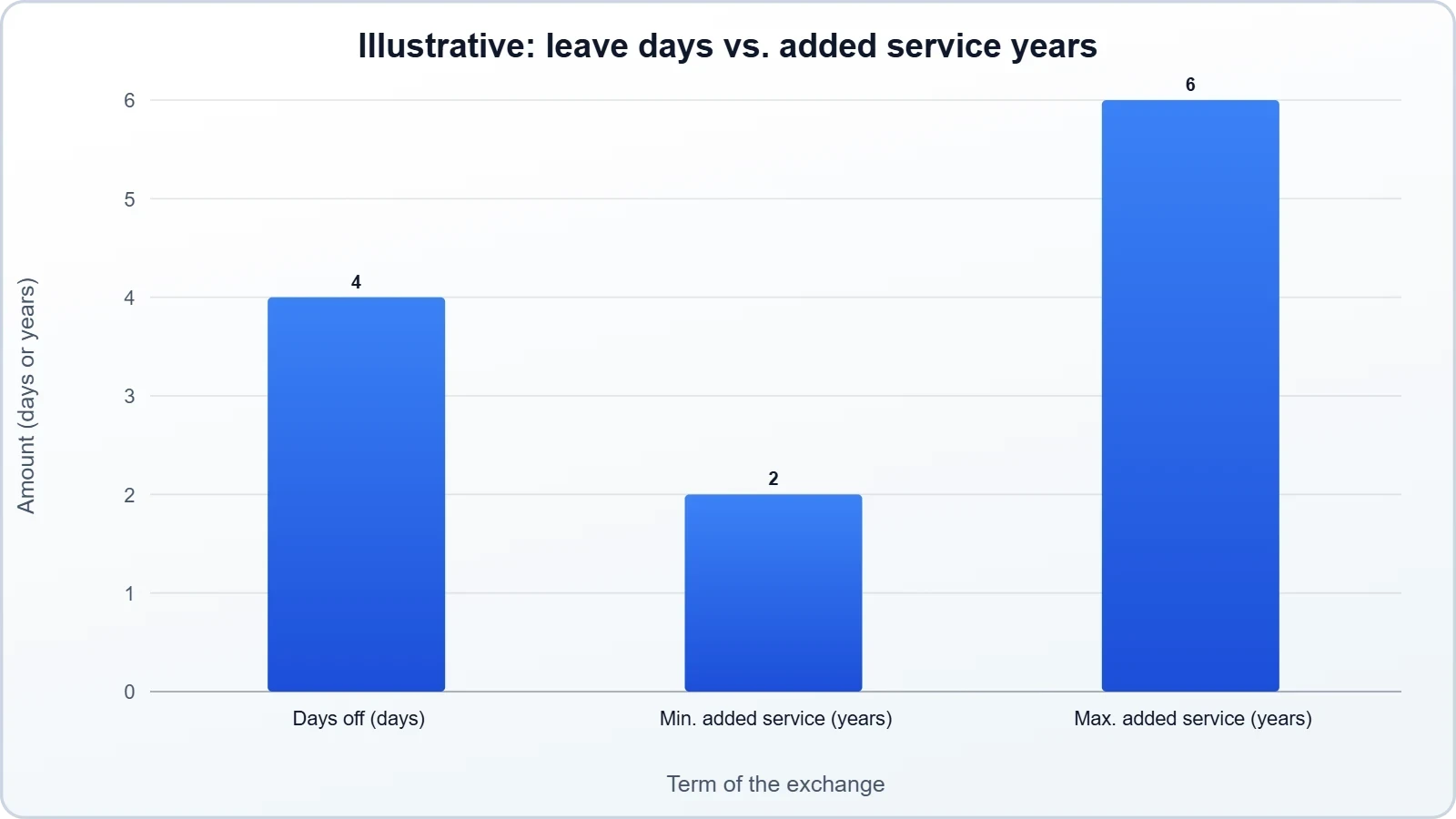
Perhaps the most unusual detail is the arrangement at Fort Stewart, Georgia, where a military base offered soldiers four days off linked to the GTA VI release in exchange for reenlisting for another two to six years. The offer converts a cultural moment into a recruitment incentive, and it raises questions about how institutions value retention.
Recruitment Meets Pop Culture
Military retention is a persistent challenge, and commanders routinely experiment with incentives ranging from bonuses to educational benefits. Tying leave to a game launch is unconventional but consistent with a broader trend of using cultural touchstones to reach younger service members. The offer speaks the language of its audience.
The arrangement also illustrates how thoroughly gaming has entered mainstream institutions. A base commander calculating that a release date could motivate reenlistment is acknowledging that the hobby matters to the people under their command. That acknowledgment is itself a cultural signal, regardless of how many soldiers accept.
Ethical Questions
Critics might ask whether leveraging a leisure event to secure multi-year service commitments is appropriate. The exchange is voluntary, and the leave is a benefit rather than a penalty, but the framing still merits scrutiny. Retention incentives should be evaluated on whether they serve the institution and the individual fairly.
For the soldiers involved, the calculation is personal. Four days of uninterrupted play may be genuinely valuable, but a two-to-six-year extension is a substantial commitment. The episode is a reminder that pop culture and institutional policy now intersect in ways that would have seemed implausible a generation ago.
What the Launch Reveals About Modern Leisure
Beyond the specific game, the episode illuminates a broader shift in how people organise their lives around entertainment. Time off is finite, and allocating it to a release date is a statement about priorities. The willingness to plan, negotiate, and sacrifice for a game reflects a culture in which interactive media occupies genuine emotional territory.
Leisure as Scheduled Experience
Modern leisure is increasingly scheduled rather than spontaneous. Streaming platforms release entire seasons on fixed dates, concerts sell out in minutes, and games arrive at midnight with global synchronisation. Audiences respond by blocking calendars, much as they would for a wedding or a medical appointment. The appointment has become the organising unit of cultural life.
This scheduling culture has commercial implications. Publishers know that a coordinated launch generates concentrated attention, social media momentum, and shared conversation. The midnight release is a marketing device as much as a distribution decision, and fans participate willingly because the synchronisation itself creates a sense of occasion.
The Economics of Attention
In an attention economy, the scarcest resource is not money but focus. A game that can command ten days of leave and a spreadsheet of scheduled hours has captured something valuable. Competing entertainment products must now reckon with a title capable of absorbing enormous blocks of discretionary time, leaving less room for rivals.
That concentration explains why the launch date ripples across the industry. Streaming services, film studios, and rival publishers all monitor the calendar, because a release of this scale can suppress engagement elsewhere. The game becomes a gravitational centre around which other entertainment must orbit, at least for a few weeks.
Conclusion: A Game That Rearranged the Calendar
The launch of Grand Theft Auto VI will be remembered for many things, but its most distinctive legacy may be the way it bent ordinary schedules around a digital city. Players took leave, planned parties, built spreadsheets, and negotiated with families. Employers granted holidays, and a military base turned the release into a retention tool.
Underneath the enthusiasm sits a serious economic story: a production estimated above $1 billion, delayed twice, and expected to generate revenue for years. The game is a commercial bet of extraordinary scale, and the cultural response suggests the bet is well placed. Attention, after all, is the currency that matters most.
What remains is a simple observation about contemporary life. A medium once dismissed as a distraction now shapes calendars, workplace policy, and even military incentives. The midnight launch is no longer a niche ritual; it is a mainstream appointment, and the world has adjusted accordingly.
From our network :
- The Hidden Cost of AI Convenience: Why Over-Permissioned Agents Are a Security Time BombDiscover why AI agents with excessive permissions create dangerous single points of failure, and learn how implementing least privilege principles can protect your organization from exploitation.
- Committed Mediterranean Precipitation Decline: Why Emissions Cuts Alone Cannot Restore Winter RainsNew NOAA research reveals that Mediterranean winter rains may decline irreversibly even with emissions cuts. Explore the science of committed climate change and regional impacts.
- The Final Descent: How ESA Retired the Legendary Cluster Constellation After 24 Years of Space Weather ScienceAfter 24 years mapping Earth’s magnetosphere, ESA’s Cluster mission concluded with a precisely controlled reentry over the South Pacific. This analysis explores the scientific legacy, engineering decisions, and debris mitigation principles behind one of space exploration’s most responsible retirements.
- University Language Proficiency Exams: Why Institutional Tests Demand Different Preparation Than IELTS and TOEFLDiscover why university-specific language proficiency examinations differ fundamentally from IELTS and TOEFL, and learn strategic preparation approaches for institutional assessment success.
- CISA’s Ten-Advisory Wave: Why Generic Patching Fails in OT and How to Build Product-Specific PlaybooksCISA released ten ICS advisories in one week, exposing critical infrastructure risks. Generic patching fails in OT. Learn to build product-specific remediation playbooks.
- How AI Agents Will Change the Way We Manage Personal FinancesExplore how AI agents are transforming personal finance through automated budgeting, bill payment, and investment management, while examining the critical security protocols and governance frameworks required for safe deployment.
- Mobile Learning and VR in English: What Global Evidence Reveals About Effective Language TechnologyA systematic review across 14 countries reveals which language-learning technologies genuinely work. Mobile learning, AI, and VR show measurable benefits when pedagogically integrated. This evidence-based guide helps educators and learners select technology that delivers real return on investment.
- Forbidden Matrix Patterns and Visible Lattice Points: A Geometric DictionaryExplore how multidimensional 0–1 matrices encode geometric truths, linking forbidden patterns to visible lattice points and hypergraph theory, with applications in combinatorics and computational geometry.
- Live Online English Classes for Kids: Do They Actually Reduce Anxiety?A ten-week study reveals that synchronous online English classes can significantly reduce child language anxiety while improving listening and reading skills. Discover what makes these programs effective and how parents can select the right one.
RESOURCES
- Upcoming Grand Theft Auto Release Is Driving PTO Requests - SHRMshrm.orgNov 9, 2026 ... “Pop culture is a big part of people's lives, and events like the GTA VI release can influence how employees…
- Gamer's Day Off: PTO Requests Spike for Grand Theft Auto VI Releasebamboohr.comOct 22, 2026 ... The GTA VI launch date is coinciding with a rise in PTO requests, workforce data shows ... These days, pop…
- Ipsos research reveals GTA VI set to be a cultural phenomenon, with ...ipsos.com7 days ago ... New Ipsos research reveals the blockbuster launch could reshape media habits, workplace behaviour and social conversations.
- A tech company has made a major announcement for its ... - Instagraminstagram.com4 days ago ... [Logitech, GTA VI, GTA 6 release date, gaming industry, employee benefits, paid leave, workplace culture, gaming news] #Logitech #GTAVI #GTA6…
- GameSquare Announces The "Grand Theft Auto" Effectinvestors.gamesquare.comOct 20, 2026 ... ... Grand Theft Auto VI will have on the workplace and broader cultural landscape upon its launch. From employees taking…
- YouTube celebrates the launch and cultural impact of Grand Theft ...blog.youtube5 days ago ... As the definitive destination for all GTAVI video content, YouTube introduces GTA-themed interactive features, 24-hour global livestream, ...
- A cultural moment for gamers! An entire company is closing its doors ...facebook.comJun 18, 2026 ... GTA VI's release day will affect the ... NQS Prime Time: GTA VI might be one of the biggest workplace…
- Rockstar Games Cleaned Up Its Frat-Boy Culture - Bloombergbloomberg.comJul 27, 2022 ... With a new tone at the company and a change in creative direction, GTA VI will probably feel very different…
- Rockstar abandoned its 'boy's club' past and fired toxic managers ...gameworldobserver.comJul 27, 2022 ... Improving workplace culture and fighting crunch. Rockstar's so ... The release of GTA VI is set for November 19, 2026,…
- Why is GTA6 expected to be such a cultural phenomenon? - Redditreddit.comJun 8, 2026 ... I get it for the console release. What i dont understand is PC game developers talking about dodging GTA vi…
- Grand Theft Auto VI and Suspected Sick Leave Abuse: What New ...bhlawpllc.comNov 4, 2026 ... A launch-day absence may raise legitimate questions, particularly where the employee previously sought time off or openly discussed plans to ...
- GameSquare Announces The "Grand Theft Auto" Effectfinance.yahoo.comOct 20, 2026 ... ... Grand Theft Auto VI will have on the workplace and broader cultural landscape upon its launch. From employees taking…
- Employer refused my leave request for November 19th (GTA VI ...reddit.comNov 6, 2026 ... ... work culture. Leave of absence is there for personal issues or emergencies, definitely not for a video game release.…
- 'Grand Theft Auto Flu': is the whole world really taking the day off ...theguardian.com1 day ago ... ... workplaces, owing to GTA VI's midweek release. Grand Theft Auto VI ... Though the cultural cachet and impact of…
- 01
- 02
- 03
- 04
- 05
- 06
- 07
- 08
0 Comments