
When the diplomatic caravan of global climate governance moves from the Red Sea resort of Sharm El-Sheikh to the Mediterranean coast of Antalya, the shift is far more than a change of venue. It signals a decisive transition from the pledging phase to the implementation phase, where the moral vocabulary of climate justice must confront the harder arithmetic of national budgets, institutional capacity, and political will.
The central question animating negotiators, civil society observers, and frontline communities alike is whether the commitments solemnly recorded in Egypt will survive the journey to Turkey and emerge as funded, measurable action.
Climate justice, at its core, rests on a simple but contentious proposition: those nations and communities that contributed least to historical greenhouse gas emissions should not bear the heaviest burden of climate impacts. This principle underpins the architecture of loss and damage finance, adaptation support, and technology transfer that has dominated successive Conference of the Parties gatherings.
On This Page
Yet the gap between principle and practice has widened with each passing summit, and the Antalya deliberations will be scrutinised as a test of whether multilateralism can still deliver tangible outcomes for the world's most vulnerable populations.
This analysis examines the substance behind the Sharm El-Sheikh to Antalya transition, tracing how pledges on loss and damage, adaptation finance, and just transition are being translated into operational mechanisms. It weighs the institutional machinery now being built against the persistent shortfalls in disbursement, and it considers what credible accountability would require from wealthy nations and multilateral institutions. The stakes extend well beyond diplomatic optics, touching the credibility of the entire climate regime.
TL;DR The relocation of international climate talks from Sharm El-Sheikh to Antalya marks a critical test of whether climate justice pledges become operational reality. Loss and damage funding, adaptation finance, and just transition commitments now face the discipline of implementation, budget allocation, and verification. This analysis maps the institutional machinery, the persistent financing gaps, and the accountability mechanisms that will determine whether climate justice remains rhetoric or becomes measurable policy.
The Shift from Pledging to Implementation
The Sharm El-Sheikh conference produced a landmark agreement to establish a loss and damage fund, a breakthrough that many observers had considered politically unattainable. That agreement, however, was a framework rather than a functioning institution, and the move to Antalya places the burden of operationalisation squarely on the shoulders of negotiators who must now design governance structures, eligibility criteria, and disbursement channels. The transition is therefore best understood as a stress test of political commitment.
What the Sharm El-Sheikh Pledges Actually Contained
The Egypt package combined several distinct commitments: a dedicated loss and damage fund, renewed calls for doubling adaptation finance, and language on just transition that acknowledged the social dimensions of decarbonisation. Each element carried different legal weight and different constituencies, which explains why implementation has proceeded at uneven speeds. The loss and damage fund advanced fastest in institutional terms, while adaptation finance remained largely aspirational.
Critically, the pledges were framed around the principle of common but differentiated responsibilities, a cornerstone of international environmental law. That framing gives developing nations a moral claim on resources but does not automatically create enforceable obligations. The Antalya talks must therefore confront the question of how voluntary political commitments can be converted into predictable, adequate, and accessible finance flows.
The Antalya Agenda and Its Priorities
Antalya brings a different set of priorities to the fore, including the operational details of the fund, the composition of its board, and the relationship between the new mechanism and existing institutions such as the Green Climate Fund. Host Turkey, itself navigating economic pressures, has signalled interest in positioning the talks around practical delivery rather than further declaratory statements. That emphasis on delivery is welcome but also raises expectations that may prove difficult to meet.
The agenda also reflects a broader geopolitical reality: climate diplomacy no longer operates in isolation from energy security, trade tensions, and fiscal constraints. Wealthy nations facing domestic budget pressures are reluctant to commit new resources, while developing countries argue that delay itself constitutes a form of injustice. The Antalya deliberations will reveal how these competing pressures are reconciled.
The Moral Architecture of Climate Justice
Climate justice draws its force from a straightforward ethical claim: the atmosphere is a shared resource, and its limited capacity to absorb emissions has been consumed disproportionately by a small group of industrialised nations. Rectifying that imbalance requires more than charity; it demands a structured transfer of resources and a rebalancing of decision-making power within international institutions. The Antalya talks will be judged against that standard.
Historical Responsibility and the Polluter Pays Principle
The polluter pays principle, embedded in the Rio Declaration and reaffirmed in subsequent climate agreements, holds that those responsible for environmental damage should bear the cost of remediation. Applied to climate change, this principle supports claims for compensation from high-emitting nations to those suffering loss and damage. The difficulty lies in attribution, since emissions accumulate over centuries and responsibility is diffuse.
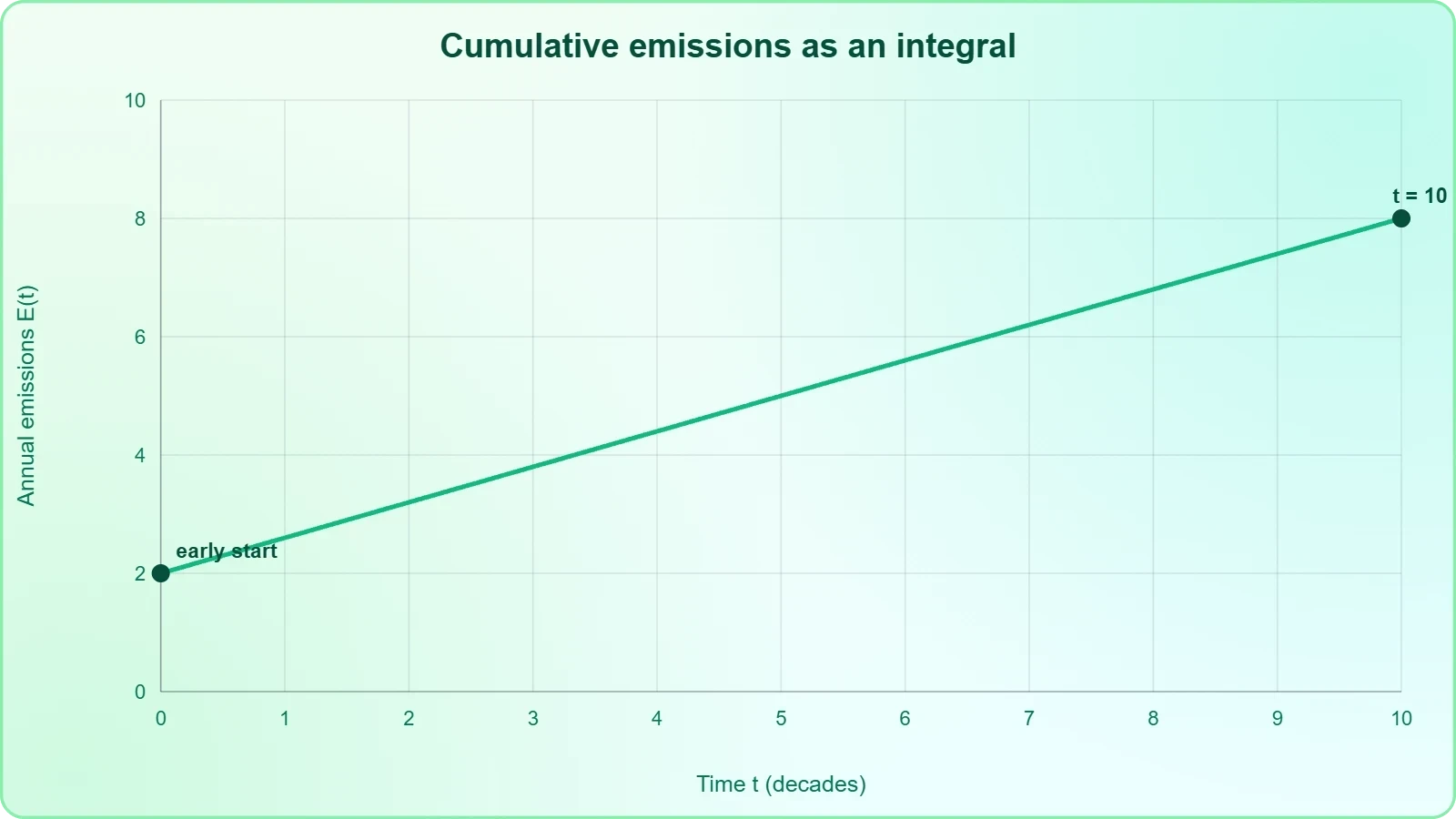
Mathematically, the cumulative emissions of a nation can be expressed as an integral over time, which illustrates why historical responsibility is so consequential:
Where ##E(t)## represents annual emissions at time ##t##. Nations that industrialised early carry larger cumulative totals, which is precisely the argument developing countries advance when they demand that climate finance be framed as an obligation rather than generosity. Antalya will test whether that framing survives contact with donor politics.
Vulnerability, Adaptation, and the Frontline Communities
Justice is not only about historical emissions but also about present vulnerability. Small island states, low-lying deltas, and arid regions face existential risks that no amount of mitigation elsewhere can fully offset. Adaptation finance is therefore the practical expression of climate justice, yet it remains chronically underfunded relative to need. The Antalya agenda must address this shortfall credibly.
Frontline communities often lack the institutional capacity to navigate complex application processes for international funds, a problem known as the access barrier. Simplifying procedures and channelling resources through regional institutions are practical remedies, but they require donor trust and recipient accountability. Without such reforms, the most vulnerable will continue to be underserved despite the rhetoric of inclusion.
We Also Published
Financing the Transition: Loss and Damage in Practice
Money is the currency of credibility in climate diplomacy. The loss and damage fund, however historic in principle, remains a vessel awaiting capitalisation, and the Antalya talks will determine whether it becomes a functioning instrument or a symbolic gesture. Pledges announced at various forums must be converted into legally binding contributions with clear timetables, or the fund risks becoming another under-resourced multilateral body.
Capitalisation Gaps and Donor Reluctance
Initial pledges to the loss and damage fund have fallen well short of credible estimates of need, which run into hundreds of billions of dollars annually by mid-century. Donor nations cite fiscal constraints and domestic political resistance, while recipient nations point out that the same governments find resources for defence and industrial subsidies. This asymmetry undermines trust and complicates negotiations.
The reluctance is partly structural: contributions are voluntary, and there is no enforcement mechanism for non-payment. Some proposals suggest linking contributions to historical emissions or to gross national income, which would introduce a formulaic element and reduce the discretion that donors currently enjoy. Whether Antalya embraces such formulaic approaches will be a key indicator of seriousness.
Innovative Sources and the Role of Multilateral Banks
Beyond national budgets, attention is turning to innovative finance, including levies on international shipping, aviation, and fossil fuel extraction, as well as carbon pricing mechanisms. Multilateral development banks are being asked to stretch their balance sheets through guarantees and risk-sharing arrangements. These instruments can mobilise private capital, but they also raise questions about additionality and debt sustainability.
For vulnerable nations already burdened by debt, loans disguised as climate finance offer little relief. Grant-based support and debt relief linked to climate resilience are therefore central demands. The Antalya negotiations must distinguish clearly between genuine transfers and accounting exercises that inflate headline figures without delivering real resources to frontline communities.
- 01
- 02
- 03
- 04
Geopolitics and the Credibility of Multilateralism
Climate negotiations do not unfold in a vacuum; they are shaped by energy markets, security crises, and shifting alliances. The movement from Egypt to Turkey occurs against a backdrop of geopolitical fragmentation, with major emitters distracted by conflicts and trade disputes. In such an environment, the credibility of multilateral commitments depends on whether institutions can deliver even when political attention is elsewhere.
Turkey's Role as Host and Bridge
Turkey occupies an unusual position, simultaneously a developing economy, a significant emitter, and a diplomatic bridge between Europe and the Global South. Hosting the talks allows Ankara to project influence and to press for recognition of its own climate finance needs. Its domestic energy mix, still reliant on coal, complicates its credibility as a climate leader but does not disqualify its convening role.
The host country's priorities inevitably shape the agenda, and observers will watch whether Turkey uses the platform to advance adaptation finance and loss and damage or to deflect scrutiny of its own emissions trajectory. A successful summit would require balancing these domestic considerations against the broader expectations of the international community.
Trust Deficits Between North and South
The relationship between industrialised and developing nations remains strained by unfulfilled promises, particularly the long-standing pledge of one hundred billion dollars annually in climate finance. Each missed target erodes trust and makes subsequent negotiations harder. Antalya must therefore address not only new commitments but also the arrears of past ones, which is politically uncomfortable for donors.
Rebuilding trust requires verifiable action rather than rhetorical reassurance. Independent monitoring, transparent reporting, and civil society participation are essential components of any credible accountability architecture. Without them, the cycle of pledge and disappointment will continue, and the moral authority of the climate regime will further diminish.
Accountability Mechanisms and Verification
Commitments without verification are little more than aspirations. The credibility of climate justice depends on robust accountability mechanisms that track whether pledges are fulfilled, whether finance reaches intended recipients, and whether outcomes improve resilience on the ground. Antalya offers an opportunity to strengthen these mechanisms, but it also risks producing more process without measurable progress.
Transparency Frameworks and Reporting Standards
Enhanced transparency frameworks require countries to report regularly on emissions, finance, and adaptation measures. These frameworks are technically demanding, and many developing nations lack the capacity to comply fully. Capacity-building support is therefore essential, not as a substitute for finance but as a complement that enables recipients to participate meaningfully in the accountability architecture.
Independent verification by civil society and academic institutions adds another layer of scrutiny. Such external oversight can expose gaps between claims and reality, but it depends on access to data and freedom of information. Where civic space is constrained, accountability weakens, and the risk of inflated reporting increases.
Civil Society and the Watchdog Function
Non-governmental organisations play a vital role in translating technical negotiations into public understanding and in holding governments to account. Their presence at climate summits ensures that vulnerable communities have some voice in proceedings dominated by state interests. Restricting their access undermines the legitimacy of outcomes and weakens the moral force of agreements.
Antalya should therefore be judged not only by its formal decisions but also by the openness of its process. Inclusive participation, transparent drafting, and accessible documentation are procedural markers of seriousness. When these are absent, even well-intentioned commitments struggle to gain public trust and durable political support.
What Antalya Must Deliver for Climate Justice
The measure of Antalya will be whether it converts the moral clarity of Sharm El-Sheikh into operational decisions that affect lives. That requires capitalising the loss and damage fund with binding commitments, simplifying access for vulnerable states, and establishing independent verification of finance flows. Without these steps, the transition between venues will be remembered as another missed opportunity rather than a turning point.
Priority Outcomes and Measurable Targets
A credible outcome would include a capitalisation target for the loss and damage fund with a clear timetable, a commitment to double adaptation finance by a specified date, and a mechanism for tracking delivery against these pledges. Each element must be measurable, time-bound, and subject to independent review. Vague language would signal that implementation remains subordinate to diplomatic convenience.
Beyond finance, Antalya should advance the just transition agenda by supporting national plans that address the social consequences of decarbonisation, including worker retraining and community investment. These plans must be developed with affected communities rather than imposed upon them, reflecting the participatory ethos that climate justice demands.
Risks of Another Cycle of Deferred Promises
The greatest risk is that Antalya produces a communiqué reaffirming principles without new resources, followed by another year of delay. Such an outcome would deepen cynicism among vulnerable nations and weaken the multilateral system's capacity to address future crises. The pattern is familiar, and breaking it requires sustained pressure from civil society and progressive governments alike.
Ultimately, climate justice is a test of whether the international community can honour obligations to those least responsible for the crisis. The shift from Egypt to Turkey is a procedural step, but it carries substantive weight. Whether it becomes a story of delivery or deferral depends on the choices made in the negotiating halls of Antalya.
From our network :
- Committed Mediterranean Precipitation Decline: Why Emissions Cuts Alone Cannot Restore Winter RainsNew NOAA research reveals that Mediterranean winter rains may decline irreversibly even with emissions cuts. Explore the science of committed climate change and regional impacts.
- University Language Proficiency Exams: Why Institutional Tests Demand Different Preparation Than IELTS and TOEFLDiscover why university-specific language proficiency examinations differ fundamentally from IELTS and TOEFL, and learn strategic preparation approaches for institutional assessment success.
- The Hidden Cost of AI Convenience: Why Over-Permissioned Agents Are a Security Time BombDiscover why AI agents with excessive permissions create dangerous single points of failure, and learn how implementing least privilege principles can protect your organization from exploitation.
- How AI Agents Will Change the Way We Manage Personal FinancesExplore how AI agents are transforming personal finance through automated budgeting, bill payment, and investment management, while examining the critical security protocols and governance frameworks required for safe deployment.
- CISA’s Ten-Advisory Wave: Why Generic Patching Fails in OT and How to Build Product-Specific PlaybooksCISA released ten ICS advisories in one week, exposing critical infrastructure risks. Generic patching fails in OT. Learn to build product-specific remediation playbooks.
- Live Online English Classes for Kids: Do They Actually Reduce Anxiety?A ten-week study reveals that synchronous online English classes can significantly reduce child language anxiety while improving listening and reading skills. Discover what makes these programs effective and how parents can select the right one.
- Forbidden Matrix Patterns and Visible Lattice Points: A Geometric DictionaryExplore how multidimensional 0–1 matrices encode geometric truths, linking forbidden patterns to visible lattice points and hypergraph theory, with applications in combinatorics and computational geometry.
- The Final Descent: How ESA Retired the Legendary Cluster Constellation After 24 Years of Space Weather ScienceAfter 24 years mapping Earth’s magnetosphere, ESA’s Cluster mission concluded with a precisely controlled reentry over the South Pacific. This analysis explores the scientific legacy, engineering decisions, and debris mitigation principles behind one of space exploration’s most responsible retirements.
- Mobile Learning and VR in English: What Global Evidence Reveals About Effective Language TechnologyA systematic review across 14 countries reveals which language-learning technologies genuinely work. Mobile learning, AI, and VR show measurable benefits when pedagogically integrated. This evidence-based guide helps educators and learners select technology that delivers real return on investment.
RESOURCES
- COP31 climate action in Antalya, Turkiye - Facebookfacebook.comNov 9, 2026 ... ---- COP27 in Sharm El-Sheikh, Egypt, is underway. The LWF participates in the UN Climate Change Conference (COP27) in Sharm…
- From Sharm El-Sheikh to Antalya: Will climate justice move from ...english.ahram.org.egFrom Sharm El-Sheikh to Antalya: Will climate justice move from pledges to implementation? Mohamed Hegazy. Tuesday 17 Nov 2026. COP31 is a test for…
- COP28 LGMA Announcementscities-and-regions.orgSharm El-Sheikh Adaptation Agenda reveals progress by state and non-state ... Launch of RegionsAdapt Progress Report 2023 – Addressing Climate Justice in Regional ...
- The Green Sharm El-Sheikh Project is participating in COP31 with a ...instagram.com7 days ago ... From Sharm El-Sheikh to Antalya a four-year journey, with each ... Antalya Turkiye 2026: Climate justice can't wait. COP31 must ...
- COP31 opens in Antalya: Can climate promises finally deliver results?news.un.orgNov 9, 2026 ... Their role is also being discussed at COP31, where countries are reviewing the Sharm el-Sheikh programme on agriculture and food…
- At COP31 in Antalya, MYCP joined youth leaders for a meeting with ...instagram.com6 days ago ... ... Climate Justice. Pause for a quick picture to say hi to the team on ... From Sharm El-Sheikh to…
- What Climate Law Has Been Missing for 1400 Yearscambridgeblog.orgApr 10, 2026 ... ... Sharm el-Sheikh and Dubai and are now set to host in Antalya ... climate law, comparative environmental law, and…
- Sharm El-Sheikh Climate Change Conference - November 2022enb.iisd.orgNov 20, 2022 ... For the first time, countries agreed to recognize the need for finance to respond to loss and damage associated with…
- Agroecology is a climate solution: PAN's advocacy towards food ...pan-international.orgthe Sharm el-Sheikh Joint Work. PAN International at SB64. Ahead of the ... However, without a clear shift towards people-led agroecology and climate justice ...
- Conference of the Parties (COP) - UNFCCCunfccc.intConference. Antalya, COP 31 · UN Climate Change Conference - Antalya ... Sharm el-Sheikh Climate Change Conference - November 2022. Glasgow, United ...
- Climate Justice Torch – PACJApacja.org... Climate Justice towards Sharm El Sheikh during the Africa Climate week in Gabon. In Africa, Pan African Climate Justice Alliance is a leading…
- COP31 Meets the Overshoot Era - Inside Climate Newsinsideclimatenews.org7 days ago ... ... climate finance and technology transfer in Antalya. During the ... BERWYN: The COP in Egypt in Sharm El-Sheikh. It…
- IECA Call for COP 31 Self-Nominationstheieca.orgAug 3, 2026 ... ... Sharm el-Sheikh, Dubai, Baku, and Belém. IECA's participation is ... climate change, disaster resilience, and environmental justice. 11 ...
- UN Climate Change Conferences - the United Nationsun.orgThe 31st UN Climate Change Conference (COP31) will take place in Antalya, Türkiye, from 9 to 20 November 2026. ... The UN Climate Change…
- From Commitments to Delivery: AFSA Heads to COP31 to Demand ...afsafrica.orgNov 6, 2026 ... A central priority is securing the future of the Sharm el-Sheikh ... AFSA's message is unequivocal: climate justice begins with…
- 01
- 02
- 03
- 04
- 05
- 06
- 07
- 08
0 Comments